Reading view

Trump's space transportation policy calls for new spaceport on federal land

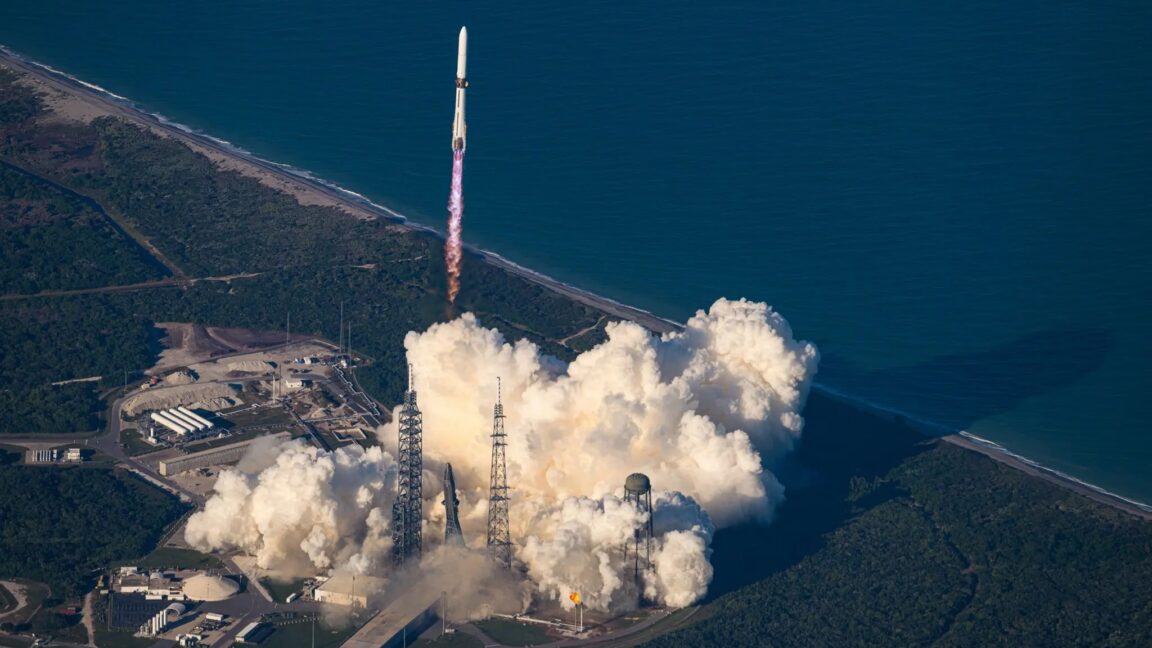
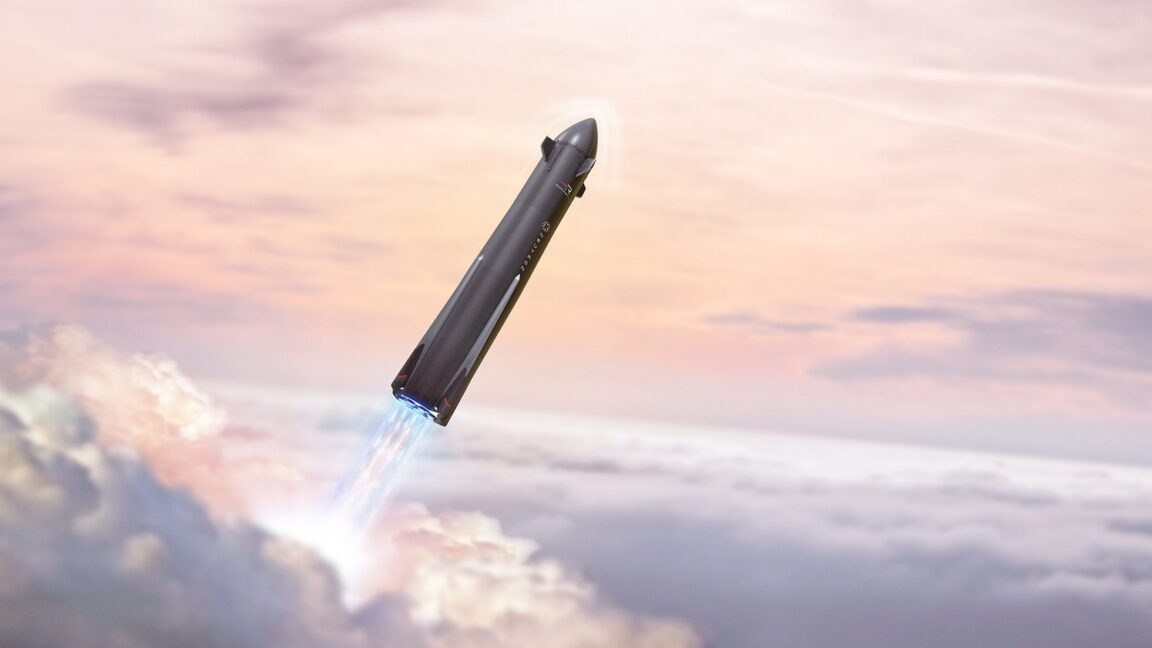
A new national space transportation policy signed by President Donald Trump on Thursday calls for the development of more spaceports to support more than 1,000 launches and reentries per year by 2030.

The presidential memorandum replaces a 2013 policy signed by former President Barack Obama. Both policies share an emphasis on supporting the commercial space industry and underscore the importance of assured access to space. But the launch sector has changed immensely since then. There were 176 orbital launch attempts from US soil last year, nearly 10 times the number in 2013. SpaceX led the pack last year with 165 orbital launches of its Falcon 9 rocket, plus five suborbital test flights of the much larger Starship.

"By 2030, our space transportation ranges must grow to support more than 1,000 launches and reentries every year," the policy says. "The policies set forth in this memorandum will secure America's continued superiority in space."

Read full article

Comments

© US Space Force/Robert Mason

  •  

Rocket Report: SpaceX makes its mark on the Moon; ULA names new boss

Welcome to Edition 9.07 of the Rocket Report! China's workhorse Long March rocket family appears to be rebounding quickly from a rare launch failure August 10. Chinese officials have not publicly released any information on what may have caused the Long March 7A rocket to break apart less than 90 seconds after liftoff, but the rocket's use of YF-100 engines initially raised questions about the failure's impact on other Chinese rockets that use the same type of engines. But no biggie. YF-100 engines returned to flight six days later with the successful flight of a Long March 12 rocket, and the heavy-lift Long March 5—also with YF-100 engines—is set to launch in a few days with one of China's most important space missions of the decade: the Chang'e 7 lunar lander en route to the Moon's south pole.

As always, we welcome reader submissions. If you don't want to miss an issue, please subscribe using the box below (the form will not appear on AMP-enabled versions of the site). Each report will include information on small-, medium-, and heavy-lift rockets, as well as a quick look ahead at the next three launches on the calendar.

Trouble in Taiwan. A prototype for a future satellite launch vehicle developed by Taiwan's top weapons manufacturer veered off course shortly after liftoff Wednesday, Taiwan's Central News Agency reports. The "trajectory anomaly" prompted the activation of the rocket's self-destruct mechanism. The government agency responsible for the test flight, the National Chung-Shan Institute of Science and Technology (NCSIST), reported no injuries or property damage. Debris from the rocket fell into a planned safety control zone near the southern tip of Taiwan.

Read full article

Comments

© NASA/Goddard Space Flight Center/Intuitive Machines

  •  

NASA calls off mission to rescue Swift gamma-ray observatory

NASA and Katalyst Space Technologies announced Wednesday they are giving up on a robotic mission to rescue the Swift gamma-ray telescope before it falls out of orbit.

The rescue satellite, named Link, launched July 3 on a journey to fly up to NASA's Neil Gehrels Swift Observatory, capture it with three robotic arms, and boost its orbit high enough to escape a looming reentry. Link is about the size of a refrigerator, with two power-generating solar arrays and three xenon-fueled electric thrusters to send Swift into a safer, higher orbit.

Katalyst, the startup leading the Swift rescue effort, said Wednesday that "ongoing attitude control issues" will prevent the Link satellite from completing its rescue mission. The spacecraft is still alive, and Katalyst said it will make the most of Link's remaining capacity, which may still allow it to get near enough to Swift for a demonstration of the satellite's close-in navigation system.

Read full article

Comments

© Katalyst Space Technologies

  •  

The floodgates are open after another Chinese company lands a reusable rocket

It has been a little more than a month since China recovered an orbital-class rocket booster for the first time. A second launch operator accomplished a similar feat Tuesday in another sign of China's growing launch capability.

It took 10 years for a second US launch company, Blue Origin, to propulsively land an orbital-class booster after SpaceX did it with the Falcon 9 rocket in 2015. SpaceX has since added a second reusable rocket to its fleet with Starship and its Super Heavy booster. Perhaps a third American company will join SpaceX and Blue Origin's club in 2027. Rocket Lab, Stoke Space, Relativity Space, and Firefly Aerospace—working in partnership with Northrop Grumman—are working on reusable rockets that could make their first flights in the next couple of years.

A similar number of launch companies are working on reusable rockets in China. Some of them operate under the auspices of the sprawling state-owned China Aerospace Science and Technology Corporation (CASC). Others are more commercial in nature, driven by capital investment from private industry.

Read full article

Comments

© LandSpace

  •  

Against all odds, SpaceX finally tugs Starship into port after 24 days at sea

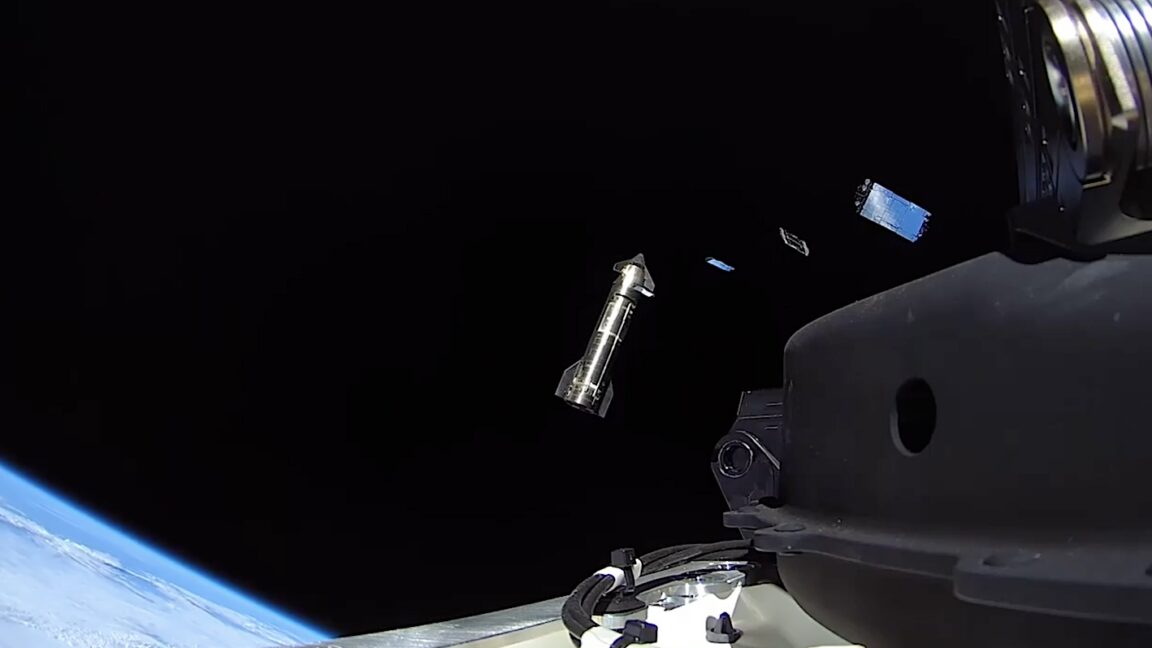
SpaceX's most recent Starship test flight may have ended July 24, but its mission isn't over yet.

The spacecraft splashed down in the Indian Ocean intact after flying halfway around the world from SpaceX's launch base in South Texas. Engineers expected the ship's life to end with a fiery disintegration after toppling over, just as past Starships have done following splashdown.

Numerous onboard sensors and cameras, along with buoys and drones in position at the splashdown zone, have provided important data for SpaceX to assess the performance of the ship's heat shield after each test flight, so officials accepted the post-flight conflagrations. That day, Starship tipped over and remained intact, surprising just about everyone.

Read full article

Comments

© SpaceX

  •  

The Moon's shadow raced across the heart of Spain, and I was there to see it

DURATÓN, Spain—I'll say it: I'm hooked. Standing in the shadow of the Moon is one of the rarest opportunities to directly sense the mechanics of our Solar System, when the dance between three celestial bodies slides into perfect alignment. It's a mathematical miracle whose rarity and grandeur are made possible by the relative sizes and distances of the Moon and the Sun from Earth. Not every planet is so lucky.

The Moon's shadow crisscrossed the American heartland twice in less than seven years, first in 2017 and again in 2024. I was fortunate to witness both. The experiences left me too impatient to wait for the next total solar eclipse in the continental United States in far-off 2044.

That's what pulled me to the plains of north-central Spain last week. This land of wide open spaces, ancient churches and castles, and vast sunflower fields, all baking under the blinding August Sun, seemed like the perfect location to enter the path of totality. The ongoing drought in Spain has turned the country's fields and forests into a tinderbox, but those conditions made for ideal eclipse viewing.

Read full article

Comments

© Stephen Clark/Ars Technica

  •  

Here's how engineers plan to save the satellite sent to save NASA's Swift mission

One week ago, more than 200 miles above the Earth, a refrigerator-size satellite making its way toward an attempted rescue of NASA's $500 million Swift gamma-ray observatory suddenly spun out of control.

It didn't look good. The spacecraft, named Link, was rotating on multiple axes, rendering it unable to maintain a reliable communications link with the ground and complicating efforts to arrest the spin. Two of the satellite's three reaction wheels, used for pointing, also stopped working. Through sporadic radio contact, engineers discovered a problem with some of the spacecraft's cold gas thrusters used for finer attitude control.

The Link satellite is built, owned, and operated by Katalyst Space Technologies, a satellite servicing startup that won a $30 million contract from NASA to fly up to the Swift observatory, grab onto it, and boost its orbit before succumbing to aerodynamic drag and burning up in the atmosphere.

Read full article

Comments

© NASA

  •  
❌