 Login
Login
Towers once planned for California shuttle launches leveled for SpaceX rockets
One of the United States' most storied space launch sites has been cleared of its decades-old support towers, making way for modern rockets to use the pad. Space Launch Complex-6 (SLC-6) at Vandenberg Space Force Station is arguably better known for what did not lift off from there than for what did.
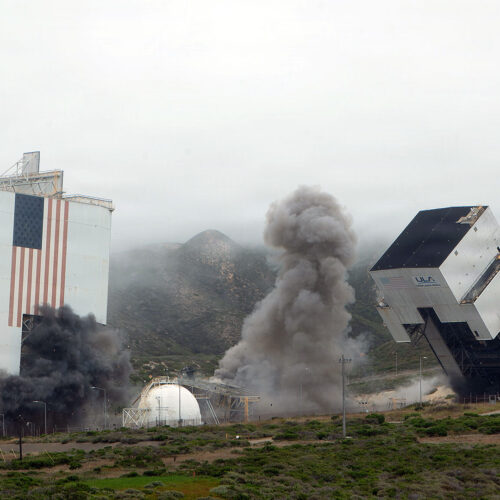
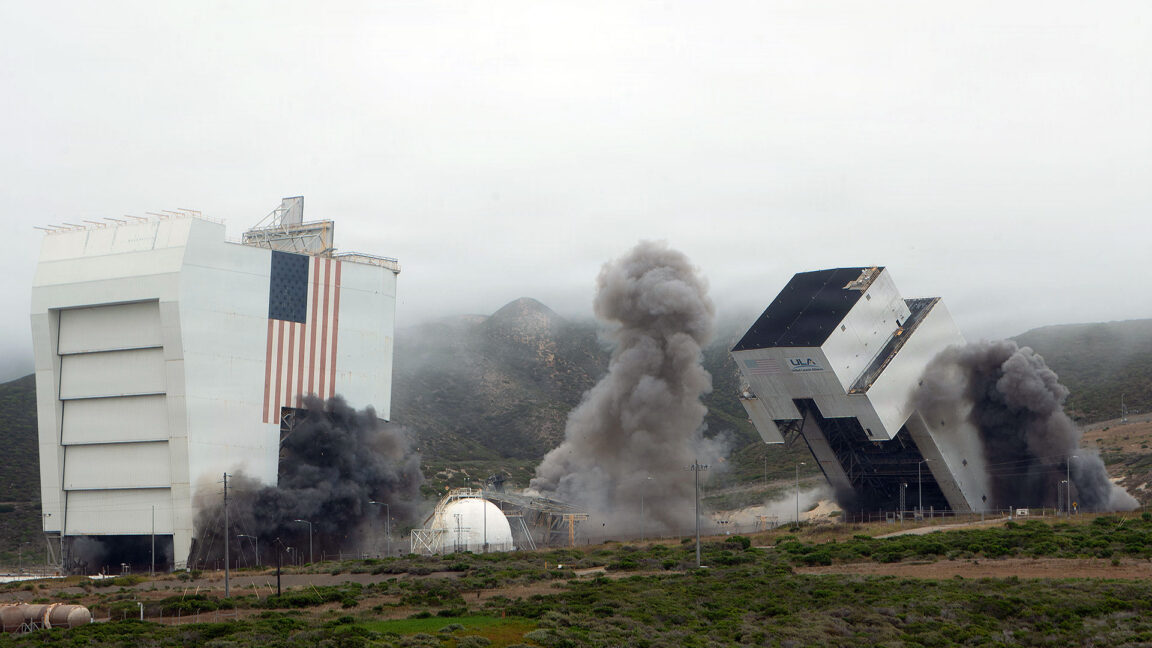
A series of demolition charges on Tuesday (June 16) brought down the access tower, mobile service tower, and what remained of the assembly building at SLC-6—pronounced "slick-six"—in Southern California. Once the location for the US Air Force's first effort to put humans into space and later, the West Coast launch site for the space shuttle, SLC-6 will next be used by SpaceX in support of Falcon 9 and Falcon Heavy missions.
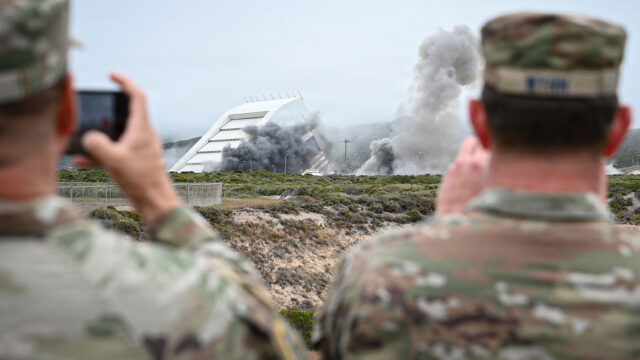 Vandenberg Space Force Base personnel watch as the assembly building at Space Launch Complex-6 (SLC-6) is toppled on June 16, 2026, to make way for SpaceX's use of the site.
Credit:
Space Launch Delta 30/Tech. Sgt. Draeke Layman
Vandenberg Space Force Base personnel watch as the assembly building at Space Launch Complex-6 (SLC-6) is toppled on June 16, 2026, to make way for SpaceX's use of the site.
Credit:
Space Launch Delta 30/Tech. Sgt. Draeke Layman
"Space Launch Complex-6 represents six decades of American innovation and our unwavering commitment to securing space superiority," Col. James T. Horne III, commander of Space Launch Delta 30 at Vandenberg, said in a statement. "By modernizing this historic footprint in partnership with our defense industrial base, we are building directly upon the foundation of our pioneers."
© Space Launch Delta 30/Staff Sgt. Daekwon Stith