❌

Reading view

Scientists find closest star to the Milky Way's central black hole

Sgr A* is the name we've given to the supermassive black hole that sits at the center of the Milky Way. We've known about its presence since the 1970s but only managed to image it within the past few years. In the intervening time, most of our understanding of the object was obtained by watching a group of stars that orbit the black hole, helping us get a good estimate of its mass and size. In essence, those stars acted as instruments that let us peer into an environment we couldn't study any other way.

In Wednesday's issue of Nature, researchers describe a recently discovered star that is on an extremely eccentric orbit that takes it closer to Sgr A* than anything we've previously identified. It gets so close that it may help us get our first measurements of the spin of the black hole.

Reading the spin

There's an entire population of stars that orbit relatively close to Sgr A*. We can estimate their mass based on their brightness and spectral features. Using their masses and a reconstruction of their orbits using several years of data, we can figure out just how supermassive Sgr A* is (nearly 1037 kilograms).


Read full article

Comments

Β© A. Berdeu/ESO

  •  

Trump is losing his war on wind power

On Thursday, a US District Court in Oregon ordered the US government to restart the process of approving wind projects. All new wind development in the US has been on hold since August 2025, when the Department of Defense (DoD) stopped participating in a process that allows it to compel developers to alter projects in order to limit their interference with radar equipment. The court ruled, however, that the DoD's national security claims did not allow it to opt out of a process that is legally mandated.

The Trump administration has made many attempts to block wind development, both offshore and land based. Its attempts to stop offshore wind included the same approach at issue in this case: Claim that drone developments mean that radar interference by wind turbines creates a national security risk. The courts were not sympathetic to this claim, including in cases where judges examined a classified report that the DoD was using to justify blocking offshore wind construction. As a result, the administration has turned to paying companies not to pursue wind development.

In parallel, the government was pursuing a similar approach for onshore wind. Here, a law lays out a process for the DoD to evaluate any problems posed by wind turbines and negotiate changes to planned wind farms with the developers. As laid out in the new decision, the government simply stopped participating in this process in August 2025, first by refusing to sign off on previously negotiated agreements, and later by refusing to draft agreements entirely. Eventually, it simply refused to participate in negotiations at all. This has brought a halt to all wind development in the US.

Read full article

Comments

Β© picture alliance

  •  

Large genome models used to design new viruses

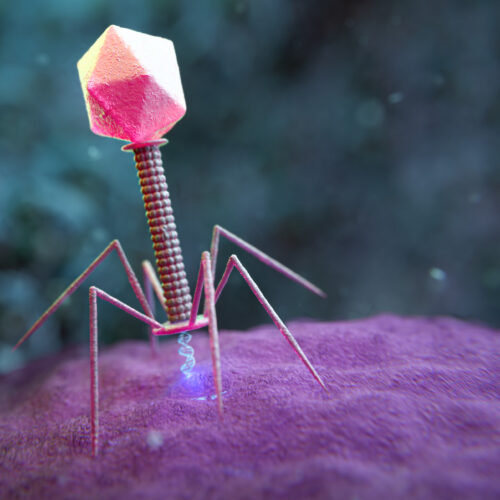
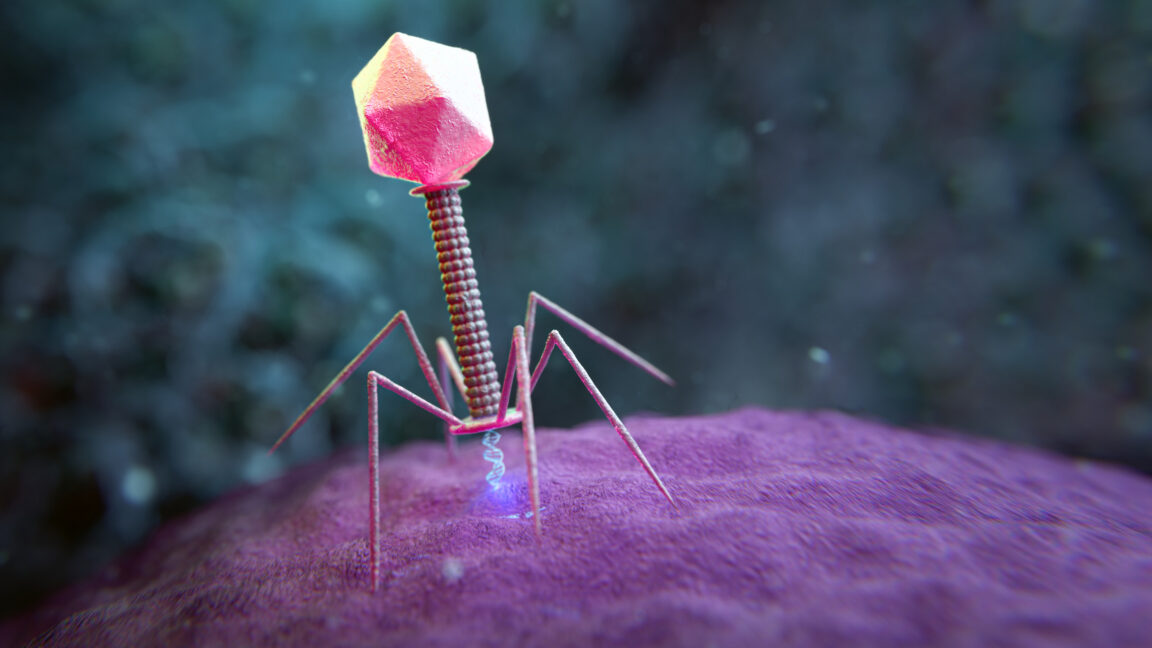
A lot of the AI work in biology has been focused on designing proteins. That's partly because proteins do most of the business of life, catalyzing the interesting chemistry and structuring cells. So, figuring out how to make a new protein can mean directly tinkering with biochemistry, providing new and potentially useful functions.

Since the genetic code provides a layer of abstraction between DNA and proteins, it wasn't obvious what a model trained on DNA could do. Yet people went ahead and made a large genome model, and it turned out to be able to output DNA sequences that could encode functional proteins in bacteria and mimic the gene structures found in complex cells. Now, those same models have been used to output the genomes of viruses that infect bacteria.

This isn't science fictionβ€”all the viruses the models created are closely related to an existing virus. But they do have some distinct features that would be challenging to evolve. And the researchers who did the work, based at Stanford University, suggest we may want to start thinking now about preparing for the potential that someone could develop a related AI that can design a virus that targets vertebrates.

Read full article

Comments

Β© THOM LEACH / SCIENCE PHOTO LIBRARY

  •  

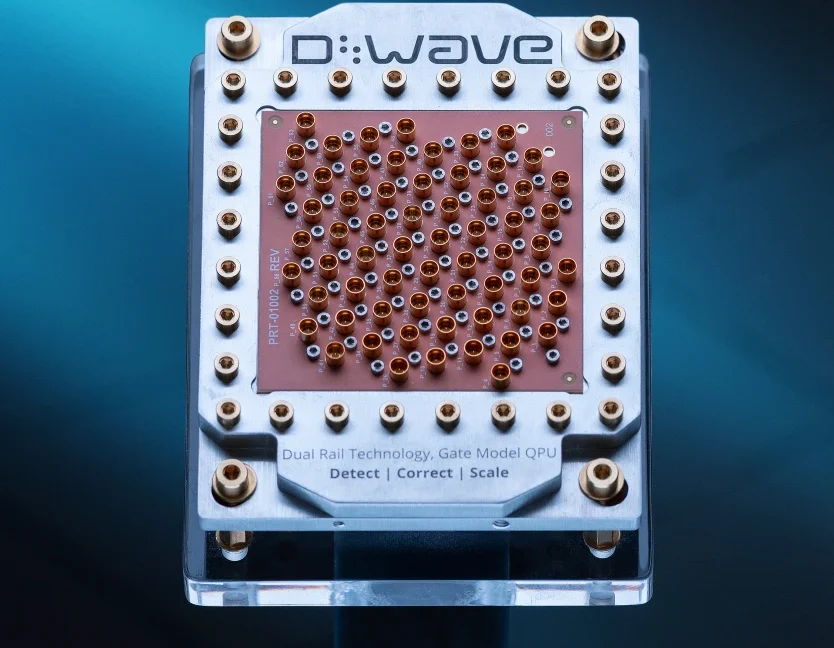
D-Wave shows off its new entry in quantum computing race

D-Wave is a bit of an oddity in the quantum computing space, having been founded back in the last century. And its initial offering wasn't a quantum computer like those being developed by IBM or Google. Instead, the company built what's now called a quantum annealer, a machine that isn't general-purpose but can solve a large class of optimization problems. While the hardware shares some similarities with the qubits used in gate-based quantum computers, it operates in a fundamentally different way.

But a few years back, D-Wave started working on gate-based hardware, apparently choosing a somewhat unusual qubit technology called fluxonium. And this year, the company acquired a startup called Quantum Circuits that spun out of Yale University and has been developing what's called a dual-rail qubit (the same technology used by Amazon), which promises to make most errors very easy to detect, simplifying error correction.

On Wednesday, the company is publishing a paper in Nature that describes a key step in validating this dual-rail technology, showing that two of the qubits can be entangled without altering their best feature: Most are a single type that is easy to detect.

Read full article

Comments

Β© D-Wave

  •  

Pushing the limits: Infinite Machine's Olto is barely a bicycle

The Infinite Machine Olto is a great electric scooter, one with an overall layout that echoes the classic Vespa. It's comfortable, and it accelerates well, handles nicely, and has a capacious battery. It has a rugged design that seems capable of handling a lot of abuse, but it also comes with thoughtful touches and security features that mean you can park it anywhere with confidence. And it provides all that at less than half the cost of its full-featured stablemate, the P1 scooter.

The reason is that the Olto is also a bicycle. Sort of.

This may technically be a bicycle, but it's not one you'd ever want to pedal. While you can set it to operate as either a Class 2 or Class 3 e-bike, it works best when the pedals are both locked in a forward position, acting as footrests. The Olto was designed to provide riders with the experience of a scooter while still allowing them to take advantage of the growing bike lane networks in many urban areas across the country.

Read full article

Comments

Β© John Timmer

  •  

Not just Neanderthals: Ghost lineage in Africa left its mark on our DNA

When the history of our ancestry is written, the fact that we've interbred with some of our closest relatives, the Neanderthals and Denisovans, will have a central role. And it will be tempting to write it as a very tidy story: Once we got genomes from these other groups, it was possible to identify the sequences in our genomes that we shared with them.

But in reality, as scientists started poking large enough collections of data, there were regular hints of some strange ancestry in our genomes. It was hard to pin down, though, at least in part because the 2 percent on average of Neanderthal DNA found in many populations does not guarantee that any two individuals will have the same 2 percent. So having the genomes of those two groups made sense of some things researchers had already been seeing.

But knowing what we do about Neanderthal and Denisovan DNA is now allowing researchers to answer a somewhat different question: Is there anything else? Using recently developed analytical techniques, they find evidence of a third lineage that we apparently interbred with before any modern humans left Africa. Again, there were hints of this earlier, but so far, there has been no genome from a modern human relative to help us understand the detailsβ€”the source of this DNA remains a "ghost lineage."

Read full article

Comments

Β© BSIP

  •  
❌