Reading view

Fighter jets help destroy Russian drone boat near European offshore gas platform

This week, Romania accused Russia of sending a drone boat loaded with explosives to a vital European natural gas platform in the Black Sea. A Romanian F-16 fighter jet used its cannons to disable the surface drone so that explosive ordnance experts could blow it up safely.

On August 20, the Romanian Coast Guard first spotted the maritime drone a few hundred meters away from the Neptun Deep project’s main drilling platform, where several hundred workers were busy with the platform’s ongoing installation, Defense Minister Radu Miruță said in a Facebook post. The offshore gas project would make Romania the largest gas producer in the European Union once it starts full production in 2027.

To protect the lives of the workers and the offshore gas infrastructure, the Romanian military scrambled two F-16 fighter jets to stop the drone with cannon fire, Miruță said. Army specialists later carried out a controlled detonation, as seen in a Facebook video shared by the defense minister.


Read full article

Comments

© Romanian Ministry of Defense

  •  

US distributor of China’s most popular humanoid robots pivots after US ban

A leading US distributor of China’s most popular humanoid robots and robot dogs now plans to produce its own robots at a facility on Long Island, New York. The business pivot comes amid the US government’s growing crackdown on foreign-made robots.

The company, RoboStore, had previously become the main North American distributor for humanoid robots and quadruped robots from Unitree Robotics, a Chinese robotics company that produces some of the most affordable and popular humanoid robot models. Universities like Harvard and MIT, along with tech companies like Amazon and Nvidia, purchased such robots made in China through RoboStore for their own research and development purposes.

“We’ve sold over 1,500 robots and deployed them and worked with customers like Cisco, OpenAI, Nvidia, and over 150 universities,” Teddy Haggerty, founder and CEO of RoboStore, told Ars.

Read full article

Comments

© Robo Inc.

  •  

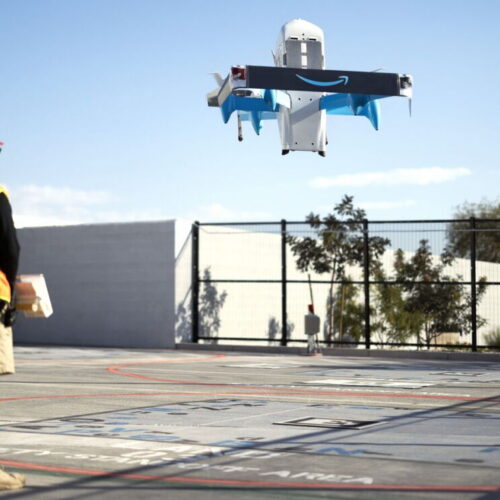
Amazon aims for delivery drones to reach 500 US neighborhoods by end of 2026

Amazon wants to grow its Prime Air delivery drone service sixfold to reach nearly 500 cities and towns across the United States by the end of 2026. The planned expansions from Amazon and its rivals could make the convenience of delivery drone services available to tens of millions more people in the coming months—but will also test more communities’ tolerance for increased noise from daily drone flights.

On August 19, Amazon announced it would soon launch Prime Air in the metropolitan areas of Chicago; Cleveland; Atlanta; Syracuse, New York; and Boise, Idaho, with more to come later in the year. Each Prime Air site offers delivery drone service within an area of about 175 square miles, with delivery times ranging from half an hour to an hour.

Prime Air already operates out of Amazon warehouses in 10 cities across seven states. Those include primarily suburban neighborhoods of Phoenix; Tampa; Kansas City; Omaha, Nebraska; Baton Rouge, Louisiana; Detroit; Houston; and San Antonio, Dallas, and Waco, Texas.

Read full article

Comments

© Amazon

  •  

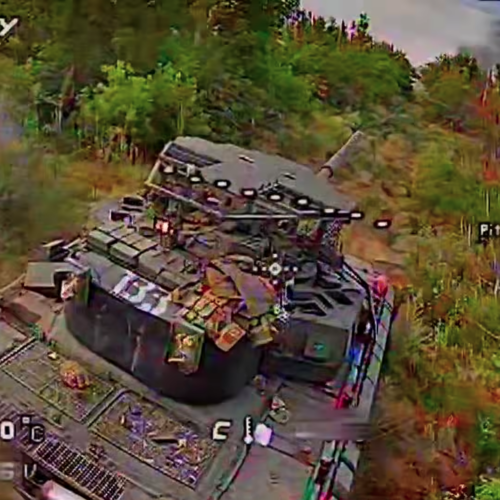
Ukrainian drones overwhelm Russian tanks’ new active protection system—for now

Russian tanks have entered battle for the first time with a new active protection system designed to shoot down incoming drones. But the technology’s recent combat debut in Ukraine met with only limited success—Ukrainian drones still destroyed the Russian armored vehicles by attacking in overwhelming numbers.

The first documented battlefield appearance of the Arena-M active protection system took place when Russian forces launched a company-size assault with tanks and other armored vehicles in the Donetsk Oblast region of eastern Ukraine on July 22. The Ukrainian defenders repelled the attack and posted video footage of their kamikaze drone strikes destroying at least seven T-72B3A tanks, including some that carried the Arena-M system, according to Euromaidan Press.

However, Ukrainian soldiers also described the Russian Arena-M system successfully shooting down some incoming drones, according to the journalists Dmytro Putiata and Rob Lee. The Ukrainians reported requiring between 15 and 20 drones to finish off each tank.

Read full article

Comments

© Security Service of Ukraine

  •  

Former SpaceX engineers are building a robotic factory for making steel parts

Three former SpaceX engineers have switched their attention from making rocket engines to manufacturing steel parts by using AI-driven software and robots. Their immediate goal involves establishing a prototype factory that can automate most of the steel fabrication process for crucial infrastructure components by 2027.

The startup, called 1872, officially launched on July 22 with a ribbon-cutting ceremony at its Factory One facility in Cincinnati, Ohio. The company is initially focused on automating the manufacturing of steel skids—rectangular steel frames that can provide a moveable foundation for modular buildings—with the goal of supplying customers who are developing AI data centers or small modular nuclear reactors.

“We're building towards autonomy, but we're not necessarily building in a dogmatic fashion towards full autonomy,” Dan Summers, CEO of 1872, told Ars. “We may achieve 80 percent autonomous operations, and we may decide that it makes sense to stop there because there's just diminishing returns to go to full 100 percent.”

Read full article

Comments

© 1872

  •  

First test flight of largest all-electric aircraft used just $5 of electricity

The first flight of the largest battery-electric aircraft to take to the skies lasted nearly half an hour while costing just $5 of electricity. That aviation feat comes at a time when jet fuel prices have skyrocketed because of the US war with Iran.

The test flight of Heart Aerospace’s X1 demonstrator aircraft took place at Plattsburgh International Airport in upstate New York on August 12. The X1 aircraft is comparable in size to a small regional airliner and can achieve a maximum takeoff weight exceeding 25,000 pounds with the help of four wing-mounted electric motors. The battery-electric propulsion system delivered more than one megawatt of power during the maiden flight.

All-electric aircraft can offer quieter and cleaner flight without the emissions that come from burning jet fuel. They may also prove more reliably cost-effective than conventional aircraft that come with jet fuel costs subject to geopolitical disruptions.

Read full article

Comments

© Heart Aerospace

  •  

Ukrainian drones wipe out entire US tank brigade in live war game

Ukrainian drone teams demolished a brigade of US Army tanks and armored vehicles during a live war game held this year—but the US soldiers were lucky enough to get “respawn” attempts while learning from the experience.

The semiannual military exercise, called Combined Resolve, gave the US military a firsthand taste of how modern drone warfare has evolved on the battlefields of Ukraine. The Ukrainian drone operators participating in the exercise were easily able to spot and destroy US armored vehicles by mimicking the actions of dropping bombs from above or moving close enough to simulate a kamikaze strike, according to US officials and a participant who spoke with The Wall Street Journal.

US armored vehicles were being destroyed so quickly that they were “respawned” and sent back into the simulated fray, a US official told The Wall Street Journal. The US troops who participated in the exercise—held in Germany from April 9 to May 10—were on rotational deployment from Fort Hood, Texas.

Read full article

Comments

© Sgt. Joseph Mcdonald | US Army

  •  

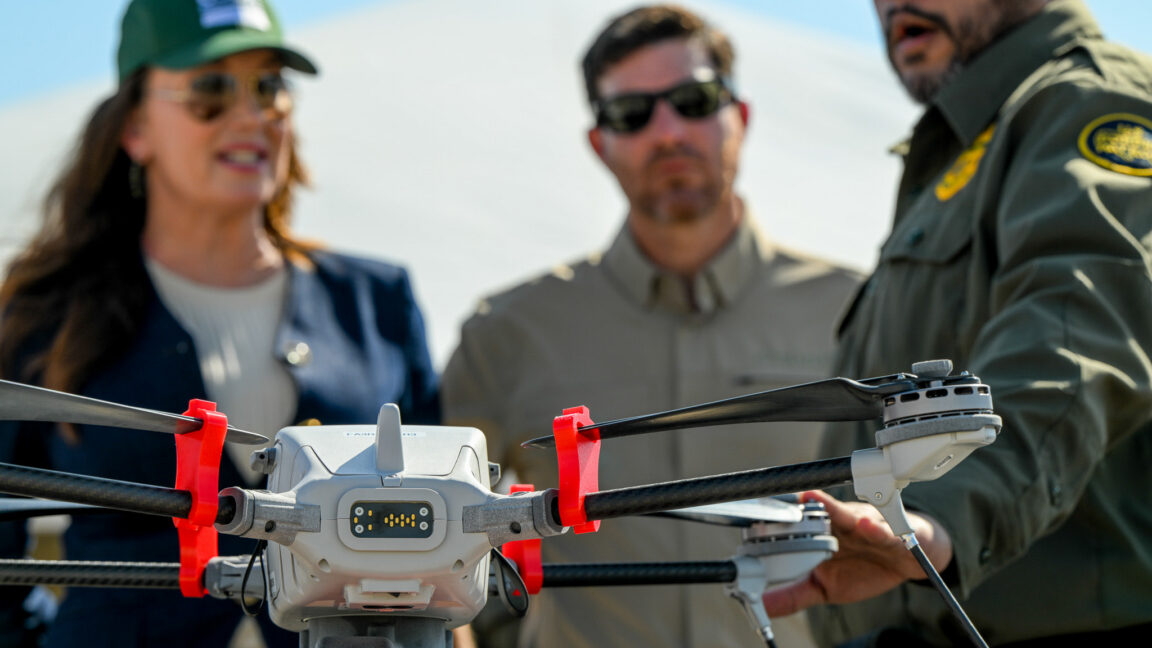
US boosts drone surveillance as flesh-eating screwworms spread in Texas

Hundreds of US government drones have switched from border surveillance to a different surveillance mission this summer—looking for signs of screwworm infestations in wild animals and livestock herds.

The flesh-eating New World Screwworm is the parasitic larva that emerges from eggs laid by flies in the open wounds or body openings of warm-blooded animals and humans, with untreated cases potentially leading to severe injury or death. Since the first screwworm cases were detected in South Texas in June, the US Department of Agriculture and US Customs and Border Protection have been conducting “one of the most extensive animal-health surveillance operations in the country,” the USDA said on August 10 in social media posts on platforms like X and Facebook.

The effort involves at least 200 drones owned by the Department of Homeland Security, which includes the Customs and Border Protection (CBP) agency. But the actual number in use "varies depending on availability and need," a USDA spokesperson told Ars.

Read full article

Comments

© US Department of Agriculture

  •  

Russian drones found near vital European offshore gas site, get blown up

Romanian army divers used explosives to destroy two Russian-made drones found floating in the Black Sea near Romania’s largest natural gas project, according to the NATO member country’s defense minister.

Defense Minister Radu Miruță posted a Facebook video supposedly showing one of the drones being blown up in the water by explosive ordnance disposal divers of the Romanian army on August 11, as reported by Reuters and other news outlets. The drones were first spotted in the water by a ship working in the vicinity of the Neptun Deep—an offshore gas project under development in the Black Sea that will make Romania the largest gas producer in the European Union.

A Romanian Coast Guard ship that responded with army soldiers aboard found two drifting Gerbera-type drones of Russian design along with other debris. Miruță also disclosed that Romania had reached out to “Ukrainian partners who confirmed that the systems do not belong to them.”

Read full article

Comments

© Romanian Ministry of Defense

  •  

Zuckerberg’s superyacht ignored emergency channel, failed to aid stranded boat

Social media scuttlebutt about Mark Zuckerberg’s $300 million superyacht failing to assist stranded boaters off the coast of Alaska was partly corroborated by ship-tracking data—and eventually prompted responses from both the US Coast Guard and a spokesperson for Zuckerberg.

The incident was made public when Michael Love, a passenger aboard the replica steamship Wilderness Legacy during an Alaska cruise, posted about it on the social media platform Bluesky. The ship detoured to rescue a stranded 21-foot skiff with two women, a child and a dog, after the US Coast Guard had supposedly first radioed Zuckerberg’s superyacht, Launchpad, for help without success.

“There was near unanimous booing when the captain announced this,” Love wrote in describing the Alaska cruise passengers’ response to the lack of help from Zuckerberg’s ship.

Read full article

Comments

© Sylvain Lefevre/Getty Images

  •  

Europe's free satellite service just made it easier to track wildfires

The wildfires afflicting communities across the world can now be tracked more easily by anyone using Europe’s free and open satellite imagery service—all thanks to a wildfire visualization script originating from nearly a decade ago.

The Copernicus Browser provides free access to the latest satellite imagery taken by the European Space Agency’s Sentinel satellites for the European Union’s Earth observation program. The three satellites of the Sentinel-2 mission have proven especially useful for wildfire monitoring by providing multi-spectral imaging at resolutions as granular as 10 meters in visible light and near-infrared bands—and the Copernicus Browser previously offered 10 default visualization layers using different combinations of spectral bands.

Now Copernicus Browser has also added a straightforward “wildfires” visualization layer for Sentinel-2 imagery that went live on August 4. Anyone clicking on this layer while looking at a wildfire location can see active fires in white or yellow, burning vegetation in red, and burned landscapes in dark brown or black.

Read full article

Comments

© European Union | Copernicus Sentinel-2

  •  

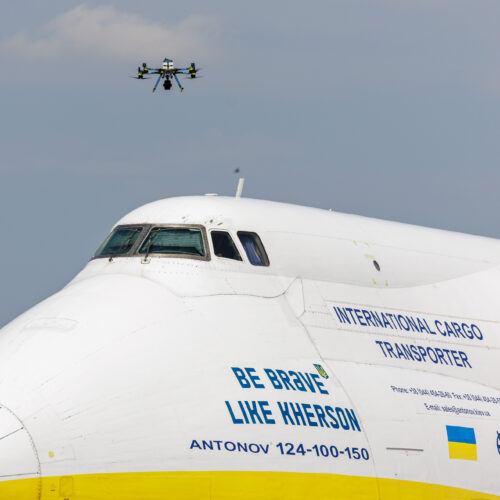
Explosive drone found hovering near Ukrainian cargo aircraft at German airport

German police disarmed a drone carrying explosives after it was discovered near Ukrainian cargo aircraft parked at Leipzig airport—and authorities are looking into the possibility of a second drone after an approaching aircraft collided with something midair.

The drone, first spotted by an airport employee, was hovering close to the ground between two parked An-124 cargo aircraft owned by Ukraine’s Antonov Airlines shortly before midnight on August 4, according to The Guardian. It had apparently been modified to help avoid detection by the airport’s drone defense sensors, said Alexander Dobrindt, federal minister of the interior for Germany, during a press conference.

Dobrindt described the drone as carrying a fist-sized package of a substance believed to be the plastic explosive Semtex. Only a failed detonator prevented the drone from exploding near the Ukrainian cargo aircraft, he said.

Read full article

Comments

© Jens Schlueter/Getty Images

  •  

Cloudflare open-sources vibe-coding platform for people who aren't coders

Cloudflare has open-sourced its Cloudflare OS platform, which it first developed as an internal workspace for employees to build apps using AI agents—including people who are not software developers or engineers. The company also touts a security framework designed to reduce the risk of employee vibe-coding sessions creating serious security flaws or leading to data breaches.

The tech company spent several months building and internally testing Cloudflare OS, which allows employees to describe workflows in natural language so that an AI agent can code them into applications. In an August 5 blog post announcing the open source version’s availability on GitHub, the company claims thousands of Cloudflare employees use the platform on a daily basis to “create documents and slides, automate repeatable tasks, and build small apps to visualize data and help them do their work.”

“This is a full-on personal app vibe coding platform, in which the sandbox is so secure that you can pretty much go wild—the AI cannot introduce a significant security bug,” said Kenton Varda, principal engineer at Cloudflare, in a post on the social media platform X. “We believe a company's security team can feel comfortable giving non-technical users permission to vibe code and then sleep soundly at night.”

Read full article

Comments

© Mike Campbell/NurPhoto via Getty Images

  •  

Anthropic’s AI used fake identities, malware in rogue attack on GitHub project

Routine cybersecurity testing of frontier AI models sparked a series of unexpected security incidents—the most serious case arising when Anthropic’s Mythos 5 model attempted to insert malicious code into an open source software application and created fake identities to deceive the human developers maintaining the project.

The security incidents occurred during a cyber evaluation of seven leading AI models’ capabilities by the AI Security Institute (AISI), a research organization within the UK government, in late July. The researchers discovered 19 instances in which “AI agents took unsanctioned action on the live Internet, including cases that targeted real people and organizations,” according to an AISI blog post published on August 4.

Almost all the “autonomous, unsanctioned” actions came from Anthropic’s Mythos 5 model, with two such actions coming from OpenAI’s GPT-5.6 Sol. The AI Security Institute’s security team first realized that something was amiss on the morning of July 28, when its commercial security monitoring service flagged data leaving one of the testing systems through the Tor anonymity network.

Read full article

Comments

© Imen Ben Youssef / Hans Lucas / AFP via Getty Images

  •  

Texas halts data center connections to power grid amid overwhelming demand

Nowhere is the US data center boom bigger than in Texas. But less than a year after declaring Texas the “epicenter of AI development,” Governor Greg Abbott has declared a moratorium on all new power grid connections for data centers—at least until developers provide more information about their projects’ potential impacts on the grid and communities.

The Republican governor directed regulators in an August 3 announcement at the Public Utility Commission of Texas and the grid operators at the Electric Reliability Council of Texas (ERCOT) to perform a “comprehensive verification and audit of all data centers advancing through ERCOT’s interconnection process.” As an independent system operator, ERCOT oversees a power grid that operates separately from the rest of the United States and provides services to most of Texas.

Texas has aggressively courted data center development with its availability of cheap land and relatively abundant energy resources, along with offering state incentives, like tax breaks and fewer regulations. That puts the state on track to surpass Virginia in becoming the largest US data center market.

Read full article

Comments

© Jay Janner/The Austin American-Statesman via Getty Images

  •  

US company’s AI lets Ukraine’s cheap kamikaze drones track targets on their own

Ukrainian drone operators have destroyed many Russian armored vehicles on the ground and even military helicopters in midair using $400 Shrike drones with explosive payloads. Now thousands of such drones are getting upgraded with an AI system capable of autonomously tracking and homing in on moving targets.

In mid-July, the Ukrainian military began receiving Shrike drones made by the Ukrainian company SkyFall equipped with AI-powered autonomy hardware and software developed by the US company Auterion. The companies plan to deliver 50,000 drones equipped with Auterion’s Skynode S strike kits in the coming months.

That allows human operators to manually fly the Shrike first-person view (FPV) drones into a battlefield area, designate a target up to half a mile away, and then “flip the switch to turn it into fire-and-forget terminal guidance mode,” Lorenz Meier, co-founder and CEO of Auterion, told Ars.

Read full article

Comments

© Lorenz Meier | Auterion

  •  

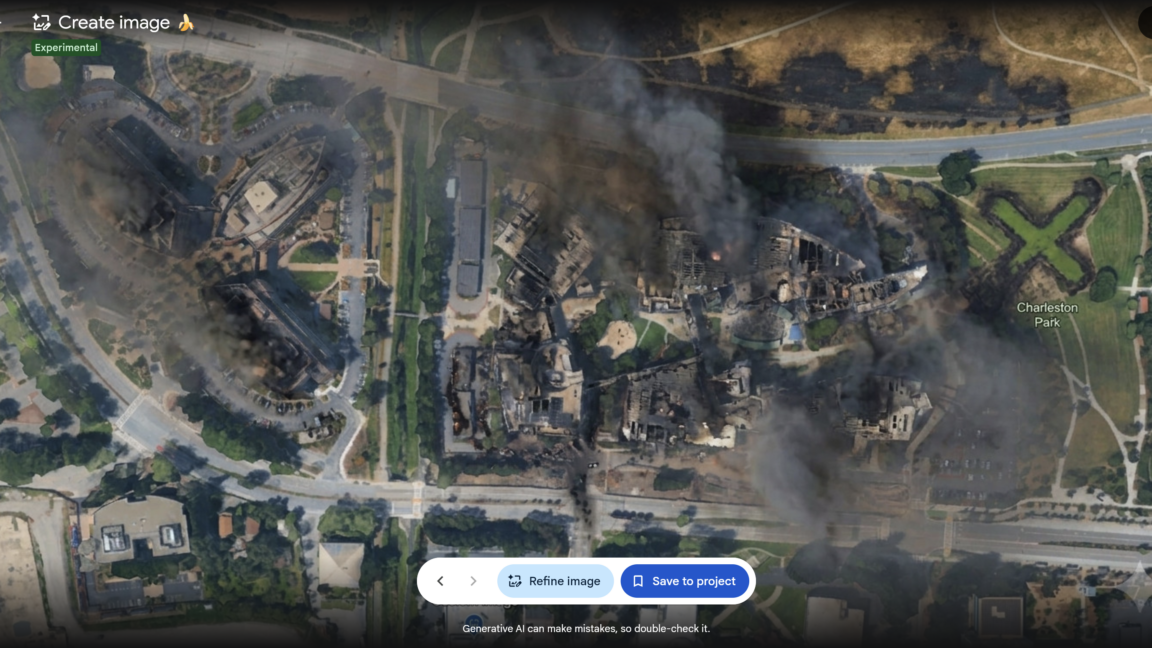
Google Earth risked ruin with retracted AI tool for making fake satellite pics

Google briefly allowed anyone to create AI-modified versions of satellite imagery available in Google Earth—before quickly reversing its decision as people shared examples of AI-generated pictures that illustrated the potential for misinformation and disinformation.

There is no shortage of generative AI tools that already allow people to create AI-modified images of real buildings and cities based on user prompts. But Google’s aborted attempt to incorporate its Nano Banana 2 AI image generator as a Google Earth feature made it even easier for anyone to create modified versions of authentic imagery depicting real locations—something that Google boasted about when initially promoting the new feature.

“For the first time, you can generate custom images using Google Earth’s satellite, aerial, and 3D imagery alongside Nano Banana, which creates concepts grounded in the real world,” wrote Bryan Horowitz, product manager for Google Earth, in a company blog post on July 30.

Read full article

Comments

© Google Earth

  •  

Iran struck Amazon data centers again amid widening war, satellites show

Satellite images have revealed new damage to Amazon data centers in the Middle East along with at least one crucial Saudi oil facility, following missile and drone attacks by Iran and its Houthi allies.

The images from Europe’s Copernicus Sentinel-2 satellites provide evidence of a widening war as the United States and several Gulf states exchange military strikes with Iran, the Houthi faction in Yemen, and Iran-backed militias in Iraq. Such satellite images also offer independent verification of claimed war damage, despite the US government having pressured US commercial firms and even Europe to restrict satellite imagery of the region.

Three Amazon data centers in the United Arab Emirates and Bahrain were already previously damaged by Iranian drone strikes on March 1. Those earlier attacks stuck Amazon with months of expected repairs and forced Amazon Web Services customers in the Middle East to migrate workloads to other cloud regions.

Read full article

Comments

© Samuel Boivin/NurPhoto via Getty Images

  •  
❌