❌

Reading view

Blue Origin is going all in on the New Glenn rocket

Blue Origin announced a major expansion of its already considerable Florida launch facilities on Friday morning with the intent of eventually flying more than 100 rockets a year from there.

The company said it would add two launch pads for the New Glenn rocket, in addition to two already under construction at Cape Canaveral. The company is also investing heavily in a new manufacturing facility that will produce up to 150 upper stages for a larger variant of the New Glenn rocket.

The company also plans to procure two additional landing ships to catch and return the first stage of the New Glenn rocket (it currently has one, named Jacklyn). Finally, Blue Origin said it would add a new customer integration facility, built in conjunction with the US Space Force, that will feature four payload bays to process multiple missions at the same time.


Read full article

Comments

© Blue Origin

  •  

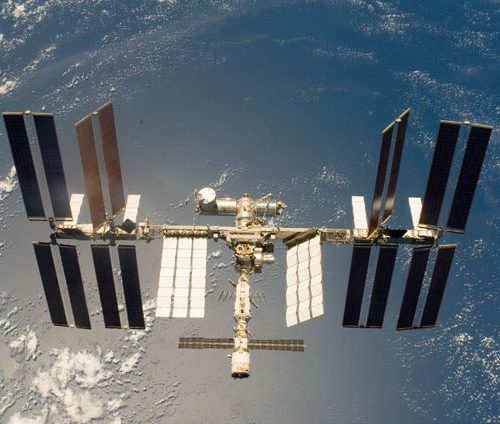
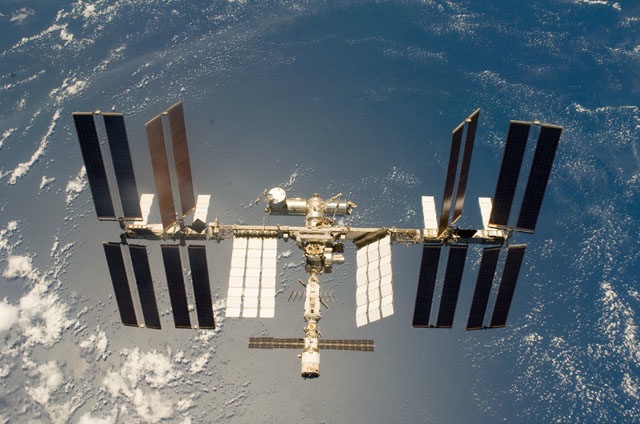
NASA issues long-awaited call to industry for private space stations

NASA on Friday released a much-anticipated "request" to the US commercial space industry to develop private space stations that, as early as 2030, will succeed the International Space Station as a place for astronauts to live in low-Earth orbit.

In a cover letter accompanying the 360-page "request for proposals," NASA stated its plan: "This will ensure NASA has a sustained human presence in LEO for crew members to perform science and exploration." Several private companies that have worked for years on designing and developing such stations have been keen to learn exactly what capabilities NASA is seeking. These new documents finally provide some answers.

NASA's solicitation can be found here. Industry responses are due back to NASA on December 8. NASA said it plans to select "two or more" contractors in this phase of the competition and intends to make a final decision in April.

Read full article

Comments

© NASA

  •  

Rocket Report: A rare Falcon 9 scrub; is it just about Vulcan's time to shine?

Welcome to Edition 9.14 of the Rocket Report! The big news this week, from our perspective, is that United Launch Alliance's Vulcan rocket appears to be close to launching. We've seen a no-earlier-than launch date for the return to flight mission of October 29 (an Amazon Leo flight), and the next rocket up after that, also an Amazon Leo mission, is also planned for this year. Assuming the solid rocket boosters work, Vulcan could be poised for a major breakthrough next year in cadence.

As always, we welcome reader submissions, and if you don't want to miss an issue, please subscribe using the box below (the form will not appear on AMP-enabled versions of the site). Each report will include information on small-, medium-, and heavy-lift rockets as well as a quick look ahead at the next three launches on the calendar.

Nuri rocket notches another success. South Korea successfully deployed five satellites for its first domestically launched microsatellite constellation during the fifth flight of its homegrown Nuri rocket Wednesday, Yonhap News Agency reports. In addition to the primary payload of five New-space Earth Observation Satellite Constellation for National Safety microsatellites, nine of the rocket's 10 CubeSat secondary payloads were released as planned, according to the Korea AeroSpace Administration. PERSAT-02, developed by South Korean startup Quaternion, failed to separate from the rocket.

Read full article

Comments

© United Launch Alliance

  •  

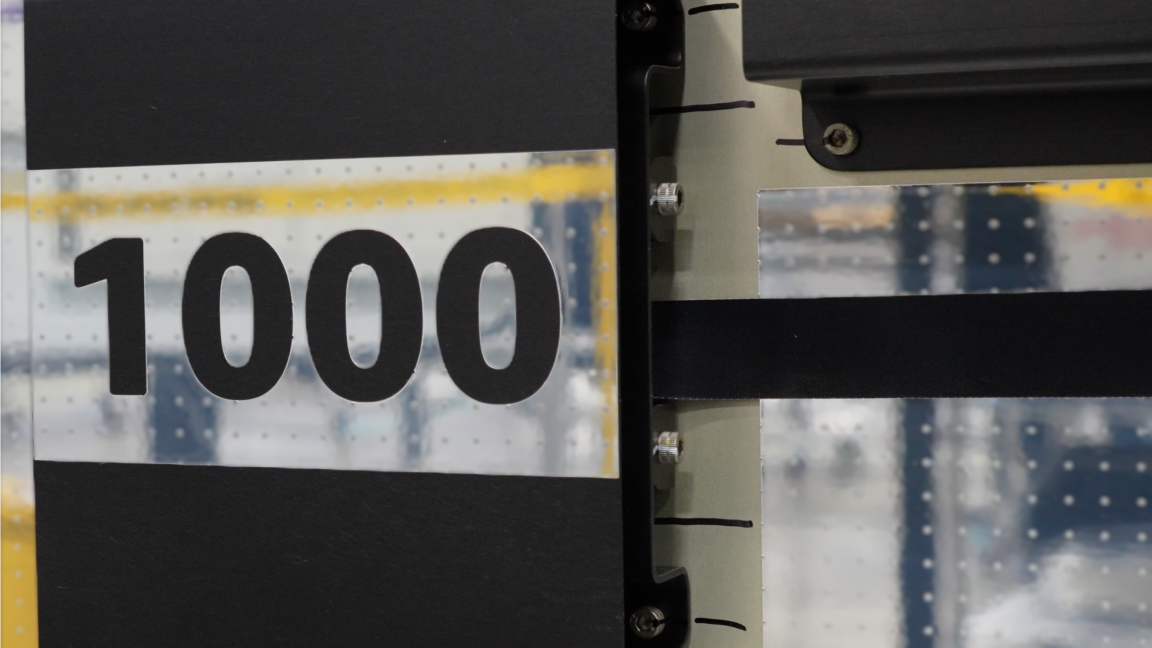
Amazon builds 1,000th satellite, will launch space internet service by end of year

The world's largest retailer wants to sell you something else—Internet from space.

Amazon has been developing a constellation of satellites to deliver broadband Internet from low-Earth orbit for the better part of a decade, and the company is just about ready to pull back the curtain. It is entering a market that SpaceX, with its Starlink Internet, has dominated for the last half-decade. Amazon's debut into satellite Internet is being closely watched, not just by some consumers, but by businesses ranging from airlines to shipping companies to governments. Broadband Internet from orbit has proven broadly useful for a lot of purposes, from video games to commerce to warfighting.

But until now, most people had to buy it from Elon Musk and SpaceX. OneWeb has only offered limited services, leaving Amazon as the only real competitor to deliver high-speed Internet globally. Moreover, at the head of the company's broadband efforts is Rajeev Badyal, who led Starlink during its early years, but whom Musk fired eight years ago for moving too cautiously on Starlink.

Read full article

Comments

© Amazon Leo

  •  

It looks like the Atlantic storm season may finally produce a hurricane

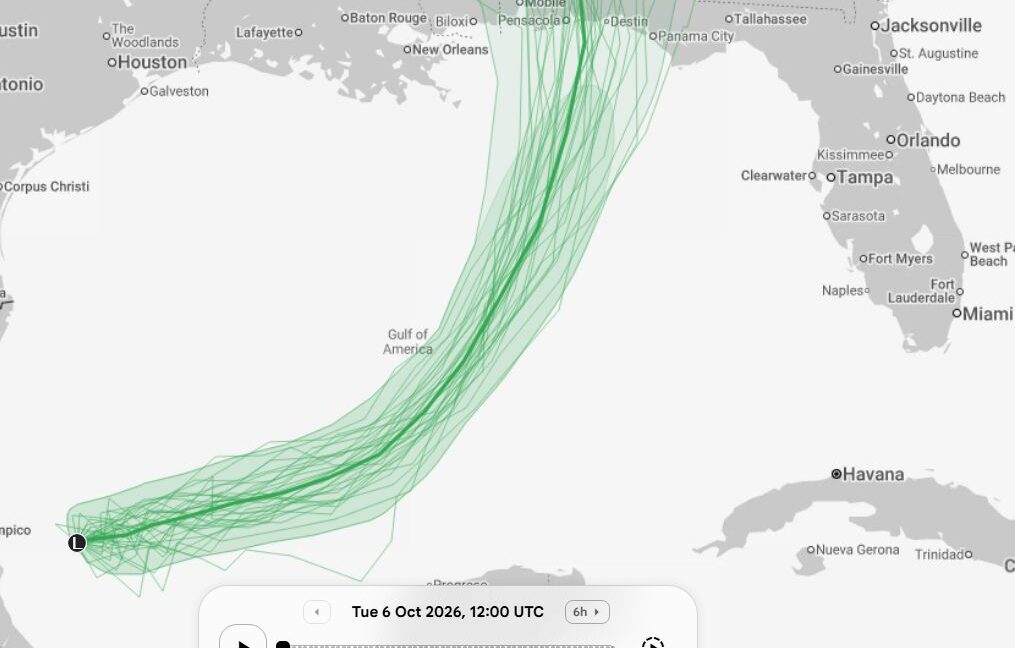
A low-pressure system in the western Gulf of Mexico should soon become a tropical storm, and based on the latest forecast modeling, it has a decent chance of becoming a hurricane.

Normally, a hurricane forming in early October would not be particularly noteworthy. However, this year the development of a hurricane would be a big deal—because it has not happened yet.

In the modern hurricane record—an era dating to about World War II when there has been aircraft reconnaissance and later continuous satellite coverage—there has never been an Atlantic season without a hurricane, and no season has gone this late without one forming.

Read full article

Comments

© Google Weather Lab

  •  
❌