Reading view

Second carcass-eating fly species cleared by FDA for maggot wound therapy

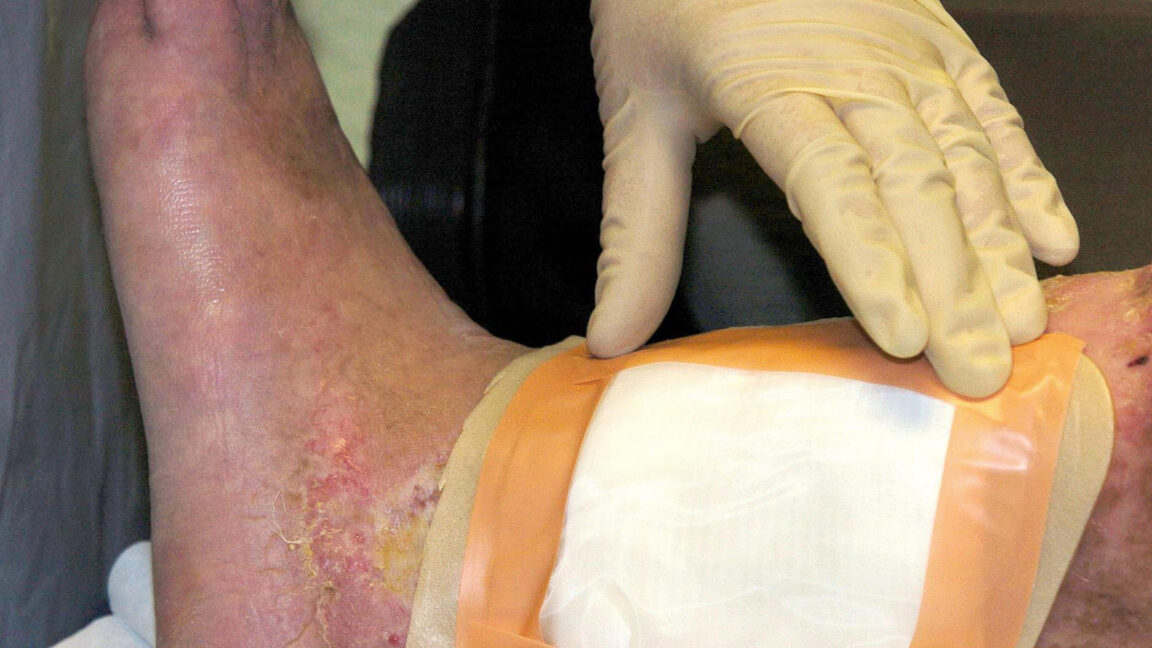
The Food and Drug Administration this week cleared a second carcass-feasting fly species for use in maggot wound therapy, according to an announcement from Cuprina Holdings, a Singapore-based company that has dubbed its new therapeutic larvae MediFly Maggots.

With the clearance, Cuprina appears to be the only company to have FDA clearance to sell two species of fly larvae—and it's abuzz with the potential to dominate the global maggot market.

The new species is Lucilia cuprina, or Australian sheep blowfly. It's a close relative of Lucilia sericata, or the common green bottle fly, which is the fly species most often used for wound therapy, often called biosurgery or maggot debridement therapy (MDT). L. sericata is the only other fly with FDA clearance, which the agency first granted in 2004 to Ronald Sherman, who is now Cuprina’s Medical and Scientific Director.
Read full article

Comments

© Getty | John Giles

  •  

Sooner than expected? Useful quantum error correction promised for 2028.

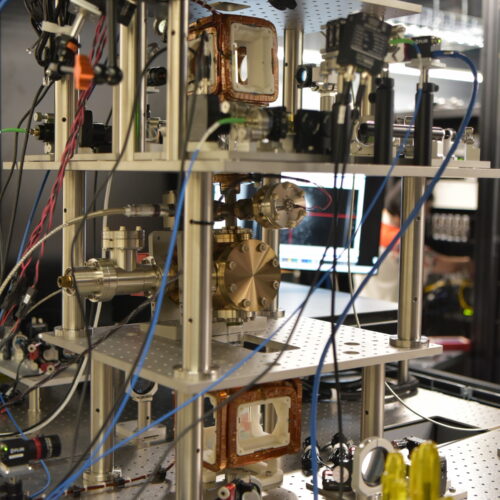
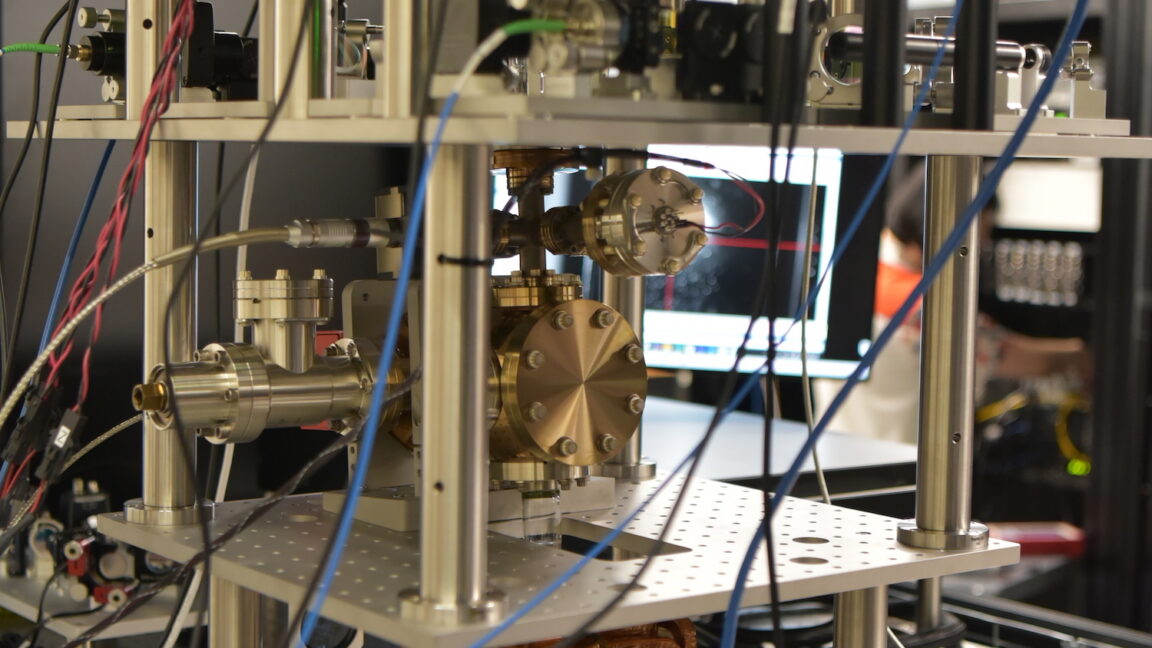
Quantum computing news usually picks up near the end of the year, as companies try to provide evidence that they are hitting benchmarks on time. However, there have been interesting announcements as the summer starts this year, from incremental progress to attention-grabbing promises. As we did earlier this month, Ars has a rundown of some of the most significant announcements.

These include a promise of useful, error-corrected quantum computing as soon as 2028, details on an updated trapped ion processor, and a case in which claims of quantum supremacy have been cut back a bit thanks to advances in more traditional algorithms.

2028 is remarkably soon

Many people in the field expect that useful quantum computers are still about five to 10 years away. While there may be a few useful algorithms that can be run on existing error-prone hardware, almost all of the interesting problems that quantum computing can be applied to will require some form of error correction enabled by linking a small collection of hardware qubits together into what's called a logical qubit. Logical qubits include the redundant storage of information along with neighboring qubits that can be measured to determine when errors occur and how to fix them.

Read full article

Comments

© QuEra

  •  

California says AT&T lied to FCC in attempt to shut off old phone network

California state regulators say AT&T lied to the Federal Communications Commission in an attempt to shut off its old copper phone network without providing an adequate replacement.

"AT&T asserts that California seeks to prohibit or hinder wireline carriers from discontinuing copper facilities and investing in fiber," said a June 15 filing by the state of California and the California Public Utilities Commission. "Indeed, AT&T has been making this argument for years. It is not and has never been true."

As we reported last month, AT&T sued California over the state’s refusal to let it stop providing phone service to all potential customers in its wireline network territory. AT&T also petitioned the Federal Communications Commission to declare that California cannot enforce its rules and to let AT&T stop providing service to about 199,000 phone customers.

Read full article

Comments

© Getty Images | KoldoyChris

  •  

Massive breach spills credentials for thousands of sensitive networks

Researchers have uncovered a massive breach of Fortinet firewalls that has given Russian-speaking attackers near-unrestricted access to some of the world’s largest and most powerful organizations, including Oracle, Chevron, Lenovo, Federal Express, a NATO defense contractor, and Fortinet itself.

Nearly 74,000 Fortinet devices from more than 21,000 IP addresses in 194 countries have been compromised and their plaintext credentials exposed online, Bob Diachenko, a security researcher and head of SecurityDiscovery.com, said online and in an interview. He said he found the data after gaining access to the attackers’ command-and-control server and other infrastructure. The exposed data also included the industry, revenue, and employee count for each compromised organization.

Exceptional scale, poor opsec

Independent researcher Kevin Beaumont reported that “almost all” of the compromised devices remained online as of Wednesday morning. He went on to say that he has confirmed with multiple organizations found in the attackers’ logs that the credentials are real and current. In many cases, once the threat actors compromised the devices, they went on to access affected organizations’ centralized authentication systems, such as Radius servers and Microsoft Active Directory. The number of compromised devices comprises roughly half of all Internet-facing Fortinet firewalls, based on polling from Shodan.

Read full article

Comments

© Getty Images

  •  

Tesco moving 40,000 server workloads off VMware amid Broadcom's “abusive conduct”

Tesco, a retail conglomerate headquartered in the United Kingdom, is moving 40,000 server workloads off of VMware amid "abusive conduct" from Broadcom, recent legal filings claim.

Tesco filed a lawsuit in the UK’s High Court against Broadcom alleging breach of contract last year. According to a September report from The Register, the lawsuit claimed that in January 2021, Tesco bought perpetual licenses for VMware’s vSphere Foundation and Cloud Foundation, a subscription to VMware Tanzu, plus support services until 2026, with the option to extend support for four additional years.

But when Broadcom took over VMware in November 2023, it would not honor the deal and instead tried to get Tesco to pay “excessive and inflated prices for virtualization software for which Tesco has already paid” and would not allow it to buy support services for its perpetually licensed software without buying “duplicative subscription-based licenses for those same Software products," the initial complaint read, The Register reported at the time.

Read full article

Comments

© Getty

  •  

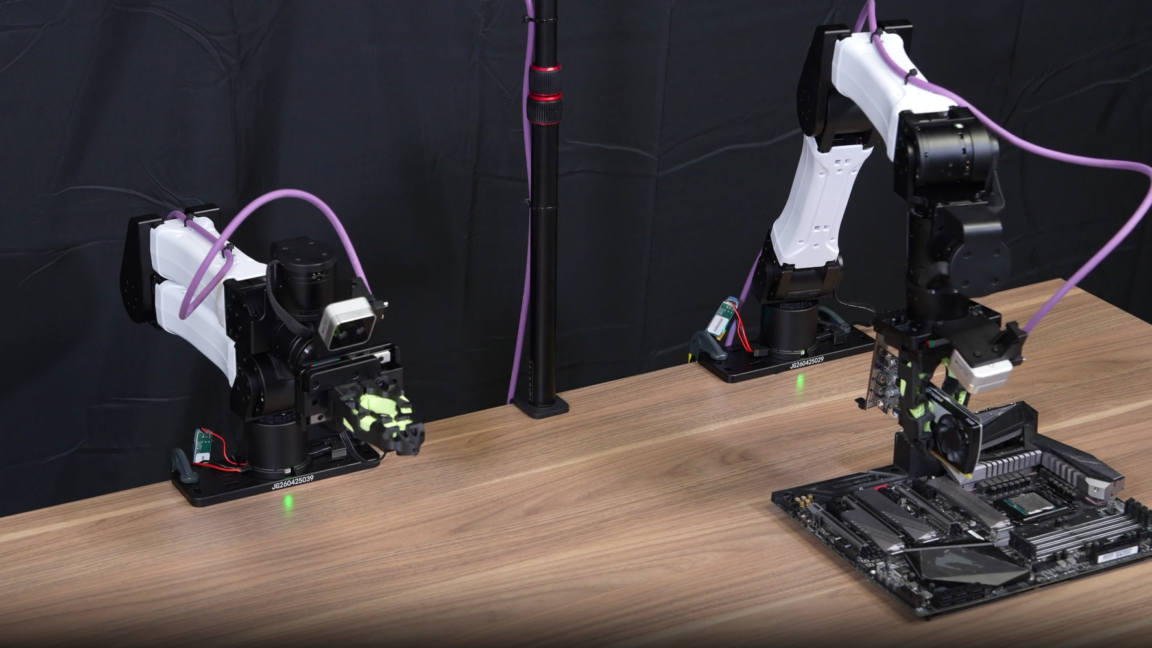
AI coding agents taught robots how to install GPUs and cut zip ties

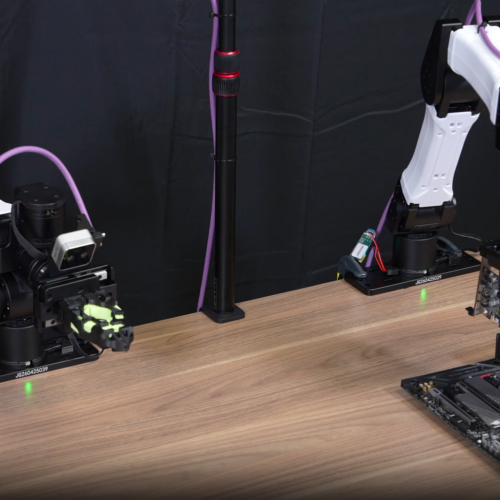
What happens when you give AI coding agents a lab full of robotic arms, some compute resources, and a “generous token budget” for teaching the robots various tasks? The agents can apparently figure out a training regimen that teaches the robots to successfully cut zip ties and even insert GPUs into thin sockets on motherboards.

That glimpse into how AI can act in a fully autonomous way to automate robot training was made possible by a new agent harness framework—software that wraps around AI models to enable their use of various tools while also providing capabilities such as memory, context, constraint, and feedback loops. That agentic harness, called ENPIRE, was developed by robotics researchers at the Nvidia GEAR (Generalist Embodied Agent Research) lab alongside collaborators from Carnegie Mellon University in Pittsburgh and the University of California, Berkeley.

“A part of our NVIDIA GEAR lab now self-improves tirelessly overnight,” wrote Jim Fan, director of AI at NVIDIA, in a LinkedIn post. “We just read the reports in the morning.”

Read full article

Comments

© NVIDIA

  •  

The Slate Truck's price may have leaked, starts at $24,950

One of the most hotly anticipated electric vehicles makes its formal debut next week. It's the Blank Slate, a refreshingly simple pickup truck EV designed by Slate Auto, which is trying to take some of the soaring cost out of a new car with a back-to-basics approach that means even electric windows are an optional extra. Of course, a crucial aspect of this pared-back approach is pricing.

Plenty of people are attracted to the idea of a truck with a compact footprint, no infotainment system or embedded modem, and the option to upconvert it later into an SUV or fastback. In the abstract, at least, people aren't going to jump at the prospect of a truck with 150 miles (241 km) of range if it costs too much.

When Slate broke cover in 2025, it was targeting a price of around $20,000, assuming the $7,500 IRS clean vehicle tax credit would remain in effect, but it was abolished later that year.

Read full article

Comments

© Slate Auto

  •  

"Dangerous" AI models are coming no matter what

Late last week, Anthropic took its new Claude Fable 5 and Mythos 5 AI models offline following a United States government export-control directive barring “any foreign national” from using the services. The company has been in talks with the White House since Friday but has yet to secure an agreement that would allow it to reinstate the offerings.

Since Mythos debuted in April, Anthropic has claimed—and warned—that the model has advanced capabilities for not only finding software vulnerabilities to help defenders patch them, but also figuring out ways to exploit them that could be used by bad actors. Anthropic itself noted this double-edged sword in its launch of Mythos 5 and Claude Fable 5. “A great deal of advanced usage of AI models is dual use: the same queries that are beneficial in the hands of cybersecurity professionals and biology researchers could be dangerous if available to malicious actors,” the company wrote in a blog post last week.

With this in mind, the company initially released a version called Mythos Preview to a select consortium as part of a working group known as Project Glasswing. Mythos 5 was also privately released to this group last week, while Claude Fable 5, which is a Mythos-grade model, was released to the general public with specific blocks on its ability to give responses to questions about biology and cybersecurity.

Read full article

Comments

© Samuel Axon

  •  

Ten months later, the $100 Google Home Speaker is finally available for preorder

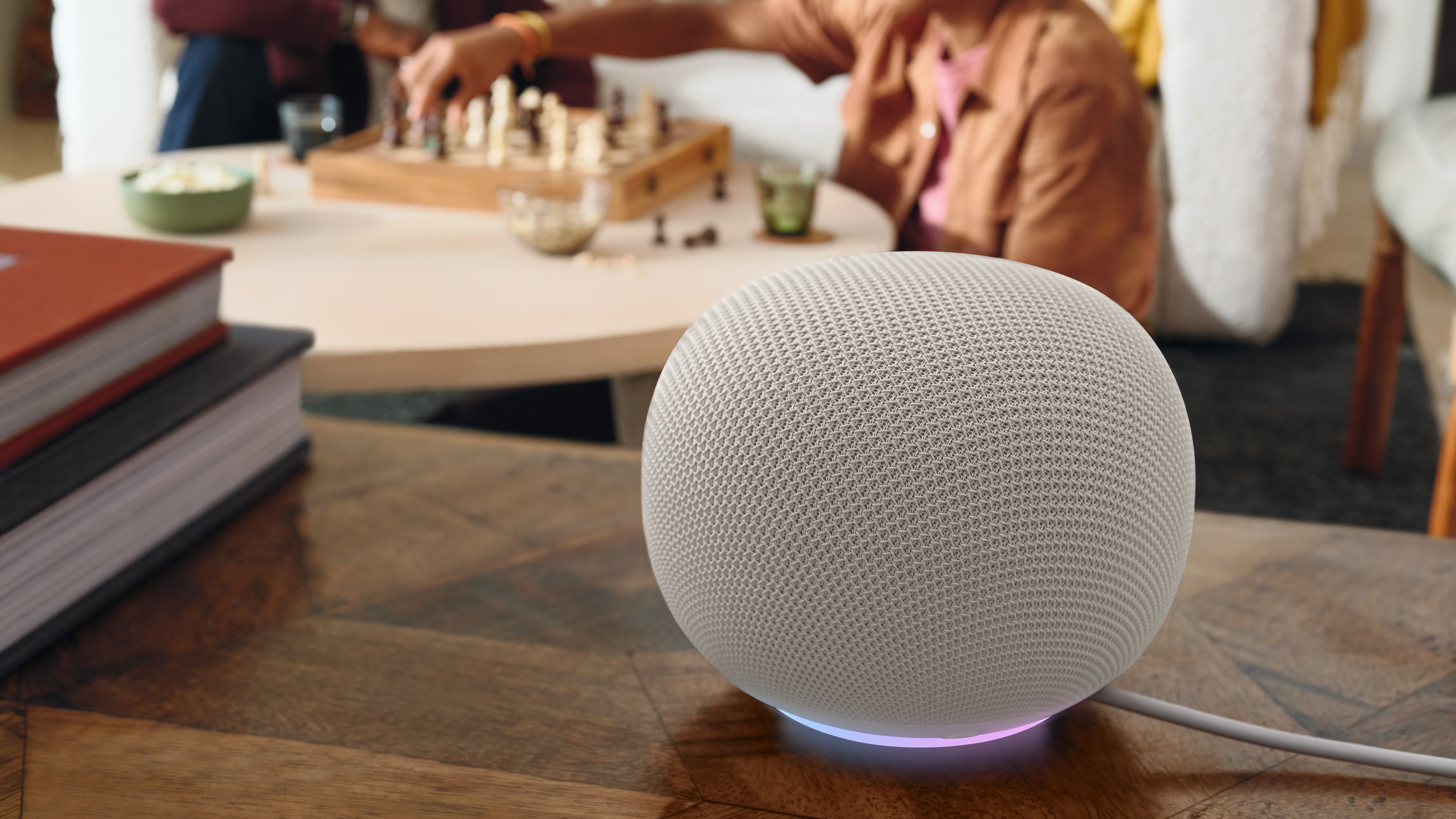
Good things take time, but not all things that take time are good. The jury is still out on the Google Home Speaker, but it certainly took a while to arrive. After announcing its new speaker last August, Google finally has a release date. The company's first new smart home speaker in years will launch on June 25, and you can preorder it today for $100.

The generically named Google Home Speaker is Google's first home audio device in almost six years. The last one was the Nest Audio, which debuted back in September 2020. The new device is small and round—an oblate spheroid, technically. It's covered in a partially recycled fabric available in four colors: hazel, porcelain, jade, and berry (jade and berry are limited to the US). Google says the device produces "360-degree sound" for a uniform listening experience anywhere in a room.

Google is into lighting effects again. Credit: Google

Previous Google speakers included Assistant-style illuminated lights, but the Google Home Speaker features a light ring around the bottom that glows when the device is listening, "thinking," or responding. This is becoming a trend with Google. The company will require a similar glowing lightbar embellishment on the upcoming Googlebook laptops. There are three far-field microphones distributed around the speaker that will pick up your speech, and there's a mute switch when you don't want it listening for the "OK Google" trigger.

Read full article

Comments

© Google

  •  

Towers once planned for California shuttle launches leveled for SpaceX rockets

One of the United States' most storied space launch sites has been cleared of its decades-old support towers, making way for modern rockets to use the pad. Space Launch Complex-6 (SLC-6) at Vandenberg Space Force Station is arguably better known for what did not lift off from there than for what did.

A series of demolition charges on Tuesday (June 16) brought down the access tower, mobile service tower, and what remained of the assembly building at SLC-6—pronounced "slick-six"—in Southern California. Once the location for the US Air Force's first effort to put humans into space and later, the West Coast launch site for the space shuttle, SLC-6 will next be used by SpaceX in support of Falcon 9 and Falcon Heavy missions.

Vandenberg Space Force Base personnel watch as the assembly building at Space Launch Complex-6 (SLC-6) is toppled on June 16, 2026, to make way for SpaceX's use of the site. Credit: Space Launch Delta 30/Tech. Sgt. Draeke Layman

"Space Launch Complex-6 represents six decades of American innovation and our unwavering commitment to securing space superiority," Col. James T. Horne III, commander of Space Launch Delta 30 at Vandenberg, said in a statement. "By modernizing this historic footprint in partnership with our defense industrial base, we are building directly upon the foundation of our pioneers."

Read full article

Comments

© Space Launch Delta 30/Staff Sgt. Daekwon Stith

  •  

"Truly evil" FDA rejection of gene therapy overturned after Trump official ousted

A gene therapy for Huntington's disease has a new path toward approval from the Food and Drug Administration after the ouster of several Trump officials, particularly Vinay Prasad, who rejected the therapy in a shocking move one former FDA official called "truly evil."

Huntington's disease is an inherited condition that typically strikes in middle age and causes nerve cells in the brain to gradually break down. There are currently no treatments for the disease, and many afflicted die in their 50s and 60s.

Gene therapy company UniQure developed a one-time treatment, AMT-130, that aims to lower brain levels of the mutant protein behind the disease, called huntingtin. Data from a small, early trial suggested the drug could slow the progression of the disease up to 75 percent, and patients and advocates have closely watched the drug's development in hopeful anticipation.

Read full article

Comments

© Getty | Congressional Quarterly

  •  

Native NACS ports, infotainment upgrade for MY27 Porsche Taycan

Has the allure of the Porsche Taycan waned? The four-door electric sedan that thinks it's a GT sold well for the first few years after its introduction in 2020, but sales began to slip even before the brand added the smaller, more affordable Macan SUV to its electric lineup. The EV underwent its midlife refresh a couple of years ago, but it seems Stuttgart wasn't done yet; Porsche has some more tweaks for model year 2027, at least for the US market.

For one thing, the 105 kWh performance battery is standard across the Taycan range now—which starts at $111,900—and can charge at up to 320 kW with an 800 V DC fast charger.

And as long as you're not ordering the stripped-out Turbo GT with the Weissach Pack, there's a new plug for that—the CCS1 port that usually lives on the passenger side has been replaced by a NACS port. So no adapter is needed to charge at any of those thousands of Tesla superchargers, but only a small percentage of them operate at sufficient voltage to charge near the Taycan's limit. But IONNA has native NACS chargers capable of 400 kW, and Porsche will provide a CCS1 adapter to use with Electrify America and other 800 V chargers.

Read full article

Comments

© Porsche

  •  

Windows and Linux users: The deadline to update Secure Boot keys is near

The clock is ticking for Windows and Linux users to update cryptographic keys that protect their systems against firmware-based UEFI infections, a pernicious form of malware that loads before operating system and anti-malware protections start.

Beginning June 24, three certificates that cryptographically verify that each piece of firmware and software that loads during system boot will expire. The Microsoft-signed certificates are the linchpins of Secure Boot, a Microsoft-designed chain of trust. Secure Boot checks the digital signatures of all firmware that loads during system startup to ensure it originates from a trusted provider, such as the manufacturer of the motherboard the system runs on.

Secure Boot is designed to thwart UEFI bootkits, a form of malware that alters the Unified Extensible Firmware Interface, the successor to the BIOS, both of which begin the initial boot sequence. Because these bootkits load before the OS and most other code, they can be difficult to detect. Once installed, they typically load malware onto the OS that steals credentials, backdoors the system, or performs other malicious actions. Even when the OS is disinfected, the bootkit can reinfect the system. Bootkits survive OS reinstallations as well.

Read full article

Comments

© Getty Images

  •  

Trump admin tries to block Clean Air Act lawsuit over xAI's gas turbines

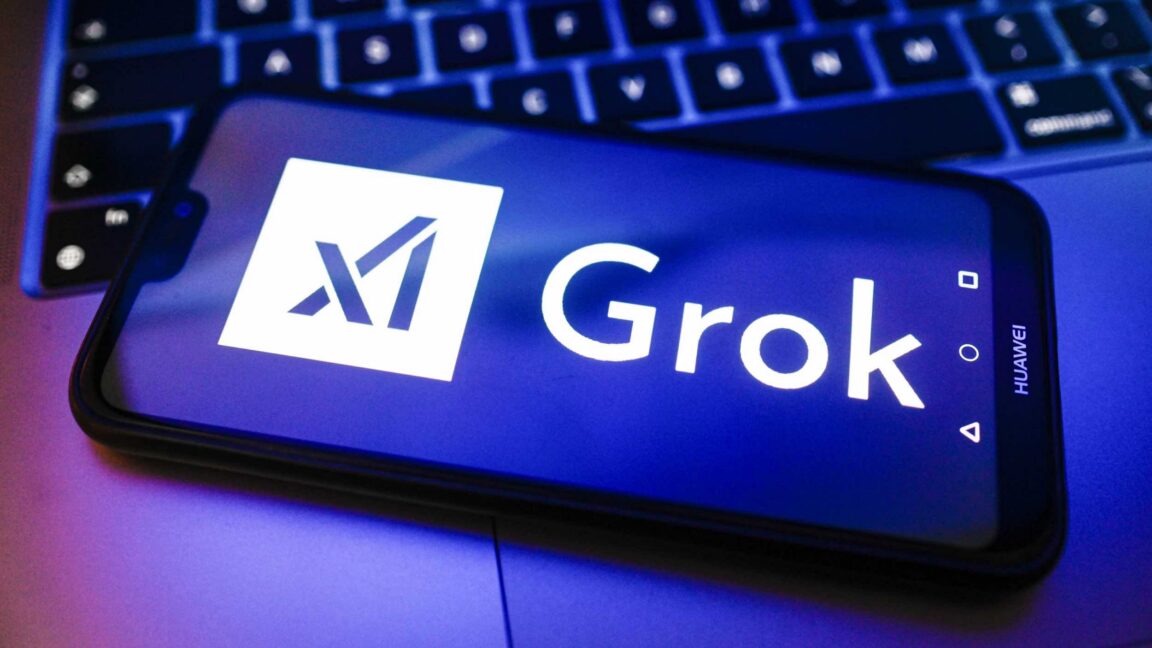
The Trump administration is trying to help Elon Musk's xAI Corp. beat a Clean Air Act lawsuit filed by the National Association for the Advancement of Colored People (NAACP). The US said the NAACP lawsuit threatens an xAI data center that powers Grok systems needed by the military.

The NAACP sued xAI and subsidiary MZX Tech in April, alleging that they violated the Clean Air Act by operating 27 gas turbines without an air permit in Southaven, Mississippi. The number of unpermitted turbines rose to 57 by mid-May and there were plans to install two more, the NAACP said in a June 12 filing.

"Defendants’ Colossus Gas Plant powers xAI’s nearby Colossus 2 data center, which in turn powers the chatbot 'Grok,'" the lawsuit said. The gas turbines have fueled both health concerns and noise complaints.

Read full article

Comments

© Getty Images | SOPA Images

  •  

Year of free HPE software a “step in the correct direction” in VMware rivalry

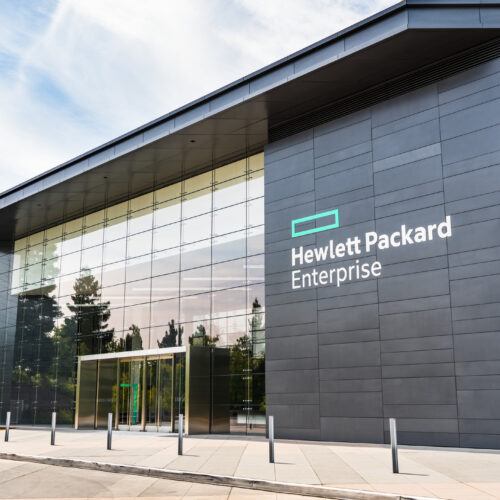
Hewlett Packard Enterprise’s (HPE) new virtualization software promotion will likely pique the interest of end users and resellers who are unhappy with Broadcom's pricing of VMware.

During its HPE Discover event in Las Vegas this week, HPE announced that customers could use its “HPE Morpheus Software—VM Essentials” offering for free for “up to one year,” per a press release. HPE’s website describes its virtualization platform as a “VMware alternative.” It includes a hardware virtual machine (HVM) hypervisor and unified management and lets users "manage VMware ESXi and HVM clusters from one console and migrate when you’re ready,” HPE’s website says.

“New VM Essentials customers can receive up to one free year of licenses for VM Essentials, a year of HPE Zerto for $1 to support non-disruptive migration to HPE virtual machines, and 0 percent interest on software through HPE Financial Services,” HPE’s announcement reads, referring to HPE’s group for helping IT teams manage funding.

Read full article

Comments

© Getty

  •  
❌