Reading view

Cockroaches scurry around with thousands of pieces of bacterial genomes

Last week, we looked at a new study of the origin of complex cells, one that showed that our ancestors' genomes were pieced together from bits and pieces of multiple species. It put a spotlight on a phenomenon called horizontal gene transfer, in which a gene from one species is incorporated into the genome of a distantly related species. The frequency of horizontal gene transfer means that, in addition to the neatly branching trees that relate species by common descent, there are small threads connecting distant branches of the tree of life.

It's easy to see why horizontal gene transfer would be common among microbes. They often live in complex communities that are likely awash in the DNA of dead and damaged cells. Plus, bacteria and archaea lack a membrane between their DNA and the rest of the cell, making it easier for environmental DNA to find its way to the genome.

However, a new study this week shows that horizontal gene transfers are remarkably common even in multicellular animals. And it does so by examining the genomes of multiple cockroach species, which have had bits of bacterial DNA for millions of years.


Read full article

Comments

© Nugroho Ridho

  •  

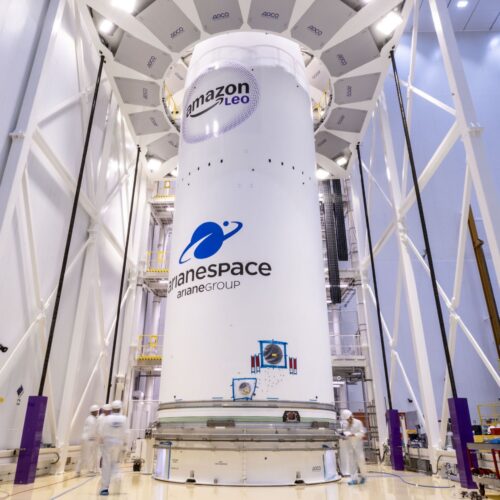
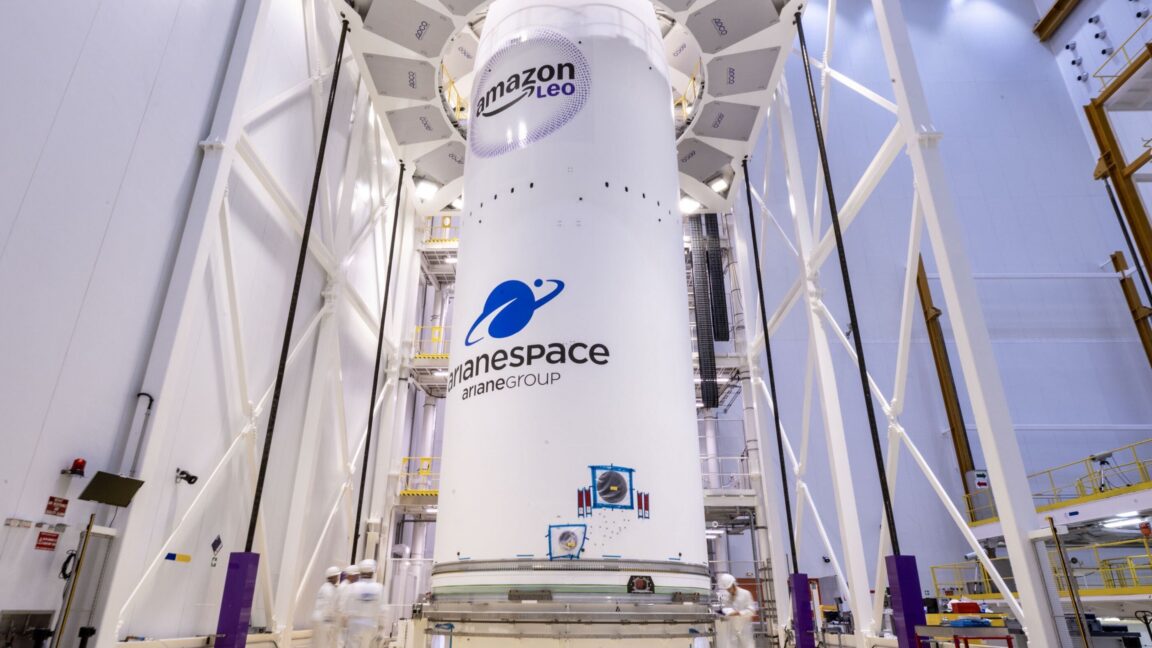
Among the large new rockets Amazon was counting on, only Europe has delivered

Amazon now has hundreds of flight-ready satellites standing idle in Florida, waiting to join the company's low-Earth orbit Internet constellation, an Amazon official said Tuesday.

"They're built, and sitting in a payload processing facility waiting for trips to orbit," said Steve Metayer, vice president of Amazon Leo Production Operations, during a teleconference with reporters. "And we're currently manufacturing several satellites a day."

Metayer spoke on the eve of the company's next mission, during which an Ariane 64 rocket will launch three dozen Amazon Leo satellites into orbit from a spaceport in French Guiana. Liftoff is targeted for 7:53 am ET (11:53 UTC) on Wednesday.

Read full article

Comments

© Amazon

  •  

Anthropic "pauses" token-based billing for its Claude Agent SDK

Last month, Anthropic announced a billing change that would have substantially increased costs for heavy users of its automation-focused Claude Agent SDK, including many third-party apps. On Monday, though, Anthropic abruptly announced it had paused those pricing changes just as they were set to take effect, allowing Agent SDK users to continue drawing from the more generous usage limits in their existing Claude subscriptions.

The plan, as announced on May 13, would have treated usage of the Claude Agent SDK (including via third-party apps and the programmatic "claude -p" command) separately from "standard" Claude usage via the chat interface or the official Claude CLI. At the time, Anthropic said that, as of June 15, that kind of outside SDK usage would be billed at Anthropic's prevailing API rates, with subscribers receiving a simple monthly usage credit equal to their subscription price.

That would have been a major change from the current setup, where Agent SDK use is limited only by the standard weekly caps applied to a user's current Claude subscription tier. Those generous limits allow power users to squeeze a lot more usage out of those paid subscriptions than they would get by paying the same price for API fees. One analysis suggests that Claude Opus users start saving money from their subscription after just two to three messages per day, and that their subscription could be worth many multiples of its monthly cost in API usage.

Read full article

Comments

© Anthropic

  •  

US approval of Paramount/Warner Bros. deal surprised DOJ lawyers, report says

When the US Department of Justice approved Paramount Skydance's proposed acquisition of Warner Bros. Discovery on Friday, a DOJ press release said "a rigorous eight-month investigation led by the [Antitrust] Division’s career staff" showed that the $111 billion deal would not harm competition or American consumers.

But according to The Wall Street Journal, the DOJ career lawyers who led that investigation "were leaning toward recommending a lawsuit challenging it on the grounds that the combination of the two movie studios would be anticompetitive and violate antitrust law." DOJ senior leaders closed the investigation "before career staffers who were concerned about the acquisition had an opportunity to object, according to people familiar with the matter," the WSJ reported.

Commenting on the report that the decision to allow the deal surprised staff investigators, Sen. Elizabeth Warren (D-Mass.) wrote that "the American people need to know if this merger was approved as a political favor. This reeks of corruption."

Read full article

Comments

© Getty Images | Andrew Harnik

  •  

Pentagon boasts of using AI to write reports mandated by Congress

The US Department of Defense has a lot of congressionally mandated homework to do every year involving hundreds of required reports on various national security topics. But Pentagon officials have been proudly describing a new shortcut—using generative AI tools to write such reports for Congress.

Pentagon Chief Technology Officer Emil Michael highlighted AI-generated reports to Congress as a key example of how the Department of Defense—stylized as the Department of War under the Trump administration—has adopted generative AI during an event hosted by the Hudson Institute think tank in Washington, DC, on June 12. The Pentagon has made AI tools, starting with Google Cloud’s Gemini for Government, widely available to members of all six military branches through the department’s bespoke GenAI.mil platform since December 2025.

“I have to report to Congress every year on this thing,” Michael said. “Let me load all the papers onto it and have it draft me a congressional report that would otherwise take 200 hours of staffing time and do it in five hours.”

Read full article

Comments

© SAUL LOEB / AFP via Getty Images

  •  

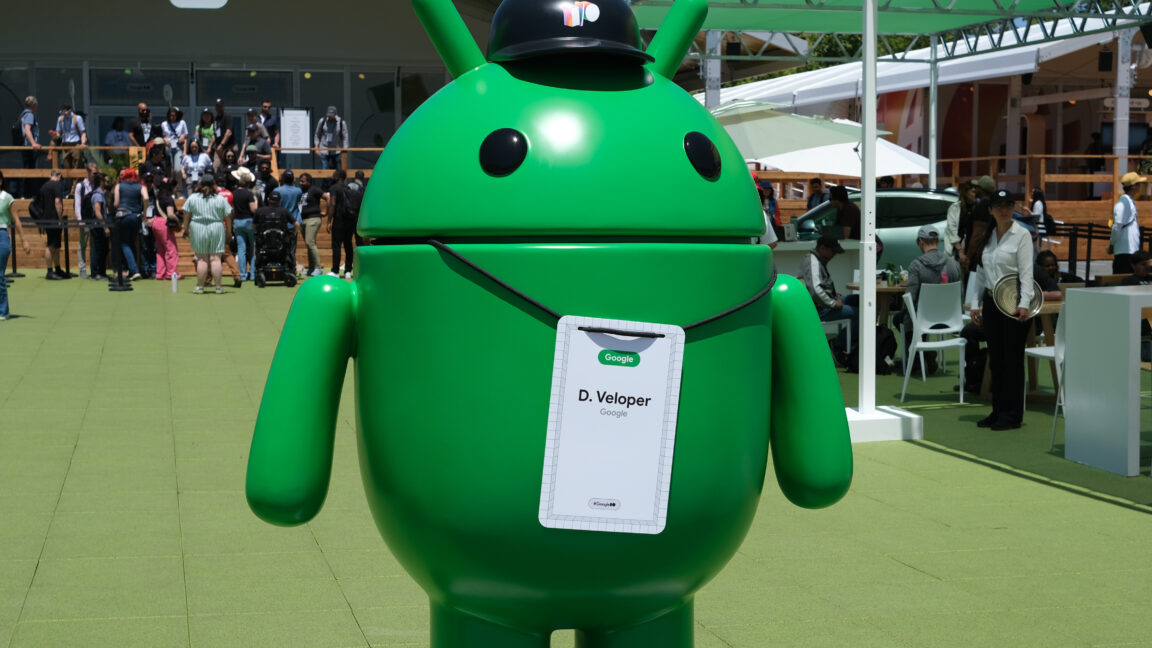
Android 17 starts hitting Pixel phones and watches today

Android 17 has been in testing since early this year, with the final beta hitting devices just a couple of weeks ago. Insofar as a mature operating system like Android still has big days, this is one of them. The official Android 17 build is starting its rollout on Pixel phones, adding a small set of new features and laying the groundwork for the future. This release also coincides with a Pixel Drop and a new version of Wear OS (based on Android 17) on Pixel Watches.

Google no longer uses an unmodified version of Android on its phones—the Pixel build includes numerous features that are distinct from Android 17 itself. Other device makers will include versions of some of these features when they eventually update their phones, but for now, Google's Pixel phones are the only way to experience Android 17.

The multitasking Bubbles system in Android 17 expands on a similar (but underutilized) messaging feature. In Android 17 on Pixels, you can long-press on any app icon to open that app as a floating window. When minimized, these bubbles stay on top of other apps. On foldable phones, the bubbles dock into a "bubble bar" for easy multitasking.

Read full article

Comments

© Ryan Whitwam

  •  

Trump admin abandons fight against wind energy as clean energy output surges

The Trump administration has abandoned its effort to halt wind energy projects across the United States and dropped its challenge to the court ruling that tossed President Donald Trump’s order freezing federal permitting and leasing for wind projects. States that challenged the order hailed the development as one of the most significant legal victories against the Trump White House’s campaign against the energy transition.

On Monday, the US Court of Appeals for the First Circuit dismissed the appeal after the Justice Department filed a motion for its voluntary dismissal on June 10.

The case against Trump’s executive order was filed in May 2025 by a coalition of attorneys general from 17 states and Washington, DC, led by New York Attorney General Letitia James.

Read full article

Comments

© glegorly

  •  

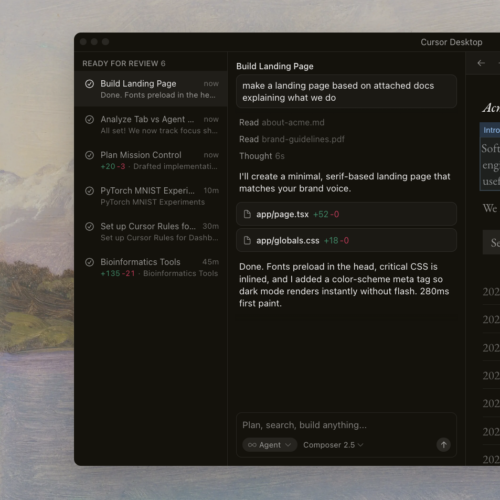
SpaceX to acquire AI coding platform Cursor for $60 billion

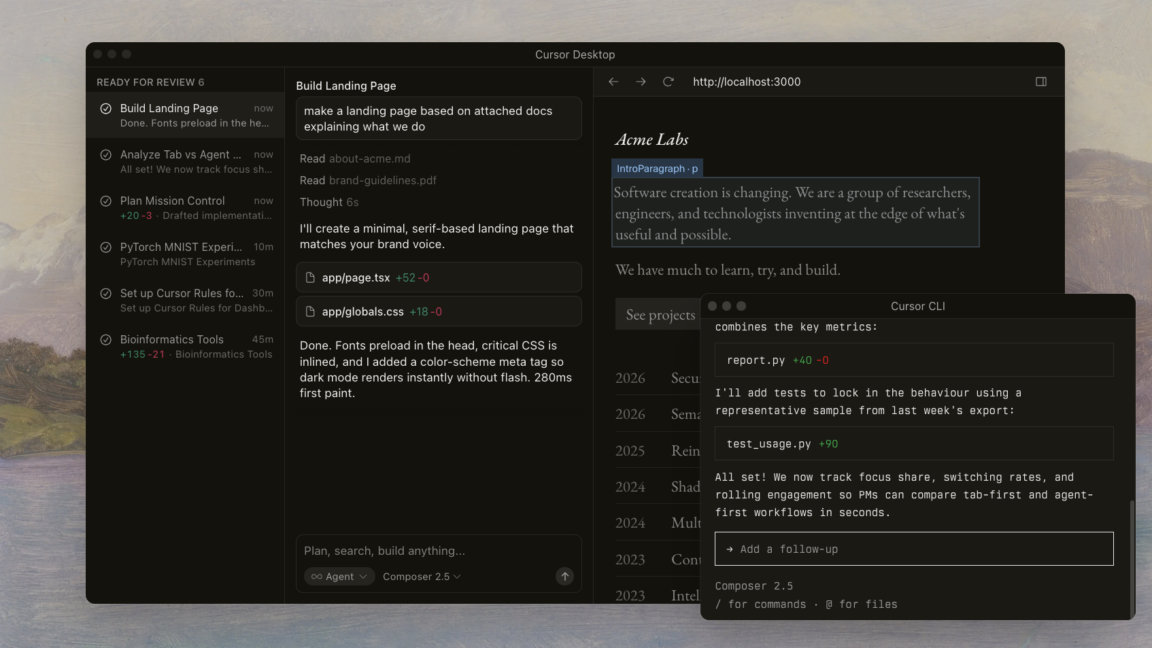
SpaceX will acquire AI coding tool Cursor for $60 billion in an all-stock transaction, the companies announced today. The deal is expected to close in the third quarter.

It comes just two days after SpaceX's unprecedented IPO and a few months after the merger of SpaceX and xAI, which brought a significant restructuring of xAI.

Cursor was one of the first tools to fully bake features that leverage large language models into an IDE. It's a branch of Visual Studio Code with heavy AI integration. However, incumbent platforms and bigger AI companies have since rolled out comparable features.

Read full article

Comments

© Cursor

  •  

Leaked financial docs show OpenAI is losing billions of dollars a year

As OpenAI files SEC paperwork ahead of an expected initial public stock offering, newly leaked financial documents show a company with quickly growing revenues that are currently being overwhelmed by even larger expenses.

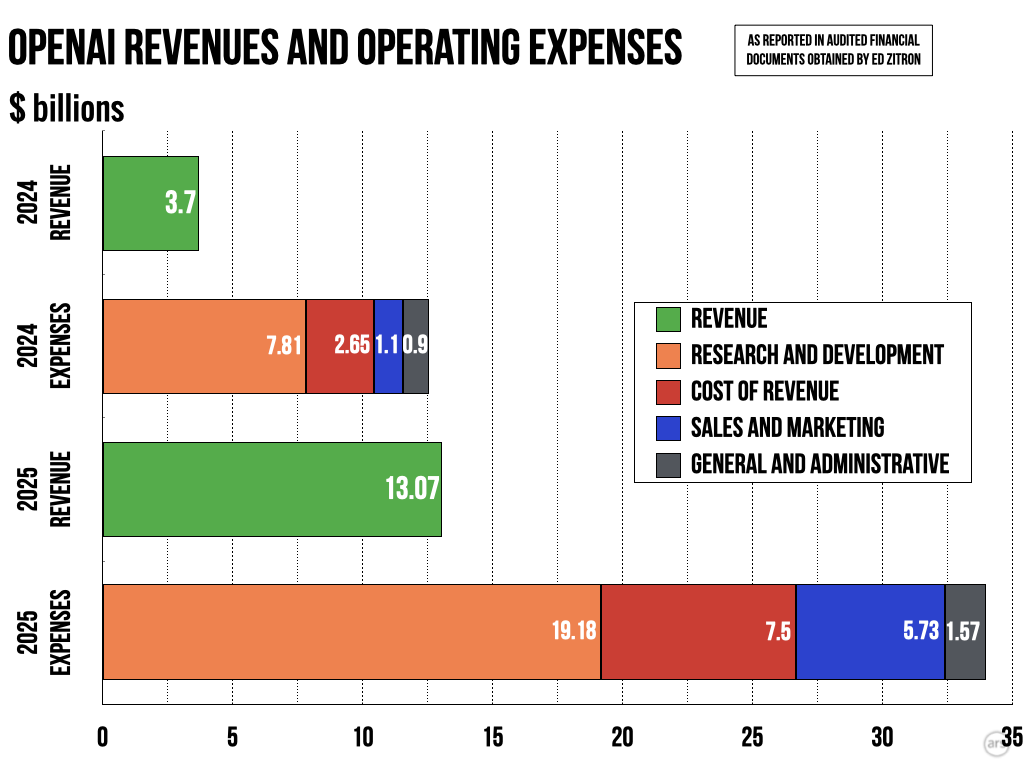
The audited financial statements, obtained by independent journalist Ed Zitron, show OpenAI's reported revenue growing from $3.7 billion in 2024 to $13.07 billion in 2025. The Financial Times, which reviewed the same documents, writes that the company's monthly revenues had grown to nearly $2 billion by the end of 2025, suggesting that its ongoing revenue rates continued to grow throughout the year.

R&D expenses alone still easily outpace OpenAI's quickly growing revenues. Credit: Ars Technica

But the company's fast-growing revenues are still dwarfed by its even more significant expenses. OpenAI's total revenues in both of the last two years were outpaced by research and development alone, which grew from a $7.81 billion line item in 2024 to a massive $19.18 billion cost in 2025. Those numbers seem to reflect the significant costs OpenAI incurred in training new models and include $10.59 billion in R&D costs paid to Microsoft alone in 2025.

Read full article

Comments

© Getty Images

  •  

Mobileye is entering the US robotaxi market with standalone service

The driving technology company Mobileye plans to launch a robotaxi service in an as-yet-unnamed US city in 2027, it said earlier today. The service will be vertically integrated, using Mobileye's Moovit mobility platform to interact with customers booking rides, coordinate drivers, and so on. The Israeli company, which was bought by Intel in 2017 before going public again in 2022, says it will start with around 100 robotaxis early next year.

"Mobileye has spent more than two decades building the technologies required for autonomous driving," said Amnon Shashua, founder and CEO of Mobileye. "Today we are taking the next step: combining those technologies with operational ownership to create a financially and geographically scalable robotaxi business designed from the ground up for global deployment."

The company first rose to prominence in the mid-2010s, when Tesla began using Mobileye's advanced driving assistance systems (ADAS) as part of Autopilot. That relationship lasted until 2016, when Mobileye dropped Tesla as a customer after being alarmed that a driver assistance system was being sold to end users as driverless technology. Since then, Mobileye has continued to work with other partners on ADAS and autonomous vehicles.

Read full article

Comments

© Getty Images

  •  

The Ars Technica 2026 Reader Survey: Let your voice be heard!

Greetings, Arsians, and welcome to the great Ars Technica 2026 reader survey! It has been almost four years since we last ran a big site-wide survey like this, where we ask our readers—you!—what you like about the work we do and what we could perhaps improve on. This kind of check-in is absolutely vital to ensuring we're steering the ship properly, and we take the results very seriously. (The last time we did this, we got several thousand responses, and that's incredibly valuable data for us!)

You don't have to have been a reader since 1998 to weigh in, either. Whether you're a first-time reader, an old grizzled forum veteran, a front page comment maven, a newbie sysadmin, or a CEO, we want to hear what you have to say, no matter who you are. The only requirement is that you're a human! (Aliens are welcome as well, though we didn't really define any demographic categories for extraterrestrial beings. We'll tackle this issue if it comes up, I suppose.) There are a few text fields. Yes, we will read what you write there!

To assay, perchance to sing

Fortunately, this isn't a long survey—just a handful of targeted questions. We're not collecting any personally identifying information, and responses will only be viewed in aggregate. None of the data will be analyzed by anyone except us, and none of it will be sold or otherwise distributed outside of Ars. (We're using SurveyMonkey for our survey platform, the same as we have many times in the past.)

Read full article

Comments

  •  

Critical Copilot vulnerability allowed hackers to steal 2FA code from users

Last Tuesday, Microsoft patched a vulnerability it rated as max critical in its M365 Copilot AI platform. On Monday, the researchers who discovered the vulnerability and reported it to Microsoft revealed how their proof-of-concept exploit could retrieve 2FA codes and other sensitive data from emails accessible to Copilot.

Microsoft and other LLM providers have been unable to prevent their products from complying with malicious requests to reveal data. The root cause: AI bots are unable to distinguish between instructions provided by users and those snuck into third-party content the models are summarizing, drafting responses to, or using to perform other actions on behalf of the user. With no way to secure this crucial boundary, Microsoft and its peers are left to erect complicated and ad hoc guardrails designed to rein in the consequences of this incurable gullibility.

Jumping over guardrails

One guardrail built into Copilot and most other LLMs prevents them from submitting web forms, sending emails, and taking similar actions that can be used to exfiltrate data from the user. To work around this, LLM hackers turned to markup language, which, among other things, allows users to add formatting elements such as headings, lists, and links to text without the need for HTML tags. Another workaround is to wrap sensitive data inside HTML tags such as <img> and <form>. In either case, a web request showing the data hits the attacker’s web server, where the secret information is captured in logs.

Read full article

Comments

© Photo Illustration by Thomas Fuller/SOPA Images/LightRocket via Getty Images

  •  

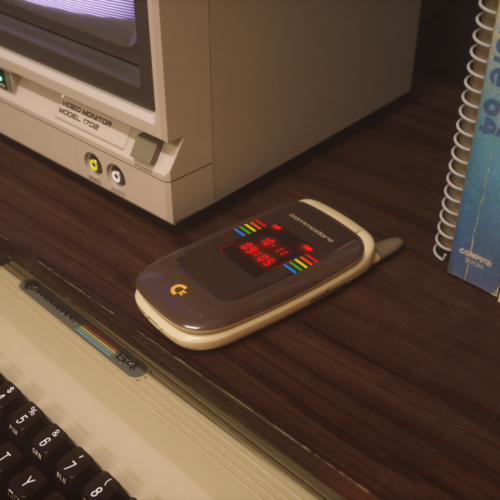
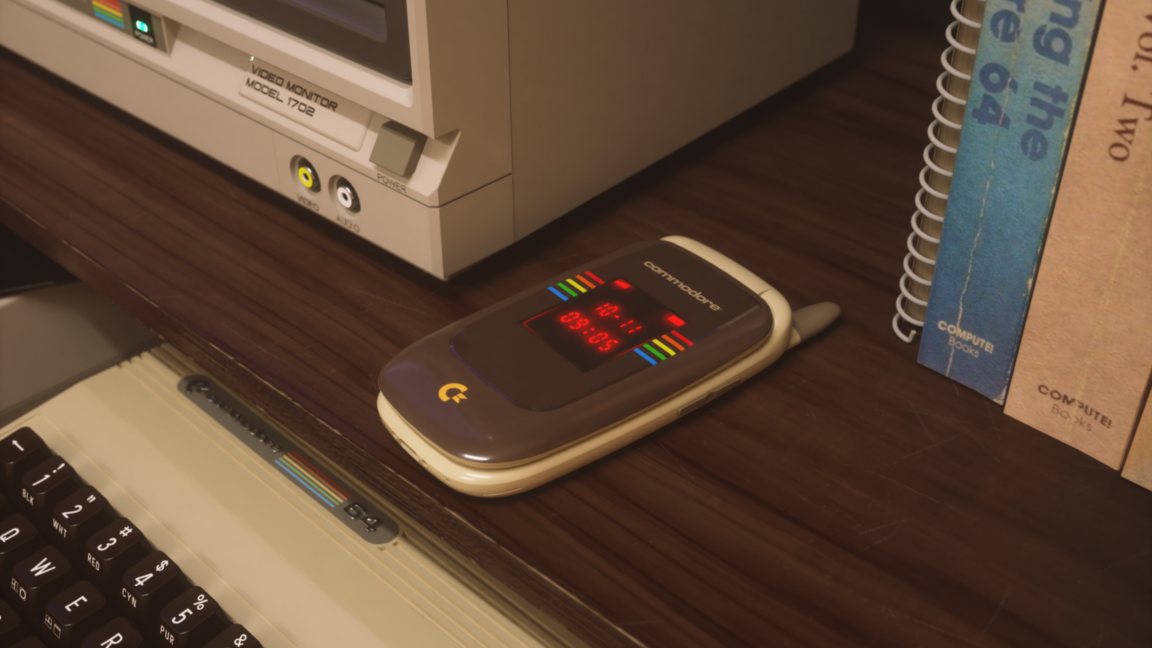
Commodore’s newest gadget is a flip phone that blocks social media and browsers

The next gadget to bear the storied Commodore branding will be a flip phone.

The name behind the bestselling desktop PC in history came back about a year ago. Christian “Peri Fractic” Simpson, best known for running the Retro Recipes (now known as Retro Recipes x Commodore) YouTube channel, acquired the Commodore Corporation and "100 percent of the original and official trademarks that defined the Commodore name since 1983,” per a July 2025 press release. Simpson said the price was “in the low seven figures.” Since the acquisition, the brand released the Commodore 64 Ultimate and the Commodore 64X PC, a mini PC housed in a chassis that resembles the Commodore 64.

Today, the new Commodore announced a new device in a dated design: a flip phone.

Read full article

Comments

© Commodore

  •  

Key mission for Europe's commercial space enterprise scrubbed again

Isar Aerospace still commands top position among a new generation of European rocket startups, but the company's efforts to launch a critical test flight of its Spectrum rocket continue to encounter roadblocks.

The latest delay came Monday, when Isar scrubbed a launch attempt after "detecting off nominal behavior in the vehicle's fluid systems," according to a social media post. "The teams are analyzing the new data to isolate the root cause."

The two-stage, 92-foot-tall (28-meter) Spectrum rocket was awaiting liftoff from Andøya Spaceport in northern Norway. It was the fourth time in five months that Isar Aerospace, headquartered near Munich, Germany, had reached a target launch date for the second test flight of the Spectrum launch vehicle.

Read full article

Comments

© Isar Aerospace

  •  
❌