❌

Reading view

Xbox wants you to pay 24 to 40 cents per hour to stream games you already bought

In September, when Microsoft severely limited the game-streaming buffet available to Game Pass subscribers, the company said non-subscribers would soon be able to "purchase cloud playtime hours through the Xbox Store and stream eligible games they own on supported devices." Today, Microsoft rolled out those a la carte Cloud Playtime purchases to Xbox Insiders, with prices that might be a bit galling for players who have already purchased these streamable games.

The "introductory launch pricing" for Xbox's Cloud Playtime purchases is as follows:

  • 10 hours for $4 (~$0.40/hour)
  • 25 hours for $8 (~$0.32/hour)
  • 50 hours for $12 (~$0.24/hour)

Purchased playtime "remains available until it’s used," Microsoft writes, so you don't have to worry about your 50-hour purchase expiring before you can use it fully.


Read full article

Comments

© Microsoft

  •  

Enterprises keep buying software upgrades that IT thinks will make things worse

Enterprise-sized businesses spend, on average, 28 percent of their software budgets on unwanted upgrades, migrations, and licensing changes. Often, those firms' IT heads think those changes are detrimental.

Those results are according to a survey of 2,018 chief information officers and senior IT decision-makers at companies with at least 10,000 employees that Origina commissioned for its report, “The Software Tax.” About half of the respondents (1,011) are from the US, and the rest are from the United Kingdom. All respondents worked at companies with at least $1 billion in annual revenue.

Keep in mind that Origina provides maintenance for various enterprise software. Its report points to independent software maintenance as a way for IT leaders to regain control over software budgets, illustrating its potential bias. A third-party research consultancy, Censuswide, conducted the survey.

Read full article

Comments

© Clara Molden/PA Images via Getty Images

  •  

Tesla profits drop 43% in Q3

Tesla published its third-quarter 2026 financial results this afternoon. Earlier in October, it reported its sales and deliveries for the three-month period, selling fewer cars than in the same quarter in 2025, yet it still beat analyst projections. Now we can see how those sales translate to the bottom line. Tesla brought in $28 billion in revenue in Q3, almost the same as in 2025.

Automotive revenues were $20.6 billion, a 3 percent decrease year over year. Perhaps more troubling is the decline in revenue from solar panels and storage batteries—this line of business had been growing, but for Q3 revenue fell 16 percent year over year to $2.9 billion. Services and other revenues, though, which include parts and Supercharger use, grew by a third to $4.6 billion.

But the company—like the rest of us—has seen its expenses go up. Operating expenses rose by 39 percent to $4.8 billion, dropping the company’s operating margin to just 2.6 percent; in Q3 2025, Tesla’s margin was 5.8 percent. Net profit fell to $787 million, down 43 percent year over year. What’s more, capital expenditures were up by 110 percent to $4.7 billion, and free cash flow was down 62 percent to $1.5 billion.

Read full article

Comments

© JIM WATSON/AFP/Getty Images/Aurich Lawson

  •  

The new human-crafted Apple Music brand matters in an AI world

Apple just revealed a new brand identity for Apple Music, with the expected turn to Liquid Glass. I’m not much of a fan of their new design language in general; this is where I admit that I’m still running MacOS Sequoia and have grumpy things to say about rounded corner radii and text legibility.

It’s just a trend, it will pass, and at some point I’ll probably cave and upgrade when it starts actually affecting my ability to get work done, or more importantly get security updates. Once I adjust, I’ll stop noticing it, and life will go on.

As such, I wouldn’t normally find an obvious rebrand like this notable, much less feel like I had much to say about it. But then I happened to catch Apple’s behind-the-scenes video in my YouTube recommendations, and I realized I did have thoughts.

Read full article

Comments

© Apple

  •  

RIP BioWare: EA shuts down storied RPG studio after over three decades

The legendary studio behind series like Mass Effect, Dragon Age, Neverwinter Nights, and Star Wars: Knights of the Old Republic is no more. BioWare announced via social media Wednesday afternoon that "after more than three decades of shared adventures, BioWare is closing and early development on the next Mass Effect project is ending."

The official announcement was posted mere minutes after a Bloomberg report detailed 400 job cuts across BioWare parent company Electronic Arts, including 50 at BioWare, based on reports from "a person familiar with the company's plans."

"Across our portfolio, we’re making deliberate choices to align talent and investments where we see the greatest opportunities for players and long-term growth," EA executives wrote in a message to staff, according to Bloomberg.

Read full article

Comments

© BioWare

  •  

OpenAI's latest AI models are coming to Google Cloud and Antigravity

Google would certainly prefer that everyone used its Gemini models with Google Cloud services, but soon, you'll have more options. OpenAI and Google have come to an arrangement that will see the former's frontier models arrive in Google Cloud services. Perhaps more importantly, GPT models will soon appear in Antigravity, Google's agent-powered coding tool.

For enterprise customers and AI enthusiasts, OpenAI's latest model will appear in Google's "Model Garden" in the coming weeks, adding to its 200-plus options. The garden already offers access to Google's Gemini models, as well as an assortment of open models like Mistral, Llama, and Gemma. Anthropic's Claude AI has also been available for some time. Google says it's now the only large cloud provider offering access to all three leading closed LLMs.

While OpenAI notes that Microsoft continues to be its primary cloud partner, the full suite of current GPT 6 and 6.1 models—Astra, Sol, and Luna—will launch on Google Cloud. Astra will naturally cost the most to run, but Google's system supports dynamically moving workloads between LLMs based on performance, latency, and efficiency.

Read full article

Comments

© Ryan Whitwam

  •  

Report: Musk ordered Starlink slowdown in Ukraine, then blamed it on Trump

A Wall Street Journal report said SpaceX CEO Elon Musk ordered the Starlink throttling that blindsided Ukraine's air assault forces last week, despite Musk's claim that all decisions on the military version of Starlink are made by the US military and President Trump.

Trump denied ordering the restrictions. While Musk may have spoken to Trump and administration officials before the decision, The Wall Street Journal reported yesterday that Musk made the final call. The decision came after both Musk and Trump criticized Ukraine for attacking Russian diesel refineries.

"Elon Musk ordered the slowdown of a military-grade version of Starlink relied on by Ukraine, a decision that sparked panic in Kyiv and confusion inside the Trump administration," the WSJ wrote, citing unnamed US officials and people familiar with the matter. The report said that "Musk capped the speeds at which Ukrainian hardware could stay connected to the satellite-based network... rendering some offensive drones and interceptor drones virtually useless."

Read full article

Comments

© Getty Images | Bloomberg

  •  

Judge rejects Trump’s wild claim EPA can dismiss data center pollution lawsuits

Elon Musk’s SpaceXAI is stuck facing a lawsuit over alleged data center pollution after Donald Trump failed to convince a judge that his Environmental Protection Agency (EPA) has complete control over all Clean Air Act lawsuits and can dismiss any suit at whim.

Soon after unpermitted gas turbines were discovered powering Musk’s giant Colossus data center in Memphis, Tennessee, the NAACP sued. Its lawsuit sought an injunction requiring xAI (which, following a merger, is known now as SpaceXAI) to use the best available pollution control technology when operating the turbines and ordering penalties up to $124,426 per day per violation. Without such remedies, the turbines risked drastically spiking pollution in already vulnerable neighborhoods housing predominantly Black communities nearby, the NAACP argued.

To block the lawsuit, Trump tried to intervene, arguing that the EPA had the power to unilaterally dismiss lawsuits any time the president decides against enforcing the Clean Air Act. According to Trump, it would supposedly “not serve the public interest” if citizens were allowed to seek massive civil penalties to punish polluting AI firms that were trying to get data centers operational as fast as possible to support Trump’s AI Action Plan.

Read full article

Comments

© ©Steve Jones, Flight by Southwings for SELC

  •  

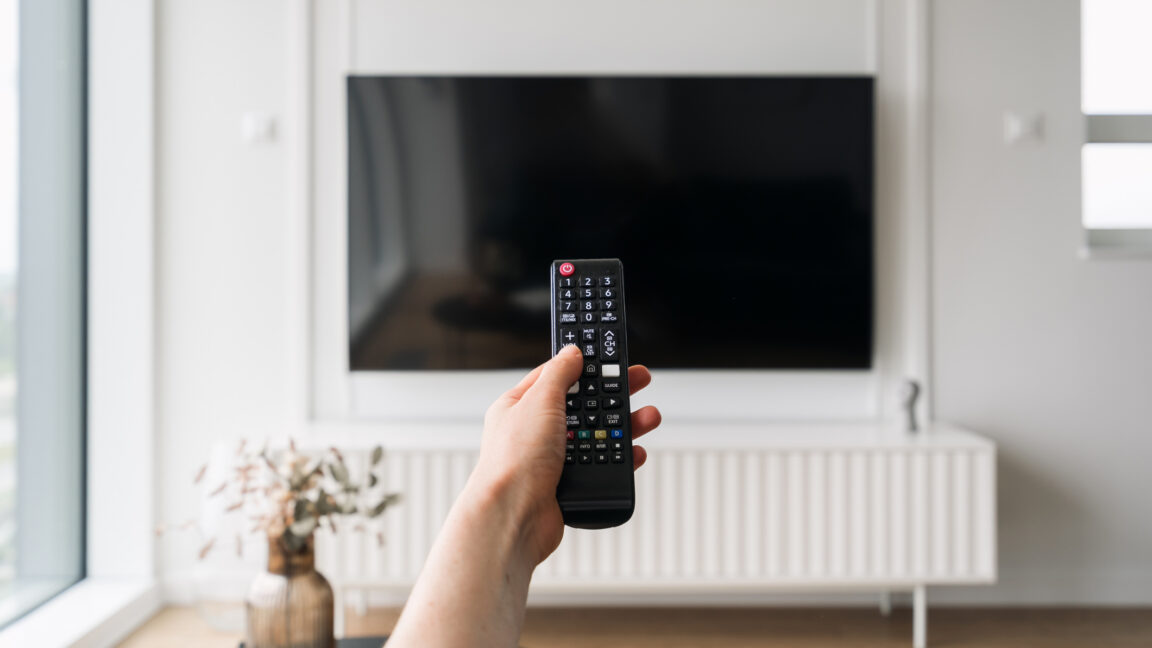
Does opting out of smart TV tracking work? Research finds “suspicious” traffic.

Smart TVs running operating systems from Samsung, Vizio, and Roku continue sending data to automatic content recognition (ACR) endpoints after users opt out of tracking in the devices’ settings, according to research published on Monday. The paper from Northeastern University researchers points to potential privacy violations from some of the biggest TV brands.

ACR captures video screenshots or audio clips from smart TVs and sends the data to remote servers, where it's used for things like measuring content viewership and serving targeted ads.

The paper, "Watching the Watchers: Privacy Analysis of US Smart TV Automatic Content Recognition," examined eight smart TV OSes across 12 smart TVs from 10 manufacturers (Amazon, Hisense, LG, Roku, Samsung, Sony, Supersonic, TCL, Vizio, and Westinghouse) to examine when smart TVs use ACR and how effective opting out of user tracking is.

Read full article

Comments

© https://www.gettyimages.com/detail/photo/modern-living-room-with-smart-tv-and-remote-control-royalty-free-image/2226225055

  •  

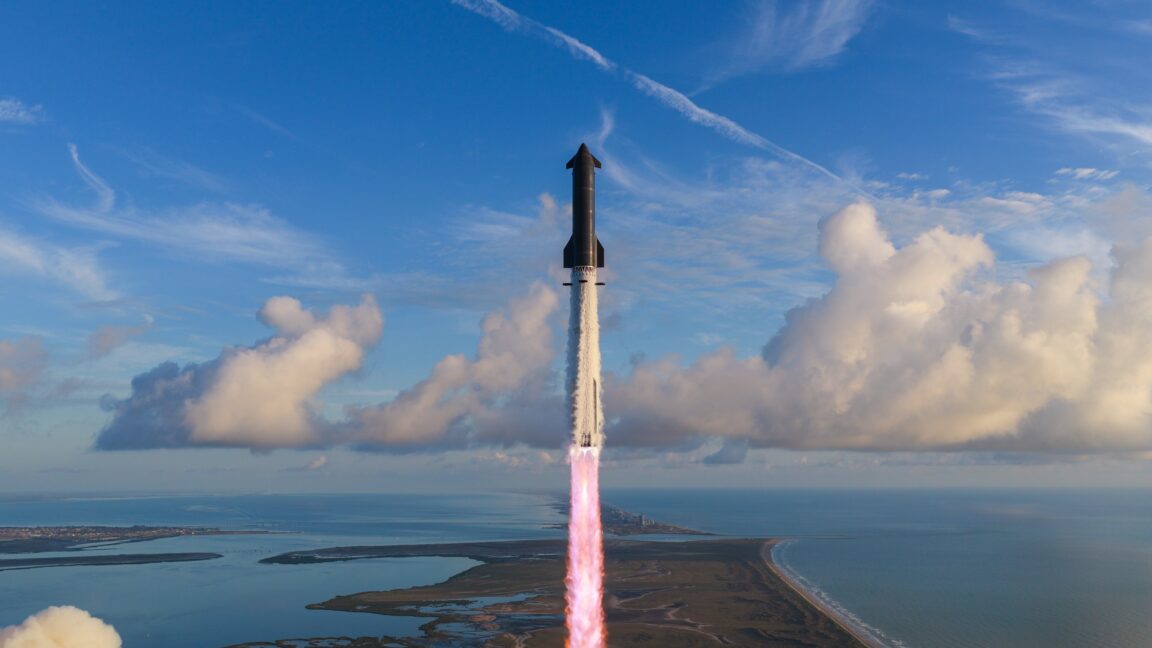
SpaceX to attempt Starship catch on next flight, with eye on rapid cadence increase

In its current iteration, SpaceX is largely a data company seeking to provide enormous amounts of compute for artificial intelligence. During an earnings call on Tuesday afternoon, company officials spent much of their time discussing ambitious plans to roll out up to 10 GW of compute in 2027—on the ground.

Gone are the days of aspirational talk about sending humans to Mars and settling the red planet. Now it is almost all about artificial intelligence and the data needed to support its expansion. However, the company's long-term ambitions to provide data services from space, initially with the Starlink Internet constellation and eventually through the "Starmind" data center constellation, still rely on an actual rocket.

That would be the Starship vehicle, and during the earnings call, SpaceX founder Elon Musk and the company's president and chief operating officer, Gwynne Shotwell, provided new performance targets for the vehicle.

Read full article

Comments

© SpaceX

  •  

The $15 billion ad-powered AI startup your doctor may already be using

Nearly two-thirds of US doctors are turning to an AI-powered search engine to make patient decisions, propelling a little-known tech startup to a $15 billion valuation while prompting a debate over the future of patient care.

Miami-based OpenEvidence, founded by serial entrepreneur Daniel Nadler in 2022, said that many of America’s 1 million physicians processed more than 42 million prompts last month. Doctors are using the company’s chatbot to scour medical journals and clinical guidelines to help diagnose and treat patients.

The ads-powered platform has grown largely by word of mouth, penetrating a sector where few tools have seen similar traction. “We’re the first viral consumer internet app in healthcare,” Nadler told the FT in an interview.

Read full article

Comments

© OpenEvidence

  •  

Review: Carrie is a triumphant remix with one major flaw

Carrie White, the telekinetic prom queen from hell, is one of the most beloved horror icons in popular culture. First introduced in Stephen King's 1974 novel, Carrie, the character was immortalized in director Brian De Palma's 1976 adaptation, widely regarded as one of the best horror films of all time. It's certainly one of the best King adaptations. So Mike Flanagan faced a massive challenge when he signed on to create an eight-episode miniseries for Prime Video based on the book, released just in time to mark the 50th anniversary of de Palma's film.

I was among the skeptics who questioned why a Carrie miniseries was even necessary, although as a diehard Flanagan fan ("Flana-fan"?), I was willing to give him the benefit of the doubt. If anyone has an affinity for smartly adapting horror in general, and King's work in particular, it's Flanagan. And you know what? With one (very big) exception, Flanagan pulls it off, giving us a richly textured version of the story that is as much about kindness and lost innocence as bloody, vengeful rage—although we get plenty of the latter, too.

(Many spoilers below for the novel and the 1976 film, but there are no major reveals for the new series until after the second gallery. We'll give you a heads-up when we get there.)

Read full article

Comments

© Prime VIdeo

  •  

The past, present, and future share a show floor at Pinball Expo 2026

It's October in the Midwest, which means it's time for the pinball world to descend on a convention center in Chicagoland for the annual Pinball Expo. Once thought to be an entertainment sector slowly bleeding out, pinball has come back in a big way in recent years. I visited one of Chicago's last old-school manufacturers before heading down the road to see what's new in the silver-ball universe.

Behind the silver ball

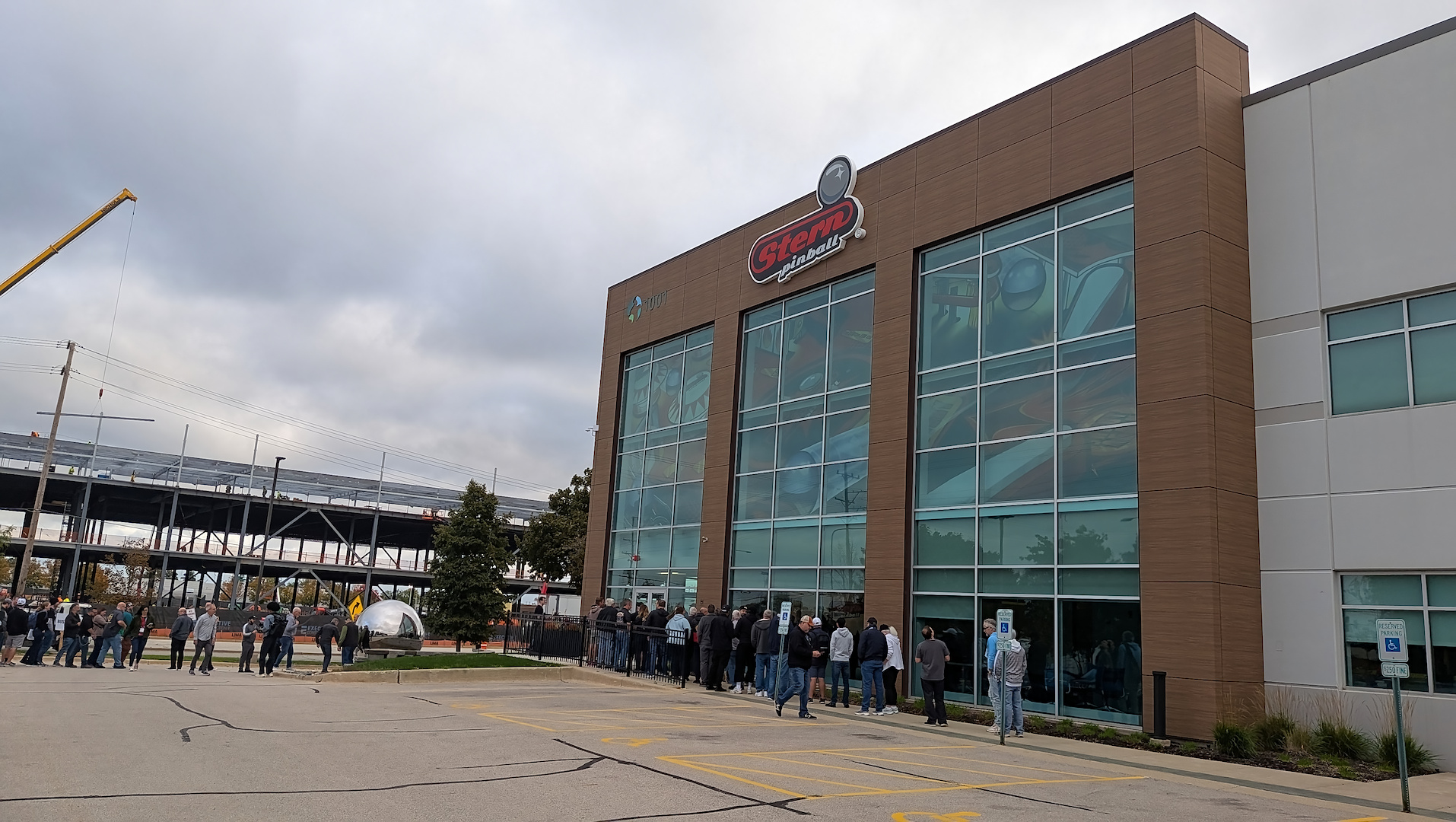
Hundreds gathered on a brisk fall Friday morning outside Stern Pinball's headquarters in Elk Grove, Illinois, waiting to enter a Wonka-like wonder factory where piles of raw parts become licensed creations from Jaws to the brand-new Fallout. Stern invited me to tour its offices and factory floor before heading off to the convention in nearby Schaumburg, Illinois.

An early morning line begins to form outside of Stern HQ as busses of Pinball Expo attendees arrived for tours. An early-morning line begins to form outside of Stern HQ as buses of Pinball Expo attendees arrive for tours.


As I stood with my tour group in Stern Pinball's HQ lobby, mouth agape at the dozens of machines lining the walls, we were greeted by the man himself, Gary Stern, who gave us some background on the company's 40-year history. After a stop at Gary's podium, we were ushered to the factory floor entrance, where Stern employee and legendary game designer George Gomez briefed us on the tour rules and answered questions. According to Gomez, "at any given time, Stern controls 90 percent of the current pinball market, and everybody else splits the rest."

Read full article

Comments

  •  

PHP warns it plans to release 2 emergency patches imminently

Website admins, brace yourselves. Fixes for what are believed to be uncommonly severe vulnerabilities are scheduled to drop in a little more than 12 hours for PHP, a programming language that powers websites and Web applications everywhere.

PHP maintainers said Monday that they planned to release patches for two vulnerabilities, both with severity ratings of 9.2 out of a possible 10.

Waiting for PHP2Shell

“All PHP users are encouraged to prepare now so they can upgrade as soon as the release is available,” the advisory stated. “We reserve the right to release earlier should details of either vulnerability become public, or should evidence of active exploitation appear in the wild.”

Read full article

Comments

© Getty Images

  •  
❌