Reading view

Amazon aims for delivery drones to reach 500 US neighborhoods by end of 2026

Amazon wants to grow its Prime Air delivery drone service sixfold to reach nearly 500 cities and towns across the United States by the end of 2026. The planned expansions from Amazon and its rivals could make the convenience of delivery drone services available to tens of millions more people in the coming months—but will also test more communities’ tolerance for increased noise from daily drone flights.

On August 19, Amazon announced it would soon launch Prime Air in the metropolitan areas of Chicago; Cleveland; Atlanta; Syracuse, New York; and Boise, Idaho, with more to come later in the year. Each Prime Air site offers delivery drone service within an area of about 175 square miles, with delivery times ranging from half an hour to an hour.

Prime Air already operates out of Amazon warehouses in 10 cities across seven states. Those include primarily suburban neighborhoods of Phoenix; Tampa; Kansas City; Omaha, Nebraska; Baton Rouge, Louisiana; Detroit; Houston; and San Antonio, Dallas, and Waco, Texas.

Read full article

Comments

© Amazon

  •  

Ukrainian drones wipe out entire US tank brigade in live war game

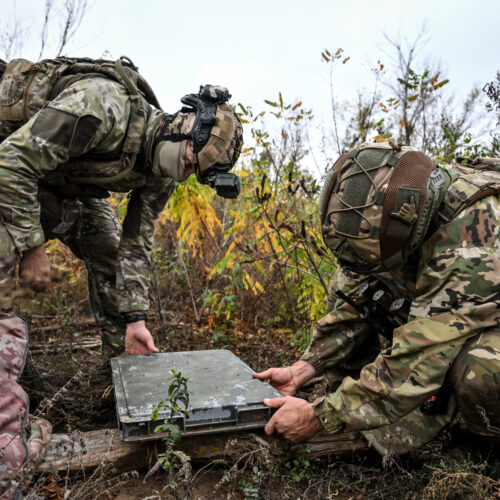
Ukrainian drone teams demolished a brigade of US Army tanks and armored vehicles during a live war game held this year—but the US soldiers were lucky enough to get “respawn” attempts while learning from the experience.

The semiannual military exercise, called Combined Resolve, gave the US military a firsthand taste of how modern drone warfare has evolved on the battlefields of Ukraine. The Ukrainian drone operators participating in the exercise were easily able to spot and destroy US armored vehicles by mimicking the actions of dropping bombs from above or moving close enough to simulate a kamikaze strike, according to US officials and a participant who spoke with The Wall Street Journal.

US armored vehicles were being destroyed so quickly that they were “respawned” and sent back into the simulated fray, a US official told The Wall Street Journal. The US troops who participated in the exercise—held in Germany from April 9 to May 10—were on rotational deployment from Fort Hood, Texas.

Read full article

Comments

© Sgt. Joseph Mcdonald | US Army

  •  

US boosts drone surveillance as flesh-eating screwworms spread in Texas

Hundreds of US government drones have switched from border surveillance to a different surveillance mission this summer—looking for signs of screwworm infestations in wild animals and livestock herds.

The flesh-eating New World Screwworm is the parasitic larva that emerges from eggs laid by flies in the open wounds or body openings of warm-blooded animals and humans, with untreated cases potentially leading to severe injury or death. Since the first screwworm cases were detected in South Texas in June, the US Department of Agriculture and US Customs and Border Protection have been conducting “one of the most extensive animal-health surveillance operations in the country,” the USDA said on August 10 in social media posts on platforms like X and Facebook.

The effort involves at least 200 drones owned by the Department of Homeland Security, which includes the Customs and Border Protection (CBP) agency. But the actual number in use "varies depending on availability and need," a USDA spokesperson told Ars.

Read full article

Comments

© US Department of Agriculture

  •  

US company’s AI lets Ukraine’s cheap kamikaze drones track targets on their own

Ukrainian drone operators have destroyed many Russian armored vehicles on the ground and even military helicopters in midair using $400 Shrike drones with explosive payloads. Now thousands of such drones are getting upgraded with an AI system capable of autonomously tracking and homing in on moving targets.

In mid-July, the Ukrainian military began receiving Shrike drones made by the Ukrainian company SkyFall equipped with AI-powered autonomy hardware and software developed by the US company Auterion. The companies plan to deliver 50,000 drones equipped with Auterion’s Skynode S strike kits in the coming months.

That allows human operators to manually fly the Shrike first-person view (FPV) drones into a battlefield area, designate a target up to half a mile away, and then “flip the switch to turn it into fire-and-forget terminal guidance mode,” Lorenz Meier, co-founder and CEO of Auterion, told Ars.

Read full article

Comments

© Lorenz Meier | Auterion

  •  
❌