Reading view

Trump admin abandons fight against wind energy as clean energy output surges

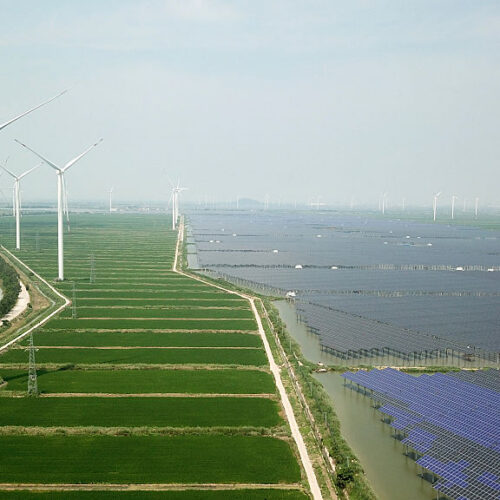
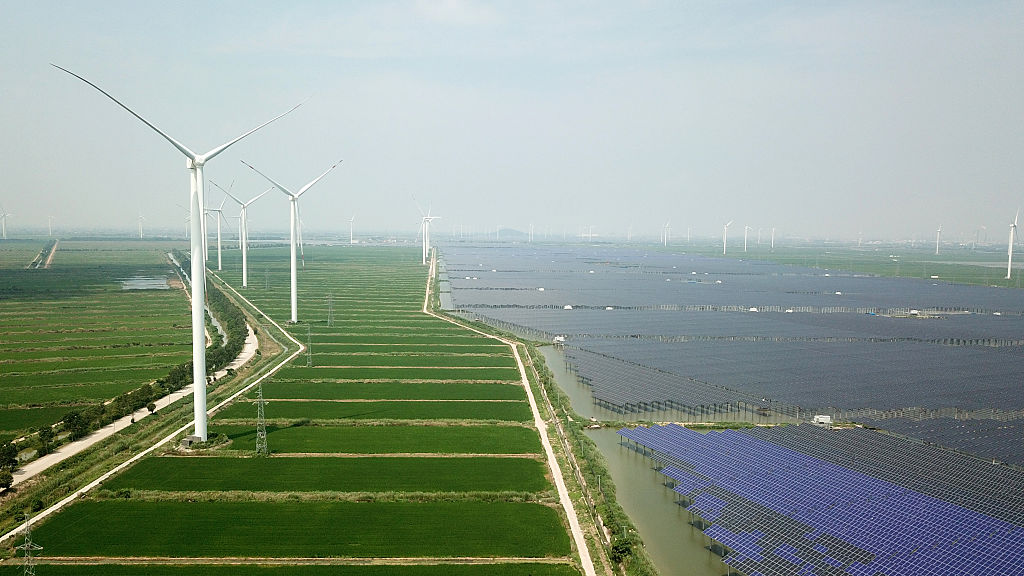
The Trump administration has abandoned its effort to halt wind energy projects across the United States and dropped its challenge to the court ruling that tossed President Donald Trump’s order freezing federal permitting and leasing for wind projects. States that challenged the order hailed the development as one of the most significant legal victories against the Trump White House’s campaign against the energy transition.

On Monday, the US Court of Appeals for the First Circuit dismissed the appeal after the Justice Department filed a motion for its voluntary dismissal on June 10.

The case against Trump’s executive order was filed in May 2025 by a coalition of attorneys general from 17 states and Washington, DC, led by New York Attorney General Letitia James.

Read full article

Comments

© glegorly

  •  

GM Energy introduces V2G support and new energy storage battery chemistry

Electric vehicle sales might be better now than the end of last year when demand fell off a cliff following the surge of purchases ahead of the end of the federal financial incentives, but it's clear they haven't panned out as well as many in the automotive industry had hoped.

Still, at a GM event Ars attended in San Francisco this week, the company continues to stick to its guns with an EV lineup spanning its brands. The automaker shared that it has also been working toward the adoption of bidirectional charging to help balance the grid.

With the rise of AI, data centers are placing more and more pressure on the nation's electric infrastructure. GM wants to relieve some of that pressure with news that its GM Energy products now support vehicle-to-grid (V2G) in addition to vehicle-to-home. The grid integration requires working with utilities and includes launch partners PG&E in California and DTE Energy in Michigan. For standalone energy storage solutions, the company also announced partnering with Peak Energy on the development of sodium-ion batteries built specifically for grid energy storage.

Read full article

Comments

© General Motors

  •  

Commonwealth Fusion makes the physics case for its 400 MW reactor

The scientific community has a plan for achieving fusion power. It involves getting a better understanding of how to control fusion in a tokamak-style reactor using the currently under construction ITER reactor, and then using that knowledge to build DEMO-style plants. But ITER isn't even expected to see hot plasmas until the middle of the 2030s, by which point solar panels will be so cheap that we'll probably all be getting them free in our cereal boxes.

Commonwealth Fusion is a startup that's basically asking "what if we did that, but now?" Its ITER equivalent, a tokamak called SPARC, is over 70 percent complete and is planned to be operating as soon as next year. The company already has a site and customers for the power-generating follow-on, called ARC. Both of those projects are predicated on using high-temperature superconductors to generate an extremely powerful magnetic field that will allow the company to build a smaller reactor, and thus get things done faster.

Years of running plasmas through tokamaks has given us confidence that the basics of these plans are sound. But there are lots of potential devils in the details (otherwise there'd be little need for experimental reactors). So Commonwealth's scientists, in collaboration with the academic community, have recently released five peer-reviewed papers that detail its plans for ARC: what our best models tell us now, and what we'll still need to learn from SPARC to finalize the design of a production fusion plant.

Read full article

Comments

© Commonwealth Fusion

  •  

Small modular nuclear reactor reaches criticality in first test

Just over a year ago, the Trump Administration issued an executive order meant to accelerate the development of nuclear power in the US. While an entire startup ecosystem has developed around the use of different—and typically smaller—reactor designs, only one of them has been fully licensed so far, and there are no plans to actually build any instances of that design.

The executive order directed the Department of Energy to have three different reactor designs reach criticality in a bit over a year. On Thursday, a startup called Antares announced that a test reactor it had placed at the Idaho National Laboratory had reached criticality, making it the first new design to cross this threshold. Criticality means that the nuclear reactions inside the hardware had become self sustaining; it does not mean the reactor had started to generate power.

Antares is one of a number of companies that is basing its design on a new fuel system called TRISO that takes some of the complexity and safety out of the reactor design and places them in the fuel design. The fuel design is based on tiny pellets with a uranium oxide core. The pellets are surrounded by several layers of carbon that can moderate the energy of both the neutrons and lighter nuclei that are released by fission reactions. All of that is encased in a hard ceramic shell that's designed to withstand the highest temperatures that can be produced by the encased uranium.

Read full article

Comments

© Department of Energy

  •  

Trump admin tries again to revive dying coal industry

On Thursday, President Donald Trump announced his administration's latest attempt to prop up the US coal industry during an incoherent press event that randomly oscillated between energy issues and Trump's fixation with building and renovating monuments in DC. The energy portion of the events was also frequently disconnected from reality.

"Today we're taking historic action to bring down the price of energy and the cost of living for all Americans with the power of clean, beautiful coal," said Trump, apparently unaware that coal is one of the most expensive means of generating electricity in the US.

With wind and solar power getting cheaper, coal has become the second-most expensive way of producing electricity, trailing only the cost of building a new nuclear plant. As a result, no new coal plants have been completed in over a decade, and coal has gone from powering over half the electrical grid to producing only about 15 percent of the nation's electricity. That's before the indirect costs of coal use are considered. It produces the most greenhouse gas emissions per unit of energy, releases dangerous particulates and chemicals into the atmosphere, and leaves behind ash that has high levels of toxic metals.

Read full article

Comments

© Douglas Sacha

  •  
❌