❌

Reading view

Scientists find closest star to the Milky Way's central black hole

Sgr A* is the name we've given to the supermassive black hole that sits at the center of the Milky Way. We've known about its presence since the 1970s but only managed to image it within the past few years. In the intervening time, most of our understanding of the object was obtained by watching a group of stars that orbit the black hole, helping us get a good estimate of its mass and size. In essence, those stars acted as instruments that let us peer into an environment we couldn't study any other way.

In Wednesday's issue of Nature, researchers describe a recently discovered star that is on an extremely eccentric orbit that takes it closer to Sgr A* than anything we've previously identified. It gets so close that it may help us get our first measurements of the spin of the black hole.

Reading the spin

There's an entire population of stars that orbit relatively close to Sgr A*. We can estimate their mass based on their brightness and spectral features. Using their masses and a reconstruction of their orbits using several years of data, we can figure out just how supermassive Sgr A* is (nearly 1037 kilograms).

Read full article

Comments

Β© A. Berdeu/ESO

  •  

Have physicists finally discovered glueballs? New evidence points to yes.

Physicists with the Beijing Spectrometer III (BES III) experiment have uncovered convincing new evidence of the existence of so-called glueballs, an elusive composite particle made entirely of gluons predicted by quantum theory. The results appeared in a preprint posted to arXiv last month and were also presented last week at the International Conference on High Energy Physics (ICHEP).

All the stuff we see around us is made up of quarks held together by gluons (carriers of the nuclear strong force) to form protons and neutrons, which comprise the core of every single atom. The Higgs boson, discovered in 2012 after decades of searching, was widely touted as the final missing piece of the Standard Model of Particle Physics. But there are still plenty of unanswered questions, including whether or not glueballs really exist. They should, if the Standard Model is correct; they're a direct prediction of quantum chromodynamics, i.e., the theory of the strong nuclear force. There should even be several kinds of glueballs.

As Matthew Francis wrote for Ars in 2015:

Read full article

Comments

Β© BES III Collaboration

  •  

The world's biggest solar telescope caught vortexes on the Sun's surface

Wherever two fluids slide past each other at different speeds, the boundary between them buckles, then curls, then rolls up into vortexes. It’s called the Kelvin-Helmholtz instability, and the physics behind it was worked out in the late 1860s. We know this instability explains why wind causes ripples on the surface of water and clouds shear into a row of curves.

For decades scientists argued the same thing must be happening with plasma on the surface of the Sun, and yet nobody had been able to confirm it. Now, a team led by David Kuridze and Friedrich WΓΆger of the National Solar Observatory reports that Kelvin-Helmholtz instabilities are not just visible on the Sun, but they’re ubiquitous. Their new study proposes that this may change the way we think about how heat, mass, and magnetic energy move through the Sun's atmosphere.

Telescope’s test drive

The reason plasma whirlpools on the Sun stayed hidden for so long is rather trivial: They are very small. Their scale sits below what telescopes with mirrors smaller than 2 meters can resolve. For most of the history of solar physics, that has ruled out every telescope on Earth. This changed when the US National Science Foundation opened the Daniel K. Inouye Solar Telescope, a 4-meter instrument in Hawaii and the largest solar telescope in the world. The telescope entered its operational phase back in November 2021.

Read full article

Comments

Β© NASA/Goddard/SDO

  •  

D-Wave shows off its new entry in quantum computing race

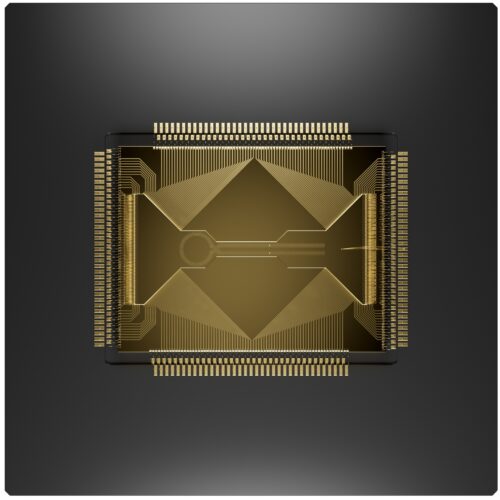
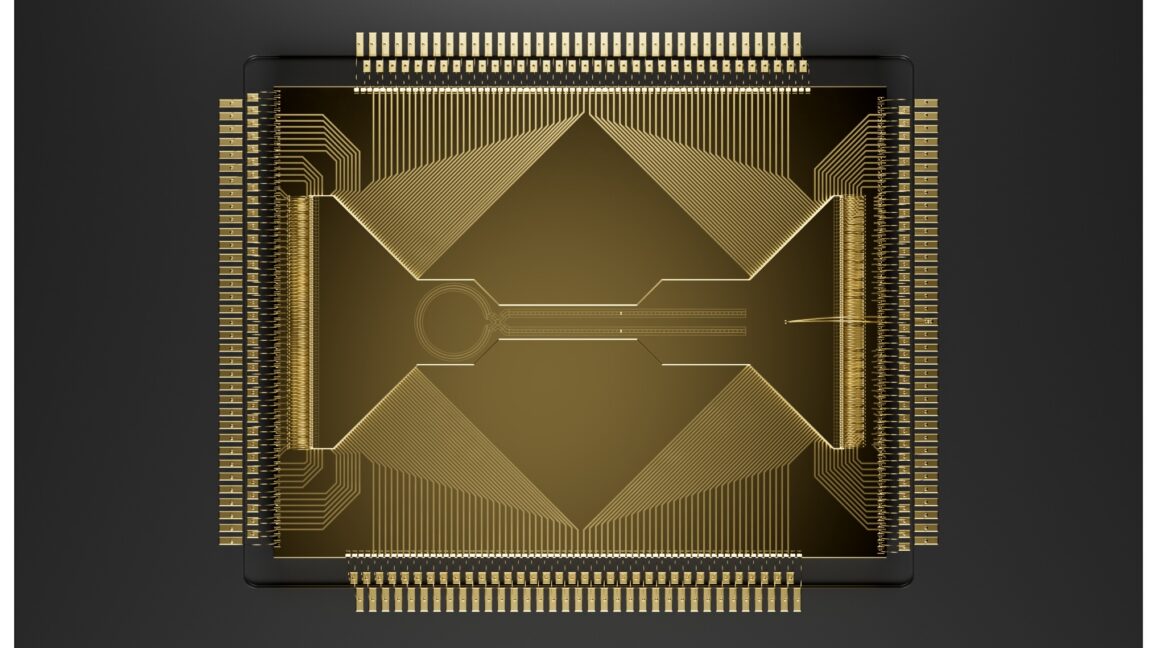
D-Wave is a bit of an oddity in the quantum computing space, having been founded back in the last century. And its initial offering wasn't a quantum computer like those being developed by IBM or Google. Instead, the company built what's now called a quantum annealer, a machine that isn't general-purpose but can solve a large class of optimization problems. While the hardware shares some similarities with the qubits used in gate-based quantum computers, it operates in a fundamentally different way.

But a few years back, D-Wave started working on gate-based hardware, apparently choosing a somewhat unusual qubit technology called fluxonium. And this year, the company acquired a startup called Quantum Circuits that spun out of Yale University and has been developing what's called a dual-rail qubit (the same technology used by Amazon), which promises to make most errors very easy to detect, simplifying error correction.

On Wednesday, the company is publishing a paper in Nature that describes a key step in validating this dual-rail technology, showing that two of the qubits can be entangled without altering their best feature: Most are a single type that is easy to detect.

Read full article

Comments

Β© D-Wave

  •  
❌