Reading view

As China looms, Taiwan makes more drones for defense and the US military

Taiwan’s existence as a self-governing democracy may depend heavily on having enough military drones to discourage any attempted invasion by China’s military. As the Taiwanese government aims to boost domestic production of military drones and Taiwanese citizens sign up for drone flight training, Taiwanese companies are forming international partnerships to sell more drones to the US military and other overseas buyers.

Taiwan’s Ministry of National Defense proposed a special budget that would spend $6.6 billion over six years on buying drones made in Taiwan, according to the Central News Agency that represents the national news service of Taiwan. Presented on June 18, the budget proposal would allow the government to buy more than 208,000 coastal attack drones, along with more than 1,400 coastal reconnaissance drones and 1,320 uncrewed surface vessels, between 2026 and 2031.

That would be a significant boost to the Taiwanese military arsenal that currently includes just 5,000 US-made attack drones and domestically produced drones, according to Resilience Media. During military exercises in early June, Taiwanese soldiers fired Altius-600 loitering munition drones—made by a subsidiary of the US military technology company Anduril Industries—from towed flatbed launchers to strike offshore targets, according to USNI News. In another exercise earlier this year, Taiwanese Marines used Taiwan-made drones to similarly strike targets at sea.

Read full article

Comments

© I-Hwa Cheng / AFP via Getty Images

  •  

Ukraine's one-time test used fully autonomous drones to kill Russian soldiers

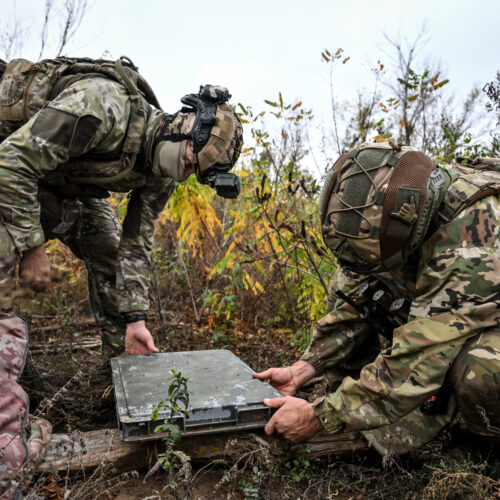
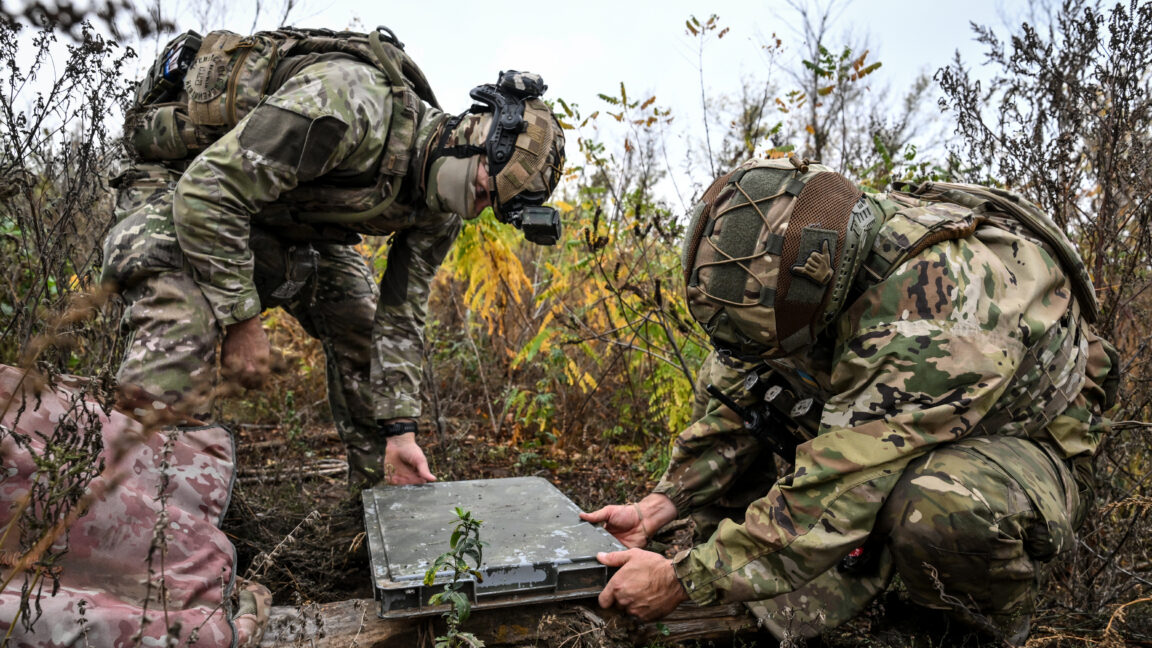
Fully autonomous drones killed Russian soldiers during a battlefield test two years ago, according to a Ukrainian drone manufacturer. If true, the incident would represent another milestone in a war that has spurred unprecedented developments in military drones, robots, and AI-guided weaponry.

The one-time test was revealed by Alexander Kokhanovskyy, CEO of the Ukrainian drone maker Aero Center, during an interview with New Scientist at a press event hosted by the Ukrainian embassy in London. Kokhanovskyy described the test—which did not involve his current company Aero Center—using quadcopter drones that were preprogrammed to fly to a front-line area before activating an AI-powered “Terminator mode” that would seek out and attack any target in the given area.

There was apparently no video feed or anything else to show what the “Terminator” drones targeted and attacked. But Kokhanovskyy told New Scientist that human-piloted drones sent to check out the aftermath found “a couple” of dead Russian soldiers, which led to the conclusion that the fully autonomous drones had killed them.

Read full article

Comments

© Francisco Richart/SOPA Images/LightRocket via Getty Images

  •  

Pokémon Go players unwittingly contributed to tech with military drone uses

A decade after the global craze for Pokémon Go peaked, an AI company has been using billions of real-world images captured by millions of players to develop navigation technologies for delivery robots and possibly military drones. That represents an intriguing but potentially discomfiting legacy for an augmented reality mobile game that has incentivized gamers to capture short smartphone videos of physical neighborhoods and landmarks.

The AI company, Niantic Spatial, was spun out of Pokémon Go game developer Niantic in May 2025, after Niantic separately sold its licensed games such as Pokémon Go to the Saudi-backed video game publisher Scopely. But before that deal, Niantic publicly announced plans to use scans from millions of Pokémon Go players along with data captured by users of the company’s Scaniverse app to train and develop a “large geospatial model”—a 3D model of the physical world trained on the geolocated images provided by app users scanning real-world locations.

“Ground scans were one component to help train Niantic Spatial's real-world foundation models —AI systems that learn to recognize and interpret physical spaces,” a Niantic Spatial spokesperson told Ars. “The models are the product of that training, not a copy of or a means of accessing the underlying scans, which were of public points of interest such as statues and fountains.”

Read full article

Comments

© Patrick T. Fallon / AFP via Getty Images

  •  

Cheap Iranian drone downed $25 million US Army helicopter—maybe by chance

A US Army helicopter gunship was apparently struck by an Iranian Shahed drone before going down near the Strait of Hormuz—but it's unclear whether the one-way attack drone was deliberately aimed or achieved more of a lucky accidental strike.

Axios correspondent Barak Ravid first reported an unnamed US government official’s comments that an Iranian drone had hit the US Army AH-64 Apache helicopter before the latter went down on June 8. The New York Times later confirmed that reporting through more anonymous US officials, including one official who said US military investigators were still evaluating whether the Iranian drone strike on the helicopter was intentional or accidental.

Iran has fired thousands of such Shahed drones against a wide range of military and civilian targets in the Gulf region since February 28, 2026, when the United States and Israel began the war by jointly attacking Iran with a barrage of bombs and missiles. But Shahed drones have mainly struck stationary targets such as Amazon data centers and energy facilities, sometimes hitting slow-moving commercial ships in the Strait of Hormuz.

Read full article

Comments

© US Central Command

  •  
❌