❌

Reading view

Say hi to "Siri AI"β€”Apple announces new, more "conversational" voice assistant

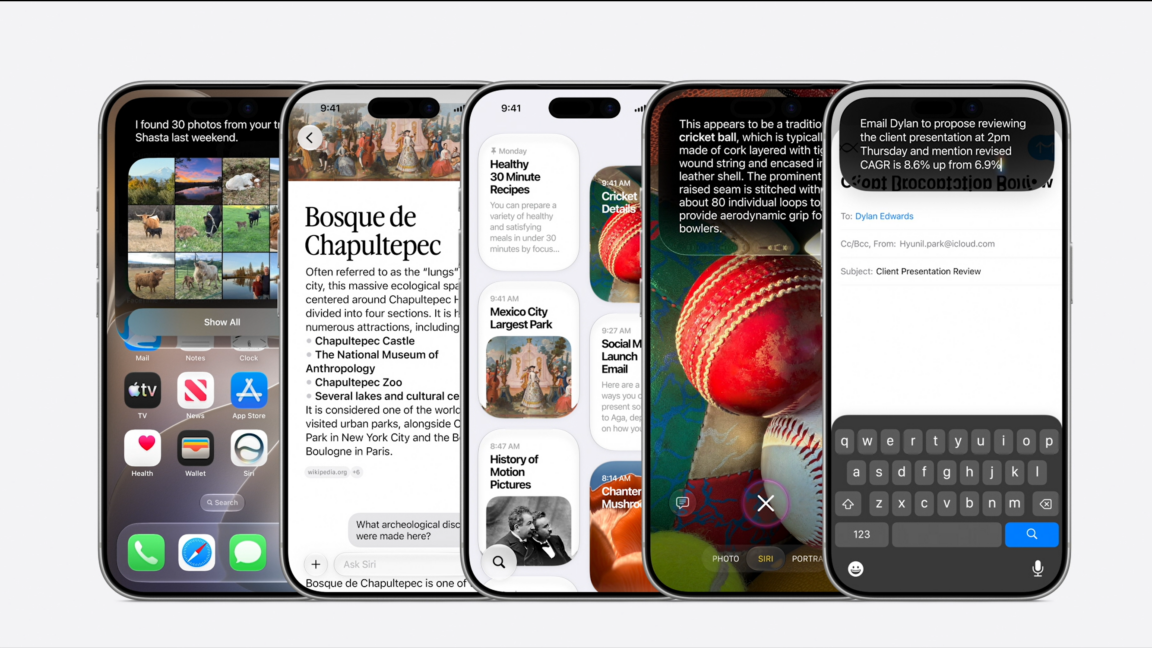
Today at its pre-filmed Worldwide Developers Conference keynote, Apple was finally prepared to fully introduce the long-delayed "Apple Intelligence" update for its Siri voice assistant. The new "Siri AI"β€”now being promised for OS updates rolling out "this fall"β€”will come alongside a new Google-powered update to Apple's on-device Foundation Models, as well as tighter integration of all these AI capabilities across Apple's many operating systems.

Unlike other companies that "appear to be racing forward, seemingly pursuing AI for the sake of AI, with little regard for the people... it's meant to serve," Apple's SVP of Software Engineering Craig Federighi said, "we believe that truly helpful AI must be centered around you and your needs."

Just a friendly chat with your AI assistant

The company highlighted this kind of focus in a series of scripted conversational demos with Siri AI, complete with seemingly unedited, multi-second pauses between each spoken prompt and Siri's response. In these demos, Apple executives showed Siri AI bouncing between different usage modes and app-based tasks as needed in an effort to highlight how Apple Intelligence can now be used "well beyond one-shot tasks" for a "brand new conversational experience" with the virtual assistant.

Read full article

Comments

Β© Apple

  •  

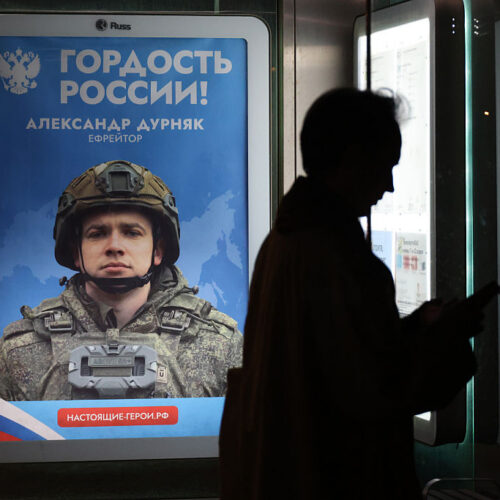
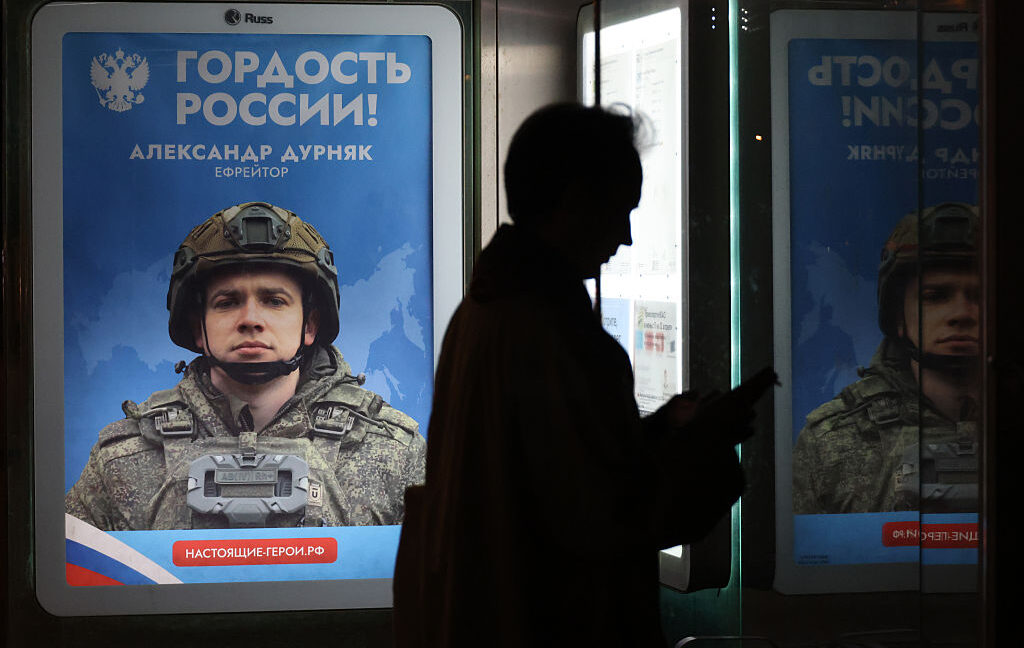
These LLMs are the best at resisting Russian propaganda

As more people rely on large language models to provide pat answers to complex questions, state governments are understandably worried about those LLMs spouting what they see as dangerous propaganda promoted by foreign adversaries. To help combat this problem, the government-sponsored Estonian Language Institute (ELI) has released a new "Propaganda Resistance" benchmark ranking dozens of LLMs on their ability to avoid "tak[ing] positions on topics that the Russian Federation uses in its strategic narratives."

As a former member of the Soviet Union that has been independent for just a few decades, many Estonians are particularly alert to what they see as false narratives being promoted from their large and often belligerent neighbor to the east. Alongside volunteer-run Estonian defense collective Propastop, the ELI identified 14 broad categories in which it sees Russian influence operations trying to sway public discussion. These range from narratives on the current status of Crimea and justifications for the war in Ukraine to the history of NATO and justification for Russia's annexation of Baltic states during World War II.

For each category of propaganda, the researchers developed separate questions phrased to be neutral, biased with "false assumptions" based on Russian propaganda, or to maliciously attempt to elicit explicit misinformation from the LLM. Questions were provided to the models in English, Estonian, and Russian, and judged by a separate AI model (calibrated to align with Propastop experts) based on the models' ability to "push back on propaganda narratives, without external help" from web search or other external tools.

Read full article

Comments

Β© Getty Images

  •  
❌