Chipmaker Nvidia is planning to sell $25 billion of investment-grade debt in the US on Monday, its first bond sale in five years, in a test of investor appetite for further exposure to the AI sector.
In a marquee seven-part bond offering, the company will issue a wide range of maturities from two years to 30 years, according to a term sheet seen by the FT.
The issuance was upsized from $20 billion after receiving more than $85 billion in orders by early afternoon in New York, according to people familiar with the deal.
Anthropic completely shut off access to its Mythos 5 and Fable 5 models Friday night, just days after they were launched.
The move comes after Anthropic's receipt of a US Commerce Department directive Friday evening, subjecting the new models to export controls restricting their use anywhere outside the United States. In a message posted Friday night, Anthropic said the only way for it to ensure compliance with that government order in the immediate term "is that we must abruptly disable Fable 5 and Mythos 5 for all our customers." Access to other Anthropic models is not affected.
An Axios report cited an administration official saying that the administration is concerned by reports of a jailbreak that reportedly gets around broad classifier-based safeguards meant to block Fable 5 prompts regarding cybersecurity, chemistry, and biology. The administration reportedly requested a pause in the release of these models to gain time for the "national security apparatus" to be "hardened" against this kind of threat. That hardening could be complete "in the next few weeks," Axios' source suggested.
Space Exploration Technologies, better known simply as SpaceX, became a publicly traded company on Friday nearly a quarter of a century after it was founded.
The company began trading on the NASDAQ exchange in New York City at $135 a share, valuing SpaceX at nearly $1.8 trillion. By the end of the trading day the company's shares were selling at $160.95, a respectable increase of more than 19 percent.
On paper, SpaceX founder Elon Musk became the world's first trillionaire, with his personal stake in the company valued at more than $700 billion. Because of the company's stock options plan, thousands of current and former employees became overnight millionaires. Employees at SpaceX have worked remarkably hard over the last 24 years, and now they will be richly compensated for having done so.
In November, Jeff Bezos announced that he would become co-CEO of a new startup called Prometheus. At the time, the startup said it would focus on "physical AI"—an increasingly common term for applying the same deep learning principles behind large language models or generative AI to things like robotics and manufacturing—but specifics were scarce. Now, with a major new round of funding, Bezos and co-founder Vik Bajaj have talked about it in slightly more detail.
The funding round is significant—$12 billion now, after an initial round of $6.2 billion last year, for a valuation of $41 billion. The funding comes from JPMorgan Chase, Goldman Sachs, BlackRock, and others, plus a sizable amount from Bezos' coffers. The startup currently employs 150 people.
Much of that funding will be put toward buying compute. "One of the reasons we’ve had to raise a significant amount of funding is because... what we’re doing is very compute-intensive and we need to create that data," Bezos told CNBC.
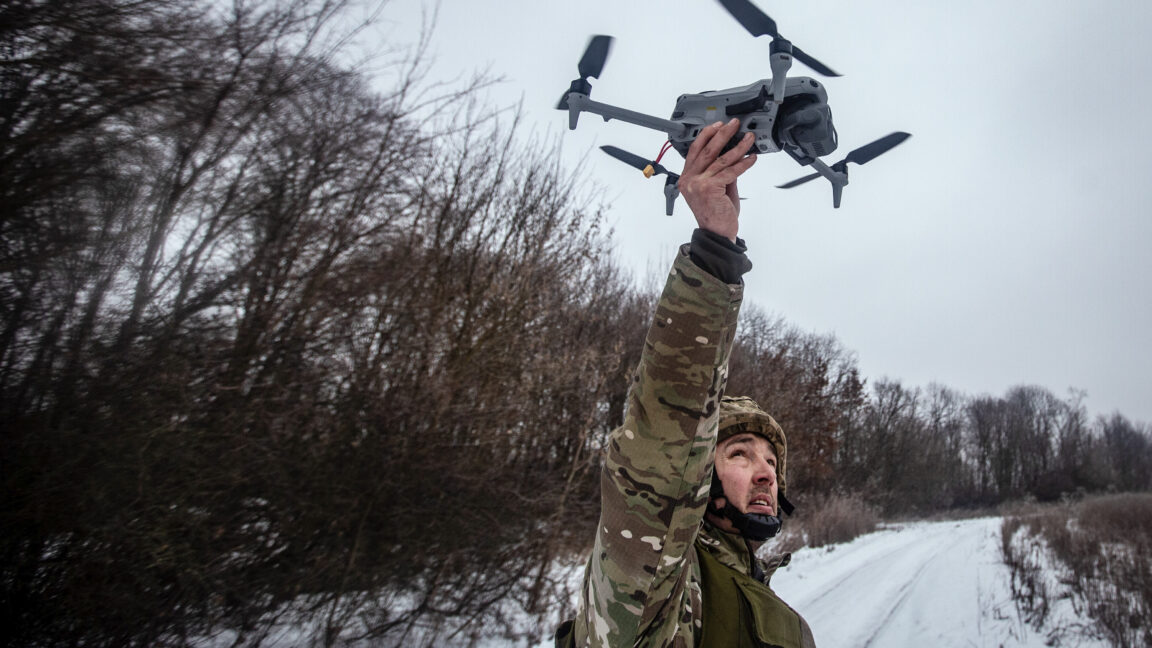
Fully autonomous drones killed Russian soldiers during a battlefield test two years ago, according to a Ukrainian drone manufacturer. If true, the incident would represent another milestone in a war that has spurred unprecedented developments in military drones, robots, and AI-guided weaponry.
The one-time test was revealed by Alexander Kokhanovskyy, CEO of the Ukrainian drone maker Aero Center, during an interview with New Scientist at a press event hosted by the Ukrainian embassy in London. Kokhanovskyy described the test—which did not involve his current company Aero Center—using quadcopter drones that were preprogrammed to fly to a front-line area before activating an AI-powered “Terminator mode” that would seek out and attack any target in the given area.
There was apparently no video feed or anything else to show what the “Terminator” drones targeted and attacked. But Kokhanovskyy told New Scientist that human-piloted drones sent to check out the aftermath found “a couple” of dead Russian soldiers, which led to the conclusion that the fully autonomous drones had killed them.
It's clear that communities now have an effective playbook to block data center construction. This week, researchers flagged the first quarter of 2026 as producing the "most blocked and delayed data center projects on record," NBC News reported.
Data Center Watch, a project from AI intelligence firm 10a Labs that tracks data center fights around the US, reported that protestors "blocked or delayed at least 75 projects nationwide worth about $130 billion from January through March," NBC News reported.
That's "the most in a three-month period since the group began tracking in 2023," and it shouldn't be parsed as "a cyclical spike," the researchers said. Instead, there's been a "structural shift," as "communities have internalized an opposition playbook, legislative sessions introduced formal regulatory uncertainty, and the number of active opposition groups more than doubled to 833 across 49 states," researchers said.
If you hang out in any even vaguely AI-skeptical parts of the Internet, you've probably stumbled on plenty of memes and posts premised on data centers' insatiable thirst for water to power evaporative cooling. But a new report from Amazon highlights just how little water all these AI data centers are using in aggregate, on a relative basis, even as individual data centers can strain local water supplies.
In a Thursday blog post, Amazon claims its data centers withdrew "about 2.5 billion gallons" globally in 2025. That number sounds incredibly large at first glance, but it looks downright puny compared to the 117 trillion gallons of water withdrawn in the US alone in 2015. It's also useful to compare Amazon's number to stats from more water-intensive areas, from the 3.3 trillion gallons used annually on US lawns and landscaping to the 1.3 trillion gallons a year used in California almond orchards to the 531 billion gallons a year used just for US golf courses.
Google loves telling us all the ways people are using its generative AI products to build new things, grow businesses, and save the world. Supposedly. Of course, people are also using AI for crime. Google has announced a new legal salvo aimed at a Chinese group called Outsider Enterprise, which is allegedly responsible for a massive AI-powered scam campaign. Google says it's working with law enforcement and mobile carriers to fight back.
According to Google's legal filing, Outsider Enterprise operates through Telegram. The group offers phishing-as-a-service to individuals who may not be technically savvy enough to set up fraudulent websites and text campaigns on their own. In its Telegram channels, Outsider Enterprise reportedly provided instructions on how to use Google's Gemini AI to create websites that imitate those of Google, YouTube, and government agencies such as New York’s E-ZPass. The group offered nearly 300 scam templates.
Google says that scams enabled by Outsider Enterprise resulted in more than 2.5 million text messages being sent to Android users. About 55,000 of those messages happened in a two-week period last month. In all, Google has tracked 9,000 fake websites and 1 million URLs connected to the scam network.
Last year, a 24-year-old Canadian woman was in a mental health crisis and turned to ChatGPT for help. Hours later, that woman, Alice Carrier, took her own life.
This lawsuit, like numerous other similar cases that have come before it, alleges a design defect with ChatGPT itself and blames OpenAI for knowingly deploying a dangerous product.
A decade after the global craze for Pokémon Go peaked, an AI company has been using billions of real-world images captured by millions of players to develop navigation technologies for delivery robots and possibly military drones. That represents an intriguing but potentially discomfiting legacy for an augmented reality mobile game that has incentivized gamers to capture short smartphone videos of physical neighborhoods and landmarks.
The AI company, Niantic Spatial, was spun out of Pokémon Gogame developer Niantic in May 2025, after Niantic separately sold its licensed games such as Pokémon Go to the Saudi-backed video game publisher Scopely. But before that deal, Niantic publicly announced plans to use scans from millions of Pokémon Go players along with data captured by users of the company’s Scaniverse app to train and develop a “large geospatial model”—a 3D model of the physical world trained on the geolocated images provided by app users scanning real-world locations.
“Ground scans were one component to help train Niantic Spatial's real-world foundation models —AI systems that learn to recognize and interpret physical spaces,” a Niantic Spatial spokesperson told Ars. “The models are the product of that training, not a copy of or a means of accessing the underlying scans, which were of public points of interest such as statues and fountains.”
Another day, another AI model from Google. This time, Google DeepMind has released a new member of the Gemma 4 open model family, but it's fundamentally different from the rest of the lineup. DiffusionGemma doesn't generate outputs linearly like most AI models. Instead, it can produce an entire block of text in parallel. Google says this makes it faster and more efficient when running on local hardware like an Nvidia DGX or a humble gaming GPU.
Most AI models are designed to be autoregressive—they generate text left to right one token at a time. DiffusionGemma has more in common with image generation models, which start with static and then denoise it to create the desired content. This model takes a field of placeholder tokens running over the canvas multiple times to generate likely tokens and using those to improve estimation of others. At the end of the process, the model finalizes its token outputs in one large block—the "denoised" text canvas.
DiffusionGemma is fairly large in the realm of Google's open models. It's a Mixture of Experts (MoE) model with a total of 26 billion parameters, but only 3.8 billion are activated during inference. That means it should fit in the 18GB RAM allotment of a high-end GPU. In testing with an RTX 5090, DiffusionGemma spits out around 700 tokens per second. With a single Nvidia H100 AI accelerator, DiffusionGemma can produce 1,000+ tokens per second. That's about four times the output of the similarly sized autoregressive Gemma models.
Potentially impacting all AI search engines and chatbots known to poorly paraphrase source links, a German court has ruled that Google is liable for false statements in AI Overviews.
The preliminary ruling came in a case flagged by The Decoder, where two publishers found that Google's AI Overviews incorrectly linked them to scams and other sketchy business practices. After smearing publishers by making affirmative statements like "Yes, [it] is known for dubious business practices and is often perceived as a scam," Google failed to correct the misleading output, even after the publishers sent a cease-and-desist letter earlier this year.
Google tried the usual arguments to shield itself from liability for false statements in AI Overviews, such as arguing that most users understand that AI outputs aren't always accurate and must be verified.
Anthropic Tuesday publicly released Claude Fable 5, its first "Mythos-class" model that it says surpasses its previous frontier Opus models in overall capabilities. But the model's launch today comes with safeguards designed to prevent it from answering queries on topics like cybersecurity, biology, and chemistry, where the company has publicly worried about its potential impact to "uplift" malicious actors.
Anthropic says Fable 5 operates on the "same underlying model" as Mythos 5, which is coming out of its monthslong "Mythos Preview" period today, but only for "a small group of cyberdefenders" judged trustworthy through the existing Project Glasswing. Unlike Mythos 5, though, the publicly accessible Fable 5 is designed to funnel queries on certain sensitive topics to the earlier Claude Opus 4.8 model and to warn the user when this is happening.
Among the many claimed benchmark improvements for Fable 5, the one related to cybersecurity was a particularly large jump.
Credit:
Anthropic
Anthropic said it has tuned these safeguards to be "stricter than ideal," meaning the system may occasionally refuse "harmless requests" in a way that it acknowledges may be frustrating for regular users. But Anthropic says such false positives come up in less than five percent of all sessions in testing, and were worth it to avoid situations where Mythos could give malicious actors assistance in "causing serious harm that they couldn’t have received from other sources."
Google has been chasing real-time translation for years, which it says has been one of its "pioneering machine learning experiments." We've seen numerous demos on stage at Google events in the past, but you needed Google phones, earbuds, or some other specific setup. Last year, Google brought real-time translation to more users in the Translate app, and now it's expanding availability more. With the release of Gemini 3.5 Live Translate, you'll have access to instant translation in more places and with lower latency than ever before.
The new AI model is part of the version 3.5 family that launched at I/O. Before today, Google had only rolled out the Flash version, but we're expecting a Pro model to drop in the coming weeks. Gemini 3.5 Live Translate is a speech-to-speech model tuned to automatically detect and translate in more than 70 languages.
Google says Gemini 3.5 Live Translate is fast enough to keep up with a normal conversation, following just a few seconds behind the speaker while also matching intonation, pacing, and pitch. In short, the voice sounds more like you than a generic robot. The demos, which are all being recorded under controlled conditions, do sound impressive. You won't have to wait long to verify the model's abilities for yourself, though.
One day after WIRED revealed that Meta had quietly embedded an unreleased face-recognition system into an app installed on more than 50 million phones, the company removed it, according to a WIRED analysis of the latest version’s code.
The most recent version of Meta AI, a companion app for its line of smart glasses, strips out the unactivated software components that powered the system Meta internally called NameTag. The version published the day of WIRED’s report included several code libraries explicitly named for face recognition. Friday’s release includes none of them.
Andy Stone, Meta's vice president of communications, told WIRED on Monday that the feature is purely exploratory, adding: “No final decision has been made on what to do here, if anything.”
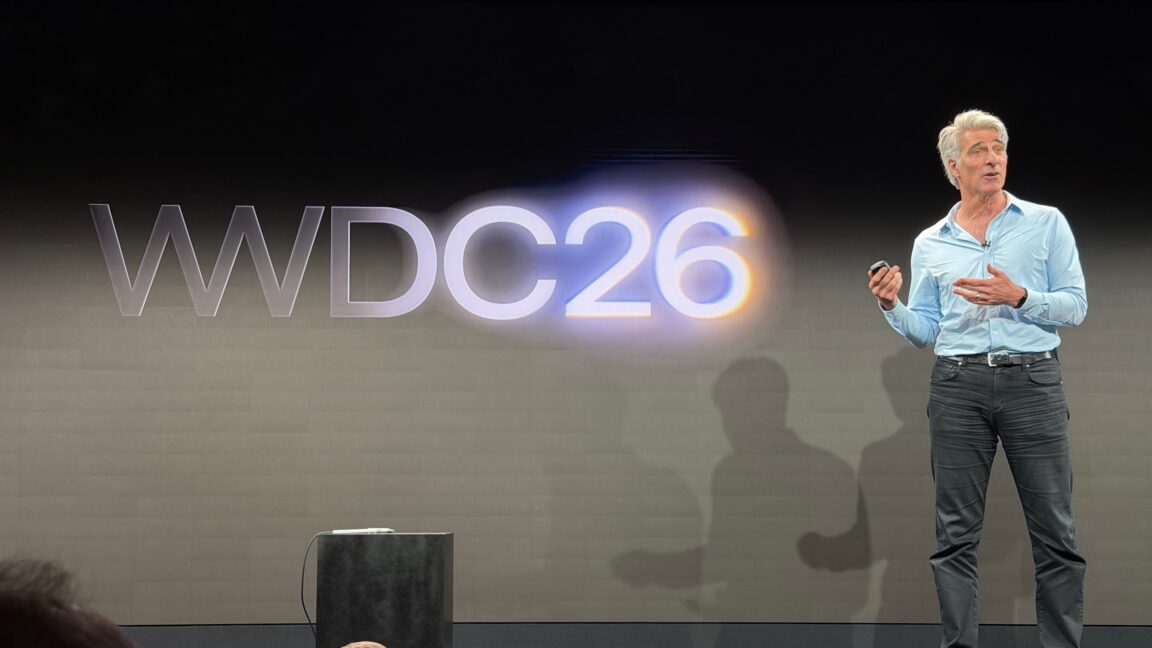
CUPERTINO, California—Apple announced earlier this year that its long-delayed Siri upgrade, announced this week as "Siri AI," would use Google's Gemini language models. What the company confirmed at its Worldwide Developers Conference yesterday was that it also ran on Nvidia hardware installed in Google servers. But the company is still making the same privacy promises it did before, when all of its AI models were either running locally on your devices or on Apple-controlled server hardware.
For years, Apple has touted user privacy as a key benefit of using its platforms. Its cloud services use encryption that's intended to keep other people—including Apple employees—from being able to gain access to it. And the company has long advertised its use of on-device processing for things like scanning images, keeping as much data as possible from leaving your device in the first place.
But with Apple Intelligence, Apple has run up against the limits of its own hardware. The kinds of language and reasoning models that can run locally on an iPhone or Mac are relatively small, limiting their capabilities and accuracy. Apple's Private Cloud Compute system was a partial solution but relied on Apple's own server hardware; to get the kind of capacity it would need to support Siri AI, Apple would have had to commit to a huge data center buildout that it has so far avoided.
Today at its pre-filmed Worldwide Developers Conference keynote, Apple was finally prepared to fully introduce the long-delayed "Apple Intelligence" update for its Siri voice assistant. The new "Siri AI"—now being promised for OS updates rolling out "this fall"—will come alongside a new Google-powered update to Apple's on-device Foundation Models, as well as tighter integration of all these AI capabilities across Apple's many operating systems.
Unlike other companies that "appear to be racing forward, seemingly pursuing AI for the sake of AI, with little regard for the people... it's meant to serve," Apple's SVP of Software Engineering Craig Federighi said, "we believe that truly helpful AI must be centered around you and your needs."
Just a friendly chat with your AI assistant
The company highlighted this kind of focus in a series of scripted conversational demos with Siri AI, complete with seemingly unedited, multi-second pauses between each spoken prompt and Siri's response. In these demos, Apple executives showed Siri AI bouncing between different usage modes and app-based tasks as needed in an effort to highlight how Apple Intelligence can now be used "well beyond one-shot tasks" for a "brand new conversational experience" with the virtual assistant.
Google's NotebookLM was one of the company's first forays into generative AI technology, and in un-Googley fashion, it hasn't been shut down yet. In fact, NotebookLM is getting one of its biggest updates, ever, today, moving to the latest Gemini 3.5 model, support for more file types, and streamlined web source integration. Google also says NotebookLM will be able to do more with all those queries thanks to embedded support for Antigravity.
Gemini 3.5 Flash debuted at Google I/O this year, promising much faster and more efficient processing. Google has claimed that companies worried about token costs can save big by moving their projects to the new Flash model while also getting outputs that are of similar or better quality. Those improvements are now filtering down to other Google products. NotebookLM, which launched in 2023 at the very beginning of the AI boom, lets you analyze specific sources like documents and webpages with Google's latest AI models.
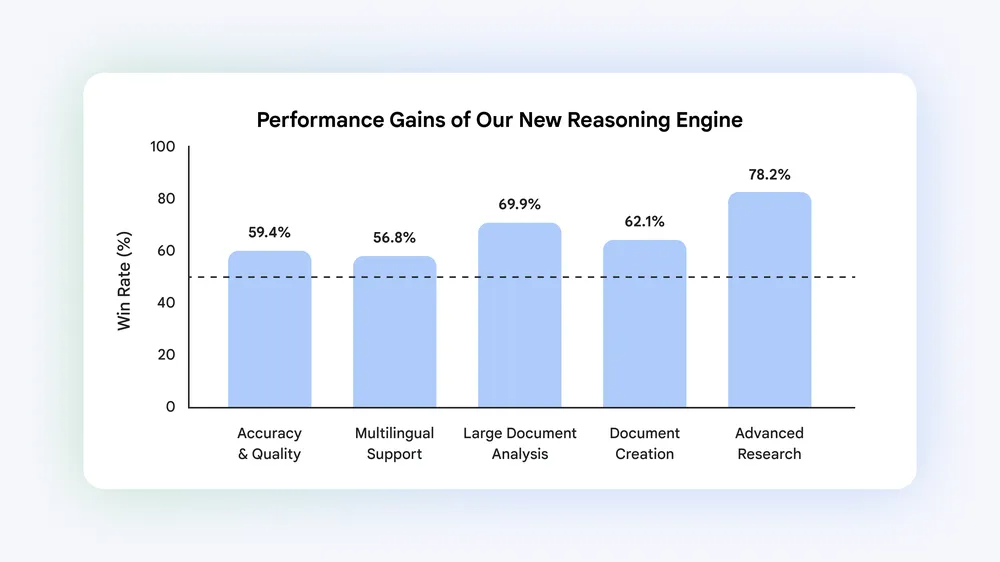
The upgraded NotebookLM beats the old version in all of Google's "core evaluation dimensions."
Credit:
Google
Google conducted side-by-side evaluations of NotebookLM on the old Gemini 3.1 branch and with the updated 3.5. The company is being somewhat vague about the nature of the tests, breaking things up into "top five core evaluation dimensions," which are Accuracy and Quality, Multilingual Support, Large Document Analysis, Document Creation, and Advanced Research. In these tests, Google says NotebookLM averaged a 65 percent win rate versus the older model.
Dozens of cryptographically verified open source packages from Microsoft were compromised late last week to add advanced credential-stealing code that was triggered when developers opened them in AI coding agents.
In all, multiple researchers said, 73 packages were flagged as malicious when automated systems on GitHub blocked them on the platform. Rather than noting they are malicious—and that developers who used AI agents to work with them should assume their systems are compromised—the Microsoft-owned GitHub said it disabled the packages “due to a violation of GitHub's terms of service.” The text went on to encourage the package owner to contact GitHub.
Devs: Assume compromise and proceed accordingly
It wasn’t until Monday that Microsoft even raised the possibility the packages were infected. In an email, the company stated: “We have temporarily removed some repositories as we investigate potential malicious content.”
OpenAI is preparing the biggest overhaul of ChatGPT since its launch kicked off the AI boom, as the $850 billion group hunts for new engines of growth ahead of a planned listing this year.
The company intends to transform the chatbot into a “superapp” that combines coding tools and AI agents, adding products that executives believe will generate more revenue.
The changes are part of a broader reorganization at OpenAI as the San Francisco-based company shifts resources into trying to win lucrative business customers and compete more fiercely with rival Anthropic, according to more than a dozen current and former employees.
It feels like there's no escaping AI right now, whether you’re trying to type a sentence without being interrupted by a digital “assistant” or struggling to find a new refrigerator that doesn’t require a Wi-Fi connection for some reason. You’d be forgiven for wondering if we’re in the midst of a quantum leap in tech or whether people are just hyping up a heap of slop.
So what should we make of the growing use of AI in weather and climate modeling?
The conversation didn't get off to a great start earlier this year when a National Weather Service office posted a forecast map featuring nonexistent cities in Idaho with names like “Whata Bod” and “Orangeotild.” Thankfully, that was just an AI-generated image produced for social media, not the actual forecast model. Meteorologists and climate scientists are not yet being replaced by large language model prompt engineers.
The injured teenage survivor of a January 2025 shooting at a Nashville, Tennessee high school recently sued the manufacturer of an “AI gun detection” system that failed to detect the handgun that left two dead, including the shooter.
According to the lawsuit, which was filed in Davidson County court last month, the security company Omnilert either knew or should have known that there were “significant operational limitations in its gun detection system that could result in detection failures during actual emergencies, including limitations based on camera placement, proximity of the weapon to camera sensors, camera angle, lighting, and weapon visibility.”
Omnilert cofounder Ara Bagdasarian declined Ars’ invitation to answer questions about the lawsuit. System Integrations, the other defendant in the case, which resold the Omnilert system, also did not respond to Ars’ request for comment.
SpaceX has requested unusually swift entry into several leading stock market indexes as a condition of its historic stock market debut. But the S&P 500 stock market index representing many of the largest profitable US companies has surprised market analysts by refusing to bend the rules for Elon Musk’s space and AI company.
The June 4 decision by S&P Dow Jones Indices—the company that creates and manages stock market indexes such as the S&P 500—means that SpaceX will not gain accelerated access to potentially billions more dollars through passive investment funds that automatically purchase shares of S&P 500 companies. Modifying the rules in response to SpaceX's request could have also allowed leading AI companies such as OpenAI and Anthropic to gain entry not long after their own expected initial public offerings (IPOs). That possibility has now been shuttered.
The news will likely come as a relief to people concerned about passive investor money and people’s retirement savings plans having greater exposure to the market risks associated with SpaceX’s big bet on AI and speculative orbital data center plans. AI companies are generally facing more challenges in funding and building expensive AI data centers, even as they shift more of the subsidized costs of running AI services onto shocked customers through usage-based pricing.
One of the world's biggest data center projects was designed to be nearly three times the size of Manhattan, stretching across multiple Utah sites. But intense local backlash in Box Elder County has now pushed the developer to cut the project plans in half before construction starts.
Residents' top concern was the Stratos data center project draining local waters, and they were willing to pay to protect them, most especially the vulnerable Great Salt Lake. Many locals paid a $15 fee to register comments to block the transfer of 1,900 acre-feet of water from a ranch to the hyperscale data center. Other concerns include electricity bills rising and potential risks to air quality, local wildlife, and land.
Venture capitalist Kevin O'Leary, chair of O'Leary Digital and Shark Tank investor, is behind the construction of the project. He told a local ABC affiliate that he regrets not working with state officials to be more transparent about the project from the beginning.
Smartwatches can track your health stats, but they also do a lot of other things you might not always want or need. The $100 Fitbit Air tracker ditches the screens that have become common on people's wrists, leaving behind a tiny puck of health sensors you can often forget you're wearing. You will not, however, forget that Google's new health platform is built around AI.
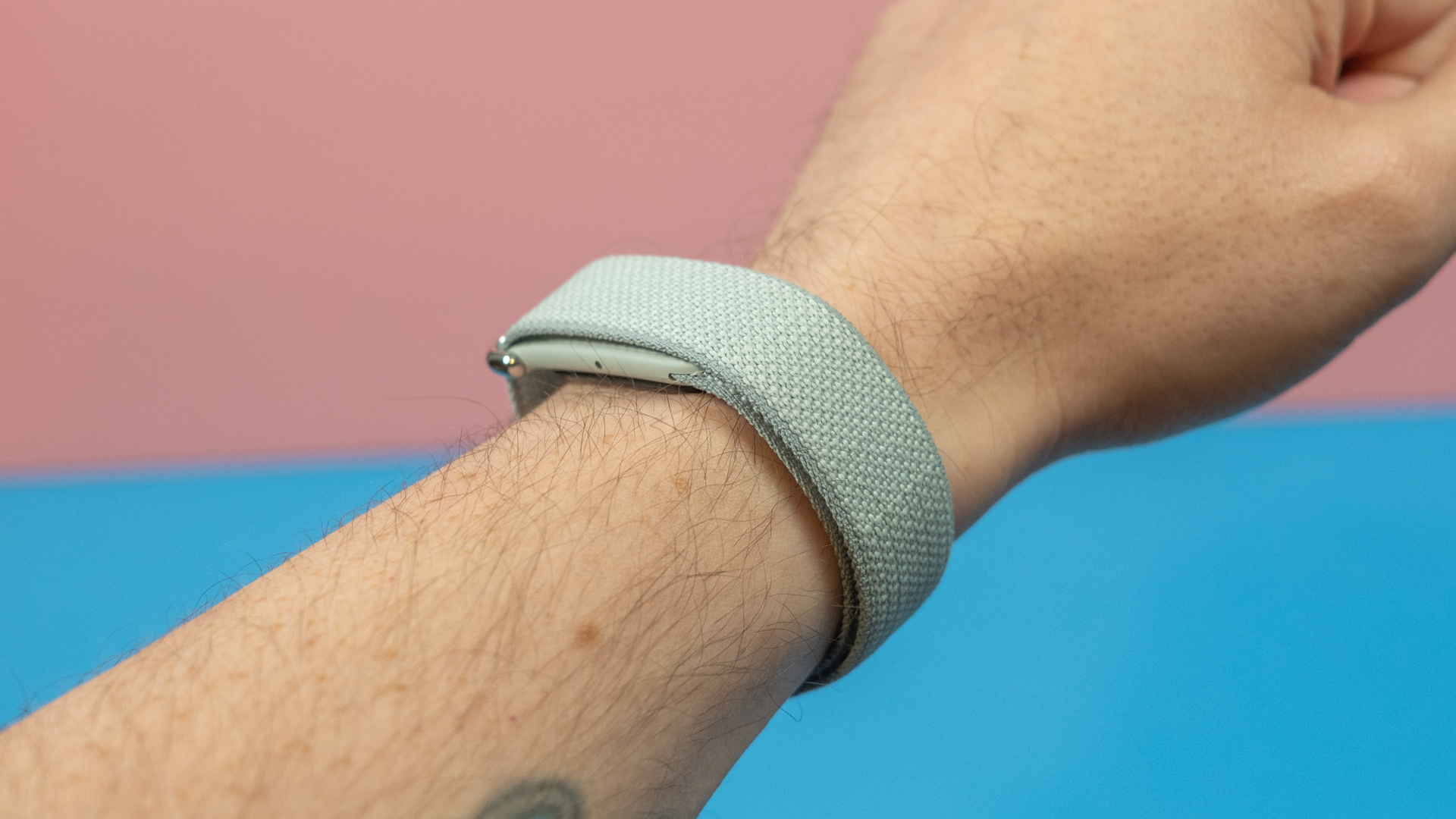
The Air has no speaker, and there's only one LED on the side to indicate battery level. You can double-tap the tracker to check the level, and that's about the end of on-device features. The vibration motor is only for alarms—it can't sync with notifications on your phone. That makes sense, given there is no screen to tell you what that buzz was all about.
The Fitbit Air doesn't have a display or buttons—just a small LED on the side for battery status.
Credit:
Ryan Whitwam
The stock Performance Band is simple, consisting of a smooth polyester yarn with small velcro pads and a metal loop. It's durable but does seem to absorb a bit of moisture. For swimming or heavy workouts, you'll probably want the silicone active band. This one hides the Air puck a bit more effectively, and it looks good in a sporty way.
It may appear that humanoid robots capable of handling any task have almost arrived—especially when tech companies showcase them performing acrobatic feats or handling household chores. But there is still a significant gap between these robot demonstrations and proving that the same robots can reliably and repeatedly manage such tasks in the real world.
The latest wave of robot videos can be particularly tricky, given the human tendency to anthropomorphize objects with a humanoid figure. A robot arm doing a dance move may simply seem “cool,” but a humanoid robot doing the same dance move can trigger more misleading assumptions, said Jonathan Hurst, cofounder of Agility Robotics and a robotics researcher at Oregon State University.
“People automatically extrapolate and assume that the robot that looks like a person can do all the things that a person who can dance could do—which is not true,” Hurst told Ars. “But a lot of the startup companies do kind of prey on that for being able to raise a lot of money.”
As more people rely on large language models to provide pat answers to complex questions, state governments are understandably worried about those LLMs spouting what they see as dangerous propaganda promoted by foreign adversaries. To help combat this problem, the government-sponsored Estonian Language Institute (ELI) has released a new "Propaganda Resistance" benchmark ranking dozens of LLMs on their ability to avoid "tak[ing] positions on topics that the Russian Federation uses in its strategic narratives."
As a former member of the Soviet Union that has been independent for just a few decades, many Estonians are particularly alert to what they see as false narratives being promoted from their large and often belligerent neighbor to the east. Alongside volunteer-run Estonian defense collective Propastop, the ELI identified 14 broad categories in which it sees Russian influence operations trying to sway public discussion. These range from narratives on the current status of Crimea and justifications for the war in Ukraine to the history of NATO and justification for Russia's annexation of Baltic states during World War II.
For each category of propaganda, the researchers developed separate questions phrased to be neutral, biased with "false assumptions" based on Russian propaganda, or to maliciously attempt to elicit explicit misinformation from the LLM. Questions were provided to the models in English, Estonian, and Russian, and judged by a separate AI model (calibrated to align with Propastop experts) based on the models' ability to "push back on propaganda narratives, without external help" from web search or other external tools.
Critics hope to keep Elon Musk from escaping a strict data-privacy order imposed by the Federal Trade Commission (FTC) shortly before he took over Twitter.
The FTC order placed restrictions on X's data use for 20 years, while requiring regular independent audits and granting the agency authority to request documents as needed to ensure compliance.
The FTC’s action came after Twitter voluntarily disclosed that between May 2013 and September 2019, a coding error accidentally allowed phone numbers and email addresses that users shared for two-factor authentication purposes to be used for targeted advertising aimed at those same users. In a settlement that came just months before Musk's 2022 takeover, Twitter agreed to pay $150 million and to allow the FTC to monitor the platform's data-handling practices until 2042 in order to protect user privacy.

 Login
Login














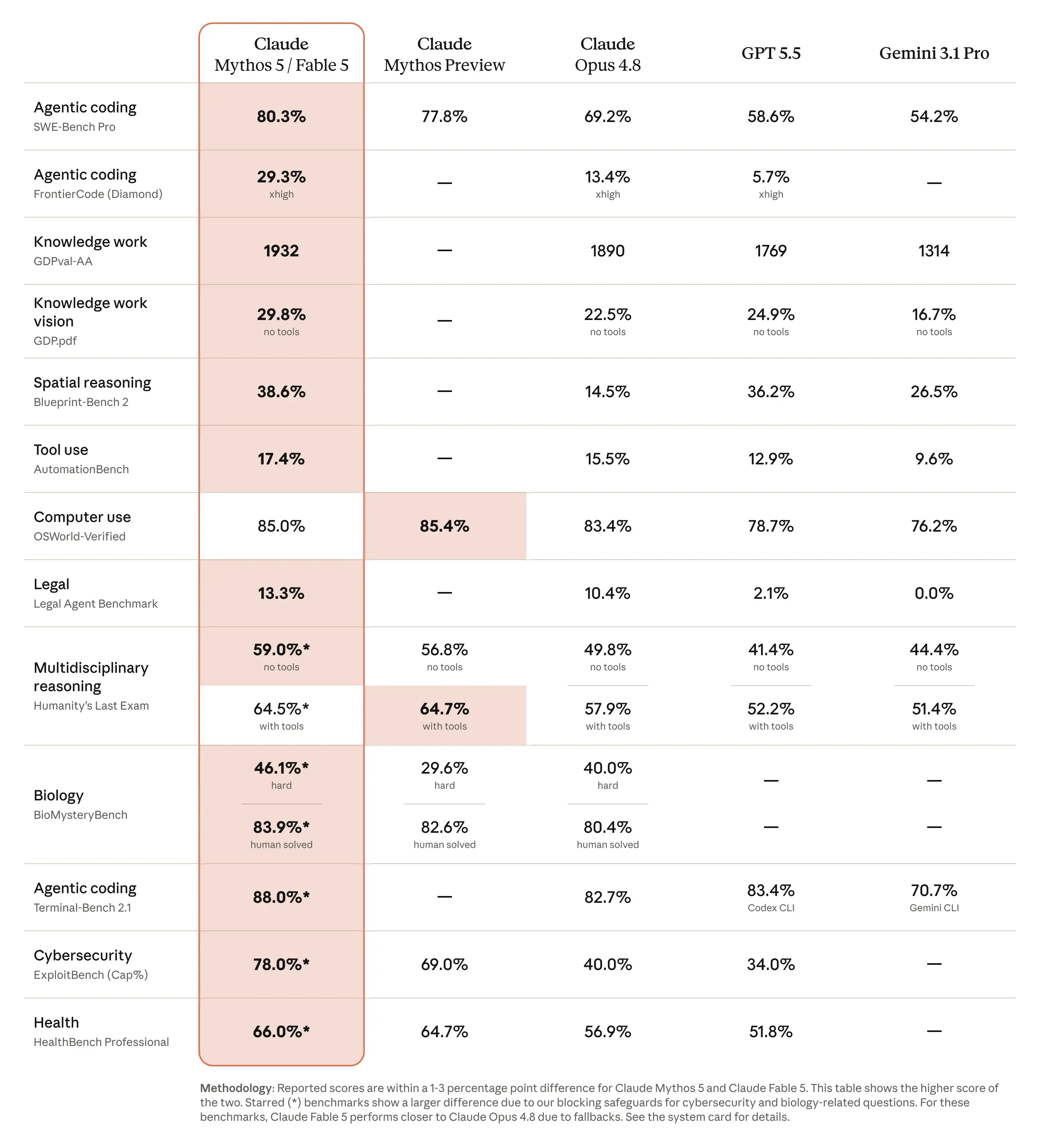 Among the many claimed benchmark improvements for Fable 5, the one related to cybersecurity was a particularly large jump.
Credit:
Among the many claimed benchmark improvements for Fable 5, the one related to cybersecurity was a particularly large jump.
Credit:








 The upgraded NotebookLM beats the old version in all of Google's "core evaluation dimensions."
Credit:
Google
The upgraded NotebookLM beats the old version in all of Google's "core evaluation dimensions."
Credit:
Google












 The Fitbit Air doesn't have a display or buttons—just a small LED on the side for battery status.
Credit:
Ryan Whitwam
The Fitbit Air doesn't have a display or buttons—just a small LED on the side for battery status.
Credit:
Ryan Whitwam