❌

Reading view

Critical Copilot vulnerability allowed hackers to steal 2FA code from users

Last Tuesday, Microsoft patched a vulnerability it rated as max critical in its M365 Copilot AI platform. On Monday, the researchers who discovered the vulnerability and reported it to Microsoft revealed how their proof-of-concept exploit could retrieve 2FA codes and other sensitive data from emails accessible to Copilot.

Microsoft and other LLM providers have been unable to prevent their products from complying with malicious requests to reveal data. The root cause: AI bots are unable to distinguish between instructions provided by users and those snuck into third-party content the models are summarizing, drafting responses to, or using to perform other actions on behalf of the user. With no way to secure this crucial boundary, Microsoft and its peers are left to erect complicated and ad hoc guardrails designed to rein in the consequences of this incurable gullibility.

Jumping over guardrails

One guardrail built into Copilot and most other LLMs prevents them from submitting web forms, sending emails, and taking similar actions that can be used to exfiltrate data from the user. To work around this, LLM hackers turned to markup language, which, among other things, allows users to add formatting elements such as headings, lists, and links to text without the need for HTML tags. Another workaround is to wrap sensitive data inside HTML tags such as <img> and <form>. In either case, a web request showing the data hits the attacker’s web server, where the secret information is captured in logs.


Read full article

Comments

Β© Photo Illustration by Thomas Fuller/SOPA Images/LightRocket via Getty Images
  •  

These LLMs are the best at resisting Russian propaganda

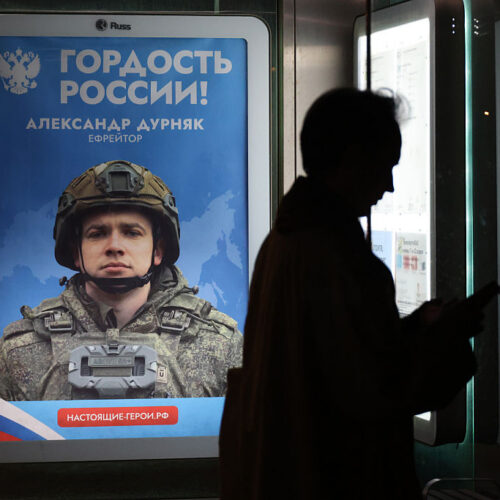
As more people rely on large language models to provide pat answers to complex questions, state governments are understandably worried about those LLMs spouting what they see as dangerous propaganda promoted by foreign adversaries. To help combat this problem, the government-sponsored Estonian Language Institute (ELI) has released a new "Propaganda Resistance" benchmark ranking dozens of LLMs on their ability to avoid "tak[ing] positions on topics that the Russian Federation uses in its strategic narratives."

As a former member of the Soviet Union that has been independent for just a few decades, many Estonians are particularly alert to what they see as false narratives being promoted from their large and often belligerent neighbor to the east. Alongside volunteer-run Estonian defense collective Propastop, the ELI identified 14 broad categories in which it sees Russian influence operations trying to sway public discussion. These range from narratives on the current status of Crimea and justifications for the war in Ukraine to the history of NATO and justification for Russia's annexation of Baltic states during World War II.

For each category of propaganda, the researchers developed separate questions phrased to be neutral, biased with "false assumptions" based on Russian propaganda, or to maliciously attempt to elicit explicit misinformation from the LLM. Questions were provided to the models in English, Estonian, and Russian, and judged by a separate AI model (calibrated to align with Propastop experts) based on the models' ability to "push back on propaganda narratives, without external help" from web search or other external tools.

Read full article

Comments

Β© Getty Images

  •  
❌