Reading view

Microsoft discovers new lightweight backdoor that steals cryptocurrency

Microsoft says it has detected new self-propagating malware that spreads through USB drives in search of cryptocurrency credentials, which it then sends to attacker-controlled servers.

The company named the worm Crypto Clipper because it monitors the contents of device clipboards for patterns consistent with wallet addresses or seed phrases. When found, the malware also takes five screenshots over a 10-second period. Both the credentials and the screenshots are then sent to the attacker through Tor, a network protocol that provides anonymous routing by sending traffic through redundant nodes so logs can’t capture both the sending and receiving IP addresses. Crypto Clipper establishes the Tor connection by using a SOCKS5 proxy, a network protocol that sends traffic through a proxy server, which then forwards it to its final destination.

A lightweight backdoor

“The execution of this clipper is notable because it does not depend on a traditional installer or exposed IP-based C2 infrastructure,” Microsoft said Thursday. “Instead, it deploys a portable Tor client, routes traffic through a local SOCKS5 proxy, and blends data theft with remote code execution, turning a financially motivated stealer into a lightweight backdoor.”


Read full article

Comments

© Getty Images

  •  

Apple patches high-severity eavesdropping vulnerability in Beats Studio Buds

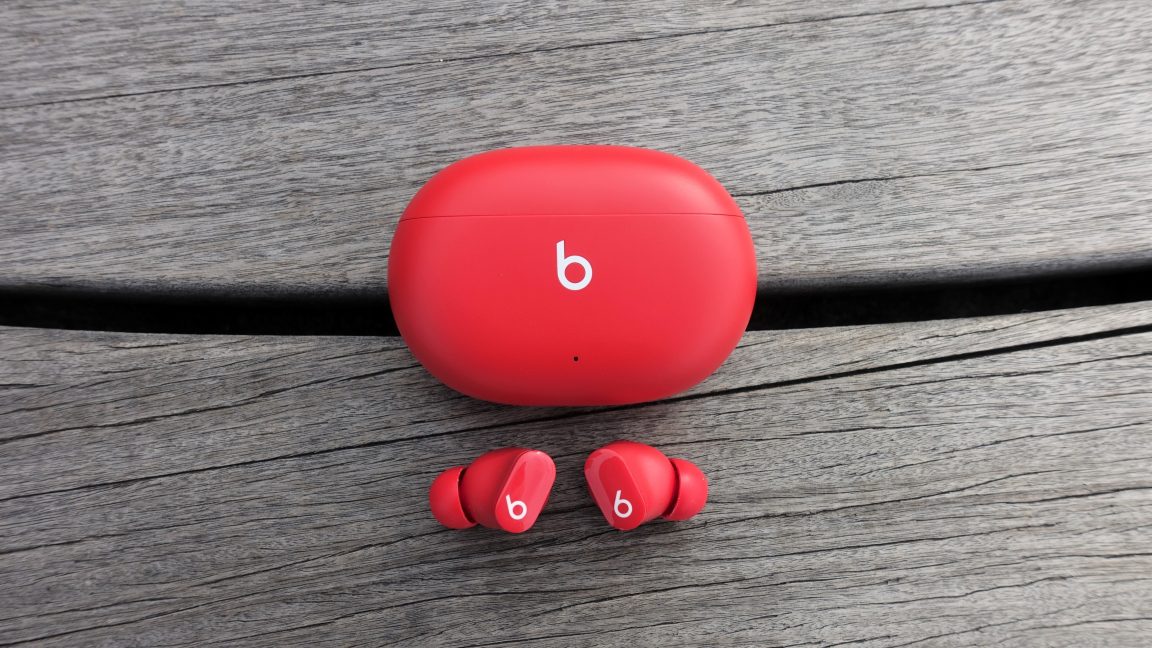
Apple has updated its Beats Studio Buds wireless earbuds to patch a high-severity vulnerability that could be exploited by nearby hackers to eavesdrop on users.

The vulnerability, CVE-2025-20701, allowed improper authentication in the firmware running on the Bluetooth-related chips, enabling people within signal range to impersonate devices that had previously been paired with the earbuds. The researchers demonstrated this in a series of end-to-end attacks that allowed them to eavesdrop on conversations or sounds within earshot of the phone microphone.

Apple joins the patch party

“Impact: An attacker within Bluetooth range may be able to listen through the microphone of a device which is not yet paired and actively seeking pair requests,” Apple said in a Tuesday security advisory. The fix is contained in Beats Firmware Update 1B211, which is delivered automatically while headphones are paired with and within Bluetooth range of a user’s iPhone, iPad, or Mac. Users can check their firmware version by going to Settings on their device, navigating to Bluetooth, and tapping the info button next to the headphones.

Read full article

Comments

© Jeff Dunn

  •  

Massive breach spills credentials for thousands of sensitive networks

Researchers have uncovered a massive breach of Fortinet firewalls that has given Russian-speaking attackers near-unrestricted access to some of the world’s largest and most powerful organizations, including Oracle, Chevron, Lenovo, Federal Express, a NATO defense contractor, and Fortinet itself.

Nearly 74,000 Fortinet devices from more than 21,000 IP addresses in 194 countries have been compromised and their plaintext credentials exposed online, Bob Diachenko, a security researcher and head of SecurityDiscovery.com, said online and in an interview. He said he found the data after gaining access to the attackers’ command-and-control server and other infrastructure. The exposed data also included the industry, revenue, and employee count for each compromised organization.

Exceptional scale, poor opsec

Independent researcher Kevin Beaumont reported that “almost all” of the compromised devices remained online as of Wednesday morning. He went on to say that he has confirmed with multiple organizations found in the attackers’ logs that the credentials are real and current. In many cases, once the threat actors compromised the devices, they went on to access affected organizations’ centralized authentication systems, such as Radius servers and Microsoft Active Directory. The number of compromised devices comprises roughly half of all Internet-facing Fortinet firewalls, based on polling from Shodan.

Read full article

Comments

© Getty Images

  •  

"Dangerous" AI models are coming no matter what

Late last week, Anthropic took its new Claude Fable 5 and Mythos 5 AI models offline following a United States government export-control directive barring “any foreign national” from using the services. The company has been in talks with the White House since Friday but has yet to secure an agreement that would allow it to reinstate the offerings.

Since Mythos debuted in April, Anthropic has claimed—and warned—that the model has advanced capabilities for not only finding software vulnerabilities to help defenders patch them, but also figuring out ways to exploit them that could be used by bad actors. Anthropic itself noted this double-edged sword in its launch of Mythos 5 and Claude Fable 5. “A great deal of advanced usage of AI models is dual use: the same queries that are beneficial in the hands of cybersecurity professionals and biology researchers could be dangerous if available to malicious actors,” the company wrote in a blog post last week.

With this in mind, the company initially released a version called Mythos Preview to a select consortium as part of a working group known as Project Glasswing. Mythos 5 was also privately released to this group last week, while Claude Fable 5, which is a Mythos-grade model, was released to the general public with specific blocks on its ability to give responses to questions about biology and cybersecurity.

Read full article

Comments

© Samuel Axon

  •  

Windows and Linux users: The deadline to update Secure Boot keys is near

The clock is ticking for Windows and Linux users to update cryptographic keys that protect their systems against firmware-based UEFI infections, a pernicious form of malware that loads before operating system and anti-malware protections start.

Beginning June 24, three certificates that cryptographically verify that each piece of firmware and software that loads during system boot will expire. The Microsoft-signed certificates are the linchpins of Secure Boot, a Microsoft-designed chain of trust. Secure Boot checks the digital signatures of all firmware that loads during system startup to ensure it originates from a trusted provider, such as the manufacturer of the motherboard the system runs on.

Secure Boot is designed to thwart UEFI bootkits, a form of malware that alters the Unified Extensible Firmware Interface, the successor to the BIOS, both of which begin the initial boot sequence. Because these bootkits load before the OS and most other code, they can be difficult to detect. Once installed, they typically load malware onto the OS that steals credentials, backdoors the system, or performs other malicious actions. Even when the OS is disinfected, the bootkit can reinfect the system. Bootkits survive OS reinstallations as well.

Read full article

Comments

© Getty Images

  •  

Critical Copilot vulnerability allowed hackers to steal 2FA code from users

Last Tuesday, Microsoft patched a vulnerability it rated as max critical in its M365 Copilot AI platform. On Monday, the researchers who discovered the vulnerability and reported it to Microsoft revealed how their proof-of-concept exploit could retrieve 2FA codes and other sensitive data from emails accessible to Copilot.

Microsoft and other LLM providers have been unable to prevent their products from complying with malicious requests to reveal data. The root cause: AI bots are unable to distinguish between instructions provided by users and those snuck into third-party content the models are summarizing, drafting responses to, or using to perform other actions on behalf of the user. With no way to secure this crucial boundary, Microsoft and its peers are left to erect complicated and ad hoc guardrails designed to rein in the consequences of this incurable gullibility.

Jumping over guardrails

One guardrail built into Copilot and most other LLMs prevents them from submitting web forms, sending emails, and taking similar actions that can be used to exfiltrate data from the user. To work around this, LLM hackers turned to markup language, which, among other things, allows users to add formatting elements such as headings, lists, and links to text without the need for HTML tags. Another workaround is to wrap sensitive data inside HTML tags such as <img> and <form>. In either case, a web request showing the data hits the attacker’s web server, where the secret information is captured in logs.

Read full article

Comments

© Photo Illustration by Thomas Fuller/SOPA Images/LightRocket via Getty Images

  •  

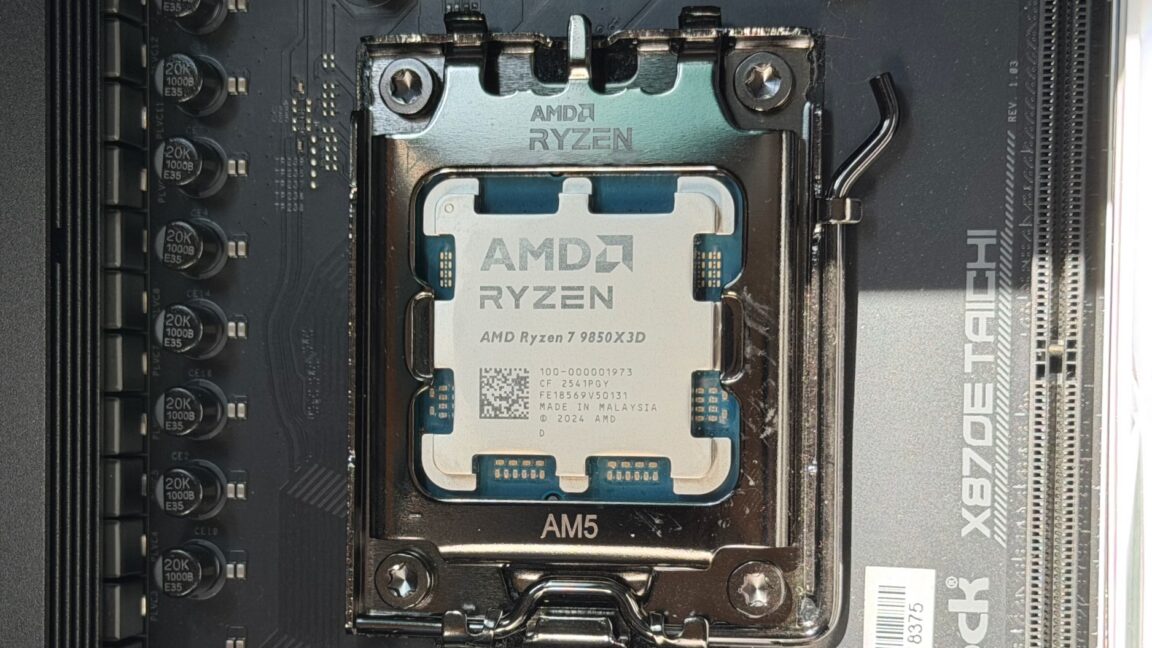
Users cry foul after AMD stripped memory crypto from its consumer CPUs

A decade ago, AMD added a protection to its high-end CPUs to protect them against cold boot attacks and other types of physical exploits that siphon sensitive data out of the connected memory chips. Short for Transparent Secure Memory Encryption, TSME encrypts the entire contents stored in memory, making the data useless to physical attackers.

Over time, AMD added TSME to lower-end processors, including the consumer version of its Ryzen chips, a CPU that costs less than the Pro version. Over the years, users of these lower-end chips have gotten used to the added security. Recently and without warning or notice, this lower-end line of AMD chips suddenly dropped the protection, and did so in a way that was impossible to detect on Windows machines and required a fair amount of technical work when using Linux.

Now you see it, now you don't

AMD has yet to say why TSME worked on these CPUs, or even to confirm the change. AMD declined to answer questions sent by email other than to say TSME "is a security feature only applied to PRO CPUs as part of AMD PRO Technologies." The statement is the first known time the chipmaker has explicitly made this restriction public.

Read full article

Comments

© Andrew Cunningham

  •  

PeopleSoft 0-day affecting hundreds of organizations steals gigabytes of data

One of the world’s most active ransomware groups exploited a critical vulnerability in Oracle’s PeopleSoft software suite and used it to target about 100 customers and extort at least one of them to pay up in exchange for not leaking stolen data, researchers said.

The group, tracked as ShinyHunters, had been exploiting the PeopleSoft vulnerability for more than two weeks before Oracle flagged it. CVE-2026-35273, as the vulnerability is tracked, carries a severity rating of 9.8 out of 10, making the former zero-day one of the year’s most critical vulnerabilities to be exploited.

Google’s Mandiant security team said it’s an SSRF (server-side request forgery), a vulnerability that allows attackers to send requests from a susceptible server to systems used by the targeted organization. Oracle said the SSRF is remotely exploitable, and the company has issued a stopgap mitigation but has yet to fully patch the flaw. Google has confirmed that victims are receiving extortion demands.

Read full article

Comments

© Mesut Dogan

  •  

Locked in heated rivalry with researcher, Microsoft fixes 0-day they disclosed

Microsoft on Tuesday released fixes for two high-severity zero-days that were disclosed by a researcher who has been locked in a testy beef with the software giant.

Nightmare Eclipse, the pseudonym the researcher goes by, released a handful of high-severity vulnerabilities in recent months, making them zero-days that had the potential to be exploited in the wild. The researcher has said the disclosures, which included proof-of-concept code, came after Microsoft reneged on an arrangement the two made regarding vulnerabilities they had discussed.

Disclosure drama

“But someone violated our agreement and left me homeless with nothing,” Nightmare Eclipse wrote in March. “They knew this will happen and they still stabbed me in the back anyways, this is their decision not mine.”

Read full article

Comments

© Getty Images

  •  

High-severity vulnerability in Linux caused by a single faulty character

Researchers have analyzed a high-severity vulnerability in Linux that’s able to escalate untrusted users to root by exploiting a bug you don't often see: a single errant character inside the kernel.

The vulnerability, tracked as CVE-2026-23111, is located in nf_tables, a subsystem of the Linux kernel that provides packet filtering capabilities. It’s used to manage firewall rules and replaces older subsystems such as iptables, ip6tables, arptables, and ebtables.

!!!WTF!!!

The presence of a single mis-issued exclamation point in code implementing nf_tables introduced a use-after-free, a class of vulnerability that corrupts memory by placing malicious code at memory addresses that haven’t been properly freed of their previous contents. CVE-2026-23111 can be exploited by an unprivileged user or process to elevate system rights to root.

Read full article

Comments

© Getty Images

  •  

For the 2nd time in weeks, Microsoft packages laced with credential stealer

Dozens of cryptographically verified open source packages from Microsoft were compromised late last week to add advanced credential-stealing code that was triggered when developers opened them in AI coding agents.

In all, multiple researchers said, 73 packages were flagged as malicious when automated systems on GitHub blocked them on the platform. Rather than noting they are malicious—and that developers who used AI agents to work with them should assume their systems are compromised—the Microsoft-owned GitHub said it disabled the packages “due to a violation of GitHub's terms of service.” The text went on to encourage the package owner to contact GitHub.

Devs: Assume compromise and proceed accordingly

It wasn’t until Monday that Microsoft even raised the possibility the packages were infected. In an email, the company stated: “We have temporarily removed some repositories as we investigate potential malicious content.”

Read full article

Comments

© Getty Images

  •  

How a USB-connected speaker can infect a PC without ever being touched

Operating system makers take many steps to prevent their wares from accepting commands from remote devices. The safeguards, designed to thwart malicious attacks, typically require hackers to jump through all kinds of hoops to bypass the measures. But what if remote code execution were as simple as being within Bluetooth range of a speaker connected to the targeted device?

It turns out it can, at least when the speaker is a Sound Blaster Katana V2X sold by Singapore-based Creative Technologies. The speaker, which sells for $283, is widely acclaimed with numerous reviews showering praise on the sound and performance of it and its predecessor, the Sound Blaster V2.

A PC-pwning proxy

Researcher Rasmus Moorats stumbled on the hack by accident, after he purchased a Katana V2X, a soundbar that connects to PCs, Macs, and Linux devices over USB or Bluetooth. Moorats was curious if he could create a Linux tool that communicated with his speaker. He discovered he could do so through CTP, a proprietary mechanism he guesses is short for Creative Transport Protocol.

Read full article

Comments

© Creative Technologies

  •  

Dashlane explains how attackers managed to download encrypted password vaults

Dashlane said that attackers mounted a coordinated hacking campaign against a large base of its users in an attempt to recover as many encrypted password vaults as possible. The password manager provider said fewer than 20 personal user vaults were downloaded before it shut down the operation.

In a campaign that started Sunday, the unknown threat actor abused the mechanism that allows Dashlane users to add new devices, such as computers or phones, to their accounts. By abusing Dashlane's programming interfaces for device enrollment, the attackers sent requests to large numbers of existing users’ registered email addresses. In an update published Thursday, Dashlane wrote:

The threat actor targeted the API endpoints for device registration and used a brute force attack to send a large volume of automated requests to those endpoints.

In response, Dashlane’s automated security systems operated as intended, triggering an automatic lockout of the targeted accounts to protect those users. Before the attack was fully mitigated, the threat actor was able to brute force and generate valid tokens for fewer than 20 personal plan customers, allowing them to register a new device on those accounts and download copies of users’ encrypted vaults.

The flow and strategy of the attack

When a user installs the Dashlane app on a new device and attempts to enroll it in their existing account, Dashlane first verifies the account holder's identity. This verification is completed by sending a one-time six-digit token to the user’s registered email address (or, for users who have enabled two-factor authentication, by validating a six-digit code generated by their authentication app).

Read full article

Comments

© Getty Images

  •  
❌