❌

Reading view

Judge gives Google one week to fix "anticompetitive" app store download in Google Play

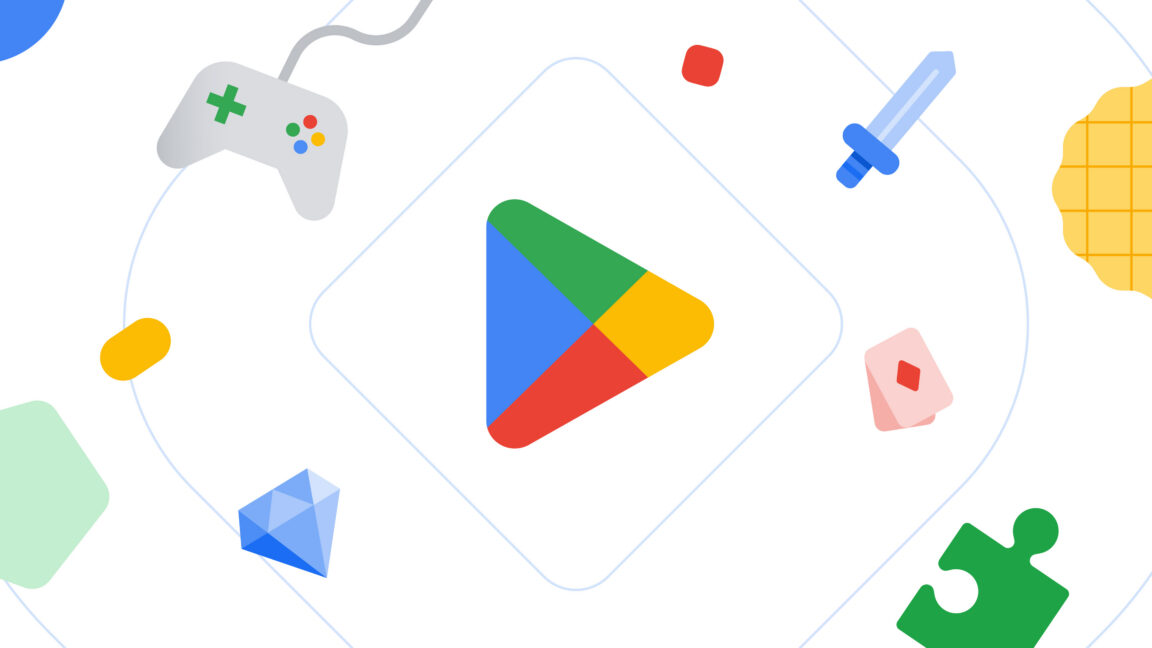
Google began offering third-party app store downloads in the Play Store earlier this week, but US District Judge James Donato says the company isn't doing enough. After reviewing the process for accessing the first non-Google store, Donato ruled that Google has added unnecessary "anticompetitive friction," ordering the company to rectify the issues.

While Epic and Google are patching things up with a global partnership agreement, the two are still on opposite sides of the antitrust case in the US. Google lost the case in 2023, and the intervening years have been about determining how to implement remedies to address Google's anticompetitive behavior. One of the court's key elements is the requirement that Google include third-party app stores in the Play Store, giving users an easy way to get apps from non-Google sources. Aptoide Games became the first such app store recently.

However, Google worked hard to avoid this outcome, attempting to settle with Epic to keep third-party app stores out. When it was forced to admit the Aptoide store under the terms of the ruling, Google didn't exactly put up a banner welcoming third-party app stores. In fact, Judge Donato found in a Thursday hearing that Google's implementation was not good enough, according to The Verge.
Read full article

Comments

Β© Google

  •  

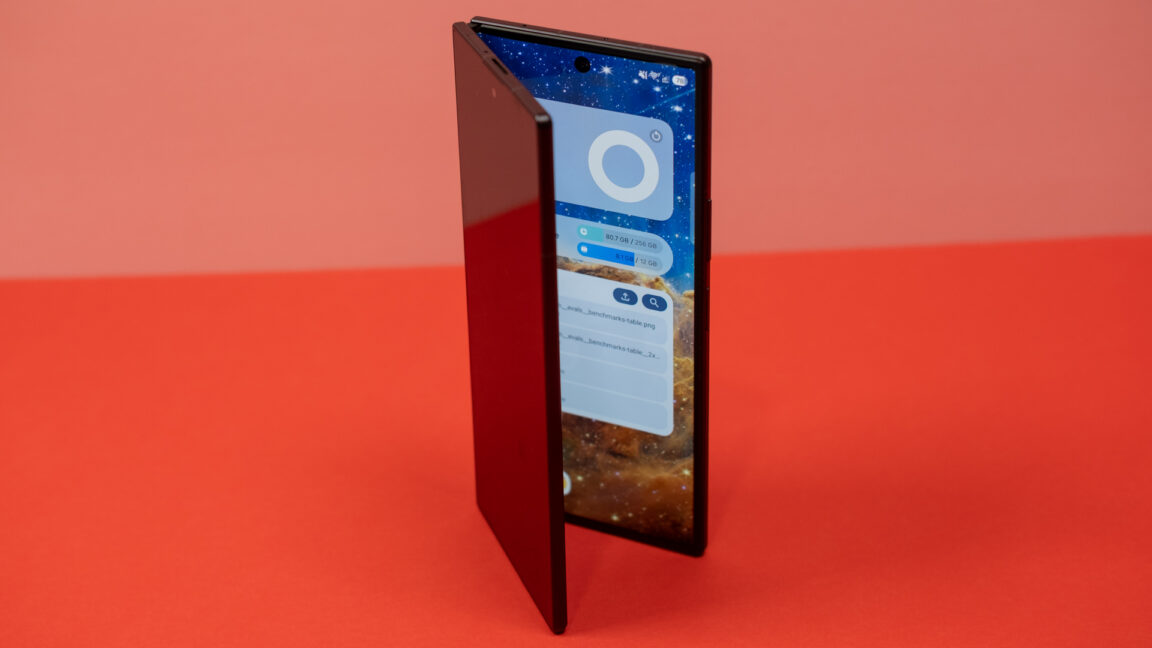
Samsung Galaxy Z Fold 8 Ultra review: The ultra foldable with an ultra price

Samsung has largely defined the foldable phone category, but it's no longer alone in releasing flexible devices. Google, Motorola, and a raft of Chinese OEMs have their own take on this form factor. Is the new Galaxy Z Fold 8 Ultra really "ultra" enough to remain on top?

This phone doesn't have the wide frame of the new Z Fold 8, instead matching the approximate size and shape of the company’s last few tablet-style foldables. The Z Fold 8 Ultra is not a big leap, but it continues Samsung's pattern of iterative foldable improvements. At this point, there's very little left to improve. The compromises of going with a foldable over a regular flat phone have largely been erased with the Z Fold 8 Ultra. Well, except for the price.

Flatter and a little better

Foldables used to be real pocket-busters, almost like carrying two phones glued together. Samsung has successively shaved a few millimeters off every year, taking a leap last year with the Z Fold 7. The Z Fold 8 Ultra is even a bit slimmer than that phone, but the difference is basically imperceptible. It still has the same buttons in the same places, including a fingerprint sensor in the power button.

Read full article

Comments

Β© Ryan Whitwam

  •  

Google announces Gemini 3.7 Flash just three weeks after previous release

Google is announcing a new Gemini model today, but it's not the long-awaited 3.5 Pro. Gemini 3.7 Flash is now rolling out to replace 3.6 Flash, which itself was released only three weeks ago. This new "workhorse" model is supposedly the product of core optimizations and developer feedback, offering improved coding and agentic performance. And Google is hoping to counter the lower cost of some competing models with a lower "introductory price" for 3.7 Flash.

According to Senior Director Tulsee Doshi, Gemini 3.7 Flash is noticeably better at coding than the previous Flash release. She cites a jump in the FrontierCode 1.1 Main test from 34.4 to 43.6 percent and DeepSWE v1.1 going from 49 to 65.3 percent. As for the vibes, Gemini 3.7 Flash's WebDev Arena score has risen to 1,588 from 1,538.

People turning to Gemini and hoping it will "know" things may also see modest improvements in Gemini 3.7 Flash. The GDP.pdf benchmark, which measures how well a model can process complex documents, has gone up to 34 percent versus 22 percent with 3.6 Flash. AutomationBench tests how well models can execute common business workflows, and Gemini 3.7 Flash rose to 30.4 percent from 3.6's 17 percent score.

Read full article

Comments

Β© Aurich Lawson

  •  

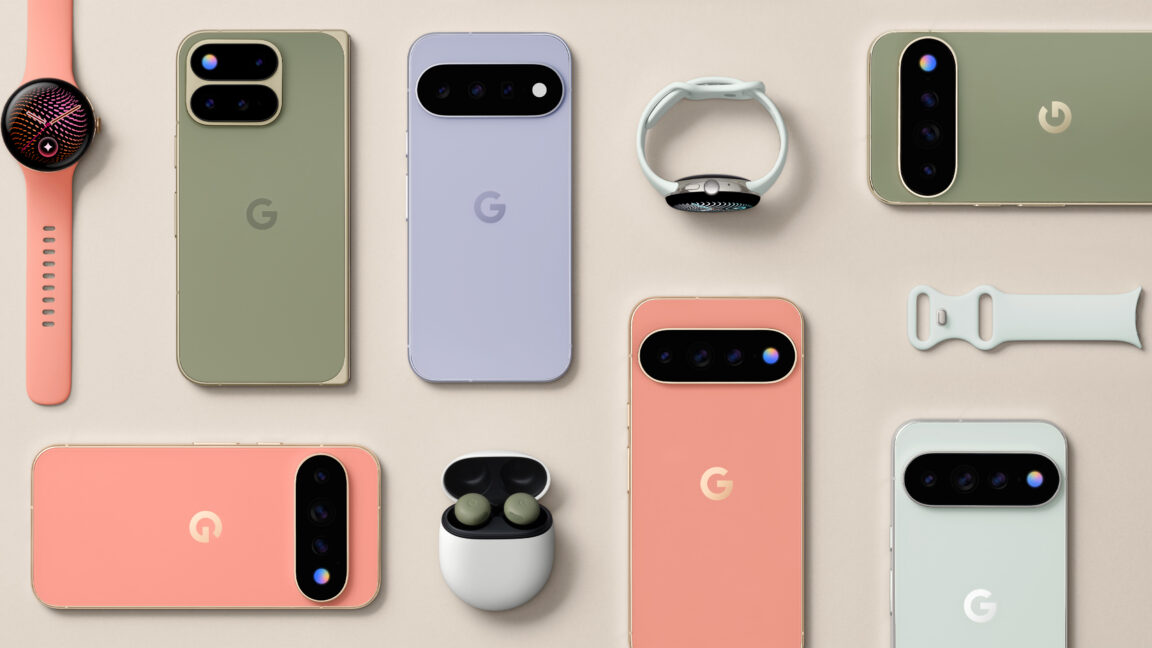
Google reveals 2026 hardware lineup: Pixel 11, Pixel Watch 5, and Pixel Tag

Google has revealed its Pixel phone hardware for 2026, and you won't be surprised. The Pixel 11 series looks a lot like last year's lineup, featuring an evolution of the design Google adopted with the Pixel 9. There are some minor tweaks, a few new hardware goodies, and yes, even more Gemini-powered AI. The new phones are joined by an updated Pixel Watch 5 with much the same story, as well as Google's first in-house tracker device, the Pixel Tag. And you can place orders for all of Google's new hardware today.

The Pixel 11 series is clearly the star of the show. You might even call it the highlightβ€”or HiLight. Just as the leaks predicted, Google's most notable hardware innovation for the 2026 Pixel phones is the return of the notification LED (sort of).

The new HiLight feature is available on the Pro phones, so the base model Pixel will remain unilluminated. HiLight consists of a ring of RGB LEDs inside the flash assembly on the back of the phone. It lights up when you're talking to Gemini, so you don't have to look at the screen of your phone to know you've been heard or that the AI is working. Thus, it makes the most sense when the phone is lying face down.

Read full article

Comments

Β© Google

  •  

Gemini becomes Google's fastest-growing product ever as it hits 1B users

Google has been all-in with Gemini for the last several years, and despite some animosity online, the bet is paying off. CEO Sundar Pichai announced today that Gemini has reached 1 billion monthly active users (MAUs), an important milestone for any Google product. While 13 other Google products have managed that feat, Gemini has done it faster than any other.

Gemini has wormed its way into virtually every Google product and service, powering email organization in Gmail, document summary in Drive, and much more. Gemini is also core to Google's flagship search experience, with AI Mode and AI Overviews becoming increasingly hard to avoid. The 1 billion-user metric has nothing to do with any of that, though.

These 1 billion users may also be encountering Gemini in all those places, but that's not the MAU metric. Pichai is talking only about people who are opening the Gemini app or visiting the Gemini web interface to enter a prompt or access Gemini Live. If you used Gemini only once in the past month, you are part of this cohort.

Read full article

Comments

Β© Aurich Lawson

  •  

Following Epic loss, Google has started hosting rival app stores in the Play Store

A new day has dawned in the Play Store, and it's one that Google tried very hard to avoid. The first third-party app store has arrived in Google Play as a result of the long-running antitrust lawsuit with Epic. Those in the US can now head into Google Play and download Aptoide, a game-focused store that has been available as a sideloaded client since the early days of Android.

Forcing Google to distribute third-party app stores in Google Play was one of several remedies imposed by Judge James Donato after Epic emerged victorious in 2023. The remedies also included lowering developer fees, mirroring Google Play apps in other app stores, and allowing developers to use alternative payment systems. But it was the app store stipulation that seemed to irk Google the most.

Google almost avoided this outcome when it agreed to a settlement with Epic, which was announced early this year. Under the terms, Google would certify third-party app stores to allow users to install and use them with less friction, but it would not host them in Google Play. However, Google and Epic withdrew the settlement when it appeared the court would not approve it. This Registered App Store program is still slated to launch internationally, but in the US, Google is only doing what it must to comply with the judge's orders.

Read full article

Comments

Β© Mateusz Slodkowski/SOPA Images/LightRocket via Getty Images

  •  

Suno hopes to go legit with watermarks for AI-generated music

The Internet is awash in AI content, and it's not always easy to tell it apart from genuine human creations. While images and videos are perhaps the most obvious type of AI slop, streaming music services like Spotify are also being inundated with AI-generated tunes. Suno is one of the most prolific sources of this AI music, but the company now says it's looking to clean up its act with watermarks and policy changes.

In a blog post announcing the plans, Suno CEO and co-founder Mikey Shulman says this is a necessary change to meet "emerging industry standards" for the labeling of AI content. Soon, the company will add watermarks to all audio outputs from its models, giving platforms the option to mark content as AI or block it entirely. Shulman doesn't say if Suno will rely on an in-house solution or a ready-made solution like Google's SynthID.

Google recently began licensing SynthID to other companies. Google says the tech has been used to label 60,000 years' worth of audio generated by its Gemini models, plus more than 100 billion images and videos.

Read full article

Comments

Β© Getty Images

  •  

Google's AI shake-up: DeepMind's Hassabis steps aside, senior scientists depart

Google got a slow start with generative AI after seemingly being caught flat-footed by Microsoft's Copilot reveal. What a difference a few years make. Now, Google is at the forefront of AI development (for better or worse), but new cracks are beginning to show. The company's string of high-profile personnel departures continues, and DeepMind CEO Demis Hassabis has now said he will hand off day-to-day responsibilities to take on an oversight role at parent company Alphabet.

Hassabis was one of the founders of DeepMind, and he maintained a key leadership role after Google acquired it. As the generative AI boom took off, Hassabis has been one of the loudest voices predicting the impending creation of artificial general intelligence (AGI), which is typically described as an AI with human-like capabilities and intelligence.

In his memo announcing his decision to leave DeepMind, Hassabis again leans on the promise of AGI. "I've been working towards AGI my whole life and now, like many of you, I feel it is close at hand," said Hassabis.

Read full article

Comments

Β© Ruhani Kaur/Bloomberg via Getty Images

  •  

Google plans to kill Assistant on your phone on September 4

Google Assistant's days have been numbered for a while, but the company has now settled on a date to retire its pre-AI assistant robot. In an email being sent out to users, Google confirms that Assistant on Android devices will be shut down starting on September 4, forcing everyone over to Gemini. Google told us it was coming, but that doesn't make it hurt any less.

The initial plan was to retire Assistant in late 2025, but the service got a brief reprieve as Google shored up some aspects of Gemini. Now that Gemini is ready to take over, Google will begin ending support for the old system on September 4, but the email notes that it may take several weeks for the process to complete. So those stubbornly clinging to Assistant may still be able to use it a bit longer before the option disappears. For those who made the switch already, nothing will change.

By ending Assistant on mobile devices, Google is also killing it on myriad other gadgets that connect to your phone for smart features. So smartwatches, headphones, and cars with Android Auto are also being forcibly moved to Gemini. Most of Google's smart home devices have already transitioned to Gemini.

Read full article

Comments

Β© Aurich Lawson

  •  

The Pixel 11's "glow" feature is actually called HiLightβ€”here's what it does

Google will reveal the Pixel 11 series later this month, but leaks and teasers so far have painted a picture of phones that have barely changed since last year. One notable exception seems to be the illuminated dot from some of the teasers. This has been rumored as "Pixel Glow," but a new leak all but confirms a different (and less interesting) name. Say hello to HiLight.

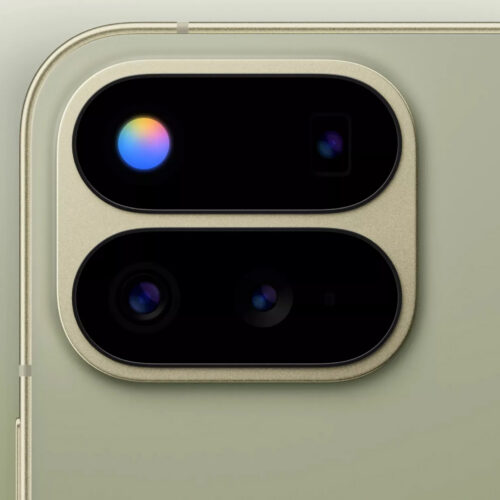
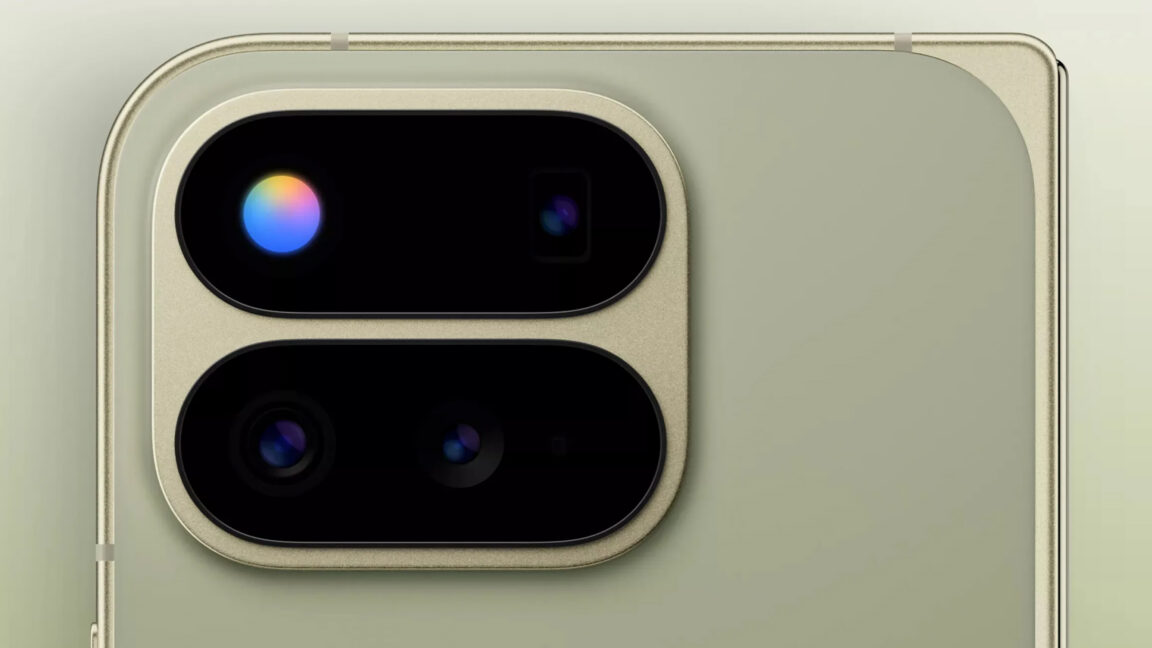
A post on Bluesky by WinFuture's Roland Quandt shows the new LED inside the camera module of the Pixel 11 Pro Fold. We can see the actual body of the device rather than a shadowy outline as in Google's teasers, and it does look a bit different than the previous Pixel Fold.

The camera bump on the Pixel 11 Pro Fold is smaller, with no separate section for the flash off to the right. It appears that HiLight is the flash. Presumably, it still works as a flashlight and camera flash, but it can also produce a range of colors.

Read full article

Comments

Β© Google

  •  

Google plans to exempt sanctioned nations from Android developer verification

We are a month away from the initial rollout of Google's Android developer verification system, which requires developers outside the Play Store to verify their identities, just like it does for devs publishing on its platform. The company contends this policy does not impinge on the platform's open nature. Still, the restrictions will be a big change, and there are still some unanswered questions. An issue that has come up repeatedly in the run-up to verification is what will happen to devs who can't verify because of where they live. It turns out that Google has a cryptic answer for that buried in an FAQ.

Developer verification will soon block the installation of apps from unverified developers on any Android device running Google services, which is functionally all Android phones outside Russia and China. Developers who want to keep releasing software, even if it's not in the Play Store, have to provide Google with their ID and pay a small fee.

But what if you're an Android developer living in a sanctioned nation? Currently, the US sanction list includes Iran, Cuba, North Korea, and occupied areas of Ukraine. Given the current uncertain state of US foreign policy, that list could change in the future. Google doing any business with developers in those places is a thorny issue, and it seems like the company has decided to just leave them hanging.

Read full article

Comments

Β© Ryan Whitwam

  •  
❌