Reading view

The ultimate eclipse chase: A Concorde raced against the Moon's shadow

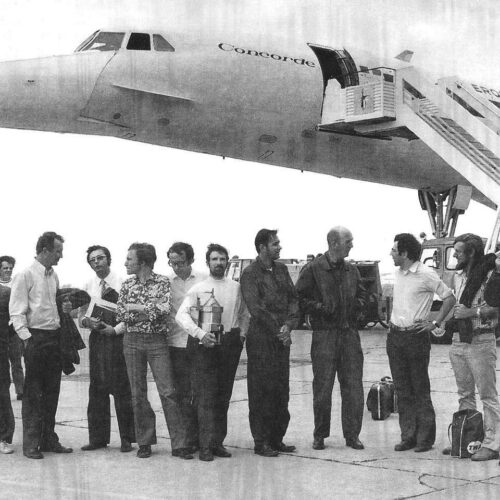
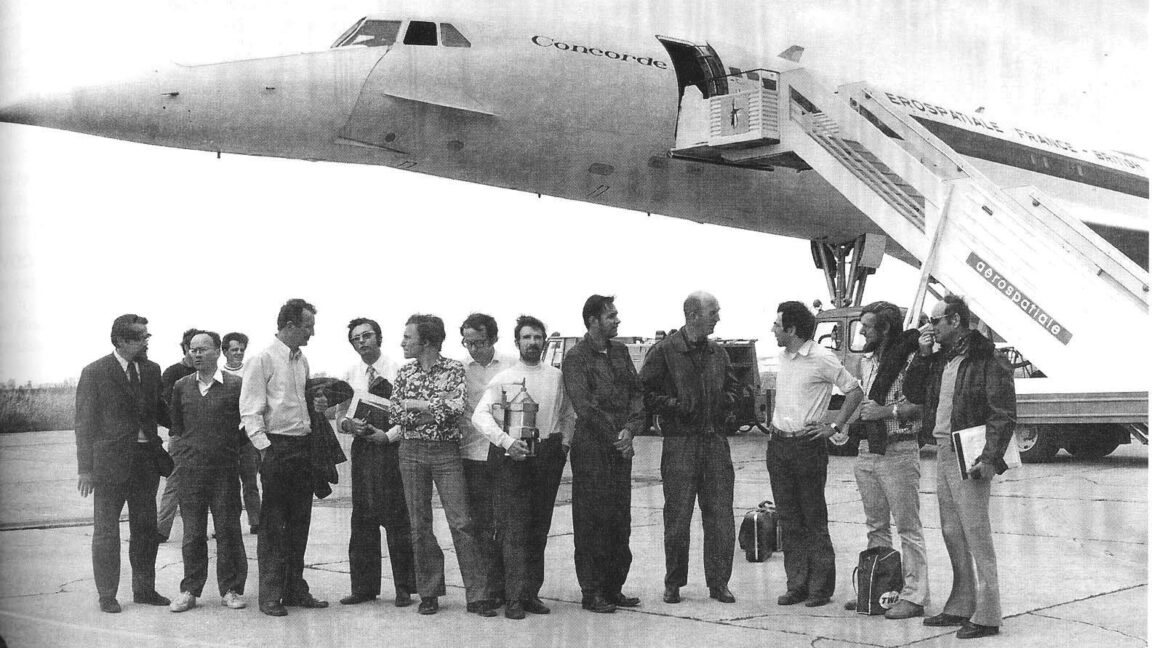
A walk down the tarmac at the National Air and Space Museum of France is guaranteed to thrill aviation enthusiasts. Several civilian and military aircraft of the past and the present are showcased in this museum, located at the Paris-Le Bourget airport. One of them is the legendary Concorde F-WTSS 001 prototype, the sight of which should give goosebumps to science enthusiasts as well.

That’s because right behind its long nose is a painted map that traces the path of a June 1973 total solar eclipse across Africa. It’s there on the Concorde 001 prototype because a group of eight scientists set a new world record of observing a total solar eclipse for 74 minutes by flying this aircraft at more than twice the speed of sound.

To put this figure into context, the maximum duration of totality on the ground is around 7.5 minutes when an eclipse is observed in the equatorial regions. For the upcoming solar eclipse of August 12, which can be seen from parts of Europe, the maximum duration of totality from the ground will be slightly more than two minutes.
Read full article

Comments

© F. Claudel

  •  

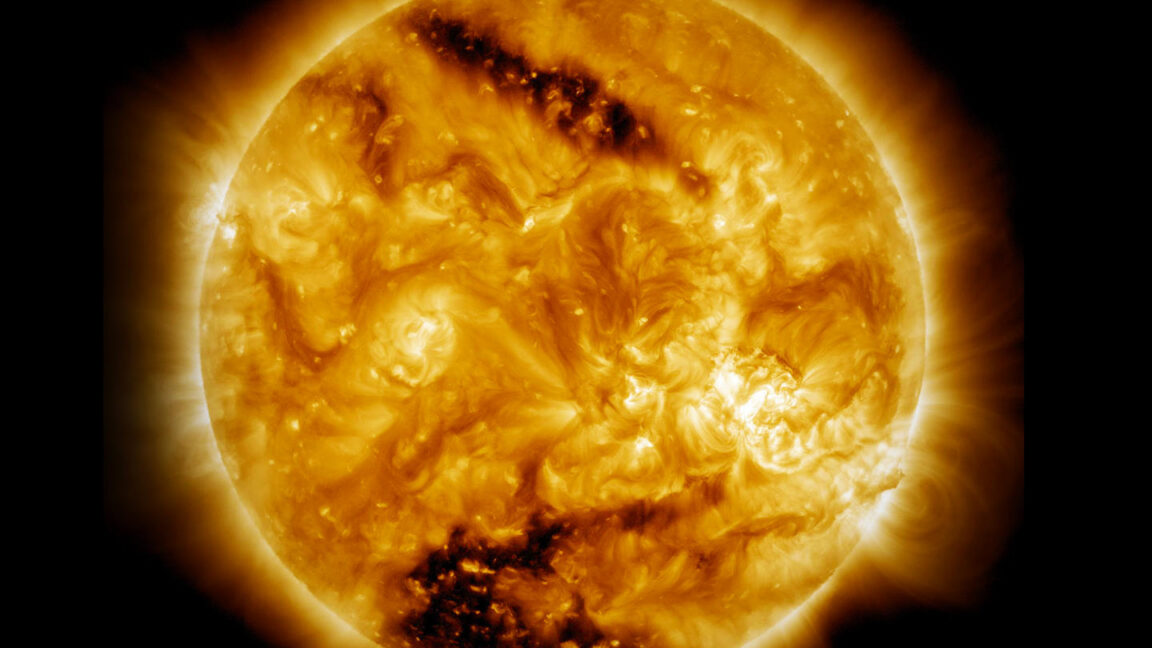
The world's biggest solar telescope caught vortexes on the Sun's surface

Wherever two fluids slide past each other at different speeds, the boundary between them buckles, then curls, then rolls up into vortexes. It’s called the Kelvin-Helmholtz instability, and the physics behind it was worked out in the late 1860s. We know this instability explains why wind causes ripples on the surface of water and clouds shear into a row of curves.

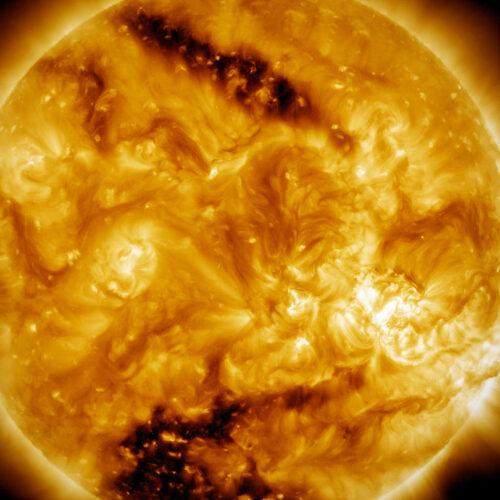
For decades scientists argued the same thing must be happening with plasma on the surface of the Sun, and yet nobody had been able to confirm it. Now, a team led by David Kuridze and Friedrich Wöger of the National Solar Observatory reports that Kelvin-Helmholtz instabilities are not just visible on the Sun, but they’re ubiquitous. Their new study proposes that this may change the way we think about how heat, mass, and magnetic energy move through the Sun's atmosphere.

Telescope’s test drive

The reason plasma whirlpools on the Sun stayed hidden for so long is rather trivial: They are very small. Their scale sits below what telescopes with mirrors smaller than 2 meters can resolve. For most of the history of solar physics, that has ruled out every telescope on Earth. This changed when the US National Science Foundation opened the Daniel K. Inouye Solar Telescope, a 4-meter instrument in Hawaii and the largest solar telescope in the world. The telescope entered its operational phase back in November 2021.

Read full article

Comments

© NASA/Goddard/SDO

  •  

Research roundup: 6 cool science stories we almost missed

It’s a regrettable reality that there is never enough time to cover all the interesting scientific stories we come across. So every month, we highlight a handful of the best stories that nearly slipped through the cracks. July’s list includes outfitting cyborg cockroaches with a tiny diving suit for navigating flooded terrain; confirmation that a Medici duke died of malaria, not poisoning; the best evidence to date that Betelgeuse is orbited by a companion star; and evidence that some ancient Egyptian princesses were skilled archers.

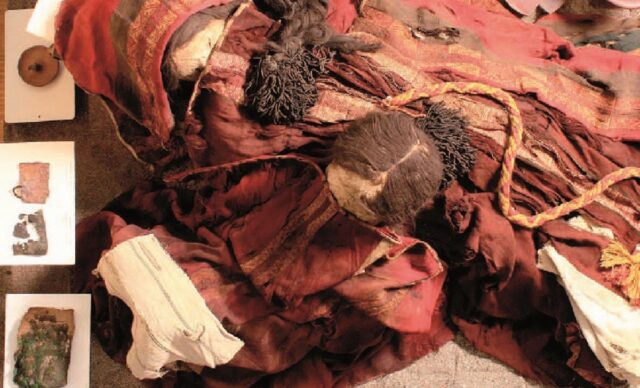
Sacrificial Incan boy died of blunt force trauma

Credit: Administrative Archive, Regional Museum of Iquique–CORMUDESI

It's known that the Incas practiced a human sacrifice ritual known as Capachoca, in which children were offered to the mountains and believed to become divine themselves, serving as intermediaries with the gods. This often involved pilgrimages to the remote sacrificial sites, with colonial accounts describing strangulation, asphyxiation, and blunt force trauma as the most common methods of sacrifice. Archaeologists have reanalyzed the remains of one such victim and concluded the boy died from blunt force trauma, rather than freezing to death as previously believed. They described their findings in a paper published in the journal Science Advances.

Read full article

Comments

© National Museum of Natural History of Chile

  •  
❌