Reading view

Thunder + fiber-optic cabling used for seismic imaging

Most of what we know about the Earth's interior comes from observing seismic waves. These travel at somewhat different speeds depending on the details of the rock they're moving through—whether it's solid or semi-molten, how much water is present, whether it's fractured or solid material, and so on. Get enough data from enough seismic events, and you can start piecing together a picture of what's present at different depths below the surface.

In many cases, we can get this data from naturally occurring events like earthquakes. In others, we intentionally create waves using things like explosives, providing the opportunity to do imaging in specific areas without needing to wait for an earthquake. Now, a team of scientists at Penn State suggests there's a potential option that sits between waiting for an earthquake and triggering your own seismic event: thunderstorms.

Some of the energy carried by thunder enters the Earth's upper crust, triggering what are termed "thunderquakes." But, for various physical reasons, the seismic signals are extremely complex, making it difficult to extract clear signals from them. The Penn State team says it has finally constructed a model that can help make sense of this complexity and used it to reconstruct the terrain under the local campus.


Read full article

Comments

© Nature247

  •  

Hidden Zillow listings created fake supply shock, raising NYC rents, lawsuit says

This week, two New York City renters filed a class action complaint alleging that a brokerage business called Compass—which has been boycotting posting listings on free digital platforms like Zillow—has now delisted so many rental units that it has created a fake supply shock that is artificially raising rents.

According to plaintiffs, Peter Castaneda and Haley Gelfand, Compass has bought so many brokerage firms over the past decade-plus that it maintains a monopoly, controlling “over 80 percent of the rental unit listings available for renters in Manhattan based on 2025 data.”

With that monopoly, Compass can “literally dictate pricing for as much as 80 percent of Manhattan’s rental units,” renters argued. And now, Compass is allegedly trying to manipulate prices on other platforms, as well.

Read full article

Comments

© Busà Photography | Moment

  •  

Motorola's GrapheneOS phones will launch in 2027 priced higher than Pixels

Several months ago, Motorola and the makers of GrapheneOS announced a team-up that would expand support for the privacy-centric OS to beyond Google's Pixel phones. The announcement, however, was bereft of details. Now, the creators of the OS have taken to Mastodon (naturally) to provide an update. Moto's GrapheneOS phones are on track to launch in 2027, but they'll cost a pretty penny.

The upcoming Moto devices won't ship with GrapheneOS, but they will be fully supported by the project with help from Moto itself. So far, only Pixel phones have met GrapheneOS's strict hardware requirements to ensure the highest level of security and privacy. The software, which is based on Android, includes features like enhanced memory protection, granular network permissions, customizable app sandboxing, and a duress code that can be used to wipe your phone. (That last one got an activist charged with a felony earlier this year after he used it to delete his data during a customs interrogation.)

According to the GrapheneOS team, the upcoming Moto phones will be premium flagship devices. The team expects pricing to be even higher than Pixel phones, which is saying something. The current Pixel lineup starts at $900 for the base model Pixel 11, a $100 increase from last year. The Pixel 11 Pro XL price has gone up to a whopping $1,300 this year.

Read full article

Comments

© Motorola

  •  

Lawsuit demands Logitech hand tariff refunds over to customers

Logitech is facing a proposed class action lawsuit for not giving customers tariff refunds.

In April 2025, Logitech raised the prices on 51 percent of its portfolio, with some prices increasing by as much as 25 percent.

The complaint seeks to “recover monies that Logitech extracted from American consumers as offset for import tariffs that the United States Supreme Court has since declared unlawful, tariffs for which Logitech now stands to be reimbursed by the federal government. This is all while Logitech retained every dollar of the corresponding price increases it charged its customers due to the illegal tariffs.”

Read full article

Comments

© Logitech

  •  

Chinese regulators tell Tesla to fix nearly 3 million cars

Tesla is facing a massive recall in China today. Chinese regulators are taking a stricter approach to safety, and the automaker now has to add warning labels to 2.98 million Model 3 and Model Y electric vehicles in China that make it clearer how to open the rear doors in the case of an emergency that causes the car to lose power.

As we learned earlier this year, Chinese regulators are getting more serious about the recent trend of electronically controlled car doors; a growing number of crashes have had fatal consequences when the occupants have been trapped in burning cars. Starting next year, new rules give specific dimensions for handles that must be followed by all newly approved vehicles. But cars that have already been on sale for some time, like the Models 3 and Y, are grandfathered in, at least until the end of 2028.

But China wants Tesla to do something about the nearly 3 million cars already on its roads. It is requiring the automaker to add warning labels to the car interiors—something that will require physical access to the car. Additionally, Tesla will push out a software update that automatically lowers all the cars' windows in the event of a collision.

Read full article

Comments

© Andrey Rudakov/Bloomberg via Getty Images

  •  

Fighter jets help destroy Russian drone boat near European offshore gas platform

This week, Romania accused Russia of sending a drone boat loaded with explosives to a vital European natural gas platform in the Black Sea. A Romanian F-16 fighter jet used its cannons to disable the surface drone so that explosive ordnance experts could blow it up safely.

On August 20, the Romanian Coast Guard first spotted the maritime drone a few hundred meters away from the Neptun Deep project’s main drilling platform, where several hundred workers were busy with the platform’s ongoing installation, Defense Minister Radu Miruță said in a Facebook post. The offshore gas project would make Romania the largest gas producer in the European Union once it starts full production in 2027.

To protect the lives of the workers and the offshore gas infrastructure, the Romanian military scrambled two F-16 fighter jets to stop the drone with cannon fire, Miruță said. Army specialists later carried out a controlled detonation, as seen in a Facebook video shared by the defense minister.

Read full article

Comments

© Romanian Ministry of Defense

  •  

Personalized pricing is “abhorrent,” but FTC limits may increase costs, critics say

Some Americans worry that the Federal Trade Commission's rush to limit personalized pricing in the name of consumer protection could end up killing discounts they depend on or, counterintuitively, raising prices.

The FTC has no power to ban personalized pricing, in which a business uses a customer’s personal data to determine the highest price that person might be willing to pay for a product or service. But the agency believes it could set limits on the practice, including potential penalties for businesses that fail to disclose when customers may be paying more because data suggests they won't balk at the price.

In a request for public comment on a proposed policy statement, the FTC acknowledged that personalized pricing is common in some industries. But FTC Chair Andrew Ferguson said new industries are increasingly tracking customers to set individualized prices, blindsiding consumers who expect a listed price in markets like retail “to be the same price that everyone else sees,” Ferguson said.

Read full article

Comments

© Andrew Harnik / Staff | Getty Images News

  •  

Waymo doubles spending on lobbying in robotaxi battle with Uber

Waymo has sharply increased its lobbying spending as it seeks to persuade US regulators to clear a path for fully autonomous taxi services, intensifying its battle with rival Uber over the future of robotaxis.

The Alphabet-owned company spent more than $1 million between April and June on lobbying the federal government, more than double its outlay a year earlier, according to filings. That put Waymo’s spending close to Uber’s and well ahead of rivals including Amazon’s Zoox and Tesla.

The rise in lobbying comes as Waymo and Uber push competing visions for the future of ride-hailing. Waymo wants a faster route to fully driverless commercial services, while Uber is advocating a staggered rollout in which robotaxis operate alongside human drivers.

Read full article

Comments

© Alex Kent, Bloomberg

  •  

As demand for Meta AI glasses explodes, it’s harder to avoid creepy recordings

Can you tell when someone nearby is wearing Meta AI glasses?

As millions of people buy into the smart glasses fad each year, the odds are increasing that you could be secretly recorded while simply going about your day.

Meta is not the only smart glasses maker, but its AI glasses are by far the most popular. And as the devices become more common, some public places, including schools, courts, restaurants, and entertainment venues, have begun to ban them. Even tech lovers have rejected Meta glasses in certain settings. The hackers behind DEF CON 2026 reportedly banned smart glasses with no exceptions, reminding attendees with prescription pairs to “be sure to pack non-violating eyewear if you need them.”

Read full article

Comments

© Aurich Lawson | Getty Images

  •  

Rocket Report: SpaceX makes its mark on the Moon; ULA names new boss

Welcome to Edition 9.07 of the Rocket Report! China's workhorse Long March rocket family appears to be rebounding quickly from a rare launch failure August 10. Chinese officials have not publicly released any information on what may have caused the Long March 7A rocket to break apart less than 90 seconds after liftoff, but the rocket's use of YF-100 engines initially raised questions about the failure's impact on other Chinese rockets that use the same type of engines. But no biggie. YF-100 engines returned to flight six days later with the successful flight of a Long March 12 rocket, and the heavy-lift Long March 5—also with YF-100 engines—is set to launch in a few days with one of China's most important space missions of the decade: the Chang'e 7 lunar lander en route to the Moon's south pole.

As always, we welcome reader submissions. If you don't want to miss an issue, please subscribe using the box below (the form will not appear on AMP-enabled versions of the site). Each report will include information on small-, medium-, and heavy-lift rockets, as well as a quick look ahead at the next three launches on the calendar.

Trouble in Taiwan. A prototype for a future satellite launch vehicle developed by Taiwan's top weapons manufacturer veered off course shortly after liftoff Wednesday, Taiwan's Central News Agency reports. The "trajectory anomaly" prompted the activation of the rocket's self-destruct mechanism. The government agency responsible for the test flight, the National Chung-Shan Institute of Science and Technology (NCSIST), reported no injuries or property damage. Debris from the rocket fell into a planned safety control zone near the southern tip of Taiwan.

Read full article

Comments

© NASA/Goddard Space Flight Center/Intuitive Machines

  •  

US distributor of China’s most popular humanoid robots pivots after US ban

A leading US distributor of China’s most popular humanoid robots and robot dogs now plans to produce its own robots at a facility on Long Island, New York. The business pivot comes amid the US government’s growing crackdown on foreign-made robots.

The company, RoboStore, had previously become the main North American distributor for humanoid robots and quadruped robots from Unitree Robotics, a Chinese robotics company that produces some of the most affordable and popular humanoid robot models. Universities like Harvard and MIT, along with tech companies like Amazon and Nvidia, purchased such robots made in China through RoboStore for their own research and development purposes.

“We’ve sold over 1,500 robots and deployed them and worked with customers like Cisco, OpenAI, Nvidia, and over 150 universities,” Teddy Haggerty, founder and CEO of RoboStore, told Ars.

Read full article

Comments

© Robo Inc.

  •  

Europe cancels planned upgrades for Ariane 6 rocket

In the two years since it made a largely successful debut, Europe's Ariane 6 rocket has launched eight missions, all of which reached orbit safely.

The large, expendable rocket has a capacity of more than 20 metric tons to low-Earth orbit. And to the credit of European rocket scientists and planners, the Ariane 6 has had a substantially smoother rollout than comparable vehicles in the United States—Blue Origin's New Glenn and United Launch Alliance's Vulcan rockets—both of which have had significant growing pains.

However, even though the Ariane 6 rocket has had a successful debut, its future is clouded by high costs.

Read full article

Comments

© ESA-CNES-Arianespace-P. Piron

  •  

They survived 9/11; 25 years later, their bonds remain unbroken

September 11, 2001, will be remembered as one of the darkest days in American history. As the 25th anniversary approaches, National Geographic, in collaboration with the 9/11 Memorial and Museum, is marking the occasion with a new documentary miniseries: 9/11: Reunited. The three-episode series revisits the personal stories of several survivors of the terrorist attacks, with a twist: It reunites people whose paths crossed at that time to celebrate the bonds they formed 25 years ago.

Director Julian Jones was a producer on NatGeo's Emmy-winning 2021 documentary miniseries 9/11: One Day in America. The experience inspired him to return to direct 9/11: Reunited. "What emerged for me [while making the 2021 documentary] was a sense of people showing up for each other, a selflessness and everyday heroism," Jones told Ars. As the 25th anniversary of the attacks approached, he and National Geographic decided to commemorate the milestone with a documentary series focused on that aspect.

"We wanted to bring people together to offer gratitude to each other, to answer unanswered questions, to talk about things that maybe they weren't ready to talk about until now, and also to remember their fallen comrades or friends," said Jones. "After 25 years, who do they want to meet? What questions have they got? I think we also wanted to tell the story of what many in the 9/11 community call 9/12, that's the rest of your lives—the journey, and in many cases, the psychological and physical struggles."

Read full article

Comments

© AP Photo/Mark Lennihan/FILE

  •  

Roblox must make changes after failing to block adults creeping on kids

Despite making changes last fall to help block adults from messaging unknown children, Roblox is still failing to stop adults from creeping on kids in other ways, Australia’s eSafety commissioner, Julie Inman Grant, said on Thursday.

Suspecting that Roblox may not be doing enough to stop child exploitation, eSafety conducted testing earlier this year that flagged alarming gaps in Roblox safeguards. The agency found that adult strangers could still send connection requests to kids, whose “profiles and biographies, including account names, number and names of connections, avatar images, and non-sensitive biographical information such as their interests were visible to anyone on the Roblox platform, with no option to restrict the visibility of this information.”

Such requests did not trigger parental alerts, eSafety found, and bad actors could also search kids’ visible-to-anyone contact lists for more targets.

Read full article

Comments

© SOPA Images / Contributor | LightRocket

  •  

Genesis joins the giant electric SUV club with new GV90

A couple of years ago, Genesis showed us its unique take on the luxury electric SUV with the Neolum concept. The brand's designers know how to draw a handsome shape, particularly using an SUV's proportions, and the clean-lined concept featured a four-seat interior with no B pillar, swiveling front seats, and a thoughtful mix of leather, wool, and even wood. Now Genesis has debuted the production version as its new electric flagship, the GV90. And based on the photos, at least, the process of turning that concept into reality has been a success.

The GV90 uses the same 800 V E-GMP platform as other Korean electric three-row SUVs, the Hyundai Ioniq 9 and Kia EV9. A three-row, seven-seat GV90 will be part of the range, and I would assume the most common variant we'll encounter on the roads. But for the launch, Genesis is just focusing on the four-seat GV90 and the high-end GV90 Neolum; the latter faithfully translates most of the concept, including the pillarless coach doors (which Genesis is calling the Neolum Arch Gate).

The GV90 Neolum is a variant with no B pillar and coach doors. Credit: Genesis
GV90 Neolum interior
Here's one GV90 Neolum interior. The wood floor from the concept made it, too. Credit: Genesis
This is one of the First Edition GV90 Neolum interiors. Credit: Genesis

Pillarless coach doors certainly add drama to a vehicle, and Genesis has previously told Ars it learned enough to engineer them with all the safety requirements volume production would require. Speaking of safety, all GV90s include the world's first roof airbag (which deploys in the case of a rollover), one of 12 airbags throughout the interior.

Read full article

Comments

© Genesis

  •  

SpaceX’s orbital data centers would create a new category of e-waste

Elon Musk’s talk about maintaining a million-strong AI data center satellite megaconstellation may not exactly be practical or economical, but it might be unique. It’s about the closest we’ve come to confronting a scheme that would export a considerable amount of valuable materials into space. Humans aren’t doing a great job of material sustainability, but normally we’re talking about stuff escaping a recycling pipeline rather than escaping Earth’s gravitational pull.

The commercial space sector likes talking about the allure of mining asteroids for precious metals to bring back to Earth. Under what circumstances are we going to be willing to do that in reverse? Starlink alone has doubled the mass of objects in low-Earth orbit, and this orbital data center constellation would dwarf that—and dispose of at least some satellites by pushing them away from Earth.

Given the roughly five-year expected lifetime for data center GPUs, about 200,000 of the 1 million proposed SpaceX AI1 satellites would be decommissioned each year. Based on their May 29 FCC filing, about 40,000 would definitely deorbit and burn up in the atmosphere. (Those materials would largely be dispersed throughout the atmosphere, turning a resource into a diffuse contaminant that slowly settles over the globe. One related issue: the aluminum would cause an unknown amount of ozone depletion over a period of decades.) Some or all of the remaining 160,000 satellites would be moved outward into a distant “disposal” orbit, instead. Either way, they're lost from a "material life cycle" point of view.

Read full article

Comments

© Aurich Lawson | Getty Images

  •  

Reverse-lookup service exposed millions of photos of people’s faces

When someone uploads a photo to the people-search tool ClarityCheck, the website has a clear message: “Your reverse image search is private and secure.” New research, though, shows that the website left more than 9 million image files, including photographs of people’s faces, publicly exposed. And a second misconfiguration publicly exposed people’s email addresses and phone numbers.

Overall, according to findings from independent security researcher Jeremiah Fowler, the exposed ClarityCheck database contained roughly 450 GB of images, including what appeared to be profile images, screenshots, and other photographs of adults, teenagers, and children. All of the images were stored in an unsecured Amazon S3 bucket, with files in folders named “faces” and “profiles,” which could be accessed by anyone online through a URL included in the company’s publicly available website code.

ClarityCheck is one of a number of so-called people-finder tools that have appeared online in recent years. These websites broadly claim to be able to search the web, public records, and other databases to identify individuals. ClarityCheck’s website says it can run searches on phone numbers, email addresses, vehicle identification numbers, and names. Its photo-search page says it can help “identify anyone in a photo” and find social media profiles “in seconds.”

Read full article

Comments

© picture alliance / Contributor

  •  

Grok exfiltrates user data when malicious instructions are encrypted

Earlier this week, researchers outlined an attack that used a secret input provided by Microsoft 365 Copilot for enterprise to cause the AI assistant to exfiltrate a password present in the user’s inbox. Now, a separate team has devised a similar attack against Grok. The new data theft hack employs a deceptively simple trick to force the Elon Musk-owned large language model to steal user chats and other personal information. At the time this post went live, the assistant continued to cough up the data, despite xAI being informed of it in June.

The lesson from both this week’s episodes—and the countless other ones that have come before it—is that LLMs are incapable of solving the root causes for prompt injections, the most severe vulnerability classes they’re most prone to. That leaves AI developers with no other option but to build a guardrail that steers the model away from the harmful actions. As I noted in Tuesday’s story, the approach is tantamount to a road traffic safety engineer erecting a protective rail around a dangerous bend rather than banking the curve.

Cryptographic Context Injection in the house

Prompt injections exploit LLMs' training to comply with user requests whenever possible. Attackers can capitalize on the predilection by smuggling harmful instructions into emails or webpages the assistant is instructed to summarize. Because LLMs can’t reliably distinguish between content in an email sent by an untrusted party and user instructions entered directly into a prompt, the overly solicitous LLM faithfully follows them. To date, Grok and other LLMs' only recourse is to create guardrails that flag suspicious instructions and forbid them from being executed.

Read full article

Comments

© Getty Images | SOPA Images

  •  

NASA calls off mission to rescue Swift gamma-ray observatory

NASA and Katalyst Space Technologies announced Wednesday they are giving up on a robotic mission to rescue the Swift gamma-ray telescope before it falls out of orbit.

The rescue satellite, named Link, launched July 3 on a journey to fly up to NASA's Neil Gehrels Swift Observatory, capture it with three robotic arms, and boost its orbit high enough to escape a looming reentry. Link is about the size of a refrigerator, with two power-generating solar arrays and three xenon-fueled electric thrusters to send Swift into a safer, higher orbit.

Katalyst, the startup leading the Swift rescue effort, said Wednesday that "ongoing attitude control issues" will prevent the Link satellite from completing its rescue mission. The spacecraft is still alive, and Katalyst said it will make the most of Link's remaining capacity, which may still allow it to get near enough to Swift for a demonstration of the satellite's close-in navigation system.

Read full article

Comments

© Katalyst Space Technologies

  •  

Amazon aims for delivery drones to reach 500 US neighborhoods by end of 2026

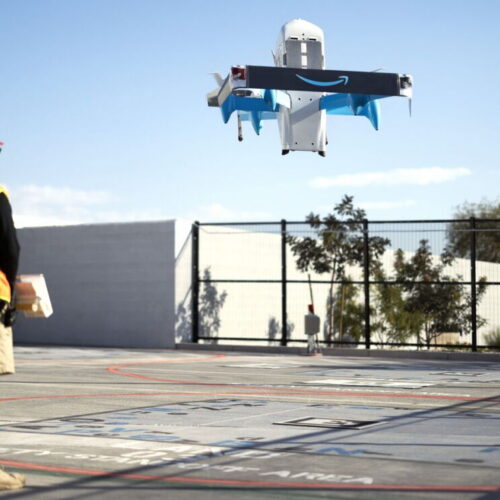
Amazon wants to grow its Prime Air delivery drone service sixfold to reach nearly 500 cities and towns across the United States by the end of 2026. The planned expansions from Amazon and its rivals could make the convenience of delivery drone services available to tens of millions more people in the coming months—but will also test more communities’ tolerance for increased noise from daily drone flights.

On August 19, Amazon announced it would soon launch Prime Air in the metropolitan areas of Chicago; Cleveland; Atlanta; Syracuse, New York; and Boise, Idaho, with more to come later in the year. Each Prime Air site offers delivery drone service within an area of about 175 square miles, with delivery times ranging from half an hour to an hour.

Prime Air already operates out of Amazon warehouses in 10 cities across seven states. Those include primarily suburban neighborhoods of Phoenix; Tampa; Kansas City; Omaha, Nebraska; Baton Rouge, Louisiana; Detroit; Houston; and San Antonio, Dallas, and Waco, Texas.

Read full article

Comments

© Amazon

  •  

Framework responds to complaints that BIOS update bricks Ryzen 7040 laptops

A BIOS update for the Framework Laptop 13 with AMD Ryzen 7040-series processors is bricking the systems, multiple users have reported online.

Framework started shipping pre-built Ryzen 7040-based Framework Laptop 13 computers and compatible motherboards in 2023. In June 2026, Framework released BIOS 3.20 for the devices. The update adds mainboard support for features, including a haptic touchpad and new speakers, for the higher-end Framework Laptop 13 Pro and fixes issues, including one “where the Battery Extender status was reported incorrectly following a reboot, hibernation, or shutdown after the timer had expired," per a post on Framework’s forum from an employee.

Some users say that they installed the update successfully.

Read full article

Comments

© Andrew Cunningham

  •  

Flight attendants freaked out that Google is buying tons of Spirit employee data

Last Friday, Google won an auction to acquire a huge amount of Spirit Airlines data.

The data doesn’t include personal information or customer data, but instead nearly covers the airline's entire employment and workplace record.

To ensure that no individual can be identified in the dataset, Google agreed to use a court-appointed ombudsman to oversee a process to strip any personally identifying information (PII) from the data before it’s transferred to Google. Under the deal, Google agreed to maintain the data in this de-identified form and to never intentionally re-identify the data. And if Google sells access to the data, third parties would supposedly be bound by the same terms.

Read full article

Comments

© Sarah Rice / Stringer | Getty Images News

  •  

FCC abolishes gigabit speed goal, suggesting it is unfair to slower technologies

The Federal Communications Commission last week eliminated the gigabit speed goal established during the Biden administration and declared that current levels of broadband deployment in the US are acceptable. Though fiber networks have routinely offered such speeds for years, the FCC said the gigabit speed goal is not "technologically neutral," suggesting that it isn't fair to other, slower technologies.

In 2024, the FCC raised its broadband benchmark to 100Mbps downstream and 20Mbps upstream, setting the new standard by which to judge whether deployment is reasonable and timely. The FCC at the time also set a long-term speed goal of 1Gbps download speeds paired with 500Mbps upload speeds, saying it would use the goal “as a guidepost for evaluating our efforts to encourage deployment.”

Republican Brendan Carr, who is now the FCC chairman, never liked that long-term goal. He proposed abolishing it last year, and the change was finalized on August 14 in the FCC's latest broadband deployment report. The reports are mandated by Section 706 of the Telecommunications Act.

Read full article

Comments

© Getty Images | UCG

  •  

The floodgates are open after another Chinese company lands a reusable rocket

It has been a little more than a month since China recovered an orbital-class rocket booster for the first time. A second launch operator accomplished a similar feat Tuesday in another sign of China's growing launch capability.

It took 10 years for a second US launch company, Blue Origin, to propulsively land an orbital-class booster after SpaceX did it with the Falcon 9 rocket in 2015. SpaceX has since added a second reusable rocket to its fleet with Starship and its Super Heavy booster. Perhaps a third American company will join SpaceX and Blue Origin's club in 2027. Rocket Lab, Stoke Space, Relativity Space, and Firefly Aerospace—working in partnership with Northrop Grumman—are working on reusable rockets that could make their first flights in the next couple of years.

A similar number of launch companies are working on reusable rockets in China. Some of them operate under the auspices of the sprawling state-owned China Aerospace Science and Technology Corporation (CASC). Others are more commercial in nature, driven by capital investment from private industry.

Read full article

Comments

© LandSpace

  •  

A fantastical journey unfolds in gorgeous Wildwood trailer

In June, we highlighted a behind-the-scenes featurette on the making of Wildwood, director Travis Knight’s forthcoming stop-motion animated fantasy film. Laika Studios released an extended teaser in May, which racked up over 90 million views. And now we've got the gorgeous full trailer, set to a haunting cover of Avicii's "Wake Me Up."

The film is an adaptation of the 2011 novel by Colin Meloy—frontman of indie folk-rock band The Decemberists—and his wife, illustrator Carson Ellis. Meloy and Ellis live in Portland, Oregon, near Forest Park, where they often hike the trails. In Wildwood, they transformed that local landmark into a magical hidden world filled with talking animals and lurking threats, only accessible to people of The Wood—and select Outsider “half-breeds.”

Twelve-year-old Prue McKee discovers the forest while out walking with her baby brother, Mac. A murder of crows swoops down and carries him away, and Prue discovers the Wilderness while hunting for him. Her schoolmate, Curtis Mehlberg, follows her, and both are able to enter that magical world. Fantastical adventures ensue as the pair encounter a mysterious woman, Alexandra, who has lost her son, along with coyotes, bandits, and some pretty big secrets.

Read full article

Comments

© LAIKA Studios

  •  

mRNA cancer vaccine succeeded in Phase 3 melanoma trial, Moderna and Merck say

Pharmaceutical partners Moderna and Merck announced on Wednesday that their novel mRNA-based vaccine—individually tailored to target a patient's unique cancer mutations—was effective in a late-stage clinical trial of patients with melanoma, one of the deadliest forms of skin cancer.

The announcement was scant on details, but if the success holds, it stands to realize the high aspirations for both mRNA vaccines and individualized cancer-targeting medicines in cancer therapy, providing a first success for both treatment types.

The Phase 3 trial included 1,137 patients who had stage IIB–IV melanoma that had been surgically removed prior to their treatment in the trial. Patients were randomized 2-1 to receive either a combination treatment of the tailored mRNA vaccine (intismeran or mRNA-4157) with Merck's established monoclonal antibody cancer treatment Keytruda, or they received treatment with Keytruda alone. Both patient groups were treated for about a year. The trial was placebo-controlled and double-blind, meaning neither the doctors nor the patients knew which treatment patients were randomly assigned to receive.

Read full article

Comments

© DeFodi Images

  •  

Google Pixel 11 series review: Is the magic fading?

Google's approach to making smartphones has changed a lot over the years. It started with Nexus phones aimed at the tinkerer and enthusiast niche back when there were countless companies making smartphones. Today, there are far fewer, and Google's hyper-polished Pixel lineup is seeing less competition and higher sales. So maybe Google thinks it can just keep doing what works. The new Pixel 11 series is Google's most refined yet, featuring sleek designs, smart software, and incredible screens. They're also rather boring.

Google made precious few hardware changes in its 2026 phones, shaving off a fraction of a millimeter here and dropping a gram there. The design language has been the same now for three generations, all while prices continue to inch upward. And this year, Google's hardware has actually regressed in a few key areas. Despite that, the Pixel 11 phones aren't bad—they're some of the best 2026 has to offer. But it feels like Google is forgetting that it's not just competing against Apple and Samsung. It also has to compete against the Pixels of yesteryear.

The same old (but great) design

Just like last year's Pixel 10 series, Google's 2026 lineup includes three flat phones and one foldable. The flat Pixels are the same size, and even side-by-side, it's hard to tell them apart from their predecessors. We've got almost identical aluminum and glass sandwich designs, which do admittedly look very nice. They still have Pixelsnap, too.

Read full article

Comments

© Ryan Whitwam

  •  

Scientists find closest star to the Milky Way's central black hole

Sgr A* is the name we've given to the supermassive black hole that sits at the center of the Milky Way. We've known about its presence since the 1970s but only managed to image it within the past few years. In the intervening time, most of our understanding of the object was obtained by watching a group of stars that orbit the black hole, helping us get a good estimate of its mass and size. In essence, those stars acted as instruments that let us peer into an environment we couldn't study any other way.

In Wednesday's issue of Nature, researchers describe a recently discovered star that is on an extremely eccentric orbit that takes it closer to Sgr A* than anything we've previously identified. It gets so close that it may help us get our first measurements of the spin of the black hole.

Reading the spin

There's an entire population of stars that orbit relatively close to Sgr A*. We can estimate their mass based on their brightness and spectral features. Using their masses and a reconstruction of their orbits using several years of data, we can figure out just how supermassive Sgr A* is (nearly 1037 kilograms).

Read full article

Comments

© A. Berdeu/ESO

  •  

Meta ran ads for an app promising to nudify female politicians

Meta platforms recently ran ads for an AI porn-generation tool that seemingly encouraged users to create deepfaked videos resembling female US politicians, despite the company’s policies against ads containing sexual material. It’s the latest in a series of failures by Meta to keep advertisements for tools that produce nonconsensual intimate imagery off its platforms.

The tool, which is called Kromix, bills itself as an “AI image styler.” A voice-over for one of the video advertisements, viewed by WIRED, promotes the tool as having “no restrictions,” saying “all the characters are real people” and describing it as “the AI that men actually use.” In one ad, a woman closely resembling a prominent female US politician is seen in front of a US flag and the flag of the president of the US above the caption “What if she moved?” She then winks, before the ad cuts to a scene of a woman with the same face performing in a pornographic video.

The Kromix app, which was hosted by Apple’s App Store prior to a request for comment from WIRED, invites paid users to upload photos so that it can use them in scenarios including “bedroom rape” and “Disney love.” Videos on the app also feature AI-generated pornographic videos of women wearing Spider-Man costumes. Requests for comment sent to a contact listed in the app went unanswered.

Read full article

Comments

© Abdullah Guclu/Anadolu

  •  

Trump expected to pick conservative policy wonk Heidi Overton to lead FDA

President Trump is expected to nominate Heidi Overton, a top conservative policy aide, as the next commissioner of the Food and Drug Administration, according to multiple media reports.

Overton is currently the deputy director of the White House Domestic Policy Council and has played a key role in shaping a variety of health policies during Trump's second term. At times, she has notably angered members of the Make America Healthy Again movement, which was created by anti-vaccine Health Secretary Robert F. Kennedy Jr.

Overton has a medical degree from the University of New Mexico School of Medicine and earned a doctoral degree in clinical investigation from Johns Hopkins Bloomberg School of Public Health. While at Johns Hopkins, she worked with Marty Makary, the previous FDA commissioner who was ousted by Trump amid a cacophony of controversies.

Read full article

Comments

© Getty | Anna Moneymake

  •  

"Sabotage": Experts, lawmakers blast RFK Jr. for destroying healthcare research

The federal agency tasked with studying ways to improve America's outstandingly poor healthcare system is "on the brink," experts warn. The Trump administration has cut its staff by 75 percent, canceled its grants en masse, and is refusing to spend tens of millions of dollars appropriated by Congress.

Whether the agency "will survive the second Trump administration is an open question," health policy experts Aaron Carroll and David Atkins wrote in an opinion piece published today in the Annals of Internal Medicine.

The agency in question is the Agency for Healthcare Research and Quality (AHRQ), which has focused on ways to improve patient safety, healthcare quality, care delivery, and new technologies and practices since the 1990s. In the past, "Republican leaders recognized that health care disparities were fundamental quality problems," Carroll and Atkins wrote. But recently, disparities in care have become partisan issues.

Read full article

Comments

© Getty | Francis Chung

  •  

Ukrainian drones overwhelm Russian tanks’ new active protection system—for now

Russian tanks have entered battle for the first time with a new active protection system designed to shoot down incoming drones. But the technology’s recent combat debut in Ukraine met with only limited success—Ukrainian drones still destroyed the Russian armored vehicles by attacking in overwhelming numbers.

The first documented battlefield appearance of the Arena-M active protection system took place when Russian forces launched a company-size assault with tanks and other armored vehicles in the Donetsk Oblast region of eastern Ukraine on July 22. The Ukrainian defenders repelled the attack and posted video footage of their kamikaze drone strikes destroying at least seven T-72B3A tanks, including some that carried the Arena-M system, according to Euromaidan Press.

However, Ukrainian soldiers also described the Russian Arena-M system successfully shooting down some incoming drones, according to the journalists Dmytro Putiata and Rob Lee. The Ukrainians reported requiring between 15 and 20 drones to finish off each tank.

Read full article

Comments

© Security Service of Ukraine

  •  

Against all odds, SpaceX finally tugs Starship into port after 24 days at sea

SpaceX's most recent Starship test flight may have ended July 24, but its mission isn't over yet.

The spacecraft splashed down in the Indian Ocean intact after flying halfway around the world from SpaceX's launch base in South Texas. Engineers expected the ship's life to end with a fiery disintegration after toppling over, just as past Starships have done following splashdown.

Numerous onboard sensors and cameras, along with buoys and drones in position at the splashdown zone, have provided important data for SpaceX to assess the performance of the ship's heat shield after each test flight, so officials accepted the post-flight conflagrations. That day, Starship tipped over and remained intact, surprising just about everyone.

Read full article

Comments

© SpaceX

  •  

Disney sues FCC and its chair, escalating fight against Trump's chief censor

Disney today sued the Federal Communications Commission and FCC Chairman Brendan Carr in a lawsuit that aims to stop what it called a "campaign of censorship" waged by the Trump administration against ABC.

Disney, ABC, and the eight broadcast stations they own filed a complaint in US District Court for the District of Columbia. They also submitted a motion for a temporary restraining order and preliminary injunction that would halt the FCC proceeding in which Carr is threatening to deny renewals of broadcast licenses held by ABC stations.

The lawsuit accused the FCC of violating the First Amendment by retaliating against the company's protected expression. "Again and again, the Administration has attacked ABC’s speech—the stories its journalists report and the viewpoints its network programs air," the lawsuit said. "Over time, those attacks have escalated into express demands that ABC be stripped of its broadcast licenses because of its speech."

Read full article

Comments

© Getty Images | John Lamparski

  •  

Peacock raises prices by 18 percent after becoming profitable

For the fourth time in four years, Peacock has raised its prices.

The Select plan, which has ads and doesn’t include sports, movies, or Peacock originals, went from $8/month to $9/month. The monthly fee for the standard ad plan (Premium) went from $11/month to $13/month, and the ad-free plan (Premium Plus) went from $17/month to $20/month. Annual pricing, as previously, offers 12 months for the price of 10 months.

Peacock’s previous price hike was in July 2025, when the middle tier (with ads) went from $8/month to $11/month, and the ad-free plan increased from $14 to $17. Peacock also raised prices in July 2024 and August 2023. NBCUniversal launched the service in 2020.

Read full article

Comments

© Jakub Porzycki/NurPhoto via Getty Images

  •  

The United States is about to wake up to the threat from China's space program

There are generally two schools of thought in the Western space community when it comes to the prospect of China landing humans on the Moon in the next few years and very possibly beating NASA and the United States in its efforts to return astronauts there.

Many people will ask what the big deal is. After all, NASA won the space race to the Moon nearly six decades ago, when Apollo 11 landed there. That it took so long for anyone else to follow speaks to the magnitude of the US achievement, they might say.

But others have a starkly different opinion. A dominant storyline of the 21st century has been the economic and geopolitical rise of China, and what was once a unipolar world now has two large nations vying for supremacy across a number of fronts. One is space. If China can land humans on the Moon before the United States returns, it will represent a huge geopolitical win. From a propaganda standpoint, it will allow China to declare that it has not just caught up to the United States but surpassed it as this century's superpower.

Read full article

Comments

© NASA/KARI/ASU

  •  

Fairphone's latest repairable phone is finally available in the US for $650

As smartphone designs have become more refined, they've also become less repairable. Fairphone bucks that trend, offering devices that can be fully disassembled and serviced using a single screwdriver. But its devices were a pain to get in the US until now.

The Dutch company has launched the Fairphone Gen 6+ in the US, offering not only the phone but a full line of accessories and replacement parts so you can keep your phone running for years. And yes, the battery is removable.

Don't expect the Fairphone Gen 6+ to blow you away in the spec department—it focuses on being repairable and paying workers a fair wage. Half of the phone is made from recycled materials, and it has a microSD card slot. How retro.

Read full article

Comments

© Fairphone

  •  

Ford hopes this Hypercar will be its next Le Mans winner

The car that Ford hopes will return it to overall victory at the 24 Hours of Le Mans made its unofficial debut this week. Ford sent us some pictures of the still-unnamed car conducting its first track test at the colorful Paul Ricard circuit in Provence, France, where drivers Matt Campbell and Logan Sargeant started the hard work of making the car both fast and reliable.

Ford already has four overall wins at Le Mans, owning the top spot four years in a row. But the last of these wins came in 1969, when a privately entered—and at that point outdated—GT40 managed to beat Porsche's still-untamed 917 on the German car's debut. The company returned to top-level endurance racing in 1982 with the C100 during the early days of the Group C regulations, but the car was uncompetitive and unreliable, and the program soon ended.

In 2016, 50 years on from its first win, a class win in the GTE-Pro category added some more silverware to the corporate display cabinet. Now, the soaring popularity of the Hypercar category in the World Endurance Championship and at Le Mans has tempted it back to the fastest class.

Read full article

Comments

© Michele Scudiero/ Drew Gibson Photography

  •  

Teenage Sex and Death at Camp Miasma takes pains to deliver a slasher fan’s dream

Here’s one for all the kids who were exposed to lurid slasher movies when they were way too young and it kinda messed them up… but they’re finally ready to laugh about it.

Jane Schoenbrun’s latest movie, Teenage Sex and Death at Camp Miasma, is shocking, emotional, provocative, numbing, warm, witty, and surreal. It’s a slasher nerd’s dream, with a David Fincher-esque attention to detail in the opening sequence, which was designed using insights gathered from horror convention-goers. Written to indulge superfans, the movie also makes sure to not lose the general audience. Just as the geeky navel-gazing threatens to become tedious, a joke or a wink keeps the audience laughing and focused on the fantastical story Schoenbrun actually wants to tell—which isn’t a genuine slasher at all.

The movie follows Kris (Hannah Einbinder), a queer film director tasked with creating a "woke" reboot of a politically incorrect sleepaway camp franchise in the vein of Friday the 13th. On her way to meet the reclusive final girl from the original Camp Miasma film—Billy Preston, portrayed deliciously by a junk food-obsessed Gillian Anderson—Kris fails to nail her pitch and instead gets yanked into a fantasy buried deep in her psyche while at the abandoned set where Billy now lives.

Read full article

Comments

© via Mubi

  •  

X-rays add new twist to narwhal's spiral tusk

CT scan of a narwhal tusk. Credit: Adrian Rodriguez Palomo/CC BY-NC

Narwhals are toothed whales, renowned for their distinctive straight, spiraling tusks, which many people in medieval times believed were the horns of unicorns and thus held magical healing properties. That belief was debunked long ago, but the tusks remain popular souvenirs in Canada and Greenland. And they still hold a fascination for scientists keen to learn more about their unusual structure. A new paper published in the journal Nature Communications reports that rather than one left-oriented spiral, narwhal tusks also have a second internal spiral oriented in the opposite direction.

Inuit legend holds that a woman was dragged into the ocean by a harpoon rope after the weapon had hit a narwhal and was transformed into the animal herself. Her hair, which she'd worn in a twisted knot, became the spiral tusk. The tusk is actually a canine tooth in the left upper jaw of male narwhals, pushing through the lip when the males reach two or three years of age and growing to lengths as long as 1.5 to 2 meters (just under 5 feet to 9 feet 10 inches). Some males may develop two long spiral tusks or, in rare cases, none at all.

There's a general consensus that these tusks most likely evolved via sexual selection as a form of social status. They clearly aren't crucial for survival, since the females usually don't develop the tusk—and if they do, the tusks are much smaller with fewer spirals—and yet typically live longer than the males. But the precise function of the tusk is still a matter of considerable debate.

Read full article

Comments

© Mads Peter Heide-Jørgensen, Greenland Institute of Natural Resources/CC BY-SA

  •  

Microsoft Copilot reveals secret input that allowed it to be hacked

It’s not every day that attackers can force a frontier AI model to cough up user passwords and other sensitive data without user confirmation. That’s exactly what researchers recently did to Microsoft 365 Copilot for enterprise. Even more unusual is the source they tapped to discover the critical vulnerability that made their exploit possible. Rather than employing reverse engineering or other traditional vulnerability-hunting methods, they asked Copilot. The LLM assistant readily complied.

Researchers at security firm Varonis knew they wanted to create an exploit that would exfiltrate user data when a user did nothing more than click on a link. Like most AI assistants today, Copilot steadfastly refused and made clear that sensitive prompts like that require explicit user consent in the form of a gesture, such as pressing a return key or other key. In response, the researchers peppered Copilot with questions about the guardrails that required user confirmation before the assistant could execute powerful commands.

Loose lips sink ships

The dialog was like a game of 20 questions. Each answer provided a new clue that divulged information about the complex safety mechanism. Why was auto-execution impossible, they asked. What URL structures and deep links were involved? What happens when a page is loaded with input already in the prompt field? Each answer provided a deeper view into the guardrail and its limits. Eventually, Copilot provided a stunning Microsoft trade secret—an undocumented prompt parameter that completely bypassed the requirement for user consent.

Read full article

Comments

© Photo Illustration by Thomas Fuller/SOPA Images/LightRocket via Getty Images

  •  

As temperatures get hotter, pesticides are more dangerous to farmworkers

For the nation’s 2.4 million farmworkers, climate change is poised to exacerbate the harms of pesticides, a growing body of research shows.

Heat stresses the body, making it more vulnerable to pesticides and other toxicants, and protective clothing worn in the heat only adds to this stress. Hotter temperatures can also lead to higher evaporation rates, increasing farmworkers’ exposure as more pesticides are applied to crops. And heat can boost rates of chemical transformation of pesticides into more toxic compounds.

“When it’s in the air, you are inhaling it through your nose. You are exposed to it through your other organs like skin. Your skin can absorb some of the pesticides [that are] in the air, and also when you’re sweating as part of doing your work you are increasing the pore size of your skin,” said Omanjana Goswami, a scientist in the food and environmental program at the Union for Concerned Scientists, an advocacy group. “It is awful. There is no other word for it.”

Read full article

Comments

© Apu Gomes/AFP via Getty Images

  •  

Theban tomb reveals how Egyptian burial trends evolved in time

Egypt's Theban necropolis holds over 400 tombs, a rich resource for archaeologists eager to learn more about that region's ancient history. A new paper published in the journal Frontiers in Environmental Archaeology outlines how Egyptian burial trends likely changed over the course of centuries, shifting from individual burials in elaborate coffins to reusing earlier burial sites for later interments, resulting in greater density and the occasional superposition of bodies.

There has been prior research on the reuse of tombs in Thebes. This latest paper focused on a Theban tomb known as 209 in the western necropolis, dating back to the early 25th Dynasty (754–656 BCE) and ultimately abandoned in the Ptolemaic period (305–30 BCE). The original owner was likely a high official of Nubian origin named Nisemro. Over the centuries, the tomb was prone to repeated flash flooding due to its location within an active drainage channel of the Wadi Hatasun, so it's a complex site, archaeologically speaking.

That made it ideal for what the authors term an "integrated archaeothanatological approach," incorporating collected data on body position, coffin use, superpositions of remains, and stratigraphic relationships with osteological analysis in order to reconstruct the chronological sequence of the burials. They focused on a site known as Side Chamber 3, one of the main secondary areas of the tomb that was largely undisrupted.

Read full article

Comments

© Proyecto dos cero nueve, Universidad de La Laguna / Jared Carballo-Pérez

  •  

US vaccination rates fall again as exemptions continue to rise, CDC data shows

The Centers for Disease Control and Prevention on Monday released data on the vaccination rates of US kindergarteners in the 2025–2026 school year, revealing that rates have once again decreased from the previous school year.

Vaccination rates have been slipping since the 2019–2020 school year, when the US had obtained rates of around 95 percent, the threshold needed to keep outbreaks of vaccine-preventable diseases from spreading in communities. The latest data shows the US is moving further away from that target.

Nationally, only 92.4 percent of kindergartners were vaccinated with the measles, mumps, and rubella (MMR) vaccine in the 2025–2026 school year, down from 92.5 percent last year. Coverage with the DTaP vaccine, which covers diphtheria, tetanus, and acellular pertussis (whooping cough), similarly fell from 92.1 percent to 92.0 percent.

Read full article

Comments

© Getty | Bonnie Cash

  •  

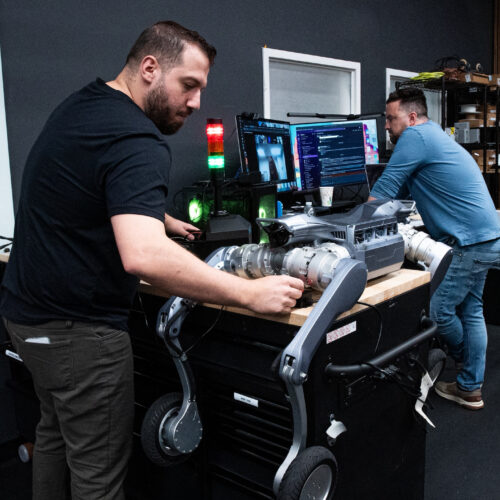
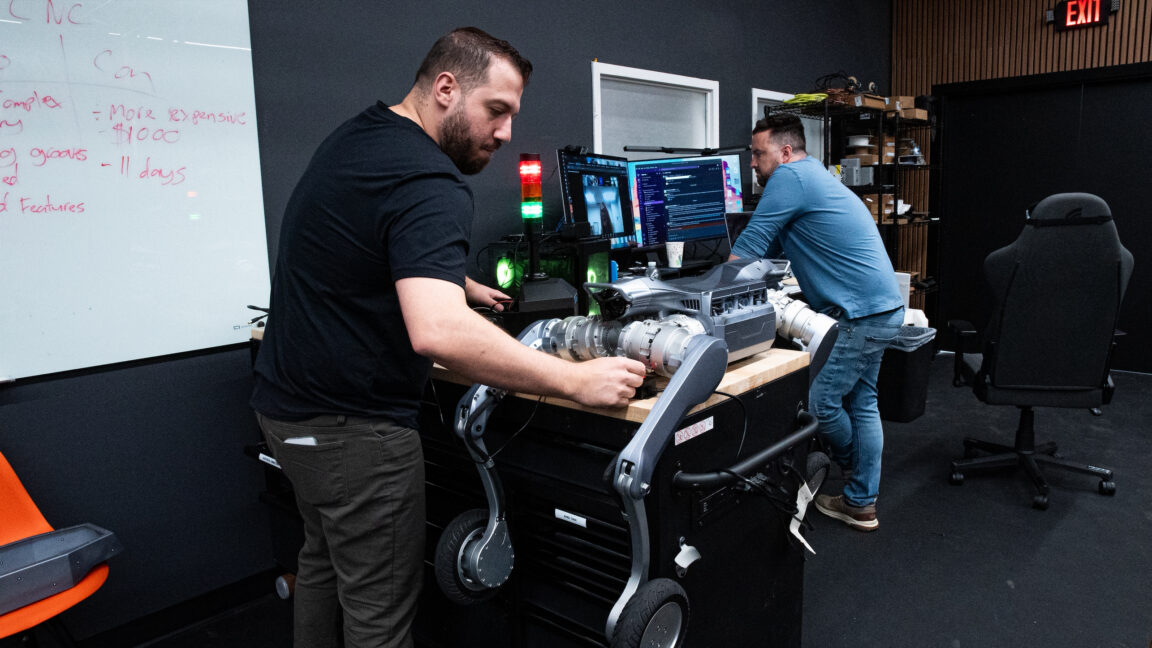
Former SpaceX engineers are building a robotic factory for making steel parts

Three former SpaceX engineers have switched their attention from making rocket engines to manufacturing steel parts by using AI-driven software and robots. Their immediate goal involves establishing a prototype factory that can automate most of the steel fabrication process for crucial infrastructure components by 2027.

The startup, called 1872, officially launched on July 22 with a ribbon-cutting ceremony at its Factory One facility in Cincinnati, Ohio. The company is initially focused on automating the manufacturing of steel skids—rectangular steel frames that can provide a moveable foundation for modular buildings—with the goal of supplying customers who are developing AI data centers or small modular nuclear reactors.

“We're building towards autonomy, but we're not necessarily building in a dogmatic fashion towards full autonomy,” Dan Summers, CEO of 1872, told Ars. “We may achieve 80 percent autonomous operations, and we may decide that it makes sense to stop there because there's just diminishing returns to go to full 100 percent.”

Read full article

Comments

© 1872

  •  

The Moon's shadow raced across the heart of Spain, and I was there to see it

DURATÓN, Spain—I'll say it: I'm hooked. Standing in the shadow of the Moon is one of the rarest opportunities to directly sense the mechanics of our Solar System, when the dance between three celestial bodies slides into perfect alignment. It's a mathematical miracle whose rarity and grandeur are made possible by the relative sizes and distances of the Moon and the Sun from Earth. Not every planet is so lucky.

The Moon's shadow crisscrossed the American heartland twice in less than seven years, first in 2017 and again in 2024. I was fortunate to witness both. The experiences left me too impatient to wait for the next total solar eclipse in the continental United States in far-off 2044.

That's what pulled me to the plains of north-central Spain last week. This land of wide open spaces, ancient churches and castles, and vast sunflower fields, all baking under the blinding August Sun, seemed like the perfect location to enter the path of totality. The ongoing drought in Spain has turned the country's fields and forests into a tinderbox, but those conditions made for ideal eclipse viewing.

Read full article

Comments

© Stephen Clark/Ars Technica

  •  

As Wisconsin cities flee Flock, its shared camera network loses value

Perhaps it's the local summer diet of deep-fried cheese curds, corn on the cob, and Spotted Cow, but Wisconsin residents have been feeling pretty dyspeptic about Flock's automated license plate cameras.

Over the past few months, a spate of Wisconsin towns and cities have withdrawn from Flock deals over privacy and trust concerns. As they did so, another issue revealed itself: With each city that leaves, the Flock network becomes less useful to the cities that remain. And cities are starting to notice.

Consider Dane County, which includes the city of Madison. It's one of the most populous counties in Wisconsin. It was also a significant Flock user, with a contract for 24 license plate cameras. But after complaints from citizens and privacy experts, the Dane County Board of Supervisors on April 16 voted to cut the $80,000 in county funding for Flock cameras and banned "further expenditures on the system."

Read full article

Comments

© Getty Images | Smith Collection/Gado

  •  

Supreme Court rejects Verizon bid for $47 million refund of FCC fine

The Supreme Court today rejected Verizon's attempt to get a $47 million refund from the Federal Communications Commission. In a list of orders issued by the court, Verizon's petition was denied without explanation.

The denial apparently ends any possibility of Verizon asking a lower court to review the fine and order the FCC to issue a refund. However, AT&T and T-Mobile are continuing to challenge similar fines on grounds that selling device-location data did not violate US telecom law.

AT&T, T-Mobile, and Verizon were fined a total of $196 million in 2024 for selling mobile users’ real-time location data without their customers' consent. The carriers sold device-location information to data aggregators, who resold it to other firms.

Read full article

Comments

© Getty Images | Bloomberg

  •  

Petlibro accused of “gaslighting” users over smart pet feeder outage

Petlibro founder and CEO York Wu provided more information about an outage that left users unable to control their smart pet feeders through the companion app and, in some reported cases, left them with hungry pets.

Petlibro, a company owned by Shenzhen, China-headquartered firm Shenzhen Libro Technology Co., first acknowledged the outage on Tuesday at 5 am PT. At 7 pm PT on Wednesday, Petlibro said the outage was resolved. Notably, some people online reported different information at the time, and some claimed to still have problems as of August 13.

In a blog post on Saturday that included an apology and acknowledgement of the “frustration and concern” the outage caused, Wu confirmed that problems with Petlibro’s cloud server caused the outage:

Read full article

Comments

© Petlibro

  •  

Hidden Airtag reveals Amazon is trashing rare books to train AI

For the past year or so, booksellers have suspected that AI firms are buying up huge lots of rare books, then destroying them after scanning them to train AI. But this was hard to prove until now, as 404 Media reports that an Airtag hidden in a rare book shows that at least one tech giant, in the race to advance its frontier models, is behind some of the bulk orders: Amazon.

On Monday, 404 Media revealed that it had connected with a bookseller who agreed to plant an Airtag in a rare book that was part of a bulk order. That Airtag was then tracked to an Amazon AI training facility in Las Vegas that housed a team focused on tearing books from their spines and scanning pages, 404 Media reported. Apparently tone-deaf to the escalating backlash over destructive book scanning, a logo on the door of that team’s warehouse, VGT3, showed a Tyrannosaurus rex preparing to devour a book, 404 Media documented.

Amazon deflects

Amazon declined to comment on 404 Media’s findings, only providing Ars with the same statement it gave to 404 Media, which does not mention AI training specifically.

Read full article

Comments

© fotek | iStock / Getty Images Plus

  •  
❌