❌

Reading view

Nvidia's big bet on physical AI aims for safer robotaxis, humanoid robots

Investors bullish on AI data centers may be fueling Nvidia’s multitrillion-dollar market capitalization, but the AI chipmaker has also bet billions of dollars on physical AI technologies such as robotics and self-driving cars. Part of that gambit has involved developing a full-stack safety system that companies can build upon to reduce the risk of their machines harming nearby people.

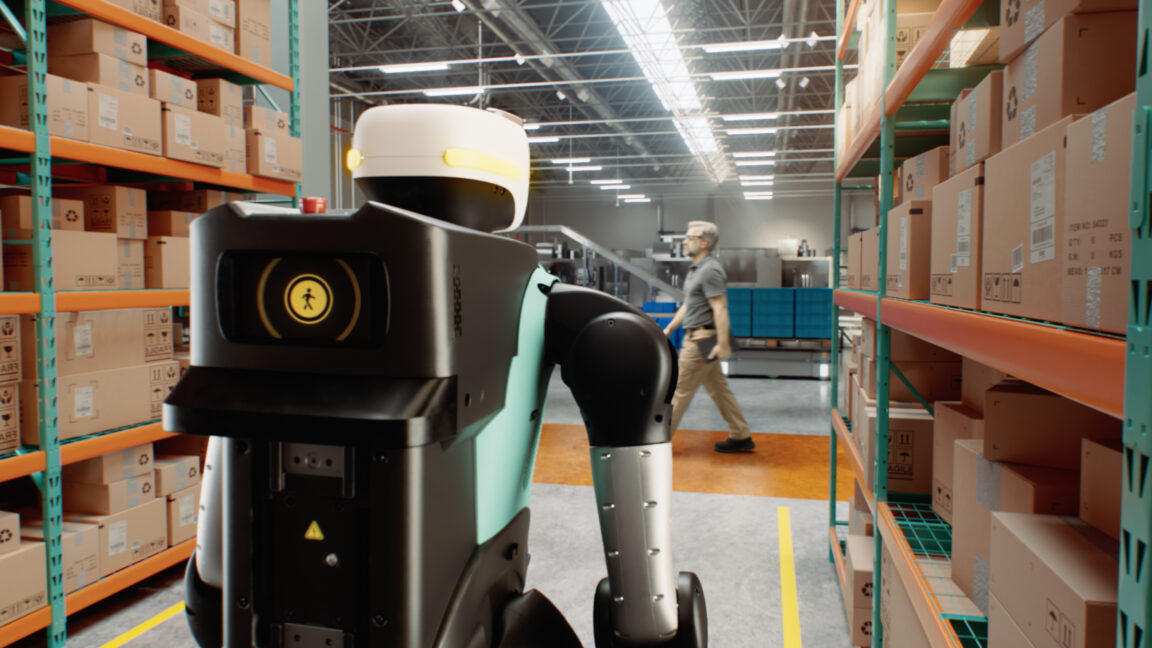
Nvidia's Halos system launched in 2025 with hardware and software tools to help developers implement guardrails in self-driving cars and other autonomous vehicles. Then the company expanded its safety architecture to more physical AI technologies by announcing Nvidia Halos for Robotics in June 2026—with the goal of enabling safe deployments of autonomous mobile robots in warehouses, humanoid robots walking around inside a factory, or even surgical robots.

“Now the AI models are getting capable, the robot hardware is getting capable, and a thing we thought is going to be the next bottleneck is safety,” Amit Goel, head of robotics ecosystem and edge computing at Nvidia, told Ars. “So that's why we launched our Halos for Robotics to unlock the capability of these systems.”
Read full article

Comments

© Agility Robotics

  •  

Microsoft event debuts new AI-friendly hardware and Windows changes

In its first live event in two years, Microsoft today announced its newest Surface laptop, outlined a host of changes coming to Windows 11, and shared a vision of how local-AI and agentic workflows could reshape personal computing for those in the dev community as well as home enthusiasts.

Surface Laptop Ultra

Originally teased in May 2026, the new Surface Laptop Ultra will be Microsoft's first offering to take advantage of the new Nvidia RTX Spark SoC (system on a chip). The device has a starting price of $2,599 and comes in various SoC and memory configurations, with either a 5120-core or 6144-core Blackwell GPU and up to 128GB of LPDDR5x unified memory. It will begin shipping on October 16 and is available for preorder now.

While the new Ultra is clearly focused on the developer crowd, graphical performance was highlighted during the presentation to show off just how capable the laptop can be. By leaning on unified memory allocation rather than the physical VRAM limits of a traditional GPU, the laptop can assign its resources to handle modern gaming tasks as well as local AI development and deployment. The new Gears of War: E-Day was shown running on the system, meaning that even without a traditional gaming GPU, AAA titles are on the table.

Read full article

Comments

© Microsoft

  •  

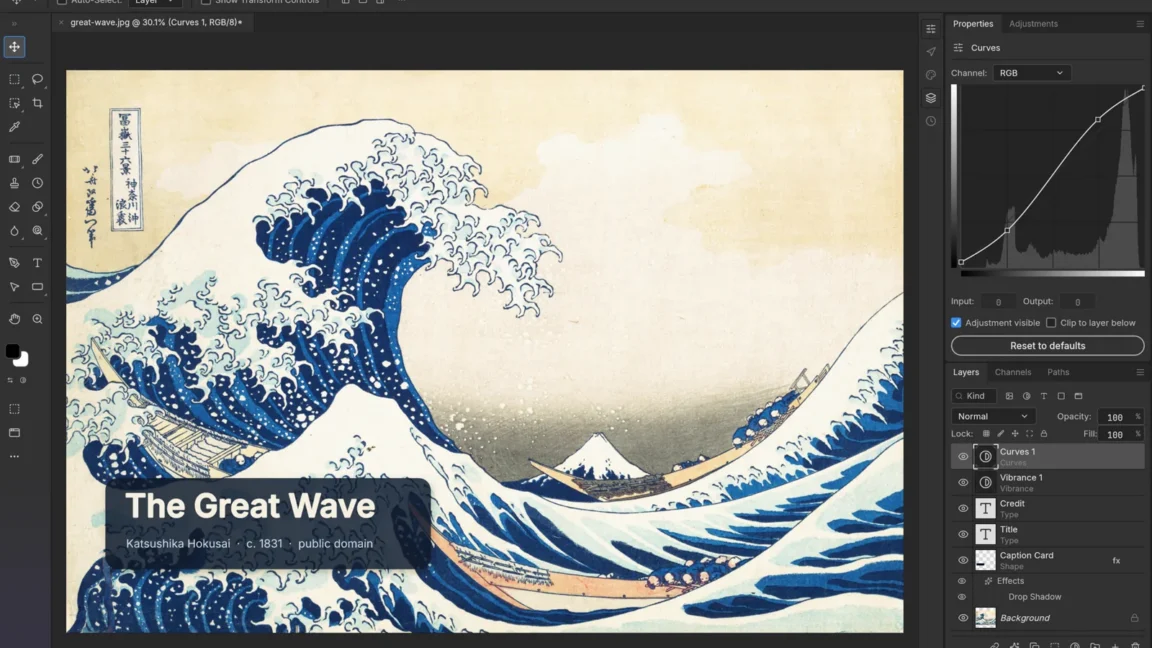
“Software is over”: Bold AI developer takes aim at Adobe with open source clones

For a while, those hoping to avoid the difficulty and expense of dealing with Adobe's Creative Suite have been able to use several free and/or open source alternatives that replicate some or all of those capabilities. Now, one developer is using AI-powered reverse engineering to mimic the look, feel, and functionality of Adobe's well-known software with what he hopes will soon be perfect fidelity.

Artcraft got its start last year as a "controllable AI for artists" that allows for precise post-generation editing of AI-crafted images and videos. Over the weekend, though, the brand debuted its pivot to a suite of seven open source apps recreating the user interface and tools found in Adobe's Photoshop, Illustrator, Premiere, Lightroom, After Effects, InDesign, and Acrobat Pro.

In announcing those new apps on Reddit earlier this week, software developer Brandon Thomas said he used Anthropic's Claude Opus 5.5 to create "clean-room replacements" for Adobe's closed source software in Rust (with WebAssembly versions available for use in a browser). And while commenters on Hacker News and elsewhere have taken pains to point out the new software's many current shortcomings, Thomas makes the grandiose promise that the current "super early alpha" state will soon lead to something just as functional as anything Adobe has ever put out.

Read full article

Comments

© Artcraft

  •  

Fraudster jailed for using 10K bots and AI songs to outstream Taylor Swift

After pleading guilty, a 54-year-old North Carolina man, Michael Smith, was sentenced to 18 months in prison for using artificial intelligence to generate songs for a scheme that stole millions from music streaming platforms.

In a press release Tuesday, the US Department of Justice said that Smith is the first American criminally charged with AI-assisted streaming fraud.

First charged in 2024, Smith successfully ran the scheme for seven years without detection.

Read full article

Comments

© Taylor Hill / Contributor | FilmMagic

  •  

Mistral says "Le Chonk" can challenge the best AI models

As tensions mount over who gets access to top-end artificial intelligence, French company Mistral has released a new freely available model that it claims can compete with the very best from the US and China.

The new 1 trillion-parameter model, Mistral Large 4—nicknamed Le Chonk—can be used and customized by anyone. It’s currently available in preview, with a final version to follow by the end of the month. Though Le Chonk is built to compete with leading general-purpose models, it’s optimized specifically for coding and cyberdefense, as well as tasks particular to manufacturing, finance, electrical engineering, and other niches.

“There are a lot of areas where the other labs will not focus that much,” Guillaume Lample, cofounder and chief scientist at Mistral, tells WIRED. “There are so many domains in which you can improve models.”

Read full article

Comments

© Mistral / Benj Edwards

  •  

Google rolls out improved SynthID AI content detector, now available globally

Every piece of AI content from Google's Gemini models has a hidden SynthID label, which makes it very difficult to pass the content off as authentic. SynthID has also gotten buy-in from other major AI players, but actually checking for those invisible watermarks has been a convoluted process. It's going to be a little easier going forward, though. Google has announced that its SynthID detector now supports watermarks from all its partners, and it's available for anyone to use on a new dedicated website.

SynthID is an invisible signal encoded in the pixels of AI-generated images and videos, and in the waveform of AI audio. Google says Gemini alone has integrated SynthID with over 180 billion images and videos, plus 240,000 years of audio. Until now, the only way for those outside of Google's trusted tester program to check for SynthID was to ask Gemini. This is rather clunky, and the model's output could sometimes be confusing when you just wanted a simple "yes" or "no."

Now you can cut Gemini out of the loop. Starting today, you can go to the new SynthID.com website to check a piece of content for an AI watermark. A major limitation of Google's previous detector was that it only checked for Google's version of SynthID. Even though ChatGPT images, for example, have SynthID, they wouldn't be flagged in Google's detector. That's no longer a problem.

Read full article

Comments

© Aurich Lawson

  •  

AI/ML is becoming a performance factor in motorsport

There’s been something of a change in the world of motorsport over the past few years. It has to do with where the money comes from. In the old days, it was tobacco and, to a lesser extent, booze. Today such things are mostly banned, and when you look at a racecar covered in sponsor logos, you’re likely to see something crypto-, cyber-, or AI-related.

This makes sense—an ever-larger share of our GDP is wrapped up in those segments. They’re the ones with all the money, and it takes money to go racing. So at the amateur level, we’ve seen tech CEOs replace dentists as the privateer of choice: This past weekend’s Petit Le Mans included co-founders of GitHub, CrowdStrike, Shopify, and the creator of Ruby on Rails, to name a few.

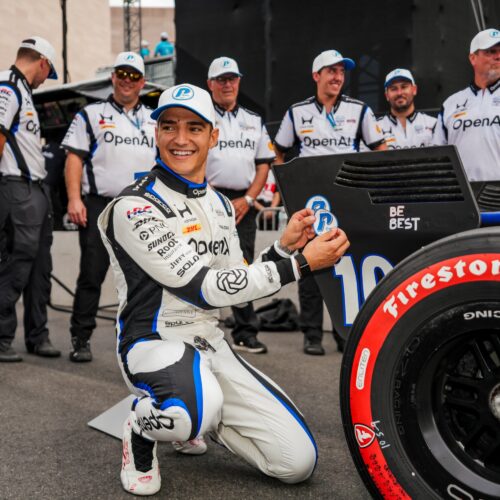
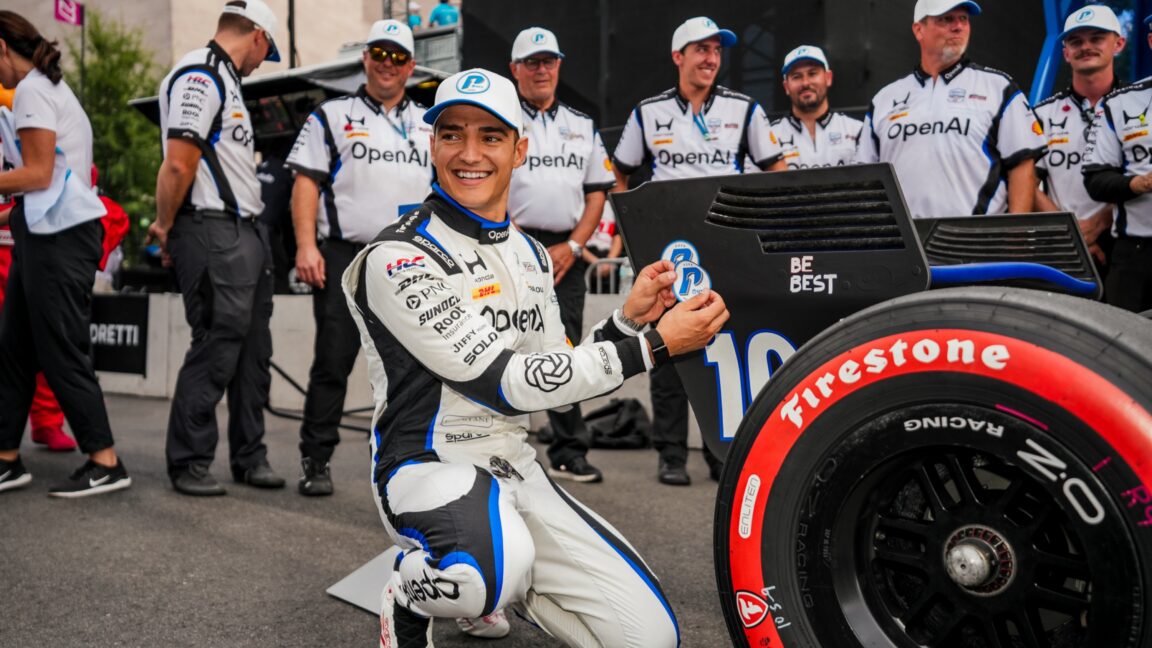
But this is an instance where a sponsor can provide tangible benefits to their motorsports partner beyond a bank transfer, as Chip Ganassi Racing (CGR) and OpenAI have been showing in IndyCar this year.

Read full article

Comments

© Chip Ganassi Racing

  •  

OpenAI will watermark ChatGPT outputs by default—but only in the EU

OpenAI will begin automatically watermarking text generated with ChatGPT in the European Union, the company has announced. It will also offer the watermarking feature in other regions, but it will be off by default outside of the EU.

The move in Europe is driven by a need to comply with the EU AI Act, which took effect in August. It requires marking content produced by AI models in a way that another tool can detect. Unfortunately, there is still no completely effective and reliable way to do that. A few standards already exist, like SynthID and the C2PA project, but they are relatively easy to circumvent for anyone with basic know-how.

The same is likely true for OpenAI's watermark. Its method is proprietary; the company calls it textGrain, and has published a technical paper explaining how it works. But in general, it works like other LLM watermarking tools we've seen in the past: It puts patterns in the word choices that are not clear to a human reader and that don't meaningfully change the general quality of the output, but that someone with a key can use a specialized detector to find. OpenAI says it will be giving access to the detector to a limited number of researchers and organizations and providing a request-for-approval process for others to be added over time.

Read full article

Comments

© Getty Images | NurPhoto

  •  
❌