❌

Reading view

RIP Margaret Hamilton, whose code saved the Apollo 11 Moon landing

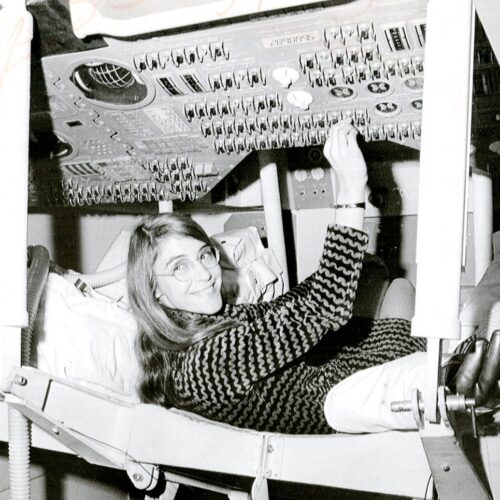
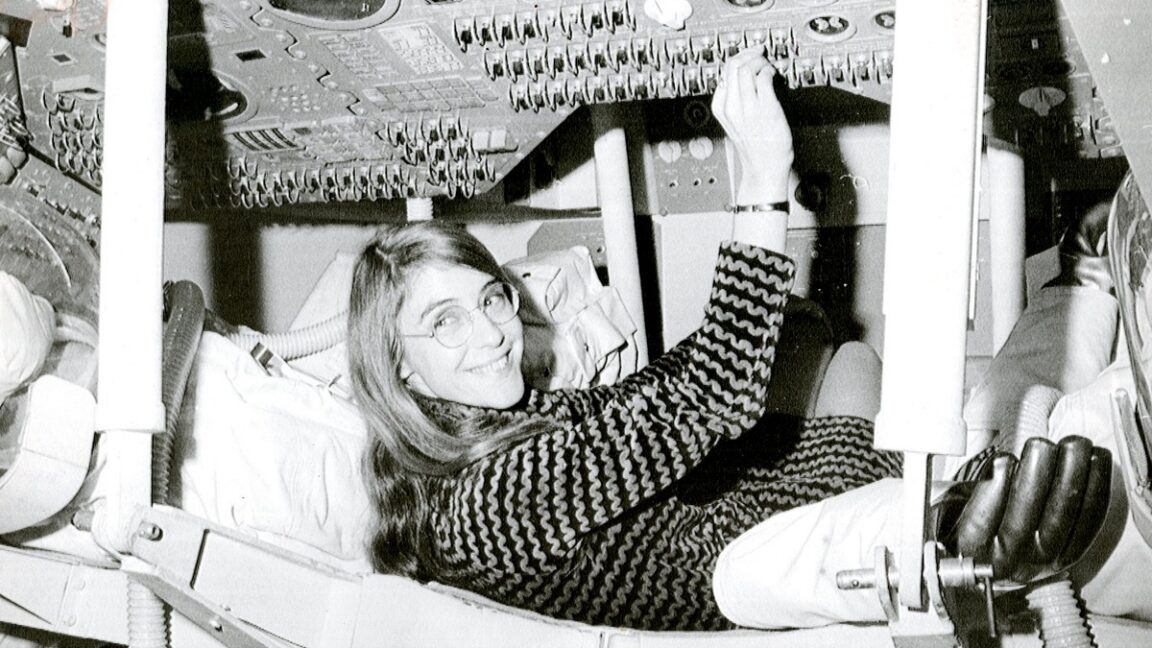
Margaret Hamilton, who coined the term "software engineering" and led the development of onboard flight software for NASA's Apollo program in the 1960s, died last week at the age of 90. A recipient of the Presidential Medal of Freedom in 2016, Hamilton was also immortalized as a LEGO minifig the following year—part of the "Women of NASA" set that also included astronauts Mae Jemison and Sally Ride.

“To say Margaret Hamilton was a pioneer—to say she was ahead of her time—would be a dramatic understatement. She was a software engineer at a time when that field was in its infancy, and she not only developed advanced code herself but also led a team in using that nascent technology to develop one of the most complex systems humanity had ever achieved,” said Olivier de Weck, interim head of the MIT Department of Aeronautics and Astronautics. “The Apollo program still stands as one of our greatest testaments to the power of collaboration, ingenuity, and engineering, and Hamilton was a fundamental contributor to that program’s success.”

Born in 1936 in Paoli, Indiana, Hamilton graduated from Earlham College in 1958 with a degree in mathematics and a minor in philosophy—the latter a nod to her father (a poet) and grandfather (a headmaster). She married her first husband, James Cox Hamilton, that same year. The plan was for her to work until he finished his law degree, after which he would support her through graduate school to earn a PhD in mathematics.
Read full article

Comments

© NASA/Public domain

  •  

Review: Fine, let's talk about Digger

I found the trailer for Digger intriguing, starring a nearly unrecognizable Tom Cruise and giving off strong Dr. Strangelove vibes. Plus, it is four-time Oscar-winning director Alejandro G. Iñárritu’s (Birdman) first English-language film since 2015’s The Revenant. Those elements quickly moved it near the top of my "must-see" list even if details about the actual plot were lacking. Given Iñárritu’s pedigree, the film seemed poised to be prime Oscar bait.

(Major spoilers appear below the gallery. We'll give you a heads-up when we get there.)

By now it's clear that Digger is on track to be one of the biggest bombs of the year instead, racking up a mere $20 million globally its opening weekend, against a $125 million (possibly more) budget. It has sharply polarized critics and audiences alike, with some appreciating Iñárritu's bold, creative swings and others finding the film practically unwatchable.

Read full article

Comments

© Warner Bros.

  •  

Neutrino physicist wins 2026 Nobel Physics Prize

Francis Halzen, a physicist at the University of Wisconsin, Madison, has won the 2026 Nobel Prize in Physics "for decisive contributions to the IceCube Neutrino Observatory and the discovery of high-energy neutrinos of astrophysical origin.” Halzen spearheaded the development and construction of the IceCube Neutrino Observatory in Antarctica, enabling physicists to capture high-energy neutrinos created in the distant universe.

“It was a great surprise, and I obviously didn’t expect it,” Halzen said during a news conference in Stockholm, Sweden, speaking by phone from Italy. While the Nobel was awarded to Halzen, he emphasized that his work was the result of a “large collaboration” with other researchers.

“This reflects on the really courageous people who joined me in this project when really no respectable conservative physicist would have joined me. But many talented people did, and that’s why I’m here,” he said.

Read full article

Comments

© IceCube/NSF

  •  
❌