❌

Reading view

Russian spacecraft maneuvers in "extreme proximity" to satellite used by Ukraine

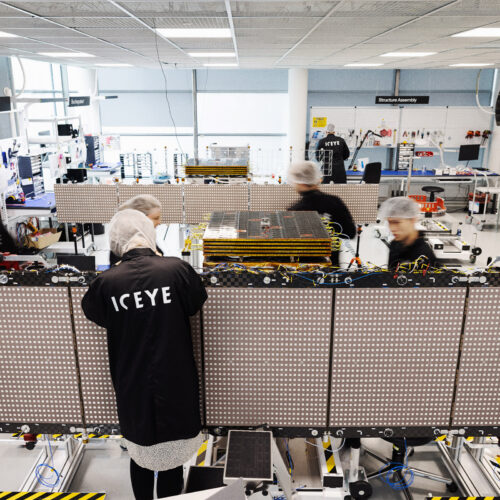
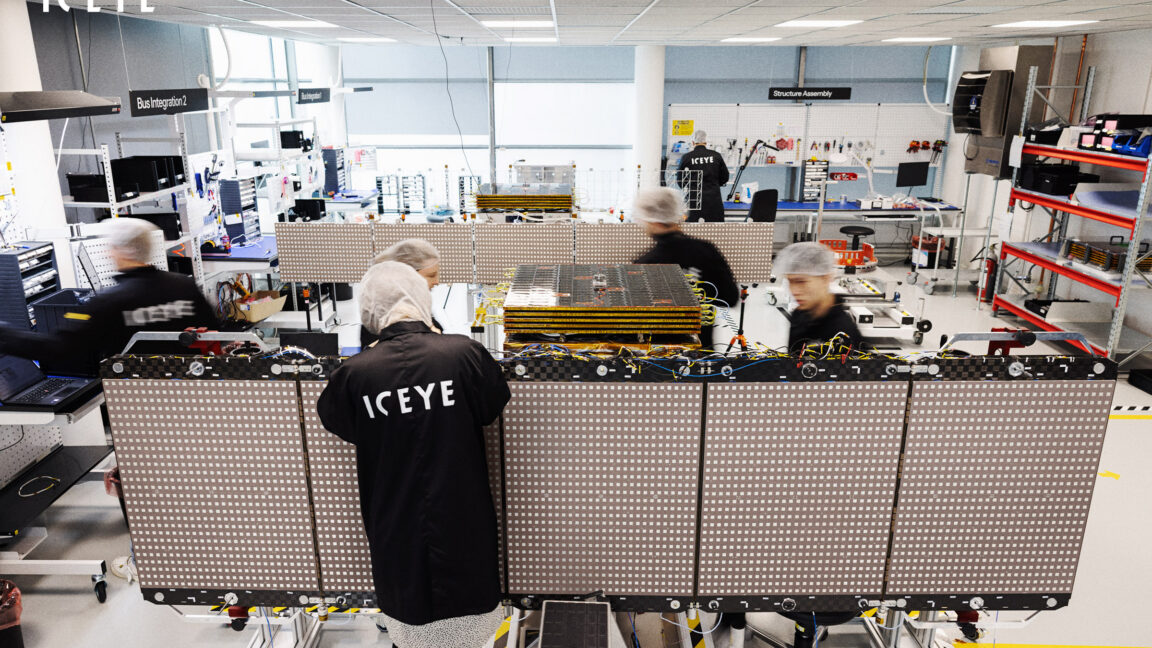
A Russian military satellite maneuvered in "extreme proximity" of a commercial Earth-imaging satellite in recent days in the first known example an unsanctioned rendezvous in low-Earth orbit, according to orbital intelligence company LeoLabs.

The Russian spacecraft, Kosmos 2612, "conducted a deliberate series of maneuvers toward ICEYE-X36, a US-operated commercial imaging satellite," LeoLabs said. "Kosmos 2612 closed from hundreds of kilometers away to extreme proximity to ICEYE-X36. It then maneuvered around ICEYE-X36, remained nearby for an extended period, and then began moving away."

US military officials and independent analysts have tracked Kosmos 2612 since its April launch on a Soyuz rocket from a spaceport in northern Russia. Within weeks, it became apparent that at least four of the six satellites from that launch were stalking ICEYE-X36 after they adjusted orbits to line up with the orbit of the ICEYE spacecraft.
Read full article

Comments

© ICEYE

  •  

A Chinese rocket deorbited over Minnesota and left this in a farmer's cornfield

About a month ago, a Chinese rocket took off from a remote spaceport in the Gobi Desert, released 10 satellites into orbit, then reignited its engine and put itself on a trajectory to rain down debris over the American Midwest.

The rocket's flight on September 15 lasted between 75 and 80 minutes, and it came down without completing a full orbit of the Earth. Social media posts at the time showed streaks of fiery debris falling from the sky, heading north over Kansas toward Minnesota. The overnight spectacle was also visible on the western horizon from Wisconsin.

The exact time, location, and direction of the debris allowed experts to connect it to the launch of a Zhuque-2E rocket, a medium-lift vehicle built by a Chinese company called LandSpace. The rocket had launched from Dongfeng, a commercial launch zone co-located with the military-run Jiuquan Satellite Launch Center in northwestern China, less than two hours before.

Read full article

Comments

© Stevens County Sheriff's Office

  •  

Rocket Report: FAA eyes more Starbase traffic; India's Skyroot snares US customer

Welcome to Edition 9.15 of the Rocket Report! The launch I'm most looking forward to in the next few weeks is that of Japan's Martian Moons Exploration (MMX) mission. MMX is one of the marquee space science missions launching this year, and it's set to leave Earth as soon as Monday (US time) aboard a Japanese H3 rocket. The spacecraft will visit Phobos and Deimos, the two asteroid-like moons of Mars, deploying a rover and collecting specimens for return to Earth in 2031. Exploration at its finest.

As always, we welcome reader submissions, and if you don't want to miss an issue, please subscribe using the box below (the form will not appear on AMP-enabled versions of the site). Each report will include information on small-, medium-, and heavy-lift rockets as well as a quick look ahead at the next three launches on the calendar.

Reflect Orbital looks to India for launch capacity. California-based Reflect Orbital, the startup attempting to offer sunlight on-demand with in-space mirrors, announced the purchase of two launches Wednesday from Indian launcher Skyroot Aerospace, Payload Space reports. One of the launches will use Skyroot's Vikram-1 rocket, which became the first privately developed Indian rocket to reach orbit in July. The other will fly on an upgraded rocket called the Vikram-1U.

Read full article

Comments

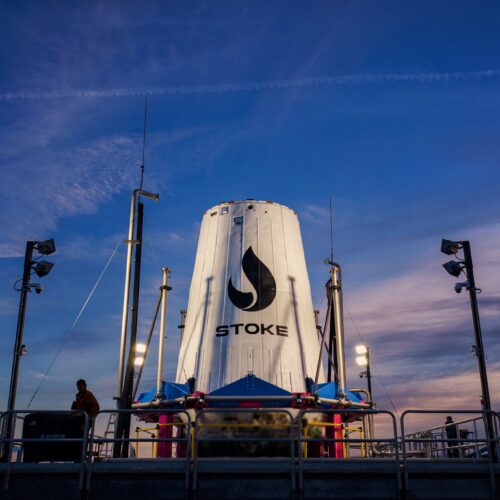
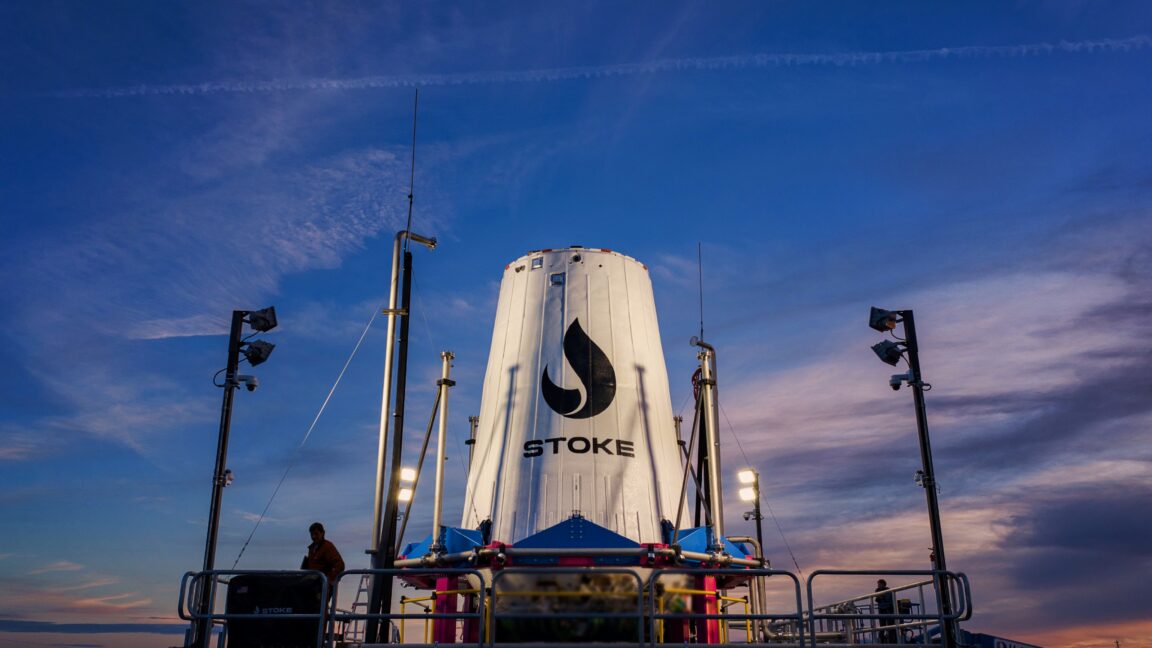
© Stoke Space

  •  

Blue Origin is going all in on the New Glenn rocket

Blue Origin announced a major expansion of its already considerable Florida launch facilities on Friday morning with the intent of eventually flying more than 100 rockets a year from there.

The company said it would add two launch pads for the New Glenn rocket, in addition to two already under construction at Cape Canaveral. The company is also investing heavily in a new manufacturing facility that will produce up to 150 upper stages for a larger variant of the New Glenn rocket.

The company also plans to procure two additional landing ships to catch and return the first stage of the New Glenn rocket (it currently has one, named Jacklyn). Finally, Blue Origin said it would add a new customer integration facility, built in conjunction with the US Space Force, that will feature four payload bays to process multiple missions at the same time.

Read full article

Comments

© Blue Origin

  •  

Neutron's first launch slips again amid trouble with carbon composites

Rocket Lab announced Wednesday that its Neutron launch vehicle won't fly until 2027, citing an issue discovered during manufacturing of the rocket's carbon composite structures.

The announcement was public confirmation of what nearly everyone inside Rocket Lab and the wider space industry already knew. The most recent official update from Rocket Lab in August suggested the company still held hope of delivering the first Neutron rocket to its launch pad at Wallops Island, Virginia, before the end of this year, a schedule that would have almost certainly pushed the first flight into 2027.

But Rocket Lab's statement Wednesday about Neutron's schedule suggests the company is still struggling with manufacturing the rocket's large booster stage. Neutron's reusable first stage is made of carbon composite structures, which offer low weight, high strength, and corrosion resistance. But carbon composites in aerospace are generally harder to manufacture than metallic structures.

Read full article

Comments

© Rocket Lab

  •  

Things are finally looking up for NASA's first missions to Venus in a generation

Most planetary scientists will tell you the heyday of Venus exploration was more than a generation ago. That is about to change.

Two NASA missions are on track to launch to Venus in the early 2030s. The first, known as the Deep Atmosphere Venus Investigation of Noble gases, Chemistry, and Imaging (DAVINCI), is now scheduled for launch in December 2030, a year earlier than previously planned. DAVINCI will send a parachute-assisted descent probe through the atmosphere of Venus, returning the first direct images of the planet's surface since 1982. A second mission, Venus Emissivity, Radio science, InSAR, Topography, And Spectroscopy (VERITAS), will follow with a launch in November 2032 to map the Venusian surface by radar from orbit.

The European Space Agency is building another orbiter, Envision, for launch to Venus in 2032. The Venus armada might get started as soon as next year, when Rocket Lab aims to launch a privately funded probe to search for signs of organic material in the planet's clouds.

Read full article

Comments

© NASA/Mike Guinto

  •  

NASA issues long-awaited call to industry for private space stations

NASA on Friday released a much-anticipated "request" to the US commercial space industry to develop private space stations that, as early as 2030, will succeed the International Space Station as a place for astronauts to live in low-Earth orbit.

In a cover letter accompanying the 360-page "request for proposals," NASA stated its plan: "This will ensure NASA has a sustained human presence in LEO for crew members to perform science and exploration." Several private companies that have worked for years on designing and developing such stations have been keen to learn exactly what capabilities NASA is seeking. These new documents finally provide some answers.

NASA's solicitation can be found here. Industry responses are due back to NASA on December 8. NASA said it plans to select "two or more" contractors in this phase of the competition and intends to make a final decision in April.

Read full article

Comments

© NASA

  •  

Rocket Report: A rare Falcon 9 scrub; is it just about Vulcan's time to shine?

Welcome to Edition 9.14 of the Rocket Report! The big news this week, from our perspective, is that United Launch Alliance's Vulcan rocket appears to be close to launching. We've seen a no-earlier-than launch date for the return to flight mission of October 29 (an Amazon Leo flight), and the next rocket up after that, also an Amazon Leo mission, is also planned for this year. Assuming the solid rocket boosters work, Vulcan could be poised for a major breakthrough next year in cadence.

As always, we welcome reader submissions, and if you don't want to miss an issue, please subscribe using the box below (the form will not appear on AMP-enabled versions of the site). Each report will include information on small-, medium-, and heavy-lift rockets as well as a quick look ahead at the next three launches on the calendar.

Nuri rocket notches another success. South Korea successfully deployed five satellites for its first domestically launched microsatellite constellation during the fifth flight of its homegrown Nuri rocket Wednesday, Yonhap News Agency reports. In addition to the primary payload of five New-space Earth Observation Satellite Constellation for National Safety microsatellites, nine of the rocket's 10 CubeSat secondary payloads were released as planned, according to the Korea AeroSpace Administration. PERSAT-02, developed by South Korean startup Quaternion, failed to separate from the rocket.

Read full article

Comments

© United Launch Alliance

  •  

SpaceX calls for better coordination in orbit after near-misses with Starlink

Space has plenty of room for more megaconstellations, but only if all operators are willing to share information about where their satellites are and where they're going, a top executive at SpaceX and its AI subsidiary said this week.

Michael Nicolls, SpaceX's vice president for Starlink and president of Elon Musk's artificial intelligence company, xAI, used a presentation Tuesday at the International Astronautical Congress in Turkey as a clarion call for improved data-sharing among satellite operators.

SpaceX's Starlink constellation now has more than 11,000 satellites, about two-thirds of all active spacecraft in low-Earth orbit. Radars and telescopes routinely track thousands more pieces of space junk.

Read full article

Comments

© SpaceX

  •  

RIP Margaret Hamilton, whose code saved the Apollo 11 Moon landing

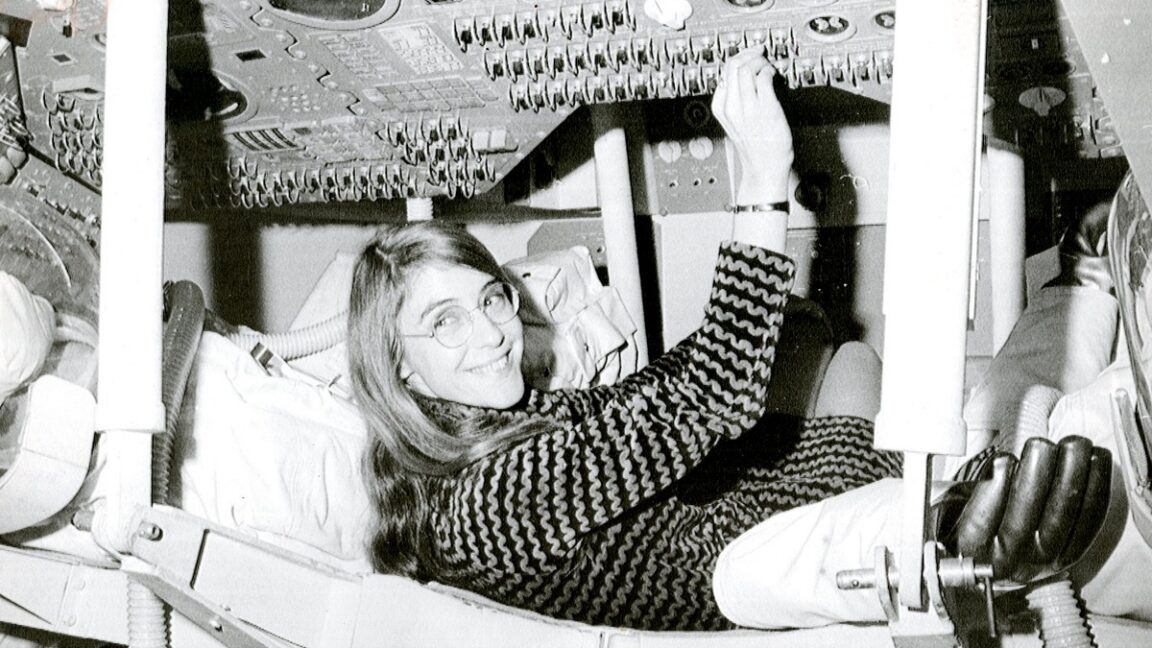
Margaret Hamilton, who coined the term "software engineering" and led the development of onboard flight software for NASA's Apollo program in the 1960s, died last week at the age of 90. A recipient of the Presidential Medal of Freedom in 2016, Hamilton was also immortalized as a LEGO minifig the following year—part of the "Women of NASA" set that also included astronauts Mae Jemison and Sally Ride.

“To say Margaret Hamilton was a pioneer—to say she was ahead of her time—would be a dramatic understatement. She was a software engineer at a time when that field was in its infancy, and she not only developed advanced code herself but also led a team in using that nascent technology to develop one of the most complex systems humanity had ever achieved,” said Olivier de Weck, interim head of the MIT Department of Aeronautics and Astronautics. “The Apollo program still stands as one of our greatest testaments to the power of collaboration, ingenuity, and engineering, and Hamilton was a fundamental contributor to that program’s success.”

Born in 1936 in Paoli, Indiana, Hamilton graduated from Earlham College in 1958 with a degree in mathematics and a minor in philosophy—the latter a nod to her father (a poet) and grandfather (a headmaster). She married her first husband, James Cox Hamilton, that same year. The plan was for her to work until he finished his law degree, after which he would support her through graduate school to earn a PhD in mathematics.

Read full article

Comments

© NASA/Public domain

  •  

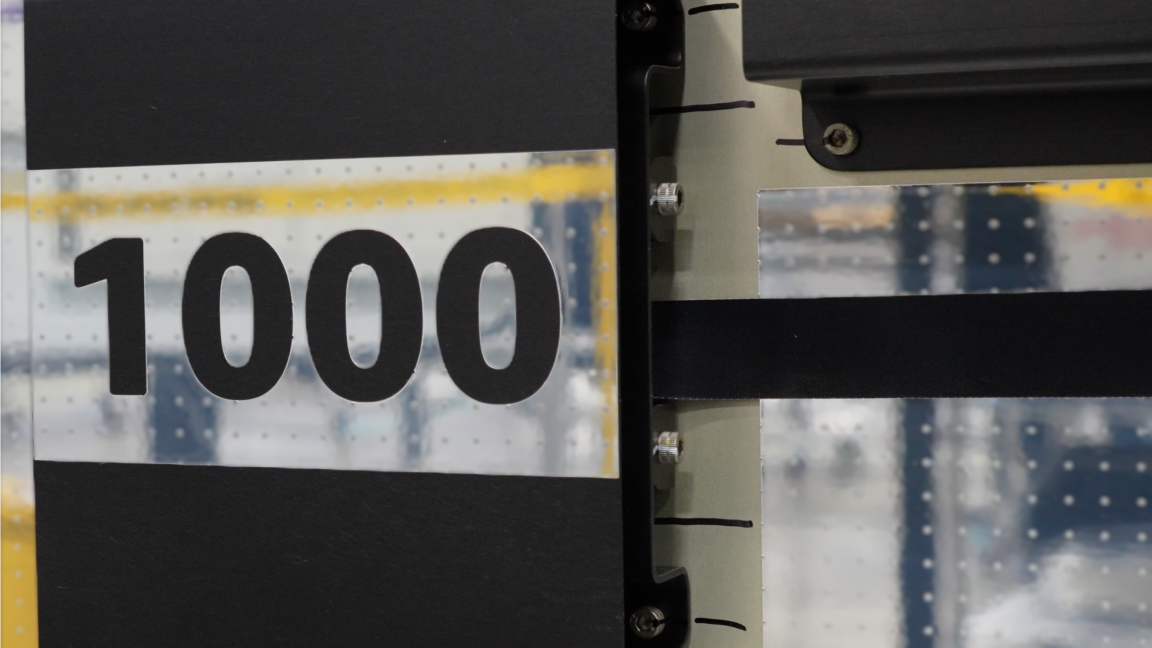
Amazon builds 1,000th satellite, will launch space internet service by end of year

The world's largest retailer wants to sell you something else—Internet from space.

Amazon has been developing a constellation of satellites to deliver broadband Internet from low-Earth orbit for the better part of a decade, and the company is just about ready to pull back the curtain. It is entering a market that SpaceX, with its Starlink Internet, has dominated for the last half-decade. Amazon's debut into satellite Internet is being closely watched, not just by some consumers, but by businesses ranging from airlines to shipping companies to governments. Broadband Internet from orbit has proven broadly useful for a lot of purposes, from video games to commerce to warfighting.

But until now, most people had to buy it from Elon Musk and SpaceX. OneWeb has only offered limited services, leaving Amazon as the only real competitor to deliver high-speed Internet globally. Moreover, at the head of the company's broadband efforts is Rajeev Badyal, who led Starlink during its early years, but whom Musk fired eight years ago for moving too cautiously on Starlink.

Read full article

Comments

© Amazon Leo

  •  

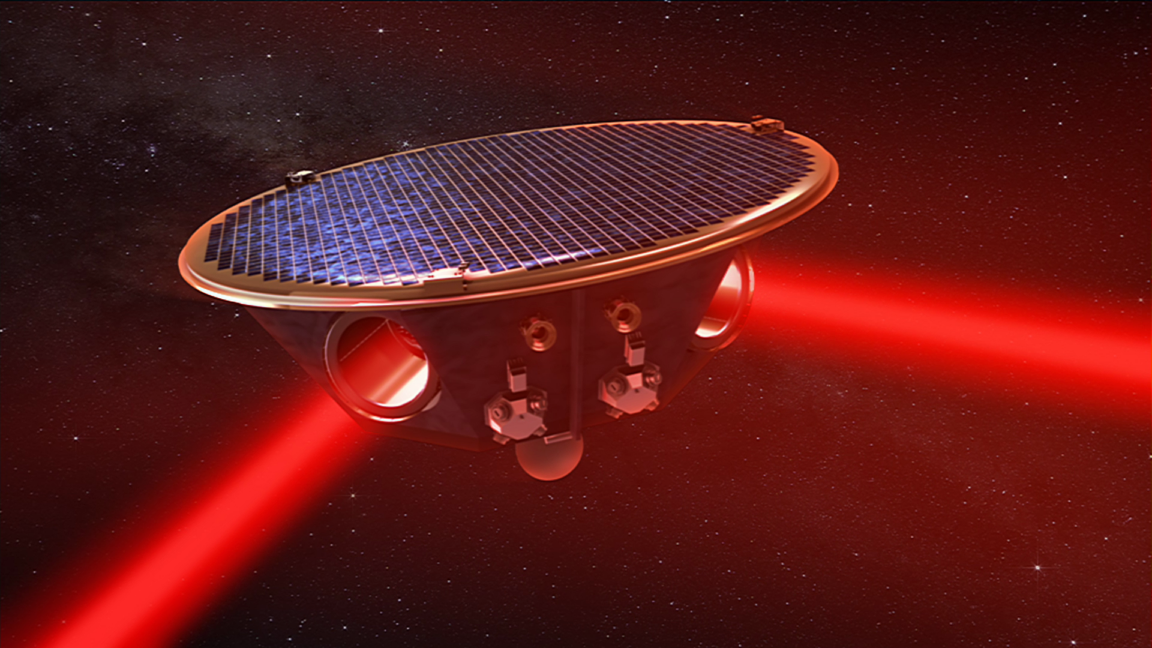
If you're looking, here's a "good deal" for NASA and the European Space Agency

It's no surprise that NASA's new tack toward foreign partnerships—good deals only, please—is challenging preconceived notions of international cooperation in space.

Without a massive budget hike, the US space agency's emphasis on building a Moon Base and winning a competition for lunar real estate and resources with China will inevitably leave lesser priorities behind.

Gone is the Lunar Gateway, a space station that was to be assembled in orbit around the Moon. For the United States, Gateway was an unnecessary distraction and expense as NASA goes all-in on placing a surface station near the Moon's south pole.

Read full article

Comments

© AEI/MM/Exozet

  •  
❌