❌

Reading view

Xbox wants you to pay 24 to 40 cents per hour to stream games you already bought

In September, when Microsoft severely limited the game-streaming buffet available to Game Pass subscribers, the company said non-subscribers would soon be able to "purchase cloud playtime hours through the Xbox Store and stream eligible games they own on supported devices." Today, Microsoft rolled out those a la carte Cloud Playtime purchases to Xbox Insiders, with prices that might be a bit galling for players who have already purchased these streamable games.

The "introductory launch pricing" for Xbox's Cloud Playtime purchases is as follows:

  • 10 hours for $4 (~$0.40/hour)
  • 25 hours for $8 (~$0.32/hour)
  • 50 hours for $12 (~$0.24/hour)

Purchased playtime "remains available until it’s used," Microsoft writes, so you don't have to worry about your 50-hour purchase expiring before you can use it fully.


Read full article

Comments

© Microsoft

  •  

Enterprises keep buying software upgrades that IT thinks will make things worse

Enterprise-sized businesses spend, on average, 28 percent of their software budgets on unwanted upgrades, migrations, and licensing changes. Often, those firms' IT heads think those changes are detrimental.

Those results are according to a survey of 2,018 chief information officers and senior IT decision-makers at companies with at least 10,000 employees that Origina commissioned for its report, “The Software Tax.” About half of the respondents (1,011) are from the US, and the rest are from the United Kingdom. All respondents worked at companies with at least $1 billion in annual revenue.

Keep in mind that Origina provides maintenance for various enterprise software. Its report points to independent software maintenance as a way for IT leaders to regain control over software budgets, illustrating its potential bias. A third-party research consultancy, Censuswide, conducted the survey.

Read full article

Comments

© Clara Molden/PA Images via Getty Images

  •  

Tesla profits drop 43% in Q3

Tesla published its third-quarter 2026 financial results this afternoon. Earlier in October, it reported its sales and deliveries for the three-month period, selling fewer cars than in the same quarter in 2025, yet it still beat analyst projections. Now we can see how those sales translate to the bottom line. Tesla brought in $28 billion in revenue in Q3, almost the same as in 2025.

Automotive revenues were $20.6 billion, a 3 percent decrease year over year. Perhaps more troubling is the decline in revenue from solar panels and storage batteries—this line of business had been growing, but for Q3 revenue fell 16 percent year over year to $2.9 billion. Services and other revenues, though, which include parts and Supercharger use, grew by a third to $4.6 billion.

But the company—like the rest of us—has seen its expenses go up. Operating expenses rose by 39 percent to $4.8 billion, dropping the company’s operating margin to just 2.6 percent; in Q3 2025, Tesla’s margin was 5.8 percent. Net profit fell to $787 million, down 43 percent year over year. What’s more, capital expenditures were up by 110 percent to $4.7 billion, and free cash flow was down 62 percent to $1.5 billion.

Read full article

Comments

© JIM WATSON/AFP/Getty Images/Aurich Lawson

  •  

FreshRSS 1.30.4

This is a fourth security release in the continuation of 1.30.x, mostly to address some severe PHP vulnerabilities and update our official alternative Docker images (Alpine) (our default Docker images based on Debian were already fixed).

Note that our rolling-release channel (edge) is recommended for faster security patches.

Bug fixes highlights 🐛:

This release has been made by @Alkarex, @Frenzie and newcomer @icco

Full changelog:

  • Security
    • Docker alternative image (Alpine 3.24) updated with PHP 8.5.12 and Apache 2.4.69 #9475
    • Docker: disable PHP session.upload_progress.enabled for additional security #9476
  • I18n

  •  

The new human-crafted Apple Music brand matters in an AI world

Apple just revealed a new brand identity for Apple Music, with the expected turn to Liquid Glass. I’m not much of a fan of their new design language in general; this is where I admit that I’m still running MacOS Sequoia and have grumpy things to say about rounded corner radii and text legibility.

It’s just a trend, it will pass, and at some point I’ll probably cave and upgrade when it starts actually affecting my ability to get work done, or more importantly get security updates. Once I adjust, I’ll stop noticing it, and life will go on.

As such, I wouldn’t normally find an obvious rebrand like this notable, much less feel like I had much to say about it. But then I happened to catch Apple’s behind-the-scenes video in my YouTube recommendations, and I realized I did have thoughts.

Read full article

Comments

© Apple

  •  

RIP BioWare: EA shuts down storied RPG studio after over three decades

The legendary studio behind series like Mass Effect, Dragon Age, Neverwinter Nights, and Star Wars: Knights of the Old Republic is no more. BioWare announced via social media Wednesday afternoon that "after more than three decades of shared adventures, BioWare is closing and early development on the next Mass Effect project is ending."

The official announcement was posted mere minutes after a Bloomberg report detailed 400 job cuts across BioWare parent company Electronic Arts, including 50 at BioWare, based on reports from "a person familiar with the company's plans."

"Across our portfolio, we’re making deliberate choices to align talent and investments where we see the greatest opportunities for players and long-term growth," EA executives wrote in a message to staff, according to Bloomberg.

Read full article

Comments

© BioWare

  •  

OpenAI's latest AI models are coming to Google Cloud and Antigravity

Google would certainly prefer that everyone used its Gemini models with Google Cloud services, but soon, you'll have more options. OpenAI and Google have come to an arrangement that will see the former's frontier models arrive in Google Cloud services. Perhaps more importantly, GPT models will soon appear in Antigravity, Google's agent-powered coding tool.

For enterprise customers and AI enthusiasts, OpenAI's latest model will appear in Google's "Model Garden" in the coming weeks, adding to its 200-plus options. The garden already offers access to Google's Gemini models, as well as an assortment of open models like Mistral, Llama, and Gemma. Anthropic's Claude AI has also been available for some time. Google says it's now the only large cloud provider offering access to all three leading closed LLMs.

While OpenAI notes that Microsoft continues to be its primary cloud partner, the full suite of current GPT 6 and 6.1 models—Astra, Sol, and Luna—will launch on Google Cloud. Astra will naturally cost the most to run, but Google's system supports dynamically moving workloads between LLMs based on performance, latency, and efficiency.

Read full article

Comments

© Ryan Whitwam

  •  

Report: Musk ordered Starlink slowdown in Ukraine, then blamed it on Trump

A Wall Street Journal report said SpaceX CEO Elon Musk ordered the Starlink throttling that blindsided Ukraine's air assault forces last week, despite Musk's claim that all decisions on the military version of Starlink are made by the US military and President Trump.

Trump denied ordering the restrictions. While Musk may have spoken to Trump and administration officials before the decision, The Wall Street Journal reported yesterday that Musk made the final call. The decision came after both Musk and Trump criticized Ukraine for attacking Russian diesel refineries.

"Elon Musk ordered the slowdown of a military-grade version of Starlink relied on by Ukraine, a decision that sparked panic in Kyiv and confusion inside the Trump administration," the WSJ wrote, citing unnamed US officials and people familiar with the matter. The report said that "Musk capped the speeds at which Ukrainian hardware could stay connected to the satellite-based network... rendering some offensive drones and interceptor drones virtually useless."

Read full article

Comments

© Getty Images | Bloomberg

  •  

Judge rejects Trump’s wild claim EPA can dismiss data center pollution lawsuits

Elon Musk’s SpaceXAI is stuck facing a lawsuit over alleged data center pollution after Donald Trump failed to convince a judge that his Environmental Protection Agency (EPA) has complete control over all Clean Air Act lawsuits and can dismiss any suit at whim.

Soon after unpermitted gas turbines were discovered powering Musk’s giant Colossus data center in Memphis, Tennessee, the NAACP sued. Its lawsuit sought an injunction requiring xAI (which, following a merger, is known now as SpaceXAI) to use the best available pollution control technology when operating the turbines and ordering penalties up to $124,426 per day per violation. Without such remedies, the turbines risked drastically spiking pollution in already vulnerable neighborhoods housing predominantly Black communities nearby, the NAACP argued.

To block the lawsuit, Trump tried to intervene, arguing that the EPA had the power to unilaterally dismiss lawsuits any time the president decides against enforcing the Clean Air Act. According to Trump, it would supposedly “not serve the public interest” if citizens were allowed to seek massive civil penalties to punish polluting AI firms that were trying to get data centers operational as fast as possible to support Trump’s AI Action Plan.

Read full article

Comments

© ©Steve Jones, Flight by Southwings for SELC

  •  

Does opting out of smart TV tracking work? Research finds “suspicious” traffic.

Smart TVs running operating systems from Samsung, Vizio, and Roku continue sending data to automatic content recognition (ACR) endpoints after users opt out of tracking in the devices’ settings, according to research published on Monday. The paper from Northeastern University researchers points to potential privacy violations from some of the biggest TV brands.

ACR captures video screenshots or audio clips from smart TVs and sends the data to remote servers, where it's used for things like measuring content viewership and serving targeted ads.

The paper, "Watching the Watchers: Privacy Analysis of US Smart TV Automatic Content Recognition," examined eight smart TV OSes across 12 smart TVs from 10 manufacturers (Amazon, Hisense, LG, Roku, Samsung, Sony, Supersonic, TCL, Vizio, and Westinghouse) to examine when smart TVs use ACR and how effective opting out of user tracking is.

Read full article

Comments

© https://www.gettyimages.com/detail/photo/modern-living-room-with-smart-tv-and-remote-control-royalty-free-image/2226225055

  •  

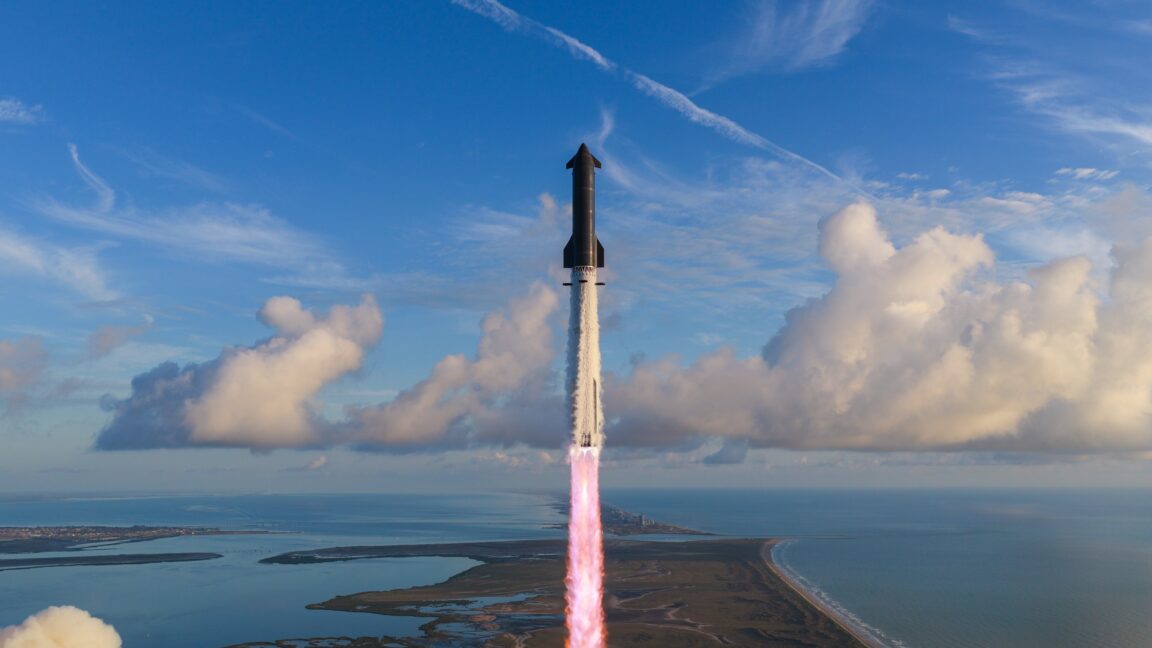
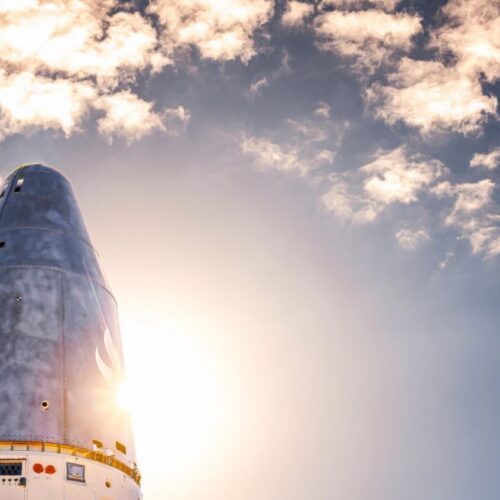
SpaceX to attempt Starship catch on next flight, with eye on rapid cadence increase

In its current iteration, SpaceX is largely a data company seeking to provide enormous amounts of compute for artificial intelligence. During an earnings call on Tuesday afternoon, company officials spent much of their time discussing ambitious plans to roll out up to 10 GW of compute in 2027—on the ground.

Gone are the days of aspirational talk about sending humans to Mars and settling the red planet. Now it is almost all about artificial intelligence and the data needed to support its expansion. However, the company's long-term ambitions to provide data services from space, initially with the Starlink Internet constellation and eventually through the "Starmind" data center constellation, still rely on an actual rocket.

That would be the Starship vehicle, and during the earnings call, SpaceX founder Elon Musk and the company's president and chief operating officer, Gwynne Shotwell, provided new performance targets for the vehicle.

Read full article

Comments

© SpaceX

  •  

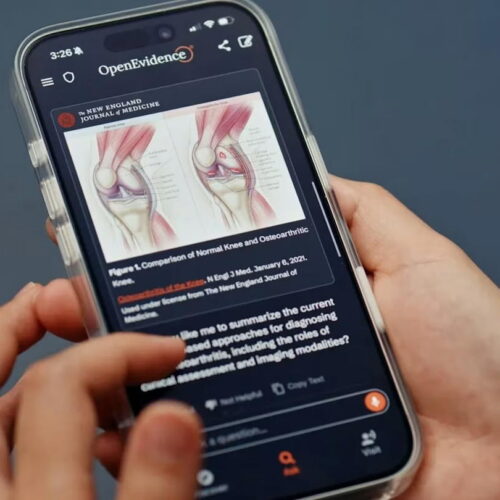
The $15 billion ad-powered AI startup your doctor may already be using

Nearly two-thirds of US doctors are turning to an AI-powered search engine to make patient decisions, propelling a little-known tech startup to a $15 billion valuation while prompting a debate over the future of patient care.

Miami-based OpenEvidence, founded by serial entrepreneur Daniel Nadler in 2022, said that many of America’s 1 million physicians processed more than 42 million prompts last month. Doctors are using the company’s chatbot to scour medical journals and clinical guidelines to help diagnose and treat patients.

The ads-powered platform has grown largely by word of mouth, penetrating a sector where few tools have seen similar traction. “We’re the first viral consumer internet app in healthcare,” Nadler told the FT in an interview.

Read full article

Comments

© OpenEvidence

  •  

Review: Carrie is a triumphant remix with one major flaw

Carrie White, the telekinetic prom queen from hell, is one of the most beloved horror icons in popular culture. First introduced in Stephen King's 1974 novel, Carrie, the character was immortalized in director Brian De Palma's 1976 adaptation, widely regarded as one of the best horror films of all time. It's certainly one of the best King adaptations. So Mike Flanagan faced a massive challenge when he signed on to create an eight-episode miniseries for Prime Video based on the book, released just in time to mark the 50th anniversary of de Palma's film.

I was among the skeptics who questioned why a Carrie miniseries was even necessary, although as a diehard Flanagan fan ("Flana-fan"?), I was willing to give him the benefit of the doubt. If anyone has an affinity for smartly adapting horror in general, and King's work in particular, it's Flanagan. And you know what? With one (very big) exception, Flanagan pulls it off, giving us a richly textured version of the story that is as much about kindness and lost innocence as bloody, vengeful rage—although we get plenty of the latter, too.

(Many spoilers below for the novel and the 1976 film, but there are no major reveals for the new series until after the second gallery. We'll give you a heads-up when we get there.)

Read full article

Comments

© Prime VIdeo

  •  

The past, present, and future share a show floor at Pinball Expo 2026

It's October in the Midwest, which means it's time for the pinball world to descend on a convention center in Chicagoland for the annual Pinball Expo. Once thought to be an entertainment sector slowly bleeding out, pinball has come back in a big way in recent years. I visited one of Chicago's last old-school manufacturers before heading down the road to see what's new in the silver-ball universe.

Behind the silver ball

Hundreds gathered on a brisk fall Friday morning outside Stern Pinball's headquarters in Elk Grove, Illinois, waiting to enter a Wonka-like wonder factory where piles of raw parts become licensed creations from Jaws to the brand-new Fallout. Stern invited me to tour its offices and factory floor before heading off to the convention in nearby Schaumburg, Illinois.

An early morning line begins to form outside of Stern HQ as busses of Pinball Expo attendees arrived for tours. An early-morning line begins to form outside of Stern HQ as buses of Pinball Expo attendees arrive for tours.


As I stood with my tour group in Stern Pinball's HQ lobby, mouth agape at the dozens of machines lining the walls, we were greeted by the man himself, Gary Stern, who gave us some background on the company's 40-year history. After a stop at Gary's podium, we were ushered to the factory floor entrance, where Stern employee and legendary game designer George Gomez briefed us on the tour rules and answered questions. According to Gomez, "at any given time, Stern controls 90 percent of the current pinball market, and everybody else splits the rest."

Read full article

Comments

  •  

FreshRSS 1.30.3

This is a third security release in the continuation of 1.30.x, mostly to address some severe PHP vulnerabilities and update our official default Docker images (Debian) (but not our alternative Alpine images yet, which are delayed).

Note that our rolling-release channel (edge) is recommended for faster security patches.

Bug fixes highlights 🐛:

This release has been made by @Alkarex, @Inverle and newcomer @Ricardo-Simoes

Full changelog:

  • Deployment
    • Docker default image updated to Debian 13 Trixie with PHP 8.4.27-1~deb13u1 and Apache 2.4.69
  • Extensions
    • New hook: Minz_HookType::AutofillField for auth views #9362
  • I18n
    • Improve Brazilian Portuguese #9473
  • Misc.
    • Translate non-English code comments and identifiers #9383

  •  

PHP warns it plans to release 2 emergency patches imminently

Website admins, brace yourselves. Fixes for what are believed to be uncommonly severe vulnerabilities are scheduled to drop in a little more than 12 hours for PHP, a programming language that powers websites and Web applications everywhere.

PHP maintainers said Monday that they planned to release patches for two vulnerabilities, both with severity ratings of 9.2 out of a possible 10.

Waiting for PHP2Shell

“All PHP users are encouraged to prepare now so they can upgrade as soon as the release is available,” the advisory stated. “We reserve the right to release earlier should details of either vulnerability become public, or should evidence of active exploitation appear in the wild.”

Read full article

Comments

© Getty Images

  •  

Merging SpaceX and Tesla would be a "good idea," Musk says

Elon Musk said Tuesday that he would like to see the consolidation of his business empire by formally merging his two largest companies, SpaceX and Tesla.

"Do I think it would be a good idea? Yes," Musk said of a potential merger. He was speaking during a question-and-answer period as part of SpaceX's third-quarter earnings call. Musk said, ultimately, it not his decision. "But at the end of the day the shareholders have to be supportive of this."

Musk's talk of a merger comes after a busy year in which SpaceX already acquired Musk's artificial intelligence firm, xAI, in February. In June, SpaceX went public with the largest initial public offering on record.

Read full article

Comments

© SpaceX

  •  

Cops raid office of RFK Jr. allies planning “unethical” vaccine trial on babies

Police in Guinea-Bissau raided the offices of Danish researchers on Monday, seizing doses of hepatitis B vaccine intended for a vaccine trial for newborns. International health experts have called the trial "unethical," but anti-vaccine Health Secretary Robert F. Kennedy Jr. has attempted to fund it with US taxpayer dollars.

Under Kennedy, the US Centers for Disease Control and Prevention announced in December that it had awarded the Danish researchers—led by married couple Peter Aaby and Christine Stabell Benn of Bandim Health Project—an unsolicited $1.6 million grant to run the trial. Aaby and Stabell Benn are controversial vaccine researchers who claim vaccines cause overlooked harms. They have been repeatedly praised by Kennedy but are currently under investigation by Danish authorities for alleged scientific misconduct.


Plans for the trial were halted in January as widespread condemnation erupted over the trial's design, which would potentially expose thousands of newborns in the country to hepatitis B, risking a lifelong infection that can lead to liver cirrhosis, cancer, and premature death. Outrage flared again after a Rolling Stone story earlier this month claimed the CDC set aside another $1.6 million in funding in late September and planned to move forward with the trial.

Read full article

Comments

© Getty | Nicholas Kajoba

  •  

Microsoft reportedly projects $1,200 to $1,800 price for 2028 Project Helix

We haven't heard many details about Microsoft's upcoming "Project Helix" gaming hardware since the company announced it in March as a device that will "play your Xbox and PC games." In a new wide-ranging profile of Xbox CEO Asha Sharma, though, Fortune alludes to a dual release strategy for upcoming Microsoft gaming hardware, with "a next-generation handheld device" planned by the end of next year and a 2028 holiday season console release that could cost between $1,200 and $1,800.

That future console price range is based on what has "internally been projected" at the company, according to Fortune. But the price for consumers could come down if "Microsoft decides to subsidize the cost," the outlet says, as many console makers have done in the past.

While a $1,200 starting price would be historically high for the game console market, even accounting for inflation, it also reflects a new normal: The slowdown in Moore's Law and AI-driven component shortages means cutting-edge gaming hardware just isn't as cheap as it used to be. This year, the Steam Machine broke the $1,000 starting price, while the 2-year-old technology in the PlayStation 5 Pro is now going for $900, and the 6-year-old Xbox Series X now starts at $750.

Read full article

Comments

  •  

JustWatch, which tackles streaming fragmentation, launches own streaming service

Since launching in 2015, JustWatch has helped people navigate the growing number of streaming services by providing a guide on where to find movies they want to stream. Now JustWatch has its own streaming service and wants people to subscribe.

Launched today, JustWatch TV offers some movies available for free with ads that aren’t free on any other streaming service, including Green Room (2015), Locke (2013), and Sing Sing (2023). Other free movies include Fiddlin’ (2018), Friday the 13th (1980), and Hotel Mumbai (2018). I could play movies available for free on JustWatch TV without creating an account.

JustWatch TV also has movies you can rent.

Read full article

Comments

© JustWatch

  •  

Meta drops the word "train" from its commercial TOS after AI backlash

Hoping to quell criticism, Meta has dropped the word “train” from its “streamlined” commercial terms of service that kick in on October 30.

Last week, Meta faced backlash after legal experts warned that the tech giant’s sweeping new commercial terms of service seemed to give Meta permission to endlessly scrape websites linked on business pages. Talking to Nieman Lab, experts suggested that Meta could possibly use the policy to avoid millions in licensing fees from news organizations by requiring all business users to share a wealth of AI training data simply for running a business page.

A Meta spokesperson confirmed that Meta did not alert users to the changed language following backlash. This potentially only adds to confusion ahead of the policy rollout. In response to backlash, Meta's spokesperson provided a statement to Ars, acknowledging Nieman Lab's initial report but not its follow-up report reiterating experts' concerns:

Read full article

Comments

© filo | DigitalVision Vectors

  •  

Gemini's Personal Intelligence is coming to cars

Google kicked off 2026 with the addition of Personal Intelligence to Gemini, allowing its AI to pull in more of your data to formulate answers. It started as a paid feature but eventually came to all Gemini users. However, this feature wasn't available in the car until now. Google is rolling out Personal Intelligence to Android Auto and Google Built-in, and it is still, thankfully, an optional feature.

As Google points out, a generative AI's outputs are better "when it knows the world and knows you," which is correct in an uncomfortable sort of way. The more context you can provide to a model, the better the output will be at the end of the token shuffle. Since Google has so much of your data already, it sees Personal Intelligence as a differentiator versus other AI systems. You don't have to provide the AI context because it already has it from apps like Gmail and Calendar.

Personal Intelligence is beginning its rollout in Android Auto today, and it will come to vehicles with Google built-in in the next few months. As an aside, "Google built-in" is questionable branding, but it refers to cars that run Google software in the infotainment system rather than projecting an interface from your phone. Very few vehicles have Google built-in, but Google often releases new car features on them first. This time, it's the other way around.

Read full article

Comments

© Google

  •  

OpenBSD 8.0 arrives with security record still intact

OpenBSD 8.0 is here, marking the project's 61st release and continuing its schedule of semiannual releases dating back to 1996. What started more than 30 years ago as a fork of NetBSD has grown into one of the most security-conscious operating systems in active development. In a post to the project's announcements mailing list, OpenBSD founder Theo de Raadt highlights a host of improvements included with the latest version and writes that the project remains "proud of OpenBSD's record of more than thirty years with only two remote holes in the default install."

The latest OpenBSD version brings new features and improvements across the board. These changes, particularly the new Intel Arc support and expanded virtual address space, should improve compatibility with modern graphics cards and allow the system to map more than 4GB of VRAM. Some of the major updates noted in the release newsletter are as follows:

  • Added support for Intel Arc A-Series (DG2/Alchemist) graphics cards.
  • 512GB kernel virtual address space on AMD64, up from 4GB, allowing VRAM mapping above 4GB.
  • Added hibernation support for ARM64 systems.
  • A new RPKI-to-router daemon: rtrd(8).
  • RISC-V improvements including kernel support for the 'V' vector extension and support for Advanced Interrupt Architecture.
  • Wireless network driver additions and improvements, including 802.11n and 40 MHz channels for the qwx(4) wireless driver.
  • Added support for up to 64 virtual CPUs per guest virtual machine.
  • Security and internal improvements for LibreSSL 4.4.0 and OpenSSH 10.6.
  • Improvements to the vmm/vmd virtualization stack.

The new OpenBSD also retires support for Loongson architecture after the port stopped working with the Clang 22 compiler. If you're interested in reading over all the changes that come with the new OpenBSD 8.0, you can take a look at the release announcement.

Read full article

Comments

© OpenBSD

  •  

The Internet goes on high alert after discovery of 8 compromised TLS certs

Security personnel around the world are on high alert Tuesday following the discovery of eight TLS certificates with private keys so weak they could allow anyone to mint trusted browser and app credentials for any site on the Internet.

As of late morning Tuesday, browser makers and some major apps and programming languages had blocked all eight of the intermediate certificates. There are no reports of certificate transparency logs, which track the issuance of all browser-trusted certificates, showing the compromised keys being used maliciously. The threat remains far from over, however, because it will be hard and time-consuming to update other key parts of the Internet, such as Linux distributions and embedded and Internet of Things devices.

One word: bonkers

The eight intermediate certificates belong to India-based certificate authority eMudhra Limited. An informal advisory published to emudhra.we-have-a-problem.com over on Tuesday posted the message “We have a problem here - Wayne.” The words were digitally signed using the private key of one of the eMudhra certificates. With proof that the reporting party had control of the key, defenders scrambled because the same key could be used to sign unauthorized certificates that would be trusted by millions of servers worldwide.

Read full article

Comments

© Getty Images

  •  

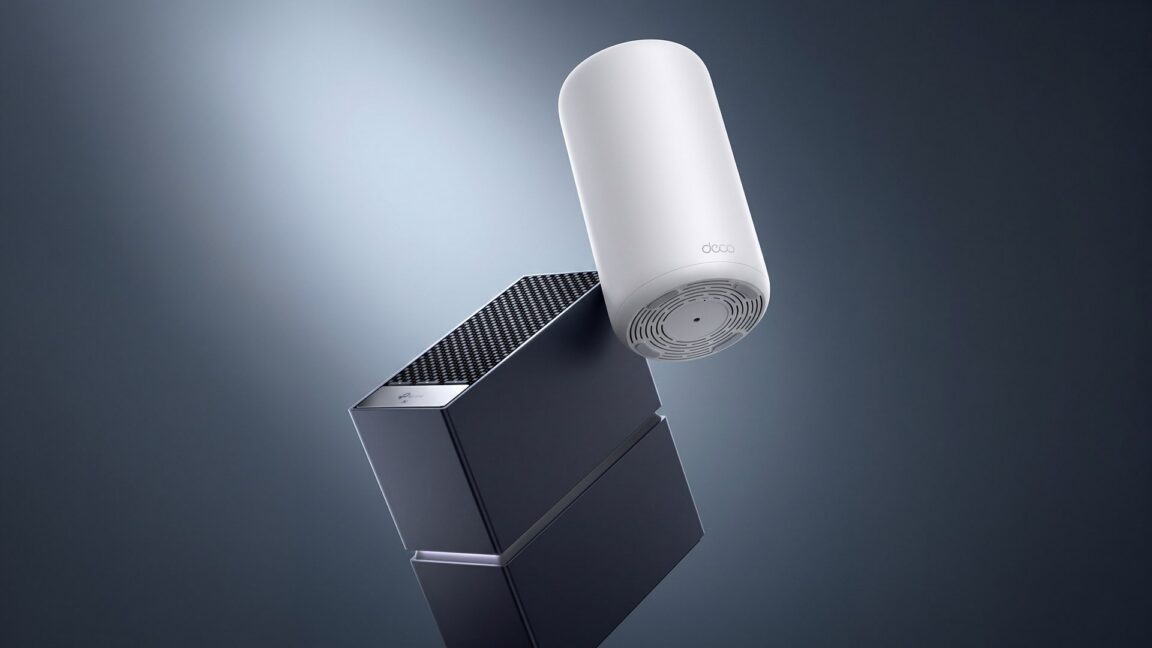
TP-Link tries to appease Trump admin with pledge to assemble routers in US

TP-Link yesterday announced plans to assemble Wi-Fi routers in the US, as the company attempts to get the Trump administration's approval to sell its newest routers to American consumers.

The timing is uncertain, as TP-Link's press release said it expects US-based assembly to begin "as early as" 2027. TP-Link's application to sell new routers in the US could be rejected by the Trump administration or remain pending long enough to push the US-based assembly to 2028.

"Pending US regulatory approval, TP-Link expects domestic assembly of its groundbreaking Wi-Fi 8 home networking product line to begin as early as next year," the company said. TP-Link said it signed a Letter of Intent with US company Keytronic, which agreed "to become a primary domestic manufacturing partner for TP-Link, supporting assembly of the company’s advanced networking portfolio in Corinth, Mississippi."

Read full article

Comments

© TP-Link

  •  

Does anyone actually want to win the medium-lift race in the United States?

It has been 13 years since the debut of a new medium-lift rocket in the United States, the Antares vehicle developed by Orbital Sciences Corporation.

The initial 100-series variant of the Antares rocket was kind of a hot mess. The rocket used old Soviet engines built during the era when Apollo astronauts were landing on the Moon. Decades later, in the 1990s, Aerojet acquired the engines and refurbished them for a rocket that would launch in the 2010s. Predictably, on the fifth launch of an Antares rocket in 2014, it exploded.

The Antares vehicle is the last of a dying breed of medium-lift rockets—defined as having a lift capacity of 2 to 20 metric tons—in the United States. Nearly a decade and a half later there is a new generation of medium-lift vehicles coming online, and they are starkly different from Antares, which had not just Russian engines but a core stage manufactured in Ukraine.

Read full article

Comments

© Stoke Space

  •  

Ukraine’s drone rescue of wounded soldier puts much touted idea into practice

Ukraine’s unprecedented drone rescue of a wounded soldier from the battlefield has shown once again how battlefield necessity can spur innovation. The operation was revealed just days after separate Ukrainian drones designed for casualty evacuation were deployed for frontline testing—taking a step beyond the US military’s decades of experimentation with similar concepts.

The drone evacuation of the injured soldier took place at an undisclosed time and place on the frontline where the presence of Russian drones and landmines made it impractical to send in a wheeled ground robot, according to The Kyiv Independent. On October 19, Ukraine’s Army shared a video of the drone evacuation, showing the wounded soldier securing himself in a harness suspended beneath a heavy hexacopter drone with six rotors before being flown to safety.

“This is a historic event, the next stage of evacuating the wounded, which we will all come to,” said Napalm, a programmer of the 92nd separate assault brigade's unmanned ground systems company, who went by his callsign per Ukrainian military practice, in a statement. “Now the serious systematic work begins, so that such missions are carried out constantly.”

Read full article

Comments

© 92nd Separate Assault Brigade of the Ukrainian Ground Forces

  •  

Quantum error correction goes well beyond breakeven

Running complicated algorithms on quantum computing hardware is going to require the use of logical qubits, where collections of hardware qubits are linked together in ways that allow errors to be detected and corrected. In general, the more hardware qubits you dedicate to each logical qubit, the better the chances are of identifying errors. But, given that the hardware qubits are prone to errors, adding more of them also increases the probability that errors will occur. If the hardware error rate is too high, then growing the logical qubit will only make matters worse.

Fortunately, several companies have demonstrated hardware where the error rate is not too high. Several demonstrations show logical qubits are beyond the breakeven point, where adding more qubits improves performance. The problem is that the improvement isn't very dramatic. To lower error rates to levels we'll need to run complex algorithms, we'd have to add a completely impractical number of qubits to each logical qubit.

On Monday, Quantinuum announced that its current generation of hardware is capable of scaling well beyond the breakeven point. Each step up in the size of logical qubits improved some measures of their performance by a factor of over 10.

Read full article

Comments

© Quantinuum

  •  

Meta tries to scapegoat staff who downloaded torrents to spare execs

In copyright lawsuits over AI training, Meta has spent weeks blaming staff for downloading torrents. The company has now been ordered to name executives who authorized decisions to pirate books from shadow libraries like Anna’s Archive and LibGen, TorrentFreak reported.

In a discovery order impacting a class action raised by book authors—including Richard Kadrey and Sarah Silverman—as well as a lawsuit from publisher Entrepreneur Media, Magistrate Judge Thomas Hixon largely agreed that Meta must clearly identify key decision-makers. Following testimony from Meta staff who downloaded torrents, the order could expose a wider range of supervisors, managers, and executives whom staffers said greenlit the piracy.

Meta had been hoping to avoid detailing the chain of command, particularly for leadership involved in early AI training. According to a Meta court filing, its initial efforts to compile massive AI datasets were managed through an “informal approach" where supposedly nobody with authority made any decisions. Instead, Meta insisted that a “decision” was “made only in the sense” that some staffers “technically” downloaded torrents.

Read full article

Comments

© JOAO LUIZ BULCAO / Contributor | AFP

  •  

Polestar tries to quantify what it’s like to drive a performance car

The human desire to go fast is old, dating back at least as far as the first time some adventurous Yamnaya saw a horse on the Pontic-Caspian steppe and thought, “I bet if I jumped on that thing’s back, it would be faster than walking.”

A thousand years later, someone else invented the wheel—and the chariot—and humanity was ready to roll. Now, about five millennia since that first horseback ride, equestrianism is mostly a leisure activity, and we drive cars, propelled by motors with more power than an entire herd of beasts could muster.

Acceleration, top speed, and lap times are the usual ways we quantify that performance, and performance electric vehicles are currently in an arms race to see which one can hit 60 mph in the least amount of time. But measuring a car’s performance is easy—all you need is a stopwatch and a track. How about measuring the effect of car performance on the driver? That’s a question Polestar is trying to answer with researchers at the University of Oxford.

Read full article

Comments

© Polestar

  •  

Meta Muse exposes users' personal and business secrets when they share conversations

Muse, the new general-purpose AI agent from Meta, can expose sensitive information when users share conversations through web links, researchers reported Monday. In response to questions from Ars about the behavior, Meta said it's suspending the sharing feature while the company reviews it and considers making changes.

Like many online services, Muse has allowed users to share searches, conversations, images, and similar content with other people. Such share features usually involve clicking an option to create a unique URL that anyone can use to load a page hosting the content. To keep potentially sensitive information from being accessible to unintended people, the URLs typically contain a long sequence of text that can’t be easily guessed.

A single query is all that's required

Muse, which Meta CEO Mark Zuckerberg said last month was “built from the ground up for privacy and security,” seems to take the same precautions. But a central design decision for constructing URLs has made the links easy to discover. As a result, researchers from security firm Claroc said they were able to enumerate 6,800 links Muse users created for sharing conversations with others. After opening a few hundred of them, the researchers found information that was clearly not intended to be publicly available, including:

Read full article

Comments

© Getty Images

  •  

Visiting Slate’s first showroom as its $25,000 electric truck nears production

As I sat in the cab of the pickup truck and manually rolled down the windows, I closed my eyes and, for the briefest moment, flashed back to opening the windows on a cold, winter day in my dad’s 1975 Ford Ranger to let more cigarette smoke escape. I opened my eyes and looked through the windshield at a wall in the Slate Customer Experience Center studded with bright color chips.

Last week, in a former Tesla store staffed by some former Tesla employees, Slate opened its first showroom. Located in the Fulton Market District just northwest of the Chicago Loop, the Slate Experience Center is a place for would-be buyers to poke around a prototype, check out customization options, buy some Slate merch, and even preorder a new Slate Truck with a $300 deposit.

Designed for the American obsession with pickup trucks, the Slate Truck is a bare-bones electric pickup truck retailing for $24,950. It sports plastic panels, a minimalist interior design sensibility, actual window winders, and a projected range of 205 miles. Ars went for a ride in a Slate Truck over the summer, but we haven't had a chance to shop for one. So I stopped by the Slate Experience Center so I could, er, experience the Slate.

Read full article

Comments

© Eric Bangeman/Ars Technica

  •  

Japan launches mission to bring home a piece of the Martian moon Phobos

Japan launched a $578 million mission Monday on a five-year expedition to land on the largest moon of Mars and retrieve samples for return to Earth, a daring international project that could yield new insights into the formation of the Solar System.

The robotic Martian Moons eXploration mission, known as MMX, lifted off at 3:41 pm EDT Monday (4:41 am Japan Standard Time Tuesday) from Tanegashima Space Center in southern Japan.

The MMX spacecraft rode into orbit atop a 207-foot-tall (63-meter) H3 rocket, Japan's flagship launch vehicle. The rocket assigned to MMX debuted a new souped-up configuration with four strap-on solid rocket boosters, full-throttle main engines, and an extended payload shroud to accommodate the demands of Japan's heaviest and most ambitious interplanetary mission to date.

Read full article

Comments

© ESA/DLR/FU Berlin/Andrea Luck

  •  

Pennsylvania issues alert on congenital measles—something US hasn't seen for decades

Pennsylvania's health department issued a health alert Monday as cases of measles in pregnancy and, in turn, cases of congenital measles have continued to increase. Before the current outbreak—which continues to rage across the state—congenital measles cases hadn't been seen in decades, the department noted in its advisory.

The alert included detailed clinical guidance for managing measles exposures and cases during pregnancy as well as cases in newborns. Many doctors have never seen such cases in their careers given the decades of successful use of the measles, mumps, and rubella (MMR) vaccine. But now, with vaccination rates slipping nationwide, the highly infectious virus is better able to get footholds in communities and spread rapidly through under-vaccinated pockets, as is happening in Pennsylvania.

As of October 19, Pennsylvania had reported 1,286 measles cases this year across 42 counties. Of those, 247 have been hospitalized, and six people have reportedly died (though the latest reported death is still pending an investigation by the state health department before it is added to the state tally).

Read full article

Comments

© South_agency

  •  

Russian spacecraft maneuvers in "extreme proximity" to satellite used by Ukraine

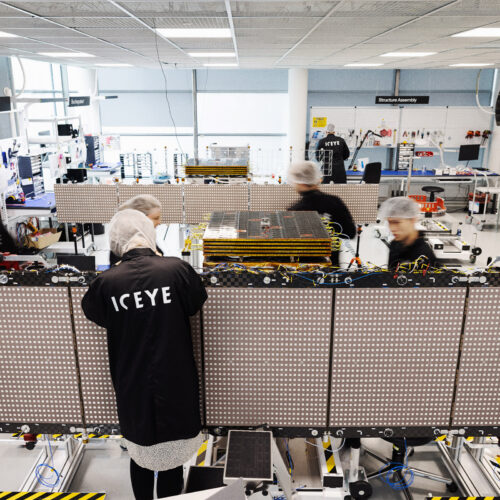
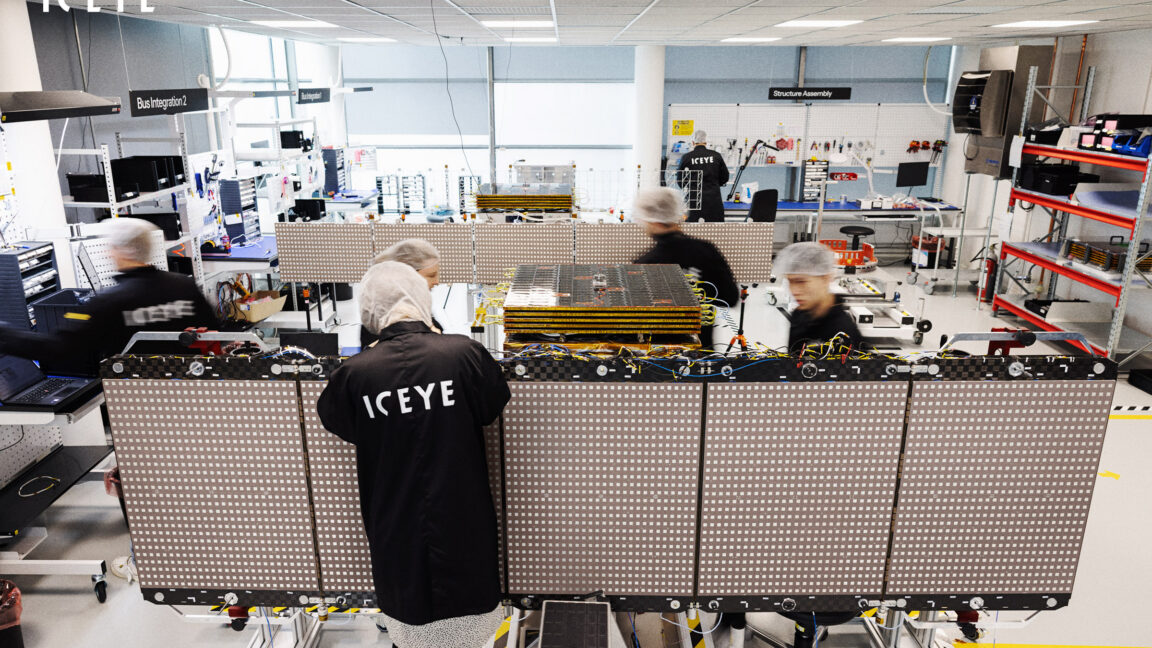
A Russian military satellite maneuvered in "extreme proximity" of a commercial Earth-imaging satellite in recent days in the first known example an unsanctioned rendezvous in low-Earth orbit, according to orbital intelligence company LeoLabs.

The Russian spacecraft, Kosmos 2612, "conducted a deliberate series of maneuvers toward ICEYE-X36, a US-operated commercial imaging satellite," LeoLabs said. "Kosmos 2612 closed from hundreds of kilometers away to extreme proximity to ICEYE-X36. It then maneuvered around ICEYE-X36, remained nearby for an extended period, and then began moving away."

US military officials and independent analysts have tracked Kosmos 2612 since its April launch on a Soyuz rocket from a spaceport in northern Russia. Within weeks, it became apparent that at least four of the six satellites from that launch were stalking ICEYE-X36 after they adjusted orbits to line up with the orbit of the ICEYE spacecraft.

Read full article

Comments

© ICEYE

  •  

Accused OpenAI spy had folder called “Saudi Gov Docs,” FBI says

On Monday, a court granted the US government's request to deny release of a former OpenAI engineer accused of bugging a top-secret conference room to steal the frontier lab’s secrets.

In a court filing Sunday, US attorney Craig Missakian argued that Abdulrahman Alfozan must continue to be detained while the US makes its case that Alfozan brazenly spied on OpenAI, either for his own personal business gain or to benefit the Kingdom of Saudi Arabia.

Evidence showed that Alfozan had been chatting with a member of the KSA royal family on WhatsApp, while pursuing opportunities to permanently move back to Saudi Arabia during the country's biggest AI push yet, the government argued. Shortly before his arrest, the FBI found he accessed a folder called "Saudi Gov Docs" on his iPhone, where he also allegedly stored photos of a second bug he planted in the offices.

Read full article

Comments

© BRENDAN SMIALOWSKI / Contributor | AFP

  •  

Batteries help reduce emissions, but how do we reduce their emissions?

The first order of business for the energy transition is electrifying applications like vehicles and heating and making sure that the electricity that powers them is made using renewables. But once the dominant slices of the emissions pie have shrunk, other categories with less potential to reduce emissions become important.

A new study led by Haiwei Zhou at the University of Melbourne focused on the emissions associated with making lithium-ion batteries, which many parts of the energy transition rely on. Those emissions aren’t zero, so as we use more and more batteries, that number will grow. Right now, the researchers estimate that these emissions only account for 0.18 percent of annual greenhouse gas releases, but they could increase by a factor of 10 or more by 2050.

Avoiding production

There are a number of ways to reduce the emissions required to make a battery. Some elements used in various lithium-ion battery chemistries are more energy-intensive to mine and refine than others. The battery manufacturing process involves many steps that could be made more energy-efficient. And then there’s recycling, which can put battery materials back into the loop while requiring much less energy than mining.

Read full article

Comments

© Oleg Nikishin

  •  

PSA: Patch your Plex media server before someone hacks it

Recently fixed vulnerabilities in the Plex Media Server are under active exploitation in attacks that, when successful, install malware, including cryptominers and residential proxy apps, a researcher said.

Plex fixed four vulnerabilities at the start of last month. Three weeks later, published CVE designations revealed five vulnerabilities, with one of them carrying a severity rating of 8.6 out of 10. A researcher last week revealed an exploit that chained four of them together to achieve remote code execution of the device running a vulnerable Plex version. The researcher named the chain "Plex2Shell."

Complex exploit chain

The new details allowed a separate researcher to create a honeypot that could track attempts in the wild to exploit the vulnerability chain. Within a day, the researcher began seeing active scanning of the simulated Plex server and eventually successful attempts to infect devices. So far, successful attacks are installing two payloads. One is a cryptominer, which uses the device to mine cryptocurrency and deposit it into a wallet controlled by the attacker. The other payload is residential proxy software, which allows people to anonymize their Internet activity (much of it illegal) by connecting to the infected box and then using it to send the user’s traffic to a final destination.

Read full article

Comments

© Plex

  •  

FreshRSS 1.30.2

This is a second security and bug-fixing release in the continuation of 1.30.x.

Note that our rolling-release channel (edge) is recommended for faster security patches.

Bug fixes highlights 🐛:

  • Fix PHP 8.5+ deprecation warning with SQLite
  • Block data: URI scheme in some cases

Performance highlights 🏎️:

  • Reduce memory consumption of export

This release has been made by @Alkarex, @Inverle and newcomers @abp002, @Arslan-TR, @Emredinho61, @HawkForge, @lordmarrik, @spa77k, @tomac4t, @tpq2030

Full changelog:

  • Security
    • SimplePie sanitizer: block data: URI scheme while keeping data:image for images #9417
    • Mitigate some 404 situations #9435
    • Do not log the Fever API key on authentication failure #9468
    • Fix local DNS leak when fetching feeds through a proxy #9451
  • Bug fixes
    • WebSub fix POST, fix warning, better message #9420
    • Fix PHP 8.5+ deprecation of sqliteCreateFunction for SQLite #9421
    • Preserve explicit sort overrides when searching #9467
    • Fix wrong order of args in extension compatibility check #9445
  • Performance
    • Reduce memory consumption of export #9350
  • Features
    • Better doc and log proxy cases #9436
  • Extensions
  • UI
    • Disallow user page navigation while refreshing feeds #9446
    • Various UI and style improvements #9426, #9441
  • I18n
  • Misc.
    • Update to GT\CssXPath 1.6.0 #9411
    • CI/CD: Fix login to Docker Hub #9433
    • Fix SVGO zero percent filtering in CI #9422
    • Update dev dependencies #9425

  •  

Startup taps underwater volcano as energy source in "proof point" test

The world’s first demonstration of a subsea geothermal power plant has taken place near an active underwater volcano almost a mile below the ocean surface. It generated less than 10 seconds of net-positive electricity but showed the technical feasibility of tapping another form of renewable energy underwater.

The three-week test deployment of the 3-ton prototype power plant took place at the Axial Seamount in the northeast Pacific Ocean in September. Endurance Energy, the Seattle-based startup behind the effort, aims to eventually commercialize subsea geothermal power for Pacific island nations and other customers looking for alternatives to importing expensive fossil fuels.

“The deep ocean gives us unlimited cold seawater for cooling, and its weight keeps the system and the well pressurized, so our plants can be compact,” said Andrew Redd, founder and CEO of Endurance Energy, in an email to Ars.

Read full article

Comments

© Endurance Energy

  •  

ReactOS reaches major milestone with NTFS install support

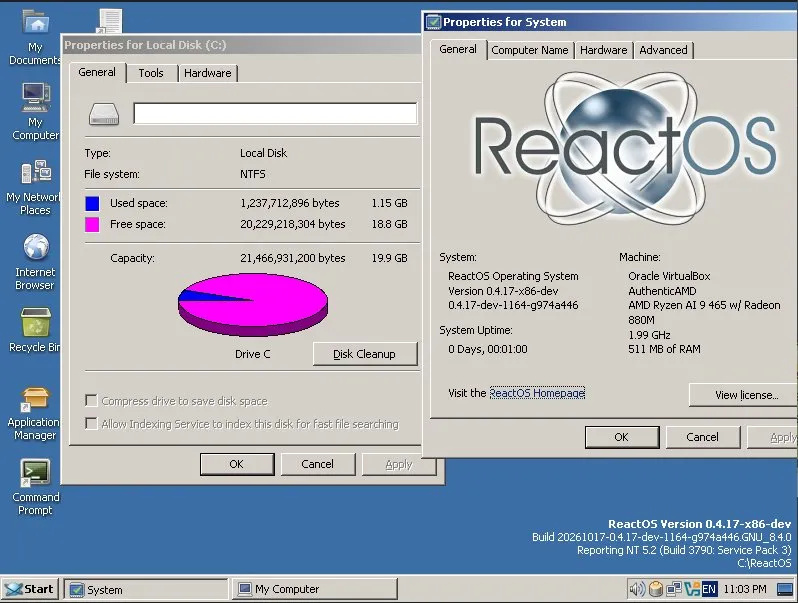
Open source Windows alternative ReactOS has reached a major milestone: The operating system can now be installed directly onto an NTFS drive partition. As reported by Phoronix, the move to NTFS clears a long-standing hurdle for the project and brings it one step closer to finally reaching beta.

Prior to this latest announcement, ReactOS required users to keep a FAT32 partition for installations. A proprietary Microsoft-developed filesystem, NTFS can trace its roots back through the Windows NT family lineage starting in 1993 with Windows NT 3.1. The variant introduced with Windows XP in 2001 remains the standard used by most Windows systems today. With ReactOS's stated goal of reaching binary compatibility with Windows Server 2003, being confined to FAT32 partitions was a practical barrier to clear on the way to reproducing the Windows environment.

However, users looking to hop off the Windows train shouldn't be grabbing their bags just yet. ReactOS wrote that the new driver still "lacks caching (which causes inferior performance), journaling and security support." So while the new driver is here, even the most intrepid of OS tinkerers should tread carefully. The ReactOS team warned in its announcement on X that there are still "potentially undiscovered bugs."

Read full article

Comments

© ReactOS

  •  

AI game clones are making indie developers afraid to show their work

Since its earliest days, the video game industry has been built on developers creating clones of competing games, with varying levels of originality and varying levels of enforcement from game platforms. Now, though, AI coding tools are making that cloning process so efficient that many developers are getting extremely cautious about sharing their early work too widely.

Developer Alliance Arts highlighted this trend over the weekend, delaying the launch of a planned public demo for its demon-themed Russian Roulette drinking game Drunken Goddess Reflux, which had been set to go live with today's launch of Steam Next Fest.

In a post on social media Friday evening, the Alliance Arts team wrote that, in addition to concerns about managing streaming restrictions, "we're concerned that the demo's content could be used to quickly imitate or replicate the game's presentation and gameplay with AI or other tools and that such works could be released before our launch."

Read full article

Comments

  •  

Florida DMV hacked after police dept insecurely stored login info

The Florida Department of Highway Safety and Motor Vehicles (FLHSMV) has begun notifying victims impacted by a recent data breach of driver’s license and motor vehicle data, but not everyone whose information was stolen will receive an alert.

In a notice posted Friday, FLHSMV confirmed that it took “immediate steps” after discovering that “a malicious actor accessed certain department records on September 4, 2026, using compromised credentials.” There’s “no evidence” that data has yet been misused, the department said, but law enforcement “determined the information potentially affected includes driver license and motor vehicle data, to include document images, and other personal information.”

FLHSMV is sending out letters to everyone affected, offering victims one year of credit monitoring from Sontiq, Inc. However, the state acknowledged that it may not have current contact information for many former Florida residents whose data was still being stored. Those potential victims can confirm if their data was stolen by emailing FLHSMV at customerinquiry@flhsmv.gov, officials said.

Read full article

Comments

© ablokhin | iStock Editorial / Getty Images Plus

  •  

Disney found a way to buy Character.AI without buying its lawsuits

This week, Character.AI declared bankruptcy. While some saw the fall of a chatbot platform as a harbinger for the industry, court filings indicate that the decision was actually a key part of a deal that has let Disney hire most of Character.AI’s staff—including its now former CEO Karandeep Anand—potentially acquire most of Character.AI’s technology, and avoid the beleaguered startup’s many legal liabilities and obligations.

In the past few years, Character.AI has faced multiple private lawsuits over the safety of its chatbots, as well as investigations from regulators around the world. In a declaration filed as part of the bankruptcy, Character.AI’s newly appointed CEO explained that the goal of the bankruptcy was to reach a “consensual resolution” with personal injury claimants and a group of states investigating the company, while maximizing the value of the company’s assets for shareholders.

The Disney deal seems to be structured so that whatever is left of Character.AI will retain responsibility for those legal battles, some of which are still ongoing.

Read full article

Comments

© Getty Images | NurPhoto

  •  

A Chinese rocket deorbited over Minnesota and left this in a farmer's cornfield

About a month ago, a Chinese rocket took off from a remote spaceport in the Gobi Desert, released 10 satellites into orbit, then reignited its engine and put itself on a trajectory to rain down debris over the American Midwest.

The rocket's flight on September 15 lasted between 75 and 80 minutes, and it came down without completing a full orbit of the Earth. Social media posts at the time showed streaks of fiery debris falling from the sky, heading north over Kansas toward Minnesota. The overnight spectacle was also visible on the western horizon from Wisconsin.

The exact time, location, and direction of the debris allowed experts to connect it to the launch of a Zhuque-2E rocket, a medium-lift vehicle built by a Chinese company called LandSpace. The rocket had launched from Dongfeng, a commercial launch zone co-located with the military-run Jiuquan Satellite Launch Center in northwestern China, less than two hours before.

Read full article

Comments

© Stevens County Sheriff's Office

  •  

Review: Lanterns is a truly unique twist on the superhero genre

The trailers for HBO's DC Universe series Lanterns teased a show that eschewed the usual superhero hijinks in favor of a gritty realism more in the vein of True Detective or Slow Horses. Personally, I liked the change. My verdict: Ignore the review bombing; it's wonderful. The season wrapped with an emotionally charged, almost elegiac finale that fully delivered on that initial promise. I've found the rebooted DC Universe films released thus far to be enjoyable but rather forgettable, even when the positives outweigh the negatives. But Lanterns is a shining beacon of what is possible when someone is allowed to get really creative within the genre.

(Spoilers below, but no major reveals.)

There are two primary storylines. The first takes place in 2016 with a mass shooting at a local football game in Rushville, Nebraska. Current Green Lantern Hal Jordan (Kyle Chandler) and his new trainee, John Stewart (Aaron Pierre), get involved in the investigation, to the annoyance of Sheriff Kerry Kane (Kelly Macdonald), who initially doesn't think the case has any extraterrestrial connection. She is soon proved wrong when the suspect (an alien) self-detonates. Hal's power ring controls the damage, but the mystery remains.

Read full article

Comments

© YouTube/HBO Max

  •  

DIY VR: How to build your own headset, and why you probably won't want to

Virtual reality is in a bit of a weird place right now. After a lot of unfulfilled promise in the 1990s, it came back strong with the 2016 release of the Oculus Rift. For a while, it looked like VR, AR, XR, the metaverse, or whatever you wanted to call it, was going to be huge. Mark Zuckerberg was certainly convinced, and even Apple got in on the hype with its Vision Pro.

But by then momentum for alternate realities of every acronym was already in steady decline, and it only dwindled from there. The rate of development of new headsets has slowed, with many companies (including Apple) scaling back or shelving their efforts. While new releases like the Steam Frame and Pimax Dream Air are still happening, many of the most interesting developments in the space these days are on the enthusiast front.

That's right, DIY VR is a thing, and with a couple hundred dollars in components, plus many hours of your time, you too can enter the immersive world of virtual reality while also experiencing the highs and lows of soldering, firmware flashing, and 3D printing. I rode that rollercoaster myself and learned why this is still a decidedly niche movement.

Read full article

Comments

© Tim Stevens

  •  

Stratospheric airship flew from US to Japan to test sky cell tower concept

Nearly 100 years after the dirigible Graf Zeppelin made the first nonstop airship journey across the Pacific Ocean, another airship has successfully completed a round-trip flight from New Mexico to Japan and back. But the significance of this modern feat was less about the journey's length and more about its purpose: demonstrating how a lighter-than-air platform can act as a cell phone tower in the sky.

The trans-Pacific flight that took place over a month between August and September 2026 was the most notable milestone yet for Sceye, a US aerospace company based near Albuquerque, New Mexico. Sceye has developed an uncrewed platform filled with helium for buoyancy and equipped with an electric-powered propeller for active propulsion, allowing it to resist most strong winds and keep hovering over the same location for long periods. The platform also uses top-mounted solar panels and onboard batteries to stay powered for stratospheric operations around the clock.

“We can stay over an area of operation, and we do that in the stratosphere right around 60,000 feet, so we're twice as high as air traffic and we're above the jet stream, and yet 30 times closer than low-Earth orbit satellites,” Mikkel Frandsen, founder and CEO of Sceye, told Ars. “We can fly through day and night until the sun comes up the next morning and recharges the batteries, at which point we're still at the same altitude and still over the same area of operation.”

Read full article

Comments

© Sceye

  •  

Anthropic gives outside AI watchdog “employee-like” access

Anthropic has granted external evaluators “employee-like access” to assess the risks of its models, following through on a commitment to increase safeguards over concerns the technology could run catastrophically out of control.

METR, a nonprofit that has worked with leading labs including OpenAI, Anthropic, Google, and Meta, now has a team embedded in the Claude maker’s office with access to its hardware and internal systems.

A greater role for third-party evaluators is among the main concrete steps the labs have proposed in response to rising concern about the dangers more capable AI systems could pose to the economy, cyber security, and humanity at large.

Read full article

Comments

© SOPA Images/Getty

  •  

Science says your boss should talk less in meetings

Close to 1 billion meetings take place each day around the world. CEOs spend nearly three-quarters of their workdays in meetings. Planning for and spearheading meetings eats up the lion’s share of managers’ time. In much of the industrialized world, meetings are both the metronomes and menaces of people’s working lives.

Given the enormous time spent in workplace meetings, do we know what they accomplish or how to make them as worthwhile as possible? For decades, the answer was… not really. Meetings weren’t a particularly accessible subject of study. But that has changed. Once a tiny niche area, “meeting science” is a growing specialization among organizational and social psychologists. The field is accelerating as archived virtual meetings provide vast swaths of data. And it is providing a fascinating window into human behavior.

Meeting to talk helps fulfill basic human needs to connect, communicate, and cooperate. People have long come together—in caves, fields, market squares, and town halls—to get something done, share ideas, get on the same page, or just to remark on the weather. But meeting scientists define their subject as gatherings of people “with some goal or structure to the event,” says organizational psychologist Liana Kreamer of the Florida Institute of Technology, who coauthored a review of over three decades of meeting science in the 2026 Annual Review of Organizational Psychology and Organizational Behavior.

Read full article

Comments

© https://www.gettyimages.com/detail/photo/hangover-at-the-office-royalty-free-image/1770771124

  •  
❌