Reading view

Anthropic says these topics are too dangerous to let its Fable 5 model talk about

Anthropic Tuesday publicly released Claude Fable 5, its first "Mythos-class" model that it says surpasses its previous frontier Opus models in overall capabilities. But the model's launch today comes with safeguards designed to prevent it from answering queries on topics like cybersecurity, biology, and chemistry, where the company has publicly worried about its potential impact to "uplift" malicious actors.

Anthropic says Fable 5 operates on the "same underlying model" as Mythos 5, which is coming out of its monthslong "Mythos Preview" period today, but only for "a small group of cyberdefenders" judged trustworthy through the existing Project Glasswing. Unlike Mythos 5, though, the publicly accessible Fable 5 is designed to funnel queries on certain sensitive topics to the earlier Claude Opus 4.8 model and to warn the user when this is happening.
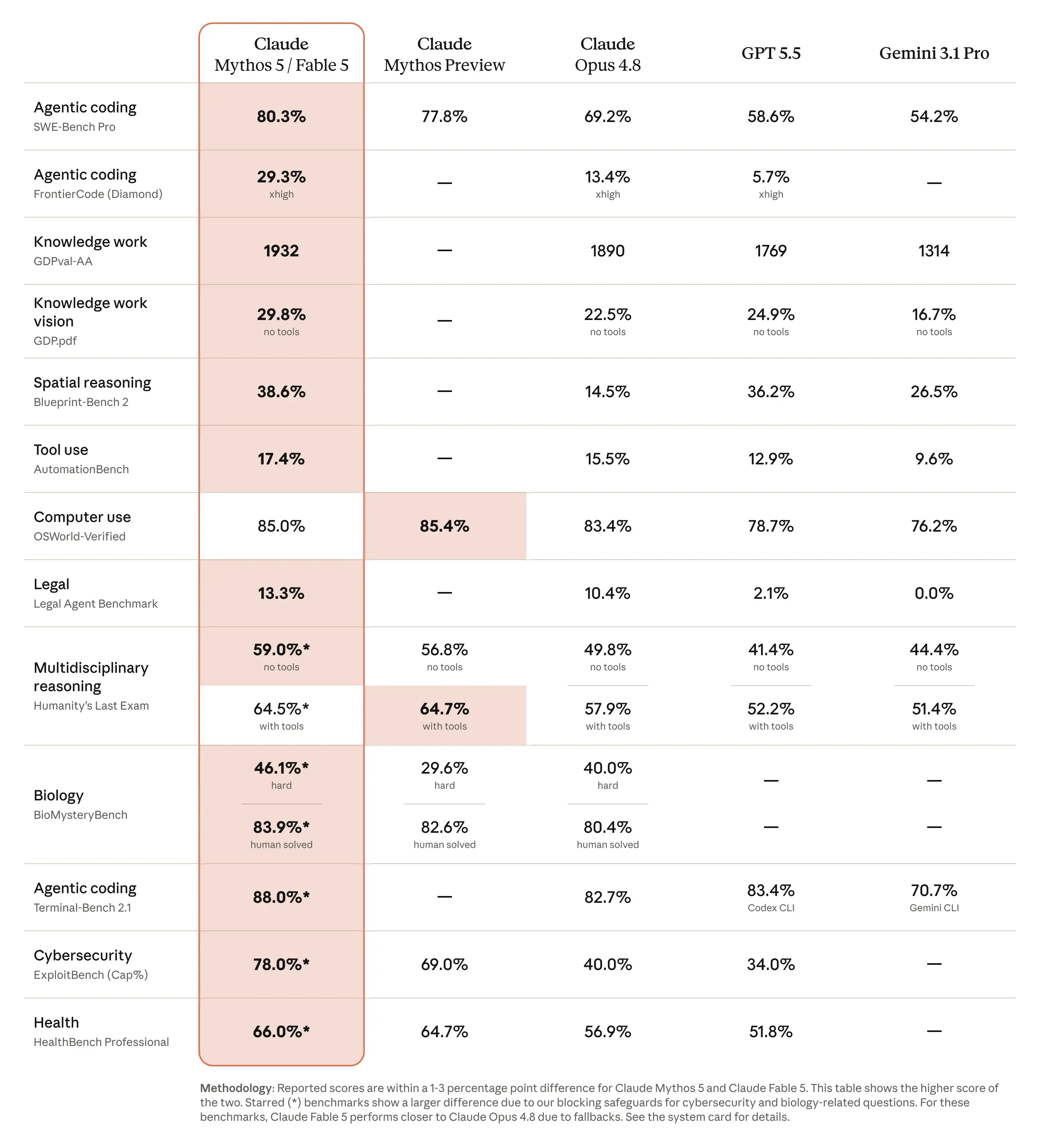
Among the many claimed benchmark improvements for Fable 5, the one related to cybersecurity was a particularly large jump. Credit: Anthropic

Anthropic said it has tuned these safeguards to be "stricter than ideal," meaning the system may occasionally refuse "harmless requests" in a way that it acknowledges may be frustrating for regular users. But Anthropic says such false positives come up in less than five percent of all sessions in testing, and were worth it to avoid situations where Mythos could give malicious actors assistance in "causing serious harm that they couldn’t have received from other sources."


Read full article

Comments

© Getty Images

  •  

Google announces Gemini 3.5 Live Translate for instant voice-to-voice translation

Google has been chasing real-time translation for years, which it says has been one of its "pioneering machine learning experiments." We've seen numerous demos on stage at Google events in the past, but you needed Google phones, earbuds, or some other specific setup. Last year, Google brought real-time translation to more users in the Translate app, and now it's expanding availability more. With the release of Gemini 3.5 Live Translate, you'll have access to instant translation in more places and with lower latency than ever before.

The new AI model is part of the version 3.5 family that launched at I/O. Before today, Google had only rolled out the Flash version, but we're expecting a Pro model to drop in the coming weeks. Gemini 3.5 Live Translate is a speech-to-speech model tuned to automatically detect and translate in more than 70 languages.

Google says Gemini 3.5 Live Translate is fast enough to keep up with a normal conversation, following just a few seconds behind the speaker while also matching intonation, pacing, and pitch. In short, the voice sounds more like you than a generic robot. The demos, which are all being recorded under controlled conditions, do sound impressive. You won't have to wait long to verify the model's abilities for yourself, though.

Read full article

Comments

© Aurich Lawson

  •  

One day after discovery, Meta pulls facial recognition code from its smart glasses

One day after WIRED revealed that Meta had quietly embedded an unreleased face-recognition system into an app installed on more than 50 million phones, the company removed it, according to a WIRED analysis of the latest version’s code.

The most recent version of Meta AI, a companion app for its line of smart glasses, strips out the unactivated software components that powered the system Meta internally called NameTag. The version published the day of WIRED’s report included several code libraries explicitly named for face recognition. Friday’s release includes none of them.

Andy Stone, Meta's vice president of communications, told WIRED on Monday that the feature is purely exploratory, adding: “No final decision has been made on what to do here, if anything.”

Read full article

Comments

© David Paul Morris/Bloomberg/Getty

  •  

Apple says its AI is still private, even when it's running on Google's servers

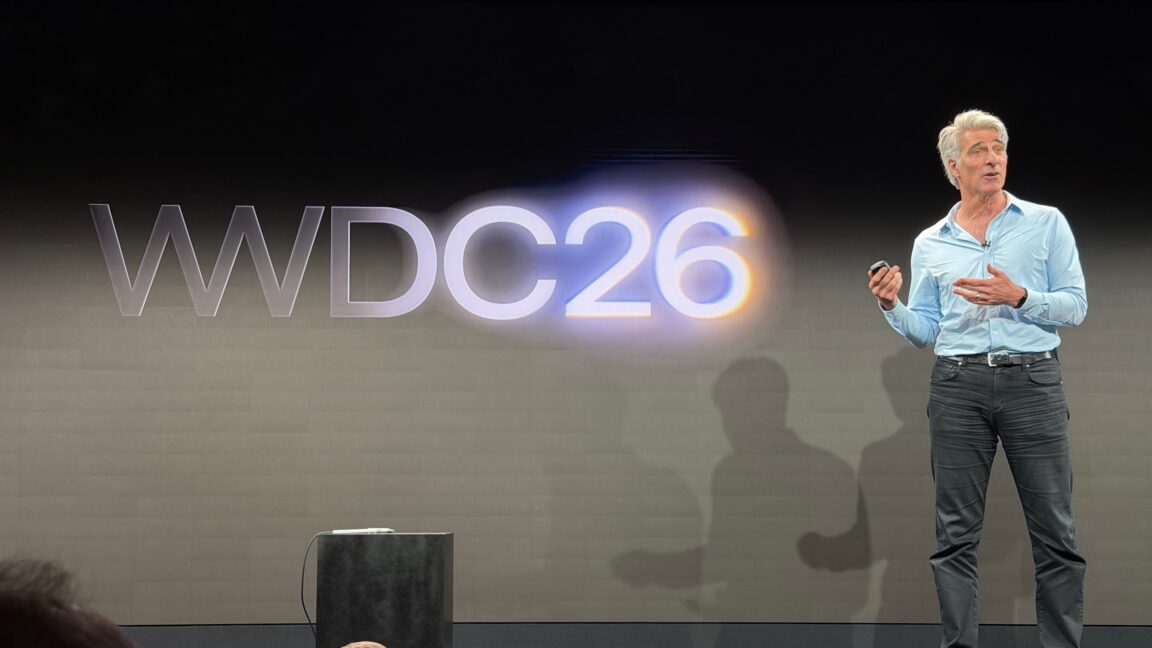
CUPERTINO, California—Apple announced earlier this year that its long-delayed Siri upgrade, announced this week as "Siri AI," would use Google's Gemini language models. What the company confirmed at its Worldwide Developers Conference yesterday was that it also ran on Nvidia hardware installed in Google servers. But the company is still making the same privacy promises it did before, when all of its AI models were either running locally on your devices or on Apple-controlled server hardware.

For years, Apple has touted user privacy as a key benefit of using its platforms. Its cloud services use encryption that's intended to keep other people—including Apple employees—from being able to gain access to it. And the company has long advertised its use of on-device processing for things like scanning images, keeping as much data as possible from leaving your device in the first place.

But with Apple Intelligence, Apple has run up against the limits of its own hardware. The kinds of language and reasoning models that can run locally on an iPhone or Mac are relatively small, limiting their capabilities and accuracy. Apple's Private Cloud Compute system was a partial solution but relied on Apple's own server hardware; to get the kind of capacity it would need to support Siri AI, Apple would have had to commit to a huge data center buildout that it has so far avoided.

Read full article

Comments

© Andrew Cunningham

  •  
❌