Reading view

Logitech’s foldable mouse is for people who refuse to carry a mouse with them

I see it often. Hardworking professionals in cafés, airports, or parks hunched over a laptop while carefully dragging their fingers over their PC’s trackpad to navigate some email, project, or alert that can’t be ignored. They would prefer a mouse to a trackpad, but are reluctant to travel with one.

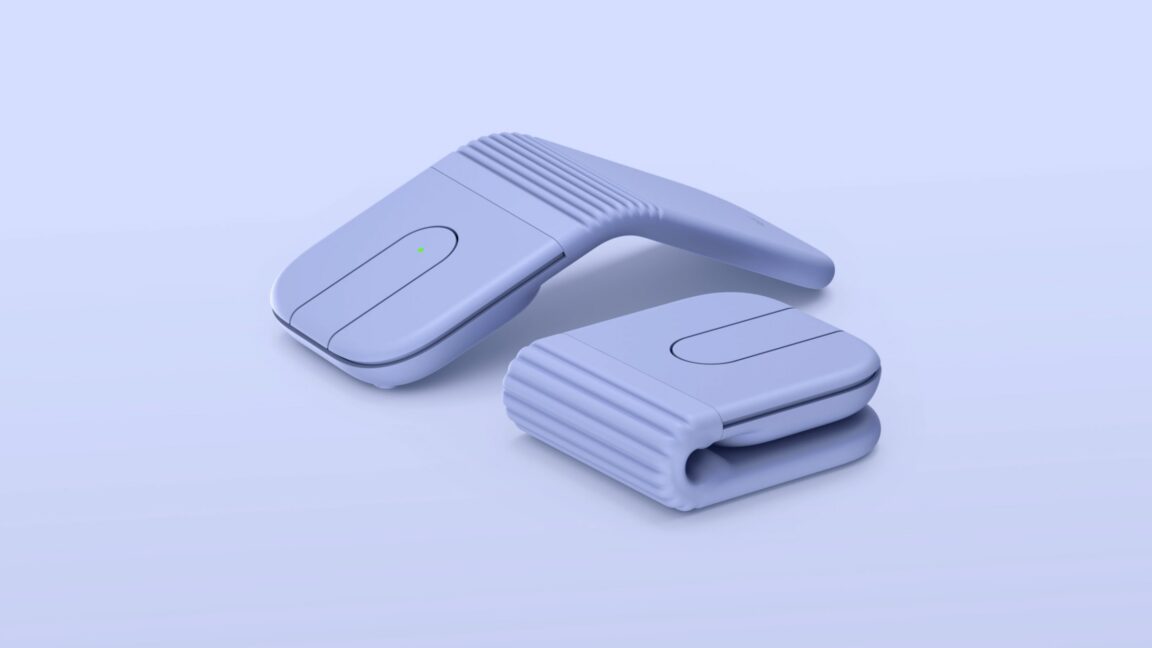
When you’re on the go, carrying a mouse can seem burdensome or unnecessary. But I’d argue that it’s worth the boost in efficiency and comfort when navigating your computer, tablet, or phone. For the people who refuse to carry a bulky mouse with them, even when they plan to use their computer away from their desk, I’m glad Logitech launched the Mobi Fold, a foldable, wireless mouse. But I’d still push reluctant mobile mouse users toward something even more comfortable.

Logitech’s Mobi Fold
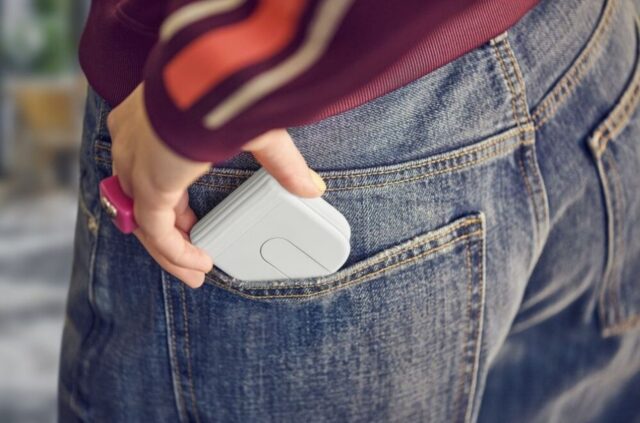
Logitech Mobi Fold going into someone's back pocket The mouse's PAW3222 sensor supports 400-4,000 DPI in 100-DPI increments. Credit: Logitech

The Logitech Mobi Fold released today for $80 folds in half so that it’s easy to carry around. Logitech’s announcement claimed that it found that “while 72 percent of professionals own a mouse, only 26 percent actually use one when working in public places.” The announcement didn’t explain Logitech’s methodology, but it seems that someone at the Swiss company has also grimaced at the awkwardly bent wrist of people using laptop trackpads in public.

Read full article

Comments

© Logitech

  •  

Google DeepMind releases DiffusionGemma, a model that runs local AI 4x faster

Another day, another AI model from Google. This time, Google DeepMind has released a new member of the Gemma 4 open model family, but it's fundamentally different from the rest of the lineup. DiffusionGemma doesn't generate outputs linearly like most AI models. Instead, it can produce an entire block of text in parallel. Google says this makes it faster and more efficient when running on local hardware like an Nvidia DGX or a humble gaming GPU.

Most AI models are designed to be autoregressive—they generate text left to right one token at a time. DiffusionGemma has more in common with image generation models, which start with static and then denoise it to create the desired content. This model takes a field of placeholder tokens running over the canvas multiple times to generate likely tokens and using those to improve estimation of others. At the end of the process, the model finalizes its token outputs in one large block—the "denoised" text canvas.

DiffusionGemma is fairly large in the realm of Google's open models. It's a Mixture of Experts (MoE) model with a total of 26 billion parameters, but only 3.8 billion are activated during inference. That means it should fit in the 18GB RAM allotment of a high-end GPU. In testing with an RTX 5090, DiffusionGemma spits out around 700 tokens per second. With a single Nvidia H100 AI accelerator, DiffusionGemma can produce 1,000+ tokens per second. That's about four times the output of the similarly sized autoregressive Gemma models.

Read full article

Comments

© Google

  •  

We managed to glean some interesting details about the Artemis III mission

On Tuesday, NASA announced the crew for the Artemis III mission, which is scheduled to be flown no earlier than summer 2027. As part of the announcement, space agency officials also discussed plans for the crew to dock with both a Blue Origin lander and a SpaceX Starship lander during the spaceflight in low-Earth orbit.

The presentation, although informative, still left open key questions about the landers' readiness and what exactly they'll look like. After the crew announcement, Ars sat down with Jeremy Parsons, NASA's Artemis program manager, to answer some of these questions.

This interview, conducted at NASA's Johnson Space Center, has been lightly edited for clarity.

Read full article

Comments

© NASA/Aubrey Gemignani

  •  

Nobody needs AI to search the Internet, court says in ruling against Google

Potentially impacting all AI search engines and chatbots known to poorly paraphrase source links, a German court has ruled that Google is liable for false statements in AI Overviews.

The preliminary ruling came in a case flagged by The Decoder, where two publishers found that Google's AI Overviews incorrectly linked them to scams and other sketchy business practices. After smearing publishers by making affirmative statements like "Yes, [it] is known for dubious business practices and is often perceived as a scam," Google failed to correct the misleading output, even after the publishers sent a cease-and-desist letter earlier this year.

Google tried the usual arguments to shield itself from liability for false statements in AI Overviews, such as arguing that most users understand that AI outputs aren't always accurate and must be verified.

Read full article

Comments

© SOPA Images / Contributor | LightRocket

  •  

Cheap Iranian drone downed $25 million US Army helicopter—maybe by chance

A US Army helicopter gunship was apparently struck by an Iranian Shahed drone before going down near the Strait of Hormuz—but it's unclear whether the one-way attack drone was deliberately aimed or achieved more of a lucky accidental strike.

Axios correspondent Barak Ravid first reported an unnamed US government official’s comments that an Iranian drone had hit the US Army AH-64 Apache helicopter before the latter went down on June 8. The New York Times later confirmed that reporting through more anonymous US officials, including one official who said US military investigators were still evaluating whether the Iranian drone strike on the helicopter was intentional or accidental.

Iran has fired thousands of such Shahed drones against a wide range of military and civilian targets in the Gulf region since February 28, 2026, when the United States and Israel began the war by jointly attacking Iran with a barrage of bombs and missiles. But Shahed drones have mainly struck stationary targets such as Amazon data centers and energy facilities, sometimes hitting slow-moving commercial ships in the Strait of Hormuz.

Read full article

Comments

© US Central Command

  •  

OB-GYNs release their own vaccine schedule, rejecting RFK Jr.'s meddling

For the first time, the American College of Obstetricians & Gynecologists (ACOG) has released its own recommendations for maternal vaccination, providing formal guidance that diverges from that of the Centers for Disease Control and Prevention amid unprecedented policy changes and meddling from anti-vaccine Health Secretary Robert F. Kennedy Jr.

ACOG President Camille Clare blamed "changing national recommendations coupled with rampant vaccine misinformation" for the confusion among patients and health care professionals about vaccines during pregnancy.

"It is incredibly important for the public to have access to reliable, evidence-based information on maternal immunizations from a trusted source. ACOG is proud to be that source," Clare said in a statement.

Read full article

Comments

© Getty | NataliaDeriabina

  •  

Valve kills its retail gift card program due to scammers

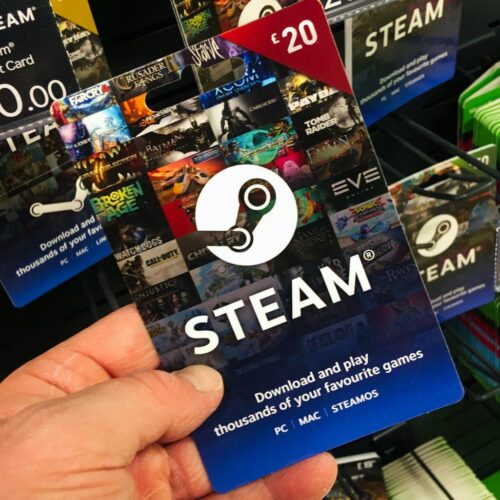
For years, Valve's physical Steam gift cards have been the closest you could come to buying a Steam game at a brick-and-mortar store. Now, Valve says it is phasing out the production of new retail gift cards, citing a losing battle against scammers exploiting the hard-to-track payment method.

PC Guide was among the first to note the end of Valve's retail gift card program, which was quietly announced in a recent update to a Steam support page. Since launching the retail cards in 2012, Valve says it has been fighting a constant battle with scammers, who instruct victims to purchase gift cards and share the pertinent details and security PIN. Those scammers can then resell the gift card details at a discount on gray-market sites to effectively launder the funds, creating an anonymous and hard-to-trace form of payment.

Valve says it has made various moves to slow scammers, including placing limits on redemption and availability and adding a prominent warning on the cards themselves: "Never share a pin via email, social media or over the phone."

Read full article

Comments

© Prestmit

  •  

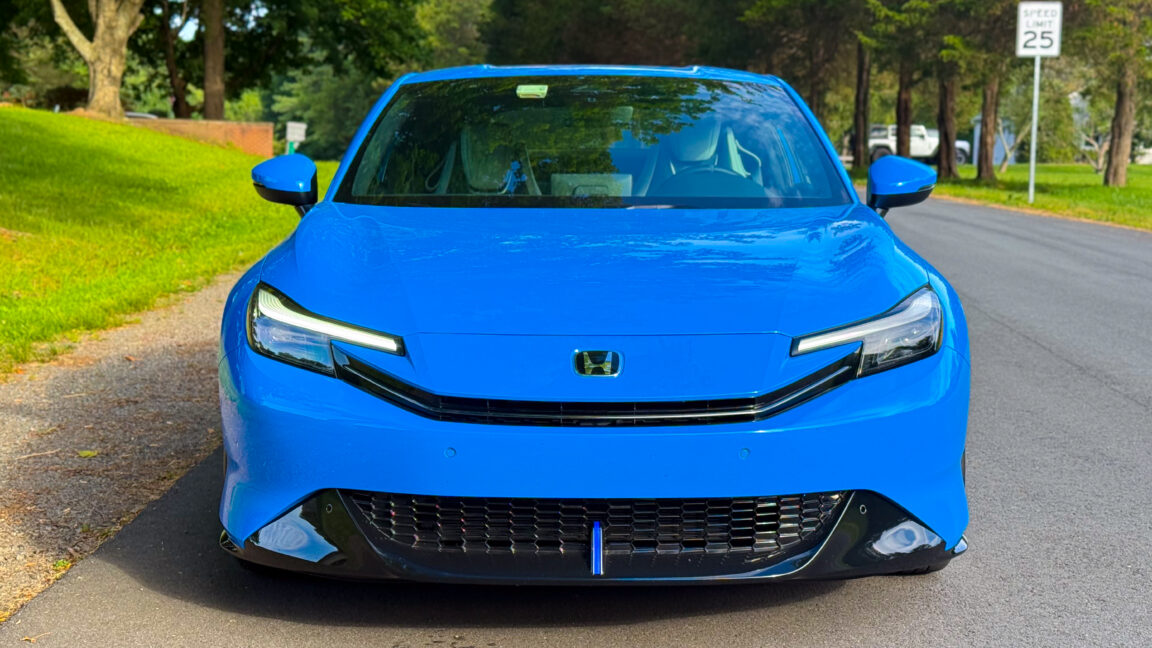
The 2026 Honda Prelude review: Didn't expect such a head-turner

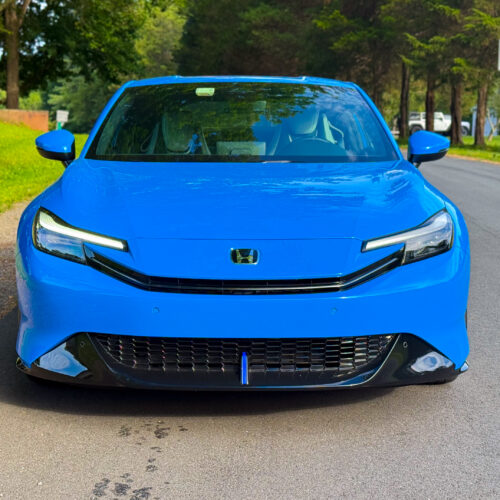
You can tell Honda was trying to manage expectations when it emailed me to stress that "the Prelude is not a sports car." And I can understand why. On paper, the specs make the sleek coupe—technically a three-door hatch—seem underwhelming. Especially if you start comparing it to alternatives.

A Mazda MX-5 or Subaru BRZ weighs hundreds of pounds less, and the Subaru packs more power than the Prelude's 200 hp (149 kW). A Volkswagen Golf GTI weighs about the same as the Prelude at 3,261 lbs (1,479 kg), but it delivers 20 percent more power and offers rear seats that actually accommodate adults. But after a week with the bright blue Prelude, it's hard to care about the specs. This might be one of the best cars we'll drive all year.

Then again, looking back across the previous five generations, the Prelude was never really a sports car. It has always been a technology showcase for Honda, introducing features like fuel injection, four-wheel steering, variable valve timing, and active torque transfer. For the sixth-generation Prelude, the headline feature is Honda's S+ shift, which adds some sporty character to the OEM's four-cylinder hybrid.

Read full article

Comments

© Jonathan Gitlin

  •  

Racist comments targeting politicians tripled since Meta relaxed its rules

Last year, Meta radically overhauled the rules around what content it would allow on its platforms. The company claimed that its own efforts policing speech had gone too far and that it would relax the rules around what speech was allowed. “We have been over-enforcing our rules, limiting legitimate political debate and censoring too much trivial content and subjecting too many people to frustrating enforcement actions,” Joel Kaplan, Meta’s chief global affairs officer, wrote in a blog post at the time.

Over a year later, new research from the Center for Countering Digital Hate (CCDH) shows the immediate impact of these changes.

The researchers analyzed about 8 million Facebook comments and found that abusive and racist comments targeting both Republican and Democrat lawmakers tripled in the six months after the new rules were put in place. Some categories of abusive comments documented by the researchers saw even sharper rises, with violent threats and hate speech quadrupling during the same period.

Read full article

Comments

© Getty Images | Chesnot

  •  

GM Energy introduces V2G support and new energy storage battery chemistry

Electric vehicle sales might be better now than the end of last year when demand fell off a cliff following the surge of purchases ahead of the end of the federal financial incentives, but it's clear they haven't panned out as well as many in the automotive industry had hoped.

Still, at a GM event Ars attended in San Francisco this week, the company continues to stick to its guns with an EV lineup spanning its brands. The automaker shared that it has also been working toward the adoption of bidirectional charging to help balance the grid.

With the rise of AI, data centers are placing more and more pressure on the nation's electric infrastructure. GM wants to relieve some of that pressure with news that its GM Energy products now support vehicle-to-grid (V2G) in addition to vehicle-to-home. The grid integration requires working with utilities and includes launch partners PG&E in California and DTE Energy in Michigan. For standalone energy storage solutions, the company also announced partnering with Peak Energy on the development of sodium-ion batteries built specifically for grid energy storage.

Read full article

Comments

© General Motors

  •  
❌