Reading view

AI coding agents taught robots how to install GPUs and cut zip ties

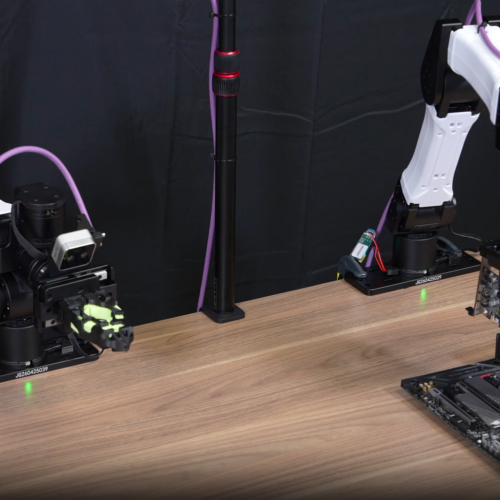
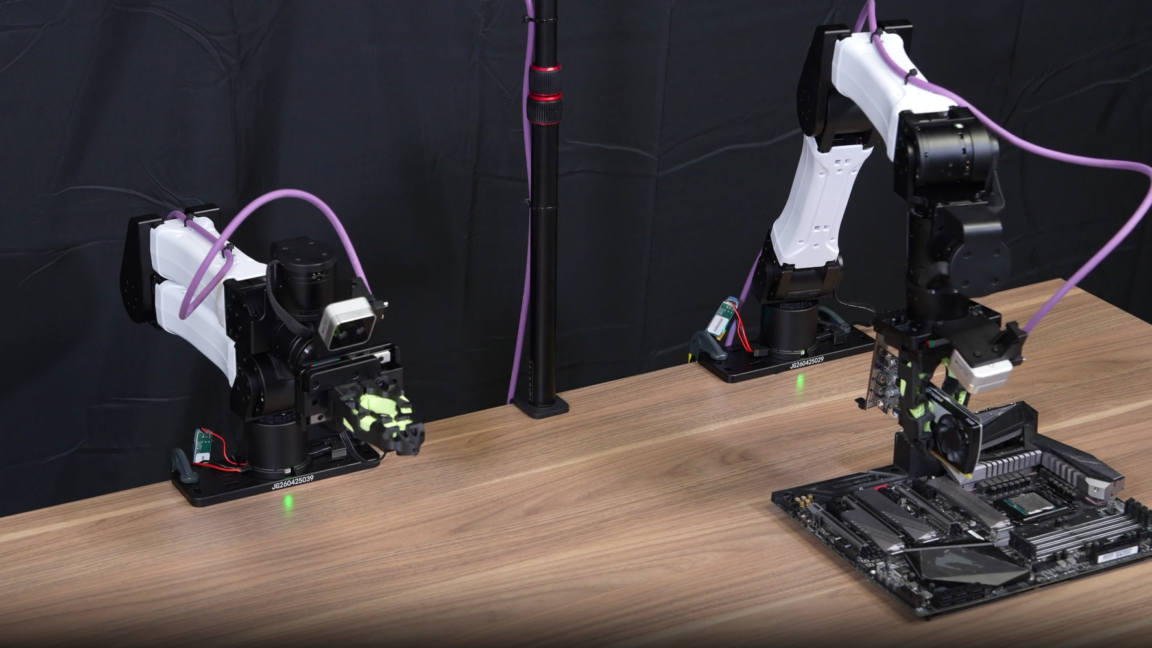
What happens when you give AI coding agents a lab full of robotic arms, some compute resources, and a “generous token budget” for teaching the robots various tasks? The agents can apparently figure out a training regimen that teaches the robots to successfully cut zip ties and even insert GPUs into thin sockets on motherboards.

That glimpse into how AI can act in a fully autonomous way to automate robot training was made possible by a new agent harness framework—software that wraps around AI models to enable their use of various tools while also providing capabilities such as memory, context, constraint, and feedback loops. That agentic harness, called ENPIRE, was developed by robotics researchers at the Nvidia GEAR (Generalist Embodied Agent Research) lab alongside collaborators from Carnegie Mellon University in Pittsburgh and the University of California, Berkeley.

“A part of our NVIDIA GEAR lab now self-improves tirelessly overnight,” wrote Jim Fan, director of AI at NVIDIA, in a LinkedIn post. “We just read the reports in the morning.”
Read full article

Comments

© NVIDIA

  •  

"Dangerous" AI models are coming no matter what

Late last week, Anthropic took its new Claude Fable 5 and Mythos 5 AI models offline following a United States government export-control directive barring “any foreign national” from using the services. The company has been in talks with the White House since Friday but has yet to secure an agreement that would allow it to reinstate the offerings.

Since Mythos debuted in April, Anthropic has claimed—and warned—that the model has advanced capabilities for not only finding software vulnerabilities to help defenders patch them, but also figuring out ways to exploit them that could be used by bad actors. Anthropic itself noted this double-edged sword in its launch of Mythos 5 and Claude Fable 5. “A great deal of advanced usage of AI models is dual use: the same queries that are beneficial in the hands of cybersecurity professionals and biology researchers could be dangerous if available to malicious actors,” the company wrote in a blog post last week.

With this in mind, the company initially released a version called Mythos Preview to a select consortium as part of a working group known as Project Glasswing. Mythos 5 was also privately released to this group last week, while Claude Fable 5, which is a Mythos-grade model, was released to the general public with specific blocks on its ability to give responses to questions about biology and cybersecurity.

Read full article

Comments

© Samuel Axon

  •  

Ten months later, the $100 Google Home Speaker is finally available for preorder

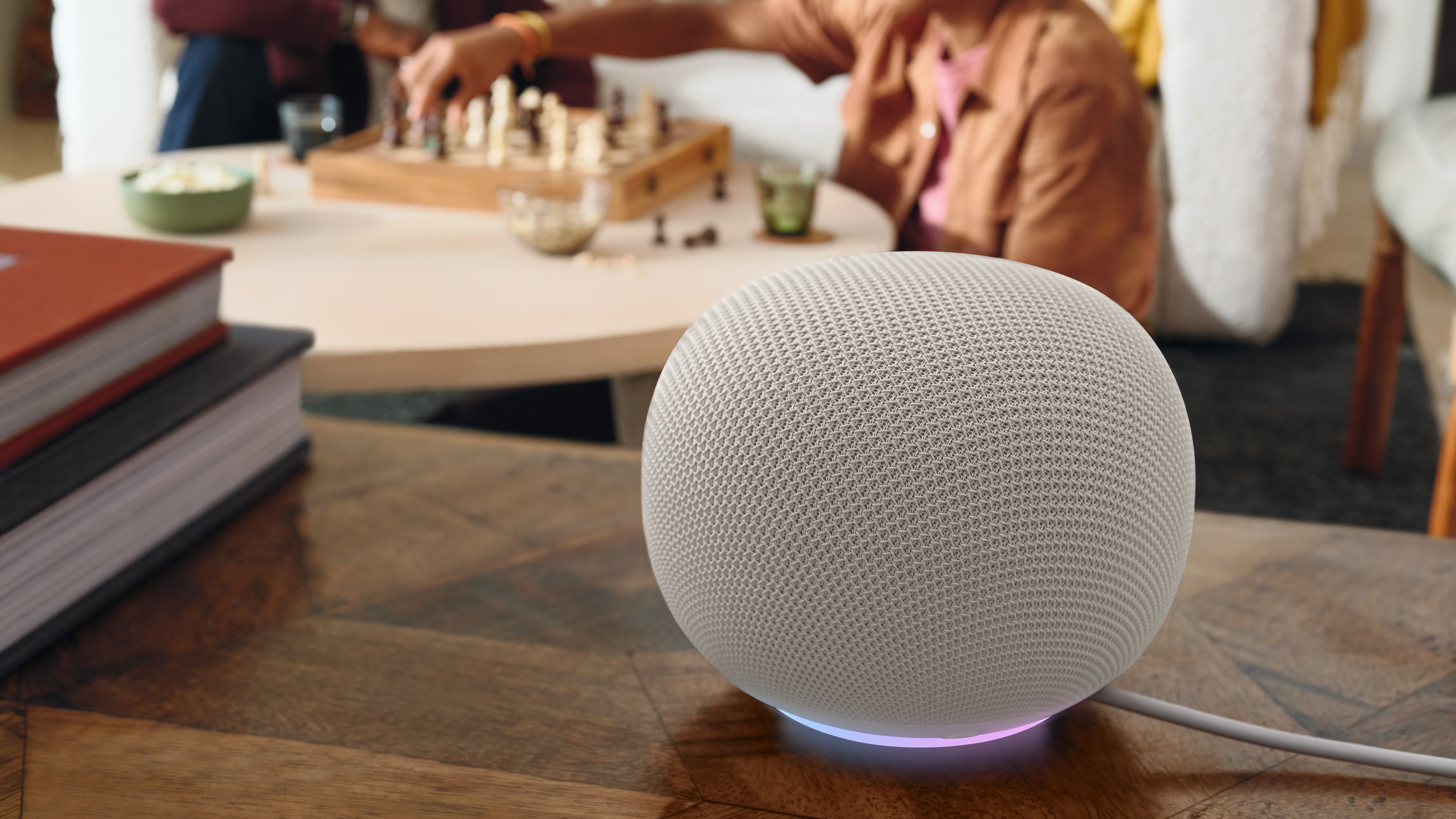
Good things take time, but not all things that take time are good. The jury is still out on the Google Home Speaker, but it certainly took a while to arrive. After announcing its new speaker last August, Google finally has a release date. The company's first new smart home speaker in years will launch on June 25, and you can preorder it today for $100.

The generically named Google Home Speaker is Google's first home audio device in almost six years. The last one was the Nest Audio, which debuted back in September 2020. The new device is small and round—an oblate spheroid, technically. It's covered in a partially recycled fabric available in four colors: hazel, porcelain, jade, and berry (jade and berry are limited to the US). Google says the device produces "360-degree sound" for a uniform listening experience anywhere in a room.

Google is into lighting effects again. Credit: Google
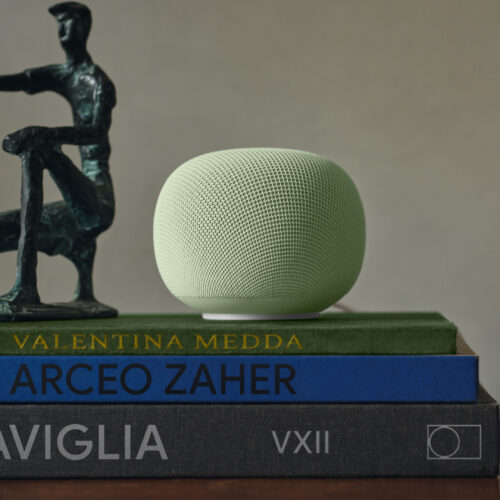
Previous Google speakers included Assistant-style illuminated lights, but the Google Home Speaker features a light ring around the bottom that glows when the device is listening, "thinking," or responding. This is becoming a trend with Google. The company will require a similar glowing lightbar embellishment on the upcoming Googlebook laptops. There are three far-field microphones distributed around the speaker that will pick up your speech, and there's a mute switch when you don't want it listening for the "OK Google" trigger.

Read full article

Comments

© Google

  •  

Trump admin tries to block Clean Air Act lawsuit over xAI's gas turbines

The Trump administration is trying to help Elon Musk's xAI Corp. beat a Clean Air Act lawsuit filed by the National Association for the Advancement of Colored People (NAACP). The US said the NAACP lawsuit threatens an xAI data center that powers Grok systems needed by the military.

The NAACP sued xAI and subsidiary MZX Tech in April, alleging that they violated the Clean Air Act by operating 27 gas turbines without an air permit in Southaven, Mississippi. The number of unpermitted turbines rose to 57 by mid-May and there were plans to install two more, the NAACP said in a June 12 filing.

"Defendants’ Colossus Gas Plant powers xAI’s nearby Colossus 2 data center, which in turn powers the chatbot 'Grok,'" the lawsuit said. The gas turbines have fueled both health concerns and noise complaints.

Read full article

Comments

© Getty Images | SOPA Images

  •  
❌