Reading view

Microsoft adds another year to Windows 10 extended update program

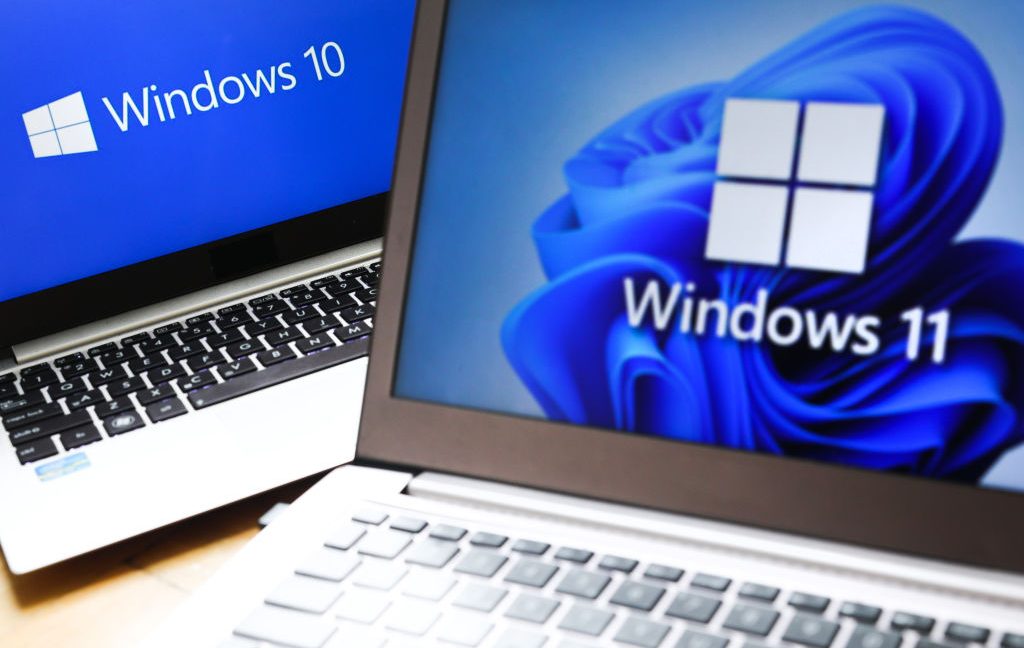
Microsoft ended official support for Windows 10 in 2025, but the company may have a harder time than expected putting the operating system out to pasture. After promising a year of optional extended update support, Microsoft has changed its policy, tacking on another year to its Extended Security Updates (ESU) program. If you are still clinging to Windows 10, you don't have to do anything but enjoy that extra year.

The last regular updates rolled out to Windows 10 in October of last year, but the Internet can be a dangerous place for unpatched Windows machines. That was a problem for Microsoft, as Windows 11 usage had only barely surpassed Windows 10 when support ended. Microsoft's solution was to give everyone on the old OS a free year of extended updates.

That program was set to end on October 12, 2026, but Microsoft has updated its policy with hardly a whisper, pushing back the end of extended updates to October 12, 2027. The ESU support page was updated with that date, and Microsoft's blog post on the program has a new editor's note confirming the change.
Read full article

Comments

© Getty Images

  •  

Notion killing Skiff-influenced email app since most users use AI agents instead

In February 2024, Notion bought Skiff, an encrypted email and productivity software startup. Within a year, Notion shut down Skiff’s email service (taking @skiff.com email addresses with it). And in April 2025, the San Francisco-based company released Notion Mail, a Gmail client primarily built by people who joined Notion through the Skiff acquisition. Today, Notion announced that it’s shutting down Notion Mail, effectively killing what little remained of Skiff email.

In an X post (first spotted by 9to5Mac) today, Notion said that it will shutter the Notion Mail “inbox across web, desktop, and iOS on September 22.”

The post claimed that most Notion users don’t use email clients anyway and instead rely on AI agents to handle their electronic correspondence. It reads:

Read full article

Comments

© SOPA Images / Contributor

  •  

IBM claims world’s first sub-1 nanometer chip technology

A new chip architecture from IBM can integrate nearly 100 billion transistors on a chip the size of a human fingernail—nearly twice the transistor density of the company’s previous generation of chip technology. The resulting improvement in chip compute performance and energy efficiency comes from what IBM describes as the “world’s first sub-1 nanometer chip technology” for AI data centers.

“It's not just an incremental step, it's a meaningful leap forward,” said Jay Gambetta, director of IBM Research and IBM Fellow, in an advance media briefing. He described the new chip technology as “pointing to a future where computing becomes significantly more powerful without a corresponding increase in energy.”

It’s worth unpacking what the “world’s first sub-1 nanometer chip technology” means, because it is impractical to build reliably functional chips with transistors and other features smaller than 1 nanometer due to various physical limitations. Instead, IBM is basically claiming that its new “nanostack” architecture can deliver the computing performance improvements that would be expected if a theoretical chip could be built with physical features smaller than 1 nanometer.

Read full article

Comments

© IBM

  •  

OpenAI and Broadcom announce chip designed for LLM inference at scale

OpenAI, the company behind ChatGPT and Codex and the models those tools use, and Broadcom, an established silicon supplier, have announced a new chip, called Jalapeño, designed specifically for large language model inference in data centers.

The companies intend to deploy the chip at large data centers and claim this is just the first generation in a long-term project that will see chips refined over time.

Read full article

Comments

© OpenAI

  •  
❌