Reading view

Private security firms will soon be allowed to hack overseas cybercriminals

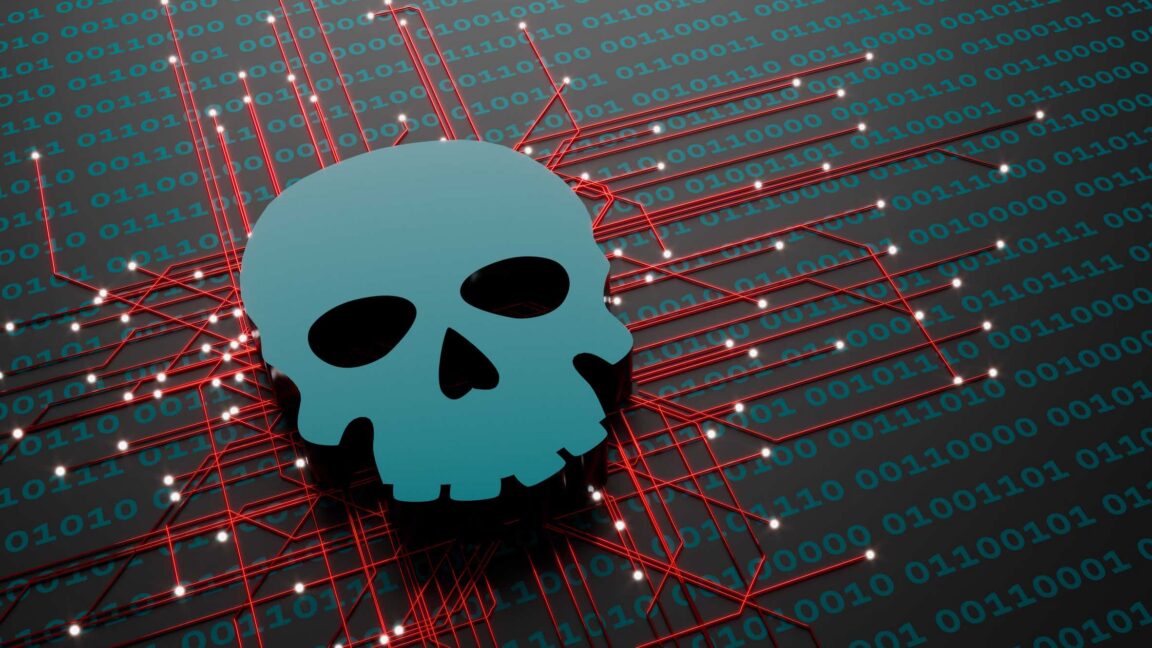
The Trump administration is recruiting private security firms to conduct federal government-authorized operations, including cyberattacks, against overseas-based criminal organizations that commit hacks on US persons, organizations, or government entities.

In a National Security Presidential Memorandum issued Thursday, US President Donald Trump directed the National Coordination Center (NCC), which operates under the Homeland Security Task Force, to develop a program for conducting specific cyber operations that combat foreign transnational criminal organizations (TCOs). The Departments of Justice and Homeland Security will provide oversight. The lynchpin of that program is bringing in private sector companies to participate.

Devil will be in the still-undefined details

A fact sheet that accompanied Thursday’s memo listed ransomware, sextortion schemes, phishing campaigns, financial fraud, and impersonation scams as activities eligible for private-sector security firms to target. The memo said such firms could “conduct Cyber Surveillance Operations and Cyber Effects Operations” against “cyber-enabled” TCOs. Such groups are defined as “any foreign group that conducts cyber-enabled crime against the United States Government, a United States person, or United States interests, and that is not an institutional part of a foreign government or wholly operated under a foreign government’s direction.”
Read full article

Comments

© Getty Images | cokada

  •  

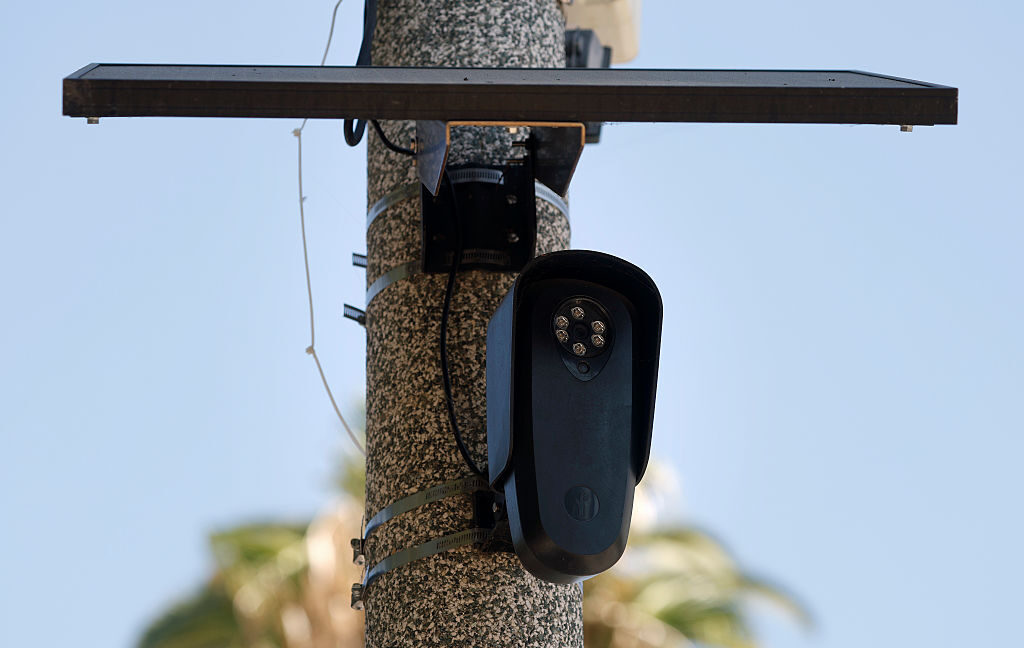
Flock “can’t tech its way out” of the stalker cop problem, experts say

On Thursday, Flock announced plans to require all agencies with access to license plate reader data to use a safety tool that automatically detects abnormal activity and locks out cops who abuse their access to stalk people they know in their personal lives.

Flock’s audit assistance tool suspends access when user activity “meets defined criteria for abnormal behavior,” Flock said. The suspension can only be lifted by administrator review, with the goal being “to intervene before misuse becomes recurring or widespread.”

The tech has been available as an optional free feature since April, but only a third of agencies had opted in, Flock said. However, after a single Georgia sheriff’s office used the tool and subsequently arrested three cops who were separately using Flock cameras to stalk acquaintances, Flock CEO Garrett Langley told The Verge that dozens of incidents like these helped his company realize they made a mistake and had to act to correct it.

Read full article

Comments

© Justin Sullivan / Staff | Getty Images News

  •  

Claude's new Scarlet Letter watermark is invisible—for now

Anthropic has revealed that it will soon watermark content that is processed (not just generated!) by any of its models. In a support article, Anthropic explained that it was rolling out machine-readable watermarks to comply with the European Union’s AI Act, which requires all AI system providers to watermark AI-generated or manipulated audio, image, text, and video outputs. The law applies to any AI model released after August 2 and provides a grace period until December 2026 for providers to update previously released models.

Anthropic confirmed that moving forward, all new models offered globally—not just in the EU—will mark AI-generated content “from day one.” Text outputs will “carry embedded watermarks,” invisible to the user, and other “generated files will include digitally signed provenance metadata where supported,” Anthropic said.

Notably, Anthropic is deploying a "nuke it from orbit" approach, applying the watermarks to all processed content where supported, even though the EU does not require it for cases where an AI system performs "an assistive function for standard editing" (the guidance's own example is grammar correction), or where it doesn't "substantially alter" the user's text or its meaning.

Read full article

Comments

© Aurich Lawson | American Psycho (Lions Gate Films)

  •  
❌