SpaceX's most recent Starship test flight may have ended July 24, but its mission isn't over yet.
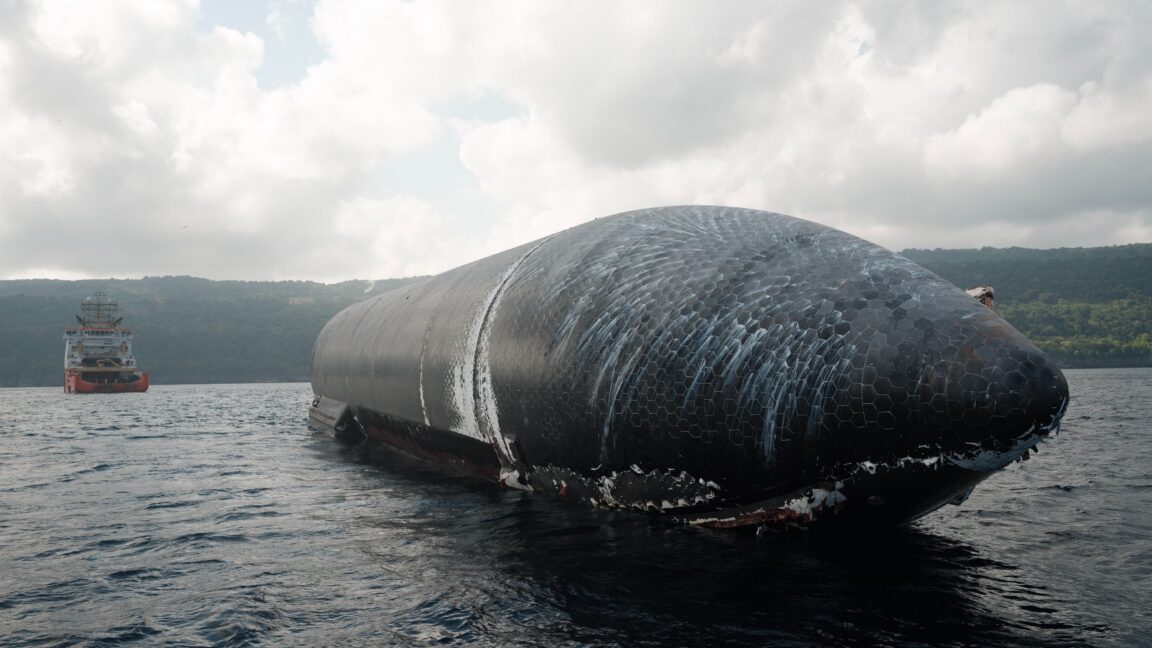
The spacecraft splashed down in the Indian Ocean intact after flying halfway around the world from SpaceX's launch base in South Texas. Engineers expected the ship's life to end with a fiery disintegration after toppling over, just as past Starships have done following splashdown.
Numerous onboard sensors and cameras, along with buoys and drones in position at the splashdown zone, have provided important data for SpaceX to assess the performance of the ship's heat shield after each test flight, so officials accepted the post-flight conflagrations. That day, Starship tipped over and remained intact, surprising just about everyone.
CT scan of a narwhal tusk. Credit: Adrian Rodriguez Palomo/CC BY-NC
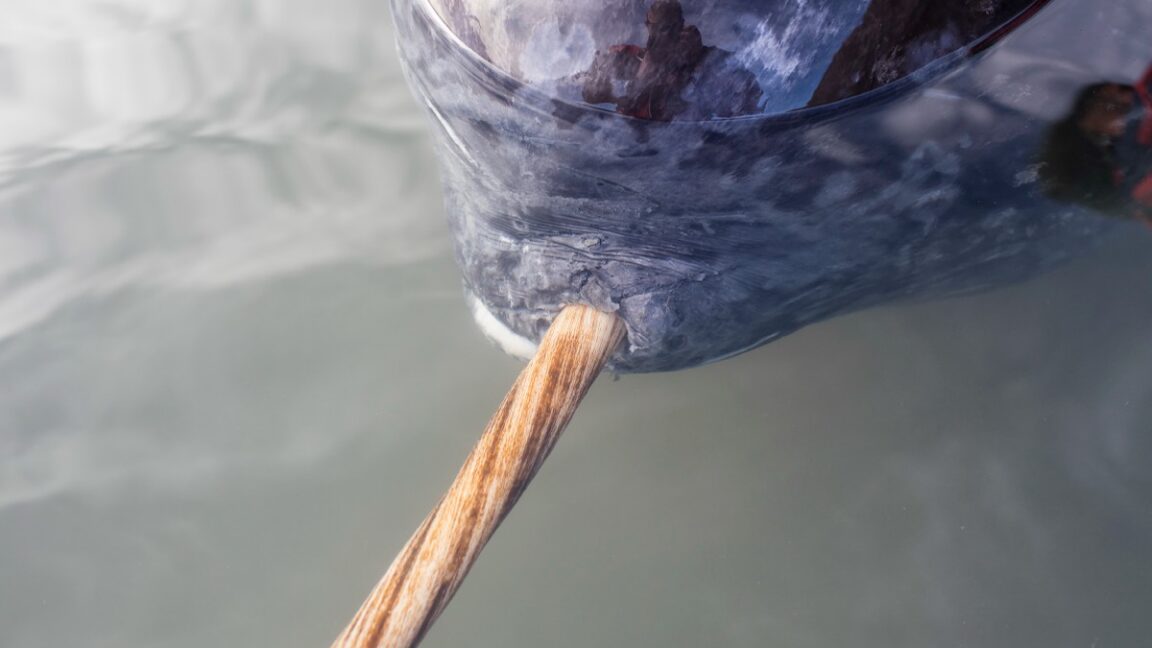
Narwhals are toothed whales, renowned for their distinctive straight, spiraling tusks, which many people in medieval times believed were the horns of unicorns and thus held magical healing properties. That belief was debunked long ago, but the tusks remain popular souvenirs in Canada and Greenland. And they still hold a fascination for scientists keen to learn more about their unusual structure. A new paper published in the journal Nature Communications reports that rather than one left-oriented spiral, narwhal tusks also have a second internal spiral oriented in the opposite direction.
Inuit legend holds that a woman was dragged into the ocean by a harpoon rope after the weapon had hit a narwhal and was transformed into the animal herself. Her hair, which she'd worn in a twisted knot, became the spiral tusk. The tusk is actually a canine tooth in the left upper jaw of male narwhals, pushing through the lip when the males reach two or three years of age and growing to lengths as long as 1.5 to 2 meters (just under 5 feet to 9 feet 10 inches). Some males may develop two long spiral tusks or, in rare cases, none at all.
There's a general consensus that these tusks most likely evolved via sexual selection as a form of social status. They clearly aren't crucial for survival, since the females usually don't develop the tusk—and if they do, the tusks are much smaller with fewer spirals—and yet typically live longer than the males. But the precise function of the tusk is still a matter of considerable debate.
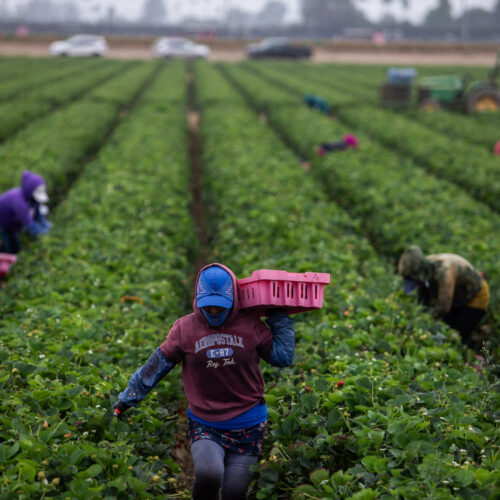
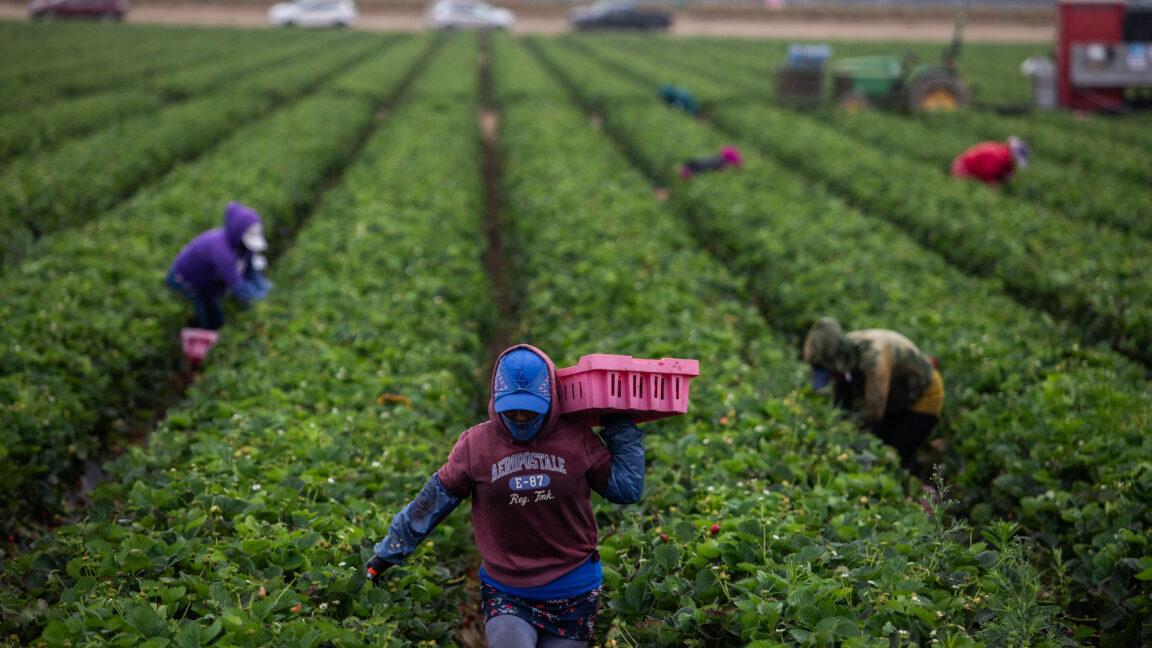
For the nation’s 2.4 million farmworkers, climate change is poised to exacerbate the harms of pesticides, a growing body of research shows.
Heat stresses the body, making it more vulnerable to pesticides and other toxicants, and protective clothing worn in the heat only adds to this stress. Hotter temperatures can also lead to higher evaporation rates, increasing farmworkers’ exposure as more pesticides are applied to crops. And heat can boost rates of chemical transformation of pesticides into more toxic compounds.
“When it’s in the air, you are inhaling it through your nose. You are exposed to it through your other organs like skin. Your skin can absorb some of the pesticides [that are] in the air, and also when you’re sweating as part of doing your work you are increasing the pore size of your skin,” said Omanjana Goswami, a scientist in the food and environmental program at the Union for Concerned Scientists, an advocacy group. “It is awful. There is no other word for it.”
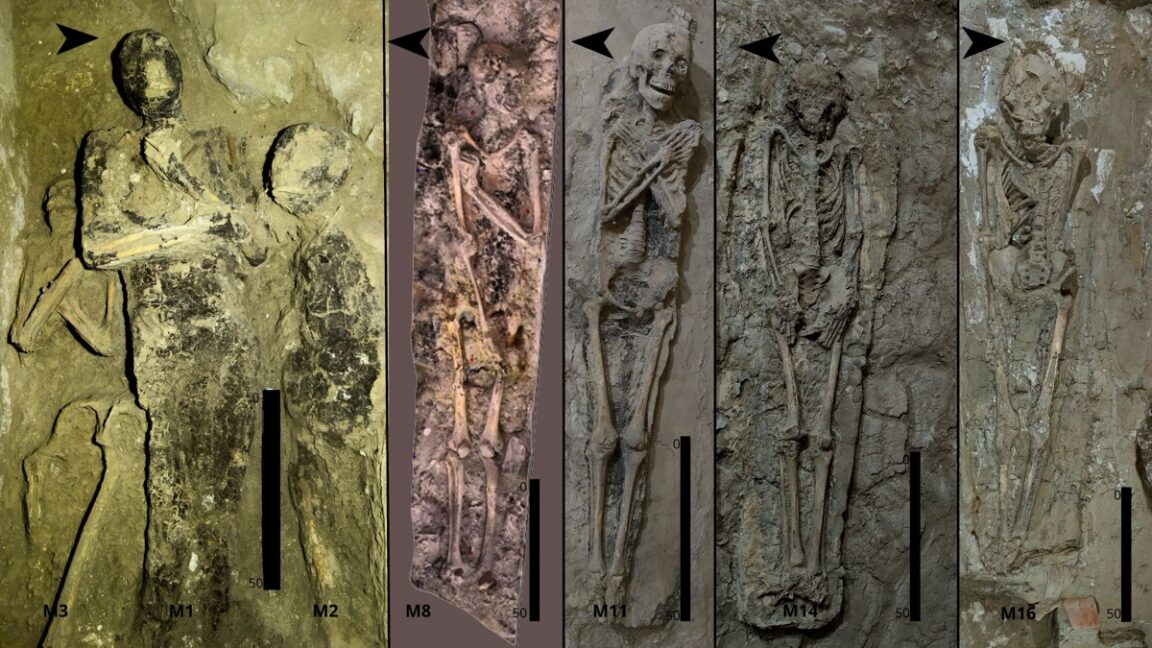
Egypt's Theban necropolis holds over 400 tombs, a rich resource for archaeologists eager to learn more about that region's ancient history. A new paper published in the journal Frontiers in Environmental Archaeology outlines how Egyptian burial trends likely changed over the course of centuries, shifting from individual burials in elaborate coffins to reusing earlier burial sites for later interments, resulting in greater density and the occasional superposition of bodies.
There has been prior research on the reuse of tombs in Thebes. This latest paper focused on a Theban tomb known as 209 in the western necropolis, dating back to the early 25th Dynasty (754–656 BCE) and ultimately abandoned in the Ptolemaic period (305–30 BCE). The original owner was likely a high official of Nubian origin named Nisemro. Over the centuries, the tomb was prone to repeated flash flooding due to its location within an active drainage channel of the Wadi Hatasun, so it's a complex site, archaeologically speaking.
That made it ideal for what the authors term an "integrated archaeothanatological approach," incorporating collected data on body position, coffin use, superpositions of remains, and stratigraphic relationships with osteological analysis in order to reconstruct the chronological sequence of the burials. They focused on a site known as Side Chamber 3, one of the main secondary areas of the tomb that was largely undisrupted.

 Login
Login