Reading view

Europe cancels planned upgrades for Ariane 6 rocket

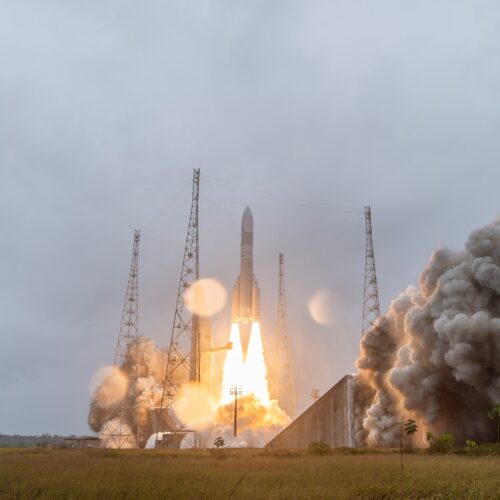
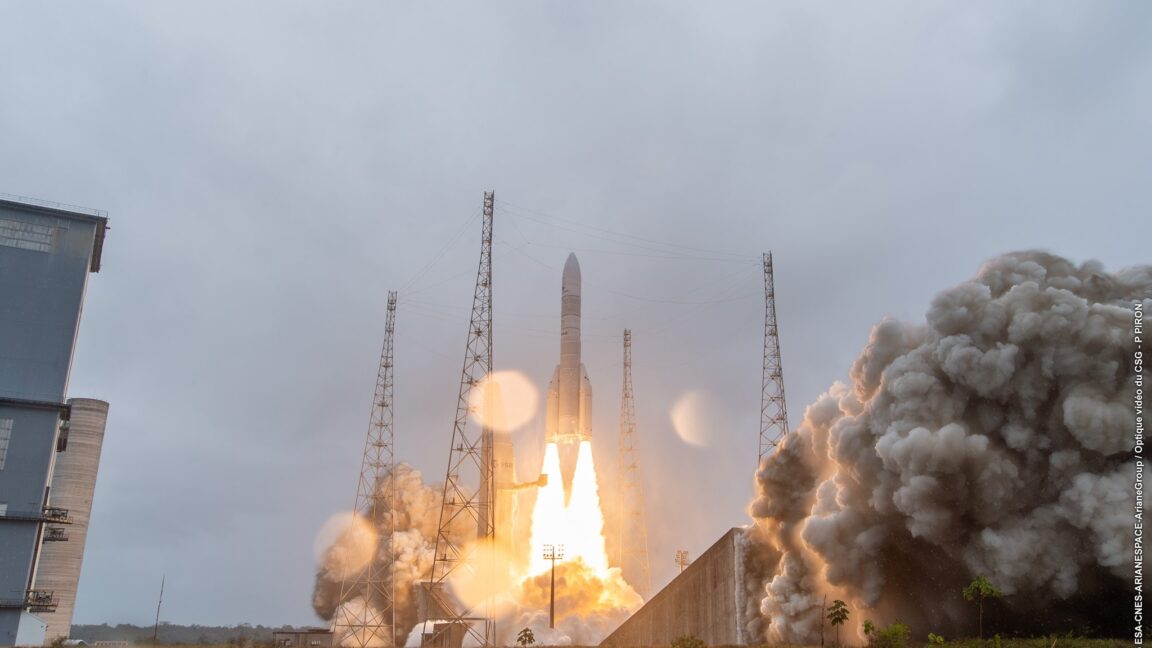
In the two years since it made a largely successful debut, Europe's Ariane 6 rocket has launched eight missions, all of which reached orbit safely.

The large, expendable rocket has a capacity of more than 20 metric tons to low-Earth orbit. And to the credit of European rocket scientists and planners, the Ariane 6 has had a substantially smoother rollout than comparable vehicles in the United States—Blue Origin's New Glenn and United Launch Alliance's Vulcan rockets—both of which have had significant growing pains.

However, even though the Ariane 6 rocket has had a successful debut, its future is clouded by high costs.
Read full article

Comments

© ESA-CNES-Arianespace-P. Piron

  •  

SpaceX’s orbital data centers would create a new category of e-waste

Elon Musk’s talk about maintaining a million-strong AI data center satellite megaconstellation may not exactly be practical or economical, but it might be unique. It’s about the closest we’ve come to confronting a scheme that would export a considerable amount of valuable materials into space. Humans aren’t doing a great job of material sustainability, but normally we’re talking about stuff escaping a recycling pipeline rather than escaping Earth’s gravitational pull.

The commercial space sector likes talking about the allure of mining asteroids for precious metals to bring back to Earth. Under what circumstances are we going to be willing to do that in reverse? Starlink alone has doubled the mass of objects in low-Earth orbit, and this orbital data center constellation would dwarf that—and dispose of at least some satellites by pushing them away from Earth.

Given the roughly five-year expected lifetime for data center GPUs, about 200,000 of the 1 million proposed SpaceX AI1 satellites would be decommissioned each year. Based on their May 29 FCC filing, about 40,000 would definitely deorbit and burn up in the atmosphere. (Those materials would largely be dispersed throughout the atmosphere, turning a resource into a diffuse contaminant that slowly settles over the globe. One related issue: the aluminum would cause an unknown amount of ozone depletion over a period of decades.) Some or all of the remaining 160,000 satellites would be moved outward into a distant “disposal” orbit, instead. Either way, they're lost from a "material life cycle" point of view.

Read full article

Comments

© Aurich Lawson | Getty Images

  •  

NASA calls off mission to rescue Swift gamma-ray observatory

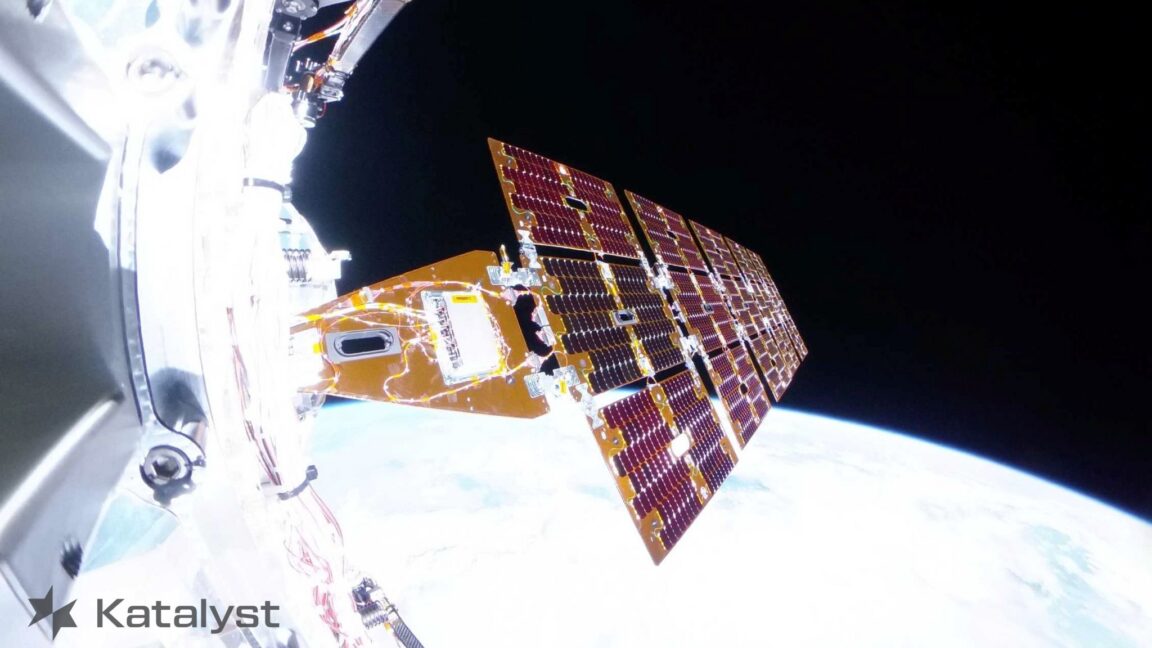
NASA and Katalyst Space Technologies announced Wednesday they are giving up on a robotic mission to rescue the Swift gamma-ray telescope before it falls out of orbit.

The rescue satellite, named Link, launched July 3 on a journey to fly up to NASA's Neil Gehrels Swift Observatory, capture it with three robotic arms, and boost its orbit high enough to escape a looming reentry. Link is about the size of a refrigerator, with two power-generating solar arrays and three xenon-fueled electric thrusters to send Swift into a safer, higher orbit.

Katalyst, the startup leading the Swift rescue effort, said Wednesday that "ongoing attitude control issues" will prevent the Link satellite from completing its rescue mission. The spacecraft is still alive, and Katalyst said it will make the most of Link's remaining capacity, which may still allow it to get near enough to Swift for a demonstration of the satellite's close-in navigation system.

Read full article

Comments

© Katalyst Space Technologies

  •  
❌