Reading view

Roblox must make changes after failing to block adults creeping on kids

Despite making changes last fall to help block adults from messaging unknown children, Roblox is still failing to stop adults from creeping on kids in other ways, Australia’s eSafety commissioner, Julie Inman Grant, said on Thursday.

Suspecting that Roblox may not be doing enough to stop child exploitation, eSafety conducted testing earlier this year that flagged alarming gaps in Roblox safeguards. The agency found that adult strangers could still send connection requests to kids, whose “profiles and biographies, including account names, number and names of connections, avatar images, and non-sensitive biographical information such as their interests were visible to anyone on the Roblox platform, with no option to restrict the visibility of this information.”

Such requests did not trigger parental alerts, eSafety found, and bad actors could also search kids’ visible-to-anyone contact lists for more targets.


Read full article

Comments

© SOPA Images / Contributor | LightRocket
  •  

SpaceX’s orbital data centers would create a new category of e-waste

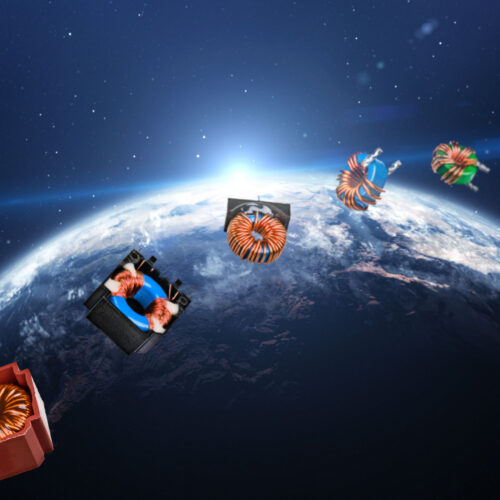
Elon Musk’s talk about maintaining a million-strong AI data center satellite megaconstellation may not exactly be practical or economical, but it might be unique. It’s about the closest we’ve come to confronting a scheme that would export a considerable amount of valuable materials into space. Humans aren’t doing a great job of material sustainability, but normally we’re talking about stuff escaping a recycling pipeline rather than escaping Earth’s gravitational pull.

The commercial space sector likes talking about the allure of mining asteroids for precious metals to bring back to Earth. Under what circumstances are we going to be willing to do that in reverse? Starlink alone has doubled the mass of objects in low-Earth orbit, and this orbital data center constellation would dwarf that—and dispose of at least some satellites by pushing them away from Earth.

Given the roughly five-year expected lifetime for data center GPUs, about 200,000 of the 1 million proposed SpaceX AI1 satellites would be decommissioned each year. Based on their May 29 FCC filing, about 40,000 would definitely deorbit and burn up in the atmosphere. (Those materials would largely be dispersed throughout the atmosphere, turning a resource into a diffuse contaminant that slowly settles over the globe. One related issue: the aluminum would cause an unknown amount of ozone depletion over a period of decades.) Some or all of the remaining 160,000 satellites would be moved outward into a distant “disposal” orbit, instead. Either way, they're lost from a "material life cycle" point of view.

Read full article

Comments

© Aurich Lawson | Getty Images

  •  
❌