❌

Reading view

Meta drops the word "train" from its commercial TOS after AI backlash

Hoping to quell criticism, Meta has dropped the word “train” from its “streamlined” commercial terms of service that kick in on October 30.

Last week, Meta faced backlash after legal experts warned that the tech giant’s sweeping new commercial terms of service seemed to give Meta permission to endlessly scrape websites linked on business pages. Talking to Nieman Lab, experts suggested that Meta could possibly use the policy to avoid millions in licensing fees from news organizations by requiring all business users to share a wealth of AI training data simply for running a business page.

A Meta spokesperson confirmed that Meta did not alert users to the changed language following backlash. This potentially only adds to confusion ahead of the policy rollout. In response to backlash, Meta's spokesperson provided a statement to Ars, acknowledging Nieman Lab's initial report but not its follow-up report reiterating experts' concerns:


Read full article

Comments

© filo | DigitalVision Vectors

  •  

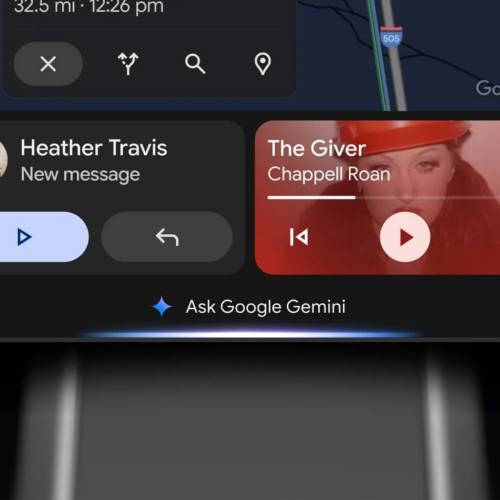
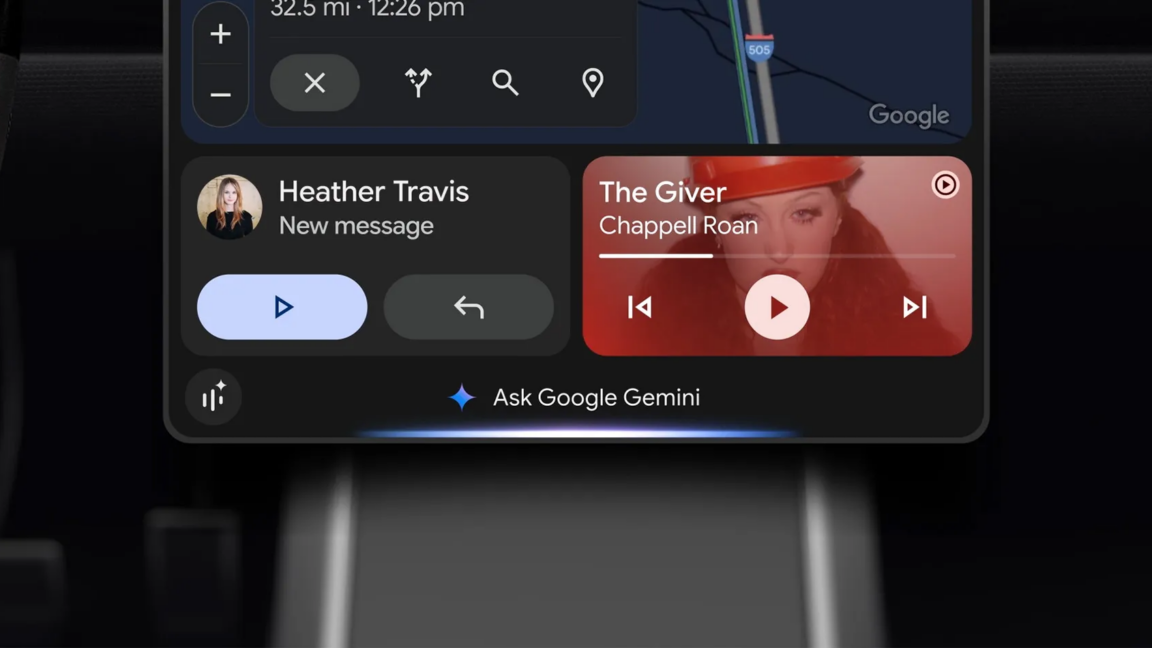
Gemini's Personal Intelligence is coming to cars

Google kicked off 2026 with the addition of Personal Intelligence to Gemini, allowing its AI to pull in more of your data to formulate answers. It started as a paid feature but eventually came to all Gemini users. However, this feature wasn't available in the car until now. Google is rolling out Personal Intelligence to Android Auto and Google Built-in, and it is still, thankfully, an optional feature.

As Google points out, a generative AI's outputs are better "when it knows the world and knows you," which is correct in an uncomfortable sort of way. The more context you can provide to a model, the better the output will be at the end of the token shuffle. Since Google has so much of your data already, it sees Personal Intelligence as a differentiator versus other AI systems. You don't have to provide the AI context because it already has it from apps like Gmail and Calendar.

Personal Intelligence is beginning its rollout in Android Auto today, and it will come to vehicles with Google built-in in the next few months. As an aside, "Google built-in" is questionable branding, but it refers to cars that run Google software in the infotainment system rather than projecting an interface from your phone. Very few vehicles have Google built-in, but Google often releases new car features on them first. This time, it's the other way around.

Read full article

Comments

© Google

  •  

Ukraine’s drone rescue of wounded soldier puts much touted idea into practice

Ukraine’s unprecedented drone rescue of a wounded soldier from the battlefield has shown once again how battlefield necessity can spur innovation. The operation was revealed just days after separate Ukrainian drones designed for casualty evacuation were deployed for frontline testing—taking a step beyond the US military’s decades of experimentation with similar concepts.

The drone evacuation of the injured soldier took place at an undisclosed time and place on the frontline where the presence of Russian drones and landmines made it impractical to send in a wheeled ground robot, according to The Kyiv Independent. On October 19, Ukraine’s Army shared a video of the drone evacuation, showing the wounded soldier securing himself in a harness suspended beneath a heavy hexacopter drone with six rotors before being flown to safety.

“This is a historic event, the next stage of evacuating the wounded, which we will all come to,” said Napalm, a programmer of the 92nd separate assault brigade's unmanned ground systems company, who went by his callsign per Ukrainian military practice, in a statement. “Now the serious systematic work begins, so that such missions are carried out constantly.”

Read full article

Comments

© 92nd Separate Assault Brigade of the Ukrainian Ground Forces

  •  

Meta tries to scapegoat staff who downloaded torrents to spare execs

In copyright lawsuits over AI training, Meta has spent weeks blaming staff for downloading torrents. The company has now been ordered to name executives who authorized decisions to pirate books from shadow libraries like Anna’s Archive and LibGen, TorrentFreak reported.

In a discovery order impacting a class action raised by book authors—including Richard Kadrey and Sarah Silverman—as well as a lawsuit from publisher Entrepreneur Media, Magistrate Judge Thomas Hixon largely agreed that Meta must clearly identify key decision-makers. Following testimony from Meta staff who downloaded torrents, the order could expose a wider range of supervisors, managers, and executives whom staffers said greenlit the piracy.

Meta had been hoping to avoid detailing the chain of command, particularly for leadership involved in early AI training. According to a Meta court filing, its initial efforts to compile massive AI datasets were managed through an “informal approach" where supposedly nobody with authority made any decisions. Instead, Meta insisted that a “decision” was “made only in the sense” that some staffers “technically” downloaded torrents.

Read full article

Comments

© JOAO LUIZ BULCAO / Contributor | AFP

  •  

Meta Muse exposes users' personal and business secrets when they share conversations

Muse, the new general-purpose AI agent from Meta, can expose sensitive information when users share conversations through web links, researchers reported Monday. In response to questions from Ars about the behavior, Meta said it's suspending the sharing feature while the company reviews it and considers making changes.

Like many online services, Muse has allowed users to share searches, conversations, images, and similar content with other people. Such share features usually involve clicking an option to create a unique URL that anyone can use to load a page hosting the content. To keep potentially sensitive information from being accessible to unintended people, the URLs typically contain a long sequence of text that can’t be easily guessed.

A single query is all that's required

Muse, which Meta CEO Mark Zuckerberg said last month was “built from the ground up for privacy and security,” seems to take the same precautions. But a central design decision for constructing URLs has made the links easy to discover. As a result, researchers from security firm Claroc said they were able to enumerate 6,800 links Muse users created for sharing conversations with others. After opening a few hundred of them, the researchers found information that was clearly not intended to be publicly available, including:

Read full article

Comments

© Getty Images

  •  
❌