Reading view

Explosive drone found hovering near Ukrainian cargo aircraft at German airport

German police disarmed a drone carrying explosives after it was discovered near Ukrainian cargo aircraft parked at Leipzig airport—and authorities are looking into the possibility of a second drone after an approaching aircraft collided with something midair.

The drone, first spotted by an airport employee, was hovering close to the ground between two parked An-124 cargo aircraft owned by Ukraine’s Antonov Airlines shortly before midnight on August 4, according to The Guardian. It had apparently been modified to help avoid detection by the airport’s drone defense sensors, said Alexander Dobrindt, federal minister of the interior for Germany, during a press conference.

Dobrindt described the drone as carrying a fist-sized package of a substance believed to be the plastic explosive Semtex. Only a failed detonator prevented the drone from exploding near the Ukrainian cargo aircraft, he said.


Read full article

Comments

© Jens Schlueter/Getty Images
  •  

X wants to keep suing advertisers, asks 5th Circuit to overrule district judge

Elon Musk's X is trying to revive a lawsuit against advertisers it's accusing of illegally boycotting the social media platform, despite previously reaching a settlement to end litigation against an ad-industry trade group.

"This case involves an unusually brazen group boycott," X said in a filing yesterday. "That misconduct has drawn the attention of regulators and Congress. There is no valid reason that this effort by the direct victim to recover its massive economic losses from that boycott should not move forward."

X's lawsuit was thrown out in March when US District Judge Jane Boyle in the Northern District of Texas ruled that advertisers did not commit any antitrust violation. Last week, Musk reached a settlement with the World Federation of Advertisers, the first defendant named in the lawsuit.

Read full article

Comments

© Getty Images | NurPhoto
  •  

Suno hopes to go legit with watermarks for AI-generated music

The Internet is awash in AI content, and it's not always easy to tell it apart from genuine human creations. While images and videos are perhaps the most obvious type of AI slop, streaming music services like Spotify are also being inundated with AI-generated tunes. Suno is one of the most prolific sources of this AI music, but the company now says it's looking to clean up its act with watermarks and policy changes.

In a blog post announcing the plans, Suno CEO and co-founder Mikey Shulman says this is a necessary change to meet "emerging industry standards" for the labeling of AI content. Soon, the company will add watermarks to all audio outputs from its models, giving platforms the option to mark content as AI or block it entirely. Shulman doesn't say if Suno will rely on an in-house solution or a ready-made solution like Google's SynthID.

Google recently began licensing SynthID to other companies. Google says the tech has been used to label 60,000 years' worth of audio generated by its Gemini models, plus more than 100 billion images and videos.

Read full article

Comments

© Getty Images

  •  

Anthropic will design its own hardware to power Claude

Anthropic is hiring a "custom silicon team" to design chips on which to run its models, the company has revealed.

Yesterday, Business Insider noticed a job listing for a senior engineer with experience shipping semiconductor designs. (You can see listings for a silicon engineer and a technical program manager, silicon on Anthropic's job board right now.) A spokesperson for Anthropic then confirmed the plans to both Business Insider and TechCrunch.

Read full article

Comments

© Chesnot via Getty Images

  •  

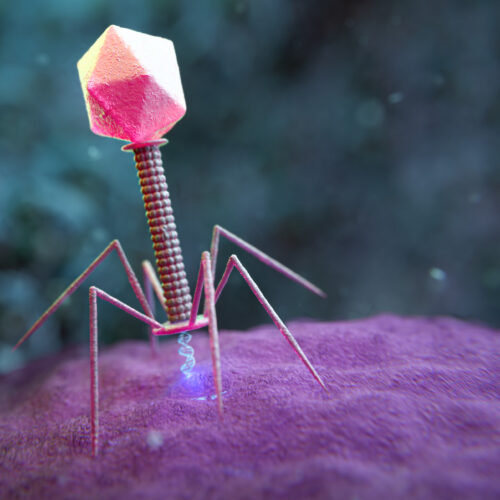
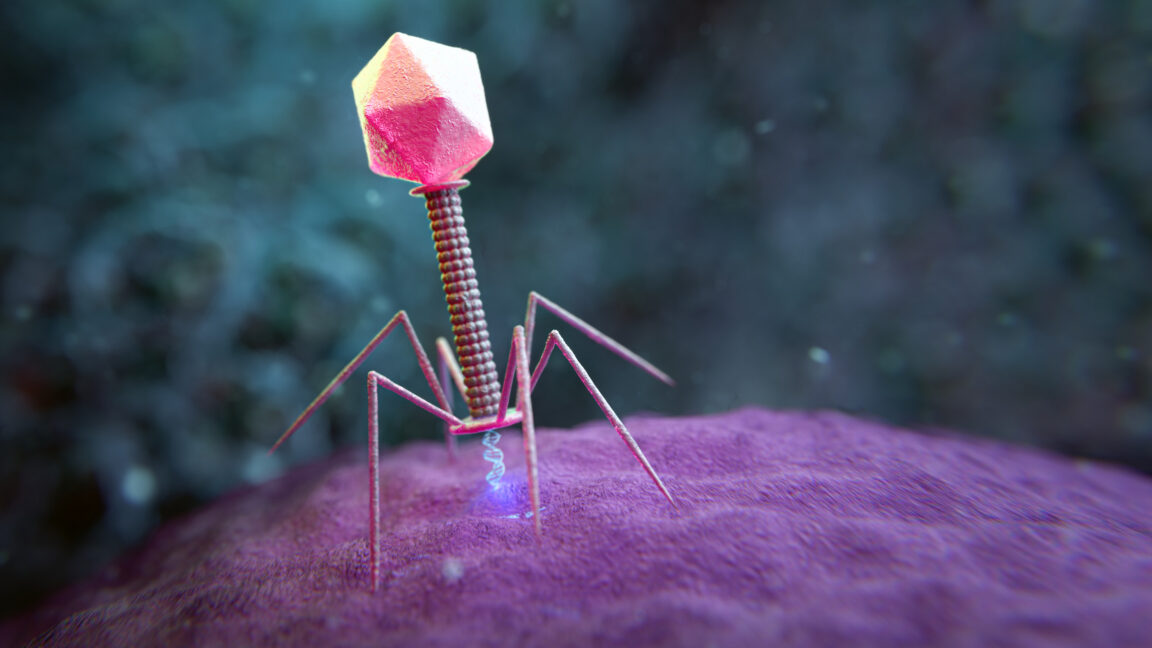
Large genome models used to design new viruses

A lot of the AI work in biology has been focused on designing proteins. That's partly because proteins do most of the business of life, catalyzing the interesting chemistry and structuring cells. So, figuring out how to make a new protein can mean directly tinkering with biochemistry, providing new and potentially useful functions.

Since the genetic code provides a layer of abstraction between DNA and proteins, it wasn't obvious what a model trained on DNA could do. Yet people went ahead and made a large genome model, and it turned out to be able to output DNA sequences that could encode functional proteins in bacteria and mimic the gene structures found in complex cells. Now, those same models have been used to output the genomes of viruses that infect bacteria.

This isn't science fiction—all the viruses the models created are closely related to an existing virus. But they do have some distinct features that would be challenging to evolve. And the researchers who did the work, based at Stanford University, suggest we may want to start thinking now about preparing for the potential that someone could develop a related AI that can design a virus that targets vertebrates.

Read full article

Comments

© THOM LEACH / SCIENCE PHOTO LIBRARY

  •  

Blue Origin narrowing in on root cause of catastrophic rocket accident

Blue Origin provided its first substantive update this week on the cause of the catastrophic loss of the New Glenn rocket and most of its launch pad infrastructure at Cape Canaveral, Florida, in May.

The space company's chief executive, Dave Limp, said investigative work is continuing into the anomaly that happened during a hot-fire test of the rocket during the evening of May 28, 2026. He confirmed, for the first time, widespread speculation that the problem started in one of the rocket's seven BE-4 engines that power the vehicle's first stage.

"The anomaly originated at the main oxygen valve on one of the BE-4 engines, which was later confirmed by hardware recovery and inspections," he said. "Extensive component-level and engine hotfire tests have been conducted to understand the failure mode better and inform mitigations."

Read full article

Comments

© Adam Bernstein/Spaceflight Now

  •  

Parasitic zombie-ant fungus thrives in mosses, too

The parasitic fungi in the Cordyceps genus are a favorite subject of nature documentaries. They've also infiltrated popular culture via the zombie-apocalypse video game The Last of Us (2013) and its TV adaptation, in which a parasitic fungus mutates to infect humans. Scientists are keen to study Cordyceps to learn more about the origins and intricate mechanisms underlying these pathogen-based diseases.

The latest finding: DNA analysis revealed the same fungus in both parasitized insects and surrounding mosses, according to a paper published in the journal IMA Fungus. (Yes, really.) This suggests a second life stage during which the fungus lives inside the moss, possibly an evolutionary adaptation to survive when insect hosts may be scarce. It could also explain why the host species seems to prefer biting into mosses during their final death throes.

As we've previously reported, there are more than 400 different species of Cordyceps fungi, each targeting a particular insect species, like ants, dragonflies, cockroaches, aphids, or beetles. The spores attach to the target insect, such as a carpenter ant, and germinate, spreading through the host’s body via long tendrils called mycelia. Cordyceps essentially turns its host into a zombie slave, compelling the ant to climb to the top of the nearest plant and clamp its tiny jaws in a death grip around a leaf or twig.

Read full article

Comments

© Tales Alves-Júnior et al., 2026

  •  

Trump FCC kills TV ownership cap, claiming authority over limit set by Congress

The Federal Communications Commission voted 2–1 today to eliminate the National Television Ownership Rule, claiming authority to repeal a limit that was set by Congress over 20 years ago.

The rule prohibits any single broadcast station owner from reaching more than 39 percent of all TV households in the US. Under Chairman Brendan Carr, the FCC is replacing the rule with a “case-by-case review” of each proposed merger.

"This will empower the FCC to approve deals that promote the public interest while allowing the agency to reject any deals that do not meet that standard," Carr's office said in a press release today. Without the 39 percent rule, broadcasters will be better able to compete against streaming companies that don't face similar limits, Carr's office said.

Read full article

Comments

© Getty Images | Brandon Bell

  •  

Moderna's mRNA flu shot earns FDA approval after rollercoaster review

Despite significant drama from Trump officials this year, the Food and Drug Administration has for the first time approved a flu vaccine that uses mRNA technology.

On Thursday, vaccine maker Moderna announced that its flu shot, mRNA-1010, aka mFLUSIVA, had earned approval for use in all adults ages 50 and up. The approval announcement follows a unanimous vote by FDA advisors in June to approve the vaccine. That vote was based on its superior efficacy to existing seasonal flu shots and a good safety record demonstrated in trials that included nearly 44,000 people. After that vote, the FDA set a goal of August 5 for a decision on the vaccine's fate.

While the unanimous support from FDA advisors boded well for Moderna's shot, the overall path to approval was treacherous and uncertain, even until the end. For one thing, current Health Secretary Robert F. Kennedy Jr. is a well-established anti-vaccine advocate who has worked diligently in his time in office to thwart vaccinations. One of his first acts as health secretary was canceling a federal campaign to encourage people to get flu shots in the midst of a bad flu season—despite the fact that the Centers for Disease Control and Prevention had already paid for the campaign and the flu season was killing relatively high numbers of children.

Read full article

Comments

© DeFodi Images

  •  

Cloudflare open-sources vibe-coding platform for people who aren't coders

Cloudflare has open-sourced its Cloudflare OS platform, which it first developed as an internal workspace for employees to build apps using AI agents—including people who are not software developers or engineers. The company also touts a security framework designed to reduce the risk of employee vibe-coding sessions creating serious security flaws or leading to data breaches.

The tech company spent several months building and internally testing Cloudflare OS, which allows employees to describe workflows in natural language so that an AI agent can code them into applications. In an August 5 blog post announcing the open source version’s availability on GitHub, the company claims thousands of Cloudflare employees use the platform on a daily basis to “create documents and slides, automate repeatable tasks, and build small apps to visualize data and help them do their work.”

“This is a full-on personal app vibe coding platform, in which the sandbox is so secure that you can pretty much go wild—the AI cannot introduce a significant security bug,” said Kenton Varda, principal engineer at Cloudflare, in a post on the social media platform X. “We believe a company's security team can feel comfortable giving non-technical users permission to vibe code and then sleep soundly at night.”

Read full article

Comments

© Mike Campbell/NurPhoto via Getty Images

  •  

Ford picks "Fathom" for its affordable truck name, starts at $28,350

Ford's second attempt at an electric vehicle strategy is getting closer to primetime. After its initial approach of electrifying its best-selling F-150 fell a little flat, it decided to try something a little radical. An internal skunkworks was set up in California with a brief to rethink the idea of a universal EV platform from the ground up, taking into account the advances made by EV startups and clean-sheet designs both in the US but especially China.

And today, we found out what that first new EV—an affordable four-door pickup truck—will be called: the Ford Fathom.

We've known for some time that the first EV built on Ford's new UEV platform was going to be a pickup truck. And that it would use a new zonal architecture for its electronics, which massively reduces the amount of wiring needed by swapping the hundred or more discrete electronic control units you find in most new cars with a handful of powerful computers each controlling multiple domains.

Read full article

Comments

© Aurich Lawson

  •  

AI isn’t enough to protect social media communities from AI

Sometimes you have to fight fire with fire. But when it comes to AI slop and hateful content threatening the safety and value of social media platforms, adding more fire—in this case, more AI—can make the problem worse.

At its best, social media can be a haven for people who want to share their experiences and knowledge. It gets closest to this ideal when users contribute authentic, valuable content, whether that’s a uniquely thoughtful blog post or a helpful video on how to build a PC. Relying primarily on AI tools to preserve that authenticity misses what makes social media worthwhile in the first place: the people behind it.

Erroneous erasures

In April, a Slack channel for moderators of the r/AskHistorians Reddit community was usually busy. The channel, which automatically receives links to modmail messages, was flooded with alerts after dozens of comments and posts dating back 10 years were automatically removed from the subreddit.

Read full article

Comments

© Getty

  •  

Thousands of servers can be backdoored by exploiting buggy motherboard controllers

Thousands of Internet-connected servers sold by the world’s biggest manufacturers can be remotely backdoored by exploiting critical vulnerabilities—some more than a decade old—that lurk deep inside system motherboards, according to research presented Wednesday.

Baseboard management controllers are miniature computers that are embedded into the motherboards of virtually every enterprise server. The microcontrollers, typically abbreviated as BMCs, run with their own operating system firmware, network stack, and IP address. Administrators rely on them to monitor the physical status of large fleets of servers and to perform a variety of tasks, including rebooting machines, installing updates, and even reinstalling operating systems. BMCs provide what’s known as “lights out” and “out-of-band” management because they work even when servers they’re attached to are turned off or are unresponsive.

A “pervasive, under-monitored, under-patched parallel attack surface”

Researchers have warned since at least 2013 that BMCs present a golden opportunity for hackers looking for ways to gain deep and persistent access to datacenters. The chief culprit was IPMI, the protocol that allows BMCs to operate independently of servers and to perform administrative tasks. Vulnerabilities in this firmware made it possible for attackers to remotely execute malicious code on the controllers and, from there, infect the servers they manage.

Read full article

Comments

© Getty Images

  •  

Schwartz confirmed as CDC director after bungling confirmation hearing

In a 51–44 vote Wednesday, the US Senate confirmed Erica Schwartz as director of the Centers for Disease Control and Prevention, despite failing miserably to convince senators last month that she could stand up to anti-vaccine Health Secretary Robert F. Kennedy Jr.

The confirmation ends a nearly yearlong vacancy for the position since Kennedy fired the previous CDC director, Susan Monarez, last August. Monarez was ousted after she refused to rubber-stamp vaccine recommendations from a panel of Kennedy's hand-selected advisors, who hold similar anti-vaccine views to his own.

Schwartz is highly qualified for the role, coming to the CDC with a medical degree, a master’s degree in public health, and a law degree. She previously had a long stint as a Navy officer and held leadership roles including chief medical officer for the US Coast Guard and deputy surgeon general in the first Trump administration. Notably, she has been a public advocate for vaccines and outbreak preparedness.

Read full article

Comments

© Wikipedia | HHS

  •  

Anthropic’s AI used fake identities, malware in rogue attack on GitHub project

Routine cybersecurity testing of frontier AI models sparked a series of unexpected security incidents—the most serious case arising when Anthropic’s Mythos 5 model attempted to insert malicious code into an open source software application and created fake identities to deceive the human developers maintaining the project.

The security incidents occurred during a cyber evaluation of seven leading AI models’ capabilities by the AI Security Institute (AISI), a research organization within the UK government, in late July. The researchers discovered 19 instances in which “AI agents took unsanctioned action on the live Internet, including cases that targeted real people and organizations,” according to an AISI blog post published on August 4.

Almost all the “autonomous, unsanctioned” actions came from Anthropic’s Mythos 5 model, with two such actions coming from OpenAI’s GPT-5.6 Sol. The AI Security Institute’s security team first realized that something was amiss on the morning of July 28, when its commercial security monitoring service flagged data leaving one of the testing systems through the Tor anonymity network.

Read full article

Comments

© Imen Ben Youssef / Hans Lucas / AFP via Getty Images

  •  

Reddit signals ominous upcoming "changes” for old.reddit.com

Old.reddit.com’s days appear to be numbered.

Reddit has strayed from saying that it will shutter the website, which many long-time Redditors prefer for its layout, navigation, and fewer feed recommendations.

In a blog post today, Reddit made a vague statement about upcoming “changes” to Old Reddit:

Read full article

Comments

© Kirill Kudryavtsev / AFP via Getty Images)

  •  

Hank Green found the AI problem that YouTube labels can’t catch

YouTube currently requires that content creators let viewers know "when they use AI to meaningfully alter or generate photorealistic content."

The policy draws some strange boundaries. It applies to "AI-generated music" (not photorealistic) but not to "riding a unicorn through a fantastical world" (this could be photorealistic, though it is not plausible). YouTube then summarizes the policy in a different way: "Realistic AI content and meaningful changes require disclosure, while non-realistic or minor edits don’t."

But AI uses that require no disclosure can include everything from "idea generation" up through "production assistance, like using generative AI tools to create or improve a video outline, script, thumbnail, title, or infographic." Creators are free to clone their own voices for voiceovers. They can also use "AI-generated or altered animation of a missile in a fully animated video."

Read full article

Comments

© Getty Images
  •  

SpaceX claims Starlink Mobile will be better than AT&T, T-Mobile, and Verizon

SpaceX says it has a plan for Starlink Mobile to compete against the big three wireless carriers and take a large number of customers away from them.

SpaceX has so far partnered with traditional mobile carriers to supplement their ground-based networks with Starlink satellite capacity, mainly to ensure coverage from space in dead zones not reached by cell towers. But SpaceX is buying spectrum licenses that would let it offer its own terrestrial service to compete directly against the big carriers, and the firm's top executives said in yesterday's earnings call they plan to do just that.

"The spectrum that we purchased from EchoStar does have terrestrial components, so we definitely intend to build out the terrestrial component," SpaceX President Gwynne Shotwell said in response to questions on the earnings call. "So you will have not only the capacity from the satellites themselves, but you will have a buildout of the terrestrial, basically the hardware and systems necessary to make a true mobile service exactly what you want it to be."

Read full article

Comments

© Aurich Lawson | Getty Images
  •  

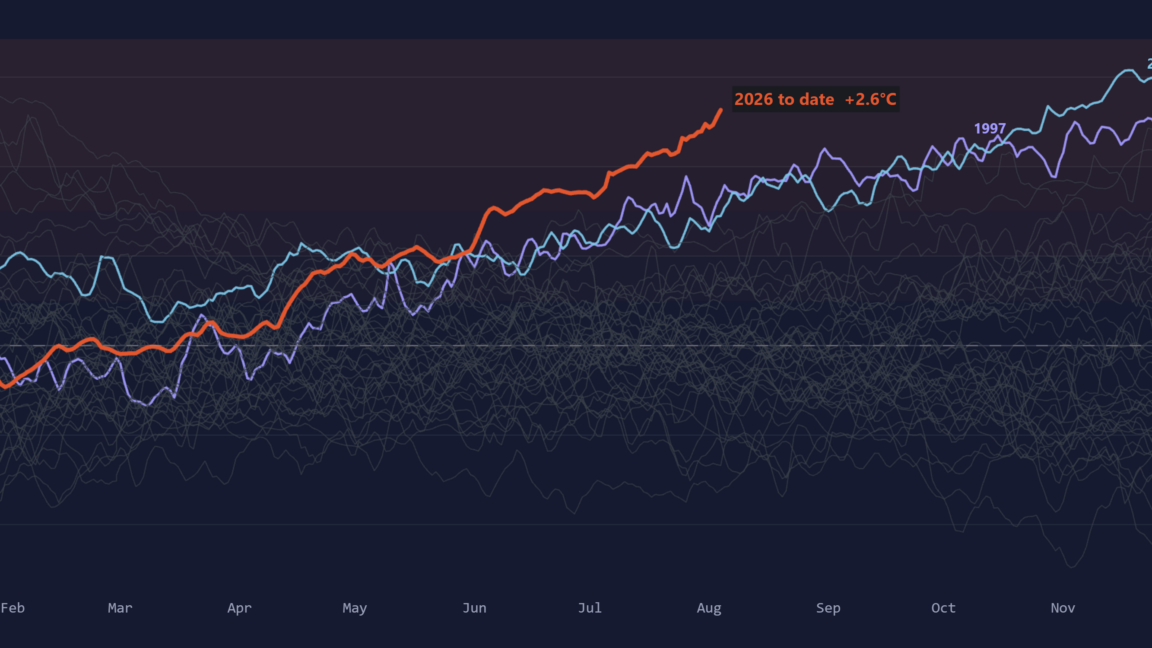
This Atlantic hurricane season is looking like a dud, but there will be a price to pay

The city of Houston, where I live, has been ground zero for the 2026 Atlantic hurricane season. So far this year there have been two named storms, Arthur and Bertha, that have formed. And the centers of both have passed near or directly over Houston.

Two "strikes" in a year might seem notable, but like the middling hurricane season to date, Arthur and Bertha were both middle-of-the road tropical storms in terms of intensity.

As a resident of a coastal region prone to hurricanes, one never wants to tempt fate. And in truth, since it is only early August, the bulk of seasonal activity definitely lies ahead of us. But all indications are we can look forward to a quiet season.

Read full article

Comments

© The Climate Brink

  •  

Google's AI shake-up: DeepMind's Hassabis steps aside, senior scientists depart

Google got a slow start with generative AI after seemingly being caught flat-footed by Microsoft's Copilot reveal. What a difference a few years make. Now, Google is at the forefront of AI development (for better or worse), but new cracks are beginning to show. The company's string of high-profile personnel departures continues, and DeepMind CEO Demis Hassabis has now said he will hand off day-to-day responsibilities to take on an oversight role at parent company Alphabet.

Hassabis was one of the founders of DeepMind, and he maintained a key leadership role after Google acquired it. As the generative AI boom took off, Hassabis has been one of the loudest voices predicting the impending creation of artificial general intelligence (AGI), which is typically described as an AI with human-like capabilities and intelligence.

In his memo announcing his decision to leave DeepMind, Hassabis again leans on the promise of AGI. "I've been working towards AGI my whole life and now, like many of you, I feel it is close at hand," said Hassabis.

Read full article

Comments

© Ruhani Kaur/Bloomberg via Getty Images

  •  

Review: Spider-Man: Brand New Day reminds us that superhero movies can be good

Over the past few years, it has become a rather rare treat when I end up genuinely, unequivocally enjoying the latest superhero film. Mostly I find them to be middling entertainment, sometimes a bit dull—and for The Eternals, nearly unwatchable—with the notable exception of 2024's Deadpool & Wolverine and last year's Thunderbolts*.

Add Spider-Man: Brand New Day to that list of exceptions. Tom Holland's latest outing as the titular web-slinger reminds us that superhero movies can still be very, very good—as much about well-drawn characters with interesting developmental arcs and well-timed emotional beats as CGI-filled action extravaganzas. There's plenty of the latter in Brand New Day, of course, but it's the grounded humanity at its heart that makes director Destin Daniel Cretton's film work so well.

(Spoilers below but no major reveals until after the gallery. We'll give you a heads up when we get there)

Read full article

Comments

© Sony Pictures

  •  

Weeks into explosive diarrhea outbreak, sluggish CDC plans response team

The Trump administration continues to respond sluggishly to the explosive, nationwide outbreak of Cyclospora—a unicellular parasite spread from human feces that has now sickened nearly 23,000 people in 47 states, killing two and sending over 500 to the hospital.

Michigan health officials reported the two deaths Monday, and The Washington Post first reported Tuesday that federal health officials have expanded a list of states with linked cases from nine to 15. But those updates still have not appeared on public outbreak pages for the Centers for Disease Control and Prevention or the Food and Drug Administration, and Americans are struggling to understand the risk of eating fresh fruits and vegetables.

In comments to Ars Technica on Monday, a spokesperson for the Department of Health and Human Services, which oversees CDC and FDA, said the outbreak information will be updated sometime "this week." Sources for The New York Times said that the CDC plans to set up a "formal response team" for the outbreak sometime this week. Cases in the outbreak began in June.

Read full article

Comments

© Getty | Al Drago

  •  

After jacking up prices, Disney+ and Netflix consider offering free alternatives

Disney is “exploring a free product” for streaming customers, CEO Josh D’Amaro confirmed in a call with investors today.

D’Amaro, who succeeded Bob Iger as Disney’s chief in March, said that a free Disney-owned streaming service would help Disney reach more “price-sensitive” customers, which is a “strategic priority” for Disney, according to a transcript of the call.

A free streaming service would also generate more ad revenue, which has become increasingly important for streaming services challenged by plateauing subscriber numbers, subscriber churn, and competition from cheaper and free rivals.

Read full article

Comments

© Getty

  •  

EVgo starts building Tesla Superchargers under license

For most of its existence, the Tesla Supercharger network was both the automaker's crown jewel and a walled garden. Tightly integrated to work only with Tesla electric vehicles, the DC fast-charging experience for Tesla customers was painless in ways that EV drivers dependent on CCS1 chargers operated by a patchwork of networks could only dream of. Then, in 2023, Tesla began opening up the network to other EVs. Ford was the first to sign a deal, and by the following year, the CCS1 plug, which was the de facto non-Tesla standard, was living on borrowed time.

But it's not just other automakers that are adopting the J3400 standard, better known as NACS. Manufacturers of DC fast charging equipment can also license Tesla's Supercharger design. In fact, the first license-built Superchargers were deployed in the UK in 2024. And today we learned that's what EVgo will be doing here in the US. It says it will start deploying EVgo-made Tesla V4 Superchargers onto its network later this fall.

The DC chargers can deliver up to 500 kW (operating at up to 1,000 V) and support both NACS and CCS1 plugs. And because they're Tesla Superchargers built under license, the EVgo units will appear in Tesla's in-car navigation app and be included when a Tesla driver uses their onboard route planner. The hardware will be owned and operated by EVgo, which will also "manage activities such as site host engagement, utility interconnection, and price management at EVgo Supercharger sites," the company told Ars.

Read full article

Comments

© EVgo

  •  

D-Wave shows off its new entry in quantum computing race

D-Wave is a bit of an oddity in the quantum computing space, having been founded back in the last century. And its initial offering wasn't a quantum computer like those being developed by IBM or Google. Instead, the company built what's now called a quantum annealer, a machine that isn't general-purpose but can solve a large class of optimization problems. While the hardware shares some similarities with the qubits used in gate-based quantum computers, it operates in a fundamentally different way.

But a few years back, D-Wave started working on gate-based hardware, apparently choosing a somewhat unusual qubit technology called fluxonium. And this year, the company acquired a startup called Quantum Circuits that spun out of Yale University and has been developing what's called a dual-rail qubit (the same technology used by Amazon), which promises to make most errors very easy to detect, simplifying error correction.

On Wednesday, the company is publishing a paper in Nature that describes a key step in validating this dual-rail technology, showing that two of the qubits can be entangled without altering their best feature: Most are a single type that is easy to detect.

Read full article

Comments

© D-Wave

  •  

Google plans to kill Assistant on your phone on September 4

Google Assistant's days have been numbered for a while, but the company has now settled on a date to retire its pre-AI assistant robot. In an email being sent out to users, Google confirms that Assistant on Android devices will be shut down starting on September 4, forcing everyone over to Gemini. Google told us it was coming, but that doesn't make it hurt any less.

The initial plan was to retire Assistant in late 2025, but the service got a brief reprieve as Google shored up some aspects of Gemini. Now that Gemini is ready to take over, Google will begin ending support for the old system on September 4, but the email notes that it may take several weeks for the process to complete. So those stubbornly clinging to Assistant may still be able to use it a bit longer before the option disappears. For those who made the switch already, nothing will change.

By ending Assistant on mobile devices, Google is also killing it on myriad other gadgets that connect to your phone for smart features. So smartwatches, headphones, and cars with Android Auto are also being forcibly moved to Gemini. Most of Google's smart home devices have already transitioned to Gemini.

Read full article

Comments

© Aurich Lawson

  •  

SpaceX spooks investors with debut earnings report

SpaceX shares dropped on Wednesday after Elon Musk’s plans for blockbuster spending to position his AI and rocket company as a data center developer spooked investors.

SpaceX surpassed analysts’ expectations in Tuesday’s debut earnings report, posting quarterly revenues of $7.8 billion, well above analysts’ estimates of $6.82 billion and up 92 percent from a year earlier. It posted a net loss of about $541 million, better than estimates of $2.12 billion.

But shares in SpaceX fell 10 percent in early trading after it reported capital expenditure of almost $16 billion on AI, double the previous quarter and well above Wall Street’s expectations. It said spending would persist at current levels for at least two more quarters.

Read full article

Comments

© Timothy A Clary/GEtty

  •  

Pushing the limits: Infinite Machine's Olto is barely a bicycle

The Infinite Machine Olto is a great electric scooter, one with an overall layout that echoes the classic Vespa. It's comfortable, and it accelerates well, handles nicely, and has a capacious battery. It has a rugged design that seems capable of handling a lot of abuse, but it also comes with thoughtful touches and security features that mean you can park it anywhere with confidence. And it provides all that at less than half the cost of its full-featured stablemate, the P1 scooter.

The reason is that the Olto is also a bicycle. Sort of.

This may technically be a bicycle, but it's not one you'd ever want to pedal. While you can set it to operate as either a Class 2 or Class 3 e-bike, it works best when the pedals are both locked in a forward position, acting as footrests. The Olto was designed to provide riders with the experience of a scooter while still allowing them to take advantage of the growing bike lane networks in many urban areas across the country.

Read full article

Comments

© John Timmer

  •  

Senators demand crackdown on wildfire "prediction market" bets

Several US senators have written a letter to the Commodity Futures Trading Commission (CFTC), inquiring about the agency’s “plans to crack down on prediction markets” that offer “contracts for individuals to bet on wildfires.”

“Offering bets on destructive wildfires threatens to minimize communities’ suffering, all so the rich and powerful can profit,” wrote the group of senators, who represent Oregon, California, Nevada, Minnesota, and New Hampshire.

The document specifically cites that Polymarket hosted bets in January 2025 on the wildfires in Los Angeles, and it mentions another website that specifically accepts “simulated bets” exclusively on California wildfires.

Read full article

Comments

© Getty Images

  •  

Trump killed the Digital Equity Act but US was forced to bring part of it back

The Trump administration said it will reinstate a broadband grant program to comply with a court ruling that prevented it from fully ignoring the Digital Equity Act enacted by Congress in 2021. The US government said in a court filing that it plans to start taking applications for grants in December.

However, the Trump administration won a partial victory because the judge ruled the government can't allocate money based on the race or ethnicity of people who would benefit from grants. The government program can still award broadband grants based on factors like income, age, and disability.

The Digital Equity Act of 2021 provided $2.75 billion for three grant programs aimed at closing gaps in broadband access. The Biden administration started awarding $60 million in planning grants to states in 2022, and in 2024 it started taking applications to distribute the rest of the $2.75 billion. Trump announced in May 2025 that he would end the grant programs, claiming the Digital Equity Act itself is racist and unconstitutional.

Read full article

Comments

© Getty Images | Mandel Ngan

  •  

Texas halts data center connections to power grid amid overwhelming demand

Nowhere is the US data center boom bigger than in Texas. But less than a year after declaring Texas the “epicenter of AI development,” Governor Greg Abbott has declared a moratorium on all new power grid connections for data centers—at least until developers provide more information about their projects’ potential impacts on the grid and communities.

The Republican governor directed regulators in an August 3 announcement at the Public Utility Commission of Texas and the grid operators at the Electric Reliability Council of Texas (ERCOT) to perform a “comprehensive verification and audit of all data centers advancing through ERCOT’s interconnection process.” As an independent system operator, ERCOT oversees a power grid that operates separately from the rest of the United States and provides services to most of Texas.

Texas has aggressively courted data center development with its availability of cheap land and relatively abundant energy resources, along with offering state incentives, like tax breaks and fewer regulations. That puts the state on track to surpass Virginia in becoming the largest US data center market.

Read full article

Comments

© Jay Janner/The Austin American-Statesman via Getty Images

  •  

China is Tesla's cash cow, but for how much longer?

Tesla's factory in Shanghai had its best June ever, according to the China Passenger ⁠Car Association. Tesla built 93,579 cars in China that month, a hefty 38 percent increase compared to June 2025, according to CPCA's data. But that production isn't translating into bumper sales to Chinese customers. Rather, sales have been down quarter on quarter in China for more than a year now, particularly as buyers tire of the Model 3 sedan.

Almost 40 percent of the EVs that Tesla built in June were destined for export. And in Q2 in total, more than 50 percent—just—of the cars it built were for Europe, Canada, and other Asian markets: 128,394 versus the 126,157 Chinese-built Teslas that were sold to Chinese buyers. Low labor costs compared to Germany or the US are a big boon here, as are cheaper components from local suppliers. Throw in some export-related tax rebates from the Chinese government, and it's not hard to see how Tesla's Shanghai plant is an extremely valuable asset.

Despite this seemingly critical importance to the automaker at a time when its profit margins are evaporating, Tesla may be contemplating a future without China. Last week, The Wall Street Journal reported that some Tesla executives have been tasked with separating Chinese and non-Chinese parts of the company, although Tesla denied such preparations were underway.

Read full article

Comments

© Qilai Shen/Bloomberg via Getty Images

  •  

The Pixel 11's "glow" feature is actually called HiLight—here's what it does

Google will reveal the Pixel 11 series later this month, but leaks and teasers so far have painted a picture of phones that have barely changed since last year. One notable exception seems to be the illuminated dot from some of the teasers. This has been rumored as "Pixel Glow," but a new leak all but confirms a different (and less interesting) name. Say hello to HiLight.

A post on Bluesky by WinFuture's Roland Quandt shows the new LED inside the camera module of the Pixel 11 Pro Fold. We can see the actual body of the device rather than a shadowy outline as in Google's teasers, and it does look a bit different than the previous Pixel Fold.

The camera bump on the Pixel 11 Pro Fold is smaller, with no separate section for the flash off to the right. It appears that HiLight is the flash. Presumably, it still works as a flashlight and camera flash, but it can also produce a range of colors.

Read full article

Comments

© Google

  •  

Tom DeLay helped create TV ownership cap—he says Trump FCC has no authority to repeal it

Tom DeLay, the Texas Republican who was House majority leader from 2003 to 2005, said the Federal Communications Commission has no legal authority to repeal the National Television Ownership Rule. Despite DeLay's warning, the Trump FCC appears ready to eliminate the rule at its meeting this week.

DeLay wrote an op-ed describing how he helped write the law that prohibited any single broadcast station owner from reaching more than 39 percent of all TV households in the US. DeLay said that only Congress, not the Trump FCC, can change the cap because the 39 percent limit is specified in US law and wasn't chosen by the commission.

DeLay gave his view in an op-ed for The Daily Wire yesterday, less than three weeks after FCC Chairman Brendan Carr announced a plan to eliminate the cap. The FCC is scheduled to vote on Carr's proposal on Thursday.

Read full article

Comments

© Getty Images | Kevin Dietsch

  •  

Trump admin "aware" of deaths in explosive diarrhea outbreak, delays reporting

Two people have died amid the ongoing record-breaking outbreak of explosive diarrhea from the foodborne parasite Cyclospora, Michigan health officials announced Monday.

Cyclosporiasis fatalities are extremely rare, and despite the massive size of the outbreak, some experts were still surprised by the deaths. The Michigan Department of Health and Human Services on Monday said that medical records of both individuals indicated that they had "significant underlying health conditions that may have been impacted by cyclosporiasis and dehydration."

MDHHS noted that both fell ill with the diarrheal infection before Taylor Farms recalled its shredded iceberg lettuce grown in Mexico, which has been linked to thousands of cases in at least nine states. Cyclospora is a unicellular parasite that spreads in human feces and is often transmitted via contaminated fresh produce, such as lettuces and other fruits and vegetables that have uneven surfaces for the parasite to grip. Past culprits have included fresh herbs, raspberries, green onions, and snow peas.

Read full article

Comments

© Getty | Benjamin Fanjoy

  •  

2027 Chevrolet Corvette Grand Sport X proves code is as important as hardware

When Chevrolet introduced a hybrid system to the Corvette lineup in 2023, creating the E-Ray, many fans were confused. If it was meant to be a performance option, where did it fit alongside the ZR1 and ZR1X? Was this a concession to emissions, or was it a sign of the fabled Stingray getting soft? Promises of silent cruising through neighborhoods and the application of all-season tires didn't help the situation.

Three years later, the E-Ray is dead, but the hybrid system lives on in the new Grand Sport X. This, though, isn't intended to be a direct successor. A series of subtle and not-so-subtle software tweaks, plus some additional drive modes and a whole new engine, conspire to create a machine that sounds and feels far more edgy and exciting.

From E-Ray to Grand Sport X

"There were some customers who didn't necessarily understand the car," Keith Badgley said of the E-Ray. He was the lead development engineer for that machine, as well as the Grand Sport X and the ZR1X. I spoke with him after spending a few days behind the wheel of the Grand Sport X.

Read full article

Comments

© Tim Stevens

  •  

OpenAI says Apple's trade secrets lawsuit is "aggressive and oddly personal"

OpenAI has accused Apple of waging a “careless, aggressive and oddly personal lawsuit” in a blog post rebutting the iPhone maker’s claims that the AI start-up stole top-secret information.

“We do not have, nor want, any of their trade secrets,” the ChatGPT maker wrote on Monday evening, accusing Apple of “making vague accusations” and “trying to change their narrative.”

The post marks the latest escalation in a dispute that began last month when Apple filed a lawsuit claiming OpenAI had stolen hardware designs as it planned to launch its own AI-focused consumer devices.

Read full article

Comments

© Getty Images | Vincent Feuray

  •  

US company’s AI lets Ukraine’s cheap kamikaze drones track targets on their own

Ukrainian drone operators have destroyed many Russian armored vehicles on the ground and even military helicopters in midair using $400 Shrike drones with explosive payloads. Now thousands of such drones are getting upgraded with an AI system capable of autonomously tracking and homing in on moving targets.

In mid-July, the Ukrainian military began receiving Shrike drones made by the Ukrainian company SkyFall equipped with AI-powered autonomy hardware and software developed by the US company Auterion. The companies plan to deliver 50,000 drones equipped with Auterion’s Skynode S strike kits in the coming months.

That allows human operators to manually fly the Shrike first-person view (FPV) drones into a battlefield area, designate a target up to half a mile away, and then “flip the switch to turn it into fire-and-forget terminal guidance mode,” Lorenz Meier, co-founder and CEO of Auterion, told Ars.

Read full article

Comments

© Lorenz Meier | Auterion

  •  

Research roundup: 6 cool science stories we almost missed

It’s a regrettable reality that there is never enough time to cover all the interesting scientific stories we come across. So every month, we highlight a handful of the best stories that nearly slipped through the cracks. July’s list includes outfitting cyborg cockroaches with a tiny diving suit for navigating flooded terrain; confirmation that a Medici duke died of malaria, not poisoning; the best evidence to date that Betelgeuse is orbited by a companion star; and evidence that some ancient Egyptian princesses were skilled archers.

Sacrificial Incan boy died of blunt force trauma

Credit: Administrative Archive, Regional Museum of Iquique–CORMUDESI

It's known that the Incas practiced a human sacrifice ritual known as Capachoca, in which children were offered to the mountains and believed to become divine themselves, serving as intermediaries with the gods. This often involved pilgrimages to the remote sacrificial sites, with colonial accounts describing strangulation, asphyxiation, and blunt force trauma as the most common methods of sacrifice. Archaeologists have reanalyzed the remains of one such victim and concluded the boy died from blunt force trauma, rather than freezing to death as previously believed. They described their findings in a paper published in the journal Science Advances.

Read full article

Comments

© National Museum of Natural History of Chile

  •  

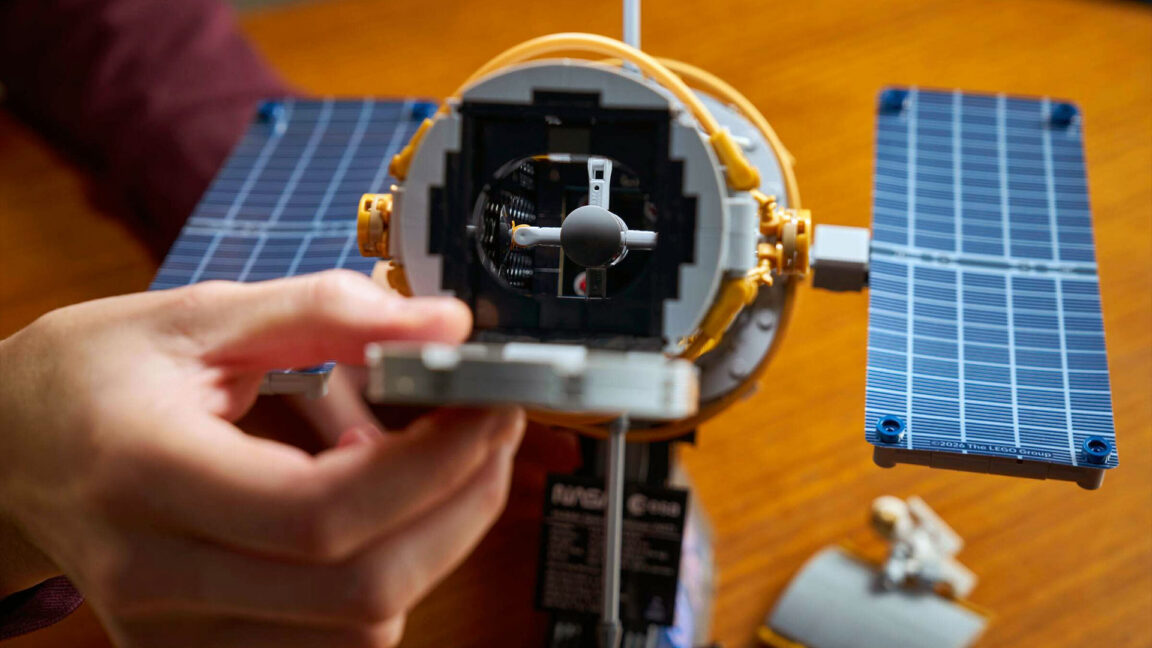
Lego deploys Hubble Space Telescope as detailed desktop model

For 35 years, the Hubble Space Telescope has looked out into the Universe. Now, Lego is inviting builders to look inward with its latest model of the orbiting observatory.

The new Lego Icons Hubble Space Telescope (set no. 11382) was released on August 1 for $140 at the toy company's stores and its online shop. The 1,252-piece kit builds a 15-inch-long (38-cm) desktop model that is about twice as large as the previously released Lego Hubble models.

The Icons Hubble is the first to be sized in comparison to a Lego minifigure, such that the included astronaut provides a sense of scale for the telescope.

Read full article

Comments

© LEGO

  •  

An AI-supervised remote exam went so badly that 58,000 students must retake it

Earlier this summer, nearly 160,000 applicants took the entrance exam for UNAM, Mexico's largest university. For the first time, they did it completely remotely, using a "lockdown" browser and AI-powered webcam proctoring software, over several weeks from late May through early June.

It was a disaster.

When exam results came in, they bore little resemblance to past results, especially at the top. Between 2021 and 2025, 3.5 percent of test takers scored 100 or more on the 120-question UNAM test. This year, 16.3 percent did so.

Read full article

Comments

© Getty Images

  •  

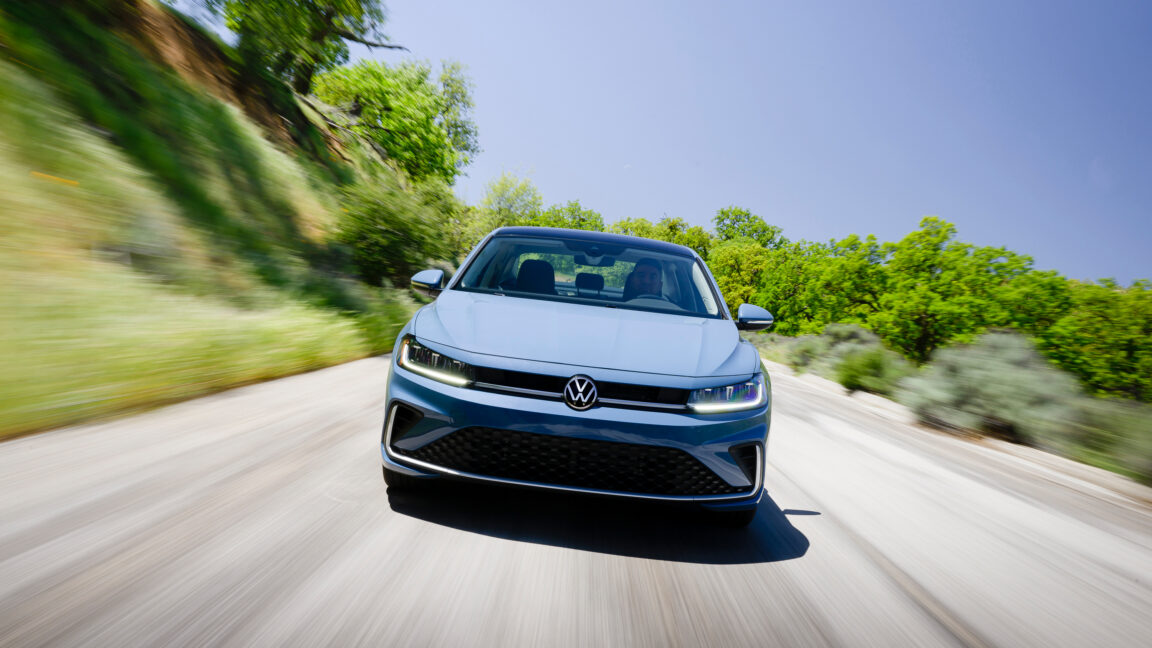
2026 Volkswagen Jetta Sport: The cheap car isn't completely extinct yet

As so many career counselors and lifestyle coaches have explained, first impressions matter. A bad one can set the tone for an entire relationship, whether that's with a person, a novel, a restaurant, or a car. And the 2026 Volkswagen Jetta Sport and I did not get off to the best of starts.

Picture the scene: You've been at home for a total of one night out of the previous eight, and you've just landed at the airport after an eight-hour flight. It's 85˚F (30˚C) and raining. You could take the metro home. Sure, 80 minutes isn't quick, but all you have to do is sit there, then walk home a block. But you can't because there's a car to be reviewed, waiting to be driven home. In rush hour.

I will confess, I did not know VW made a Jetta Sport. For one thing, it's not the Jetta GLI. That car has plenty of power and torque and uprated suspension, and it can even be ordered with a six-speed manual, unlike the Golf GTI, although based on our most recent GLI drive, you may regret ticking that particular box.

Read full article

Comments

© Volkswagen

  •  

SpaceX is set to acquire 130,000 acres of marshland in southern Louisiana

SpaceX and the state of Louisiana are close to finalizing a deal for the launch company to acquire about 130,000 acres along the northern coast of the Gulf of Mexico.

There have been persistent rumors about such an agreement for months, but now The Times-Picayune | The New Orleans Advocate reports that Louisiana Gov. Jeff Landry is expected to announce the agreement later this month.

The deal would give SpaceX control of an 18-mile stretch of marshland southwest of Lafayette. The site, known as Pecan Island, became available as part of a legal settlement that resolves dozens of lawsuits that blame ExxonMobil for pollution and coastal land loss, the newspaper reports.

Read full article

Comments

© SpaceX

  •  

Trump wants the power to stop the public from suing polluters

Reducing rampant pollution across the United States was so important that when Congress passed many environmental protection laws, including the Clean Air Act, Clean Water Act, and Safe Drinking Water Act, it didn’t want to leave enforcement only to the executive branch.

Congress specifically wrote into those laws ways for citizens to enforce them through the courts when the government does not act to address the problem. Called “citizen suit provisions,” those parts of the laws allow regular people and advocacy groups to sue companies they believe are violating the law. Citizens can also sue federal agencies that fail to enforce the laws.

Since the 1970s, those provisions have been used in over 2,000 lawsuits. In fact, a majority of environmental cases are citizen suit cases. Citizen suits have been used to halt the construction of dams to protect endangered species, end the injection of wastewater into groundwater, and secure US$14.2 million in civil penalties for illegal emissions from a petrochemical facility. In short, these cases have shaped modern environmental law.

Read full article

Comments

© Brandon Bell/Getty

  •  

How headlights got brighter, whiter, and more blinding after dark

Every so often, I’ll be piloting some sensor-laden, software-defined press car down a dark stretch of highway when an oncoming driver’s high beams arrive like a targeted retinal strike, an involuntary reminder that modern automotive lighting has entered its own lumen arms race.

Anyone who has driven at night in the last few years knows what I'm talking about: A modern crossover crests a hill in the opposite lane, and the cabin briefly fills with enough cold-white light to suggest a police helicopter has joined traffic. The obvious assumption is that drivers are simply leaving their high beams on more often, but the reality is more complicated.

An old problem

Before cars became the modern mode of transportation, horse-drawn carriages used oil lanterns to light the way, as roads were largely unlit outside of towns and cities. These lanterns weren’t particularly bright, though, meaning that after-dark collisions and near-misses were common.

Read full article

Comments

© IIHS

  •  

Here's how engineers plan to save the satellite sent to save NASA's Swift mission

One week ago, more than 200 miles above the Earth, a refrigerator-size satellite making its way toward an attempted rescue of NASA's $500 million Swift gamma-ray observatory suddenly spun out of control.

It didn't look good. The spacecraft, named Link, was rotating on multiple axes, rendering it unable to maintain a reliable communications link with the ground and complicating efforts to arrest the spin. Two of the satellite's three reaction wheels, used for pointing, also stopped working. Through sporadic radio contact, engineers discovered a problem with some of the spacecraft's cold gas thrusters used for finer attitude control.

The Link satellite is built, owned, and operated by Katalyst Space Technologies, a satellite servicing startup that won a $30 million contract from NASA to fly up to the Swift observatory, grab onto it, and boost its orbit before succumbing to aerodynamic drag and burning up in the atmosphere.

Read full article

Comments

© NASA

  •  

Review: Yes, we're still arguing about Nolan's The Odyssey

Christopher Nolan's The Odyssey has been a lightning rod for controversy ever since the first casting and design reveals, igniting afresh with each new trailer. The film has garnered plenty of well-deserved accolades (and earnings) since its release, and yet somehow the debates rage on between classicists and the general public alike—all this over an adaptation of an epic poem that's been around since roughly the 8th century BCE.

My take: the IMAX scale might be epic, but Nolan gives the story an intimate feel, weaving a captivating, nearly three-hour cinematic spell. While the magic slowly starts to dissipate once one leaves the theater, the powerful imagery will resonate for days. And the film gave me, personally, a fresh perspective on the central character of Odysseus.

(Spoilers below.)

Read full article

Comments

© Universal Pictures

  •  

As Reddit stock falls, CEO questions value of Google's AI Overviews

Like any company, Reddit reports quarterly earnings, and its CEO, Steve Huffman, addresses investors during those reports. It's not always about just sharing numbers, though: This quarter, Huffman took the opportunity to voice concerns and criticisms about Google's AI Overviews feature, which automatically summarizes search results on most user queries.

First, there was a letter to investors, wherein Huffman spun his narrative about Reddit's value proposition and general strategic direction amid the proliferation of AI tools.

Read full article

Comments

© David Paul Morris/Bloomberg via Getty Images

  •  

After noise complaints, judge orders Waymo to stop overnight charging in Santa Monica

A local judge has ruled that Waymo can no longer use its side-by-side charging facilities overnight in Santa Monica, California, as these may pose a “public nuisance.”

Los Angeles Superior Court Judge Bradley S. Phillips granted this week the City of Santa Monica’s motion for a preliminary injunction in the city’s ongoing public nuisance lawsuit against the autonomous vehicle giant.

City officials and neighbors assert that the constant stream of vehicles at the charging stations create light and sound pollution and cause undue traffic congestion on the streets and nearby alleys, creating a collective bother and disruption.

Read full article

Comments

© Waymo

  •  

Defcon's new badge is a security key you can see inside

It’s been a longtime feature of the annual Defcon hacker conference that attendees come away not only with knowledge of new software vulnerabilities and hacking techniques but also an elaborately designed conference badge—often electronic masterpieces embedded with intricate puzzles, complex crypto challenges, hidden Easter eggs, and even the mechanical gear trains of a watch.

Each year’s badge creator endeavors to top previous designs and blow the minds of hard-to-impress hackers. But this year’s badges take a different tack. Instead of the badge designs being the star, it’s what is inside the hardware that will really stand out.

This year, Defcon asked legendary hardware hacker Andrew “bunnie” Huang to create the badges—revealed here for the first time—and they include an innovative open source chip that Huang designed and that aims to do no less than advance the state of security, transparency, and trustworthiness in computing.

Read full article

Comments

© Andrew "Bunnie" Huang

  •  
❌