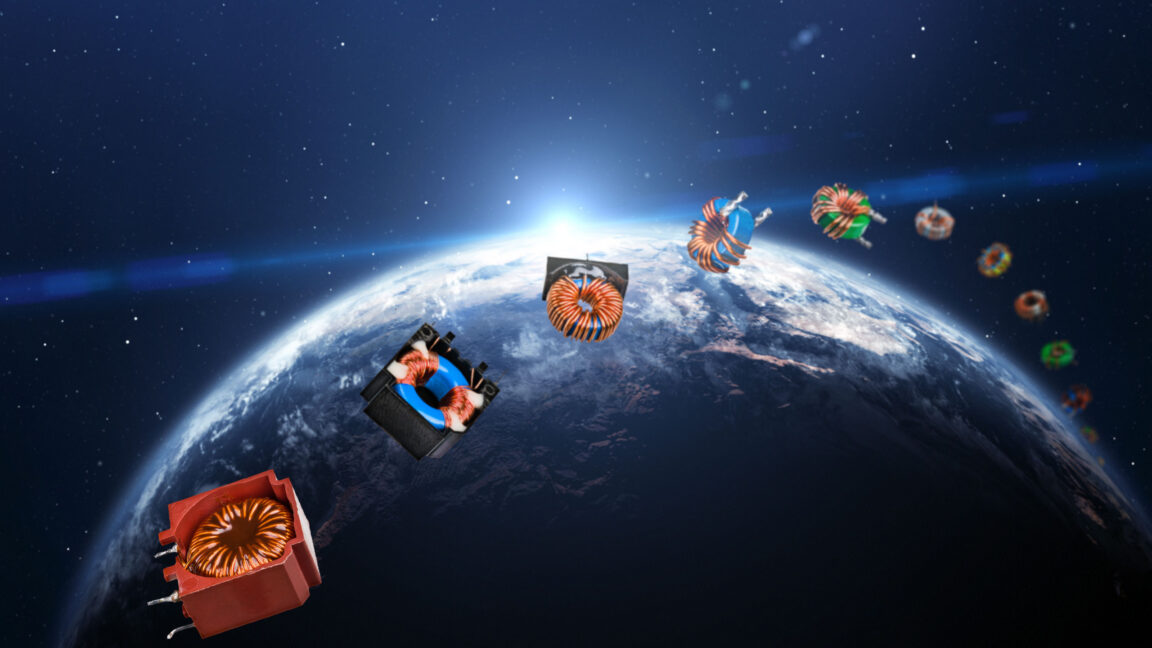
OpenAI, the company behind ChatGPT and Codex and the models those tools use, and Broadcom, an established silicon supplier, have announced a new chip, called Jalapeño, designed specifically for large language model inference in data centers.
The companies intend to deploy the chip at large data centers and claim this is just the first generation in a long-term project that will see chips refined over time.
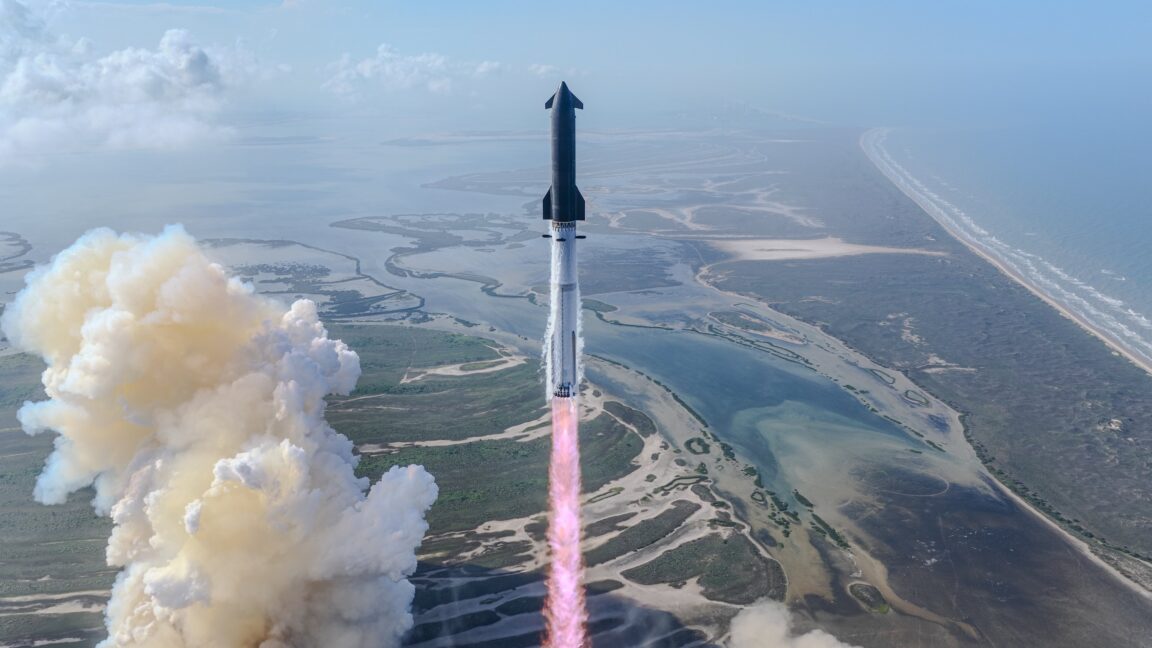
A SpaceX Falcon 9 rocket lifted off on Tuesday to test a new reentry vehicle designed to deliver cargo anywhere in the world from low-Earth orbit.
The company developed the new saucer-shaped reentry pod, called Starfall, under a veil of secrecy. Its purpose is to support the "transport and delivery of goods through space," according to an environmental assessment published by the Federal Aviation Administration last month.
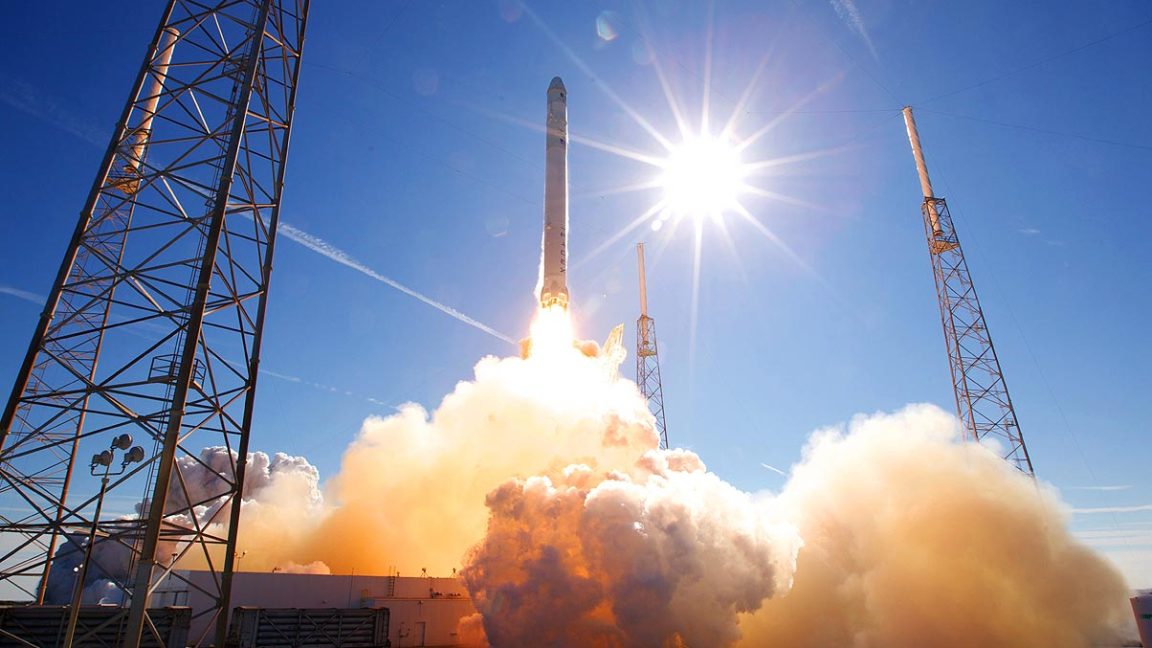
The first demonstration of the Starfall vehicle began at 6:53 am EDT (10:53 UTC) with liftoff aboard a Falcon 9 rocket from Cape Canaveral Space Force Station, Florida. At least one Starfall reentry pod rode to orbit on the Falcon 9, perhaps alongside another undisclosed payload. After circling the planet two times, the Falcon 9's upper stage was expected to release Starfall for atmospheric reentry, targeting a parachute-assisted splashdown in the Pacific Ocean around 800 miles west of California.
NASA's infrastructure at Kennedy Space Center, the crown jewel of US spaceports, is aging and approaching its limit due to increased demand from private companies, including SpaceX and Blue Origin, a new report finds.
"NASA’s launch infrastructure is vital to providing the agency, other government agencies, and commercial partners access to space for their most complex and expensive missions," states the report, published by the NASA Office of Inspector General. "Nevertheless, NASA’s launch infrastructure is dated and often does not provide the capacity to meet the growing demands of the agency and its partners."
The report covers NASA's launch facilities at the Kennedy Space Center in Florida and Wallops Flight Facility in Virginia. However, the most noteworthy information in the report concerns the Florida spaceport, where demand from SpaceX's Starship and Blue Origin's New Glenn launch vehicles is expected to stress NASA.
COLORADO SPRINGS, Colo.—If you drive the 12.4-mile (20 km), 156-corner route up Pikes Peak, abiding by the posted speed limit of 25 mph (40 km/h), it will take you a good 30 minutes to reach the top. That's assuming you resist the urge to stop and gawk at the infinite vistas that surround you along the way.
On Sunday, professional racer JR Hildebrand covered that same distance in just 9.5 minutes, ignoring the scenery all the while. He did it in a 1,250 hp (932 kW) hybrid-powered Corvette ZR1X, a car that you can take home yourself for about $210,000. It set a new production car record for the hybrid on a day when EVs and combustion-powered cars fought for mountain supremacy.
2026 marked the 104th running of the Pikes Peak International Hillclimb, one of the most historic races on the planet. Since its inception, competitors have struggled not only to string together all those corners but to maintain speed all the way to the 14,115-foot (4,302 m) summit.
Welcome to Edition 8.46 of the Rocket Report! We don't mention Starship in the body of this week's report, so I'll give a brief update here. The next test flight of SpaceX's mega-rocket—Flight 13—could happen as soon as next month, according to Gwynne Shotwell, the company's president and chief operating officer, in a recent interview with CNBC. There's still a fair bit of work to do before Flight 13, so don't count on a launch next month just yet. What we do know, based on Shotwell's comments to CNBC, is the next Starship test flight will look a lot like the previous one last month, with a suborbital flight path and a splashdown of the ship in the Indian Ocean. SpaceX is holding off on an orbital flight until at least the following launch, Flight 14, after the ship was unable to complete a critical engine restart in space on the last flight.
As always, we welcome reader submissions. If you don't want to miss an issue, please subscribe using the box below (the form will not appear on AMP-enabled versions of the site). Each report will include information on small-, medium-, and heavy-lift rockets, as well as a quick look ahead at the next three launches on the calendar.
Isar test flight scrubbed again. Isar Aerospace still commands top position among a new generation of European rocket startups, but the company’s efforts to launch a critical test flight of its Spectrum rocket continue to encounter roadblocks, Ars reports. The latest delay came Monday, when Isar scrubbed a launch attempt after "detecting off nominal behavior in the vehicle’s fluid systems," according to a social media post. "The teams are analyzing the new data to isolate the root cause." Isar is flush with cash, having raised nearly $1 billion to date, but is still lacking in the critical currency of flight experience. The Spectrum rocket has flown just once to date, on a failed launch last year that lasted less than 30 seconds.
A businessman with ties to Chinese military contractors was among the overseas investors who acquired stakes in SpaceX while it was still a private company. An entity linked to the Qatari royal family also took a stake.
The new details come from a private investor list obtained by ProPublica that sheds light on a particularly delicate issue for Elon Musk’s rocket company: which people in countries like China bought into the company, and how. SpaceX built its business off sensitive US government work like making spy satellites for the Pentagon. While there is no ban on Chinese investment in US military contractors, such investment is heavily regulated.
In a sign of its sensitivity to the concerns, SpaceX barred investors from China and Hong Kong from buying shares in its initial public offering last week due to “regulatory and compliance risks,” Bloomberg reported. The US government alleges that China has a strategy of using investments in sensitive industries for espionage and to get access to cutting-edge technology.
We're about six weeks out from the debut of Spider-Man: Brand New Day, the follow-up to 2021’s No Way Home. It's been five years since Spidey graced the big screen, so naturally, Sony Pictures has released a new trailer to build audience anticipation.
(Spoilers for No Way Home below.)
No Way Homeended on a pretty bleak note, with Peter Parker (Tom Holland) asking Doctor Strange (Benedict Cumberbatch) to erase him from everyone’s memory to protect the multiverse, including MJ (Zendaya).
One of the United States' most storied space launch sites has been cleared of its decades-old support towers, making way for modern rockets to use the pad. Space Launch Complex-6 (SLC-6) at Vandenberg Space Force Station is arguably better known for what did not lift off from there than for what did.
A series of demolition charges on Tuesday (June 16) brought down the access tower, mobile service tower, and what remained of the assembly building at SLC-6—pronounced "slick-six"—in Southern California. Once the location for the US Air Force's first effort to put humans into space and later, the West Coast launch site for the space shuttle, SLC-6 will next be used by SpaceX in support of Falcon 9 and Falcon Heavy missions.
Vandenberg Space Force Base personnel watch as the assembly building at Space Launch Complex-6 (SLC-6) is toppled on June 16, 2026, to make way for SpaceX's use of the site.
Credit:
Space Launch Delta 30/Tech. Sgt. Draeke Layman
"Space Launch Complex-6 represents six decades of American innovation and our unwavering commitment to securing space superiority," Col. James T. Horne III, commander of Space Launch Delta 30 at Vandenberg, said in a statement. "By modernizing this historic footprint in partnership with our defense industrial base, we are building directly upon the foundation of our pioneers."
SpaceX will acquire AI coding tool Cursor for $60 billion in an all-stock transaction, the companies announced today. The deal is expected to close in the third quarter.
It comes just two days after SpaceX's unprecedented IPO and a few months after the merger of SpaceX and xAI, which brought a significant restructuring of xAI.
Cursor was one of the first tools to fully bake features that leverage large language models into an IDE. It's a branch of Visual Studio Code with heavy AI integration. However, incumbent platforms and bigger AI companies have since rolled out comparable features.
Fox Corporation has agreed to buy Roku Inc. for $160 per share, an approximate enterprise value of $22 billion, the firms announced today.
The acquisition would unite Fox’s broadcast channels, including Fox, Fox News, Fox Business, and FS1, as well as its streaming businesses, including Tubi, a free ad-supported streaming television (FAST) platform that Fox bought in 2020, with Roku’s own FAST service, The Roku Channel, and Roku’s streaming hardware business, including its streaming sticks and smart TVs. Roku says it has 100 million households using its platform.
The most valuable part of Roku’s business isn't its hardware, which lost $19.1 million in the quarter ending March 31, 2026, but its the operating system (Roku OS) and advertising business. In that same quarter, Roku’s advertising and subscriptions business posted a gross profit of $584.1 million, with the advertising business pulling in $371 million in revenue. The COVID-19 pandemic helped Roku become profitable in 2021, but the company didn’t see annual profitability again until 2025.
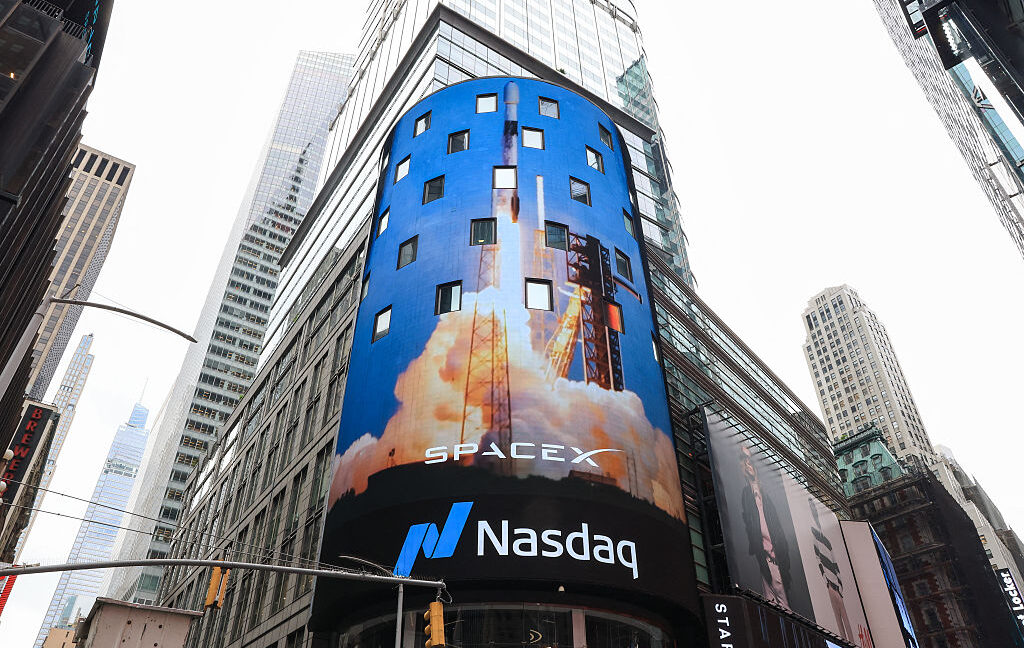
Space Exploration Technologies, better known simply as SpaceX, became a publicly traded company on Friday nearly a quarter of a century after it was founded.
The company began trading on the NASDAQ exchange in New York City at $135 a share, valuing SpaceX at nearly $1.8 trillion. By the end of the trading day the company's shares were selling at $160.95, a respectable increase of more than 19 percent.
On paper, SpaceX founder Elon Musk became the world's first trillionaire, with his personal stake in the company valued at more than $700 billion. Because of the company's stock options plan, thousands of current and former employees became overnight millionaires. Employees at SpaceX have worked remarkably hard over the last 24 years, and now they will be richly compensated for having done so.
Just 100 days ago, when new Microsoft Gaming CEO Asha Sharma replaced long-serving executive Phil Spencer, she said she'd work to "understand what makes [Xbox] work and protect it." Now, Sharma and Xbox Studios chief Matt Booty have laid out the many things that are not working for the Xbox brand in a brutal self-assessment the they say necessitates a wholesale "Xbox reset."
The message sent to Xbox employees and shared publicly via Xbox Wire last night paints a grim picture for practically every facet of the Xbox division. That portion of Microsoft is currently only seeing a "3 percent accountability margin" (read: profit margin), down year over year and well below both the game industry average and the lofty 30 percent margins that Microsoft is reportedly seeking across the board.
It's an underperformance, they write, born out of being "overextended" by moves like the $69 billion acquisition of Activision. That mega-merger came on top of $20 billion in spending on other acquisitions, platform investments, and hardware subsidies over the last five years, the executives write. But despite the spending spree, Microsoft's overall gaming revenues are down nearly $500 million compared to five years ago.
Starlink has started charging a $10 monthly rental fee for hardware in a shift away from its longtime practice of selling hardware to customers for a one-time charge.
Starlink residential ordering pages now show an upfront hardware cost of $0 and a monthly kit fee of $10, similar to the hardware rental fees long charged by cable and telecom companies. Starlink hardware includes a terminal to receive satellite signals and a router to place in a user's home.
The monthly kit fee is in addition to Internet service prices, which Starlink recently raised by $5 to $10 per month. Starlink is charging $55 a month for 100Mbps, $85 for 200Mbps, and $130 for the "Max" tier that can go up to 400Mbps. Starlink also provides a professional-installation service for a one-time fee of $199, or for no additional charge if you subscribe to the Max plan.
Paramount Skydance is accusing Netflix of maintaining a campaign against its proposed acquisition of Warner Bros. Discovery (WBD).
In a June 5 letter (PDF) addressed to Jared A. Hughes, acting section chief of the Media, Entertainment, and Communications Section of the US Department of Justice's (DOJ's) Antitrust Division, and A. Maya Kahn, a trial attorney for the Antitrust Division, and first reported on by Politico today, Paramount chief legal officer Makan Delrahim accused Netflix of trying to influence stakeholders about the merger. The letter reads:
Indeed, Netflix’s panic-level response and scorched-earth campaign to try and poison regulators and other stakeholders against the Transaction shows just how seriously Netflix takes Paramount as a scaled competitor.
The letter from Delrahim, a former assistant attorney general for the Antitrust Division, is a response to a letter that The International Brotherhood of Teamsters sent to the DOJ in March. The teamsters' letter argued that Paramount and WBD's merger would threaten film and TV workers. The union, which has 1.3 million members, asked the DOJ to block the merger "unless substantial and enforceable safeguards are put in place to increase domestic production and protect jobs," per an announcement from the group.
Researchers have analyzed a high-severity vulnerability in Linux that’s able to escalate untrusted users to root by exploiting a bug you don't often see: a single errant character inside the kernel.
The vulnerability, tracked as CVE-2026-23111, is located in nf_tables, a subsystem of the Linux kernel that provides packet filtering capabilities. It’s used to manage firewall rules and replaces older subsystems such as iptables, ip6tables, arptables, and ebtables.
!!!WTF!!!
The presence of a single mis-issued exclamation point in code implementing nf_tables introduced a use-after-free, a class of vulnerability that corrupts memory by placing malicious code at memory addresses that haven’t been properly freed of their previous contents. CVE-2026-23111 can be exploited by an unprivileged user or process to elevate system rights to root.
A little more than five years ago, a shiny white Falcon 9 rocket made its debut flight, boosting a Cargo Dragon spacecraft to the International Space Station. Over the next year, it would launch a pair of astronaut missions and a handful of commercial spacecraft.
But since then, this first stage booster, designated B 1067, has mostly flown Starlink missions. It has launched them one after another, always returning safely to a drone ship before undergoing refurbishment and flying again. Sometimes it has flown twice in a single month.
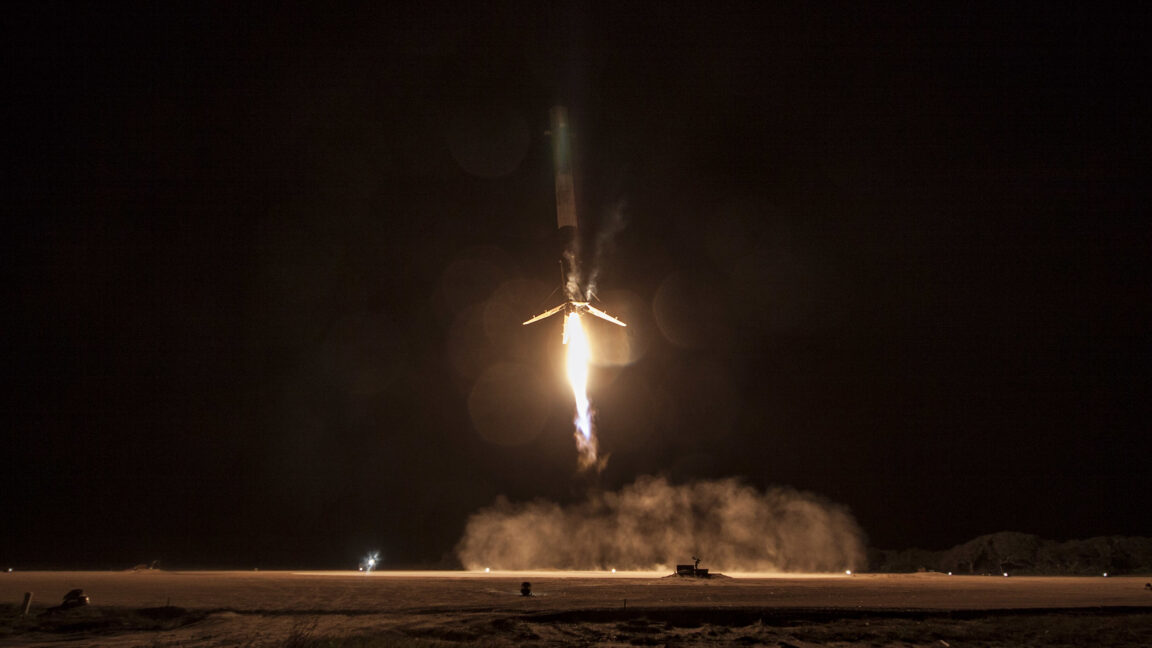
On Monday morning, B 1067 once again took to the skies, launching 29 Starlink Internet satellites into low-Earth orbit from Florida. Upon landing on the A Shortfall of Gravitas drone ship in the Atlantic Ocean, the vehicle completed its 35th mission overall, retaining its title as fleet leader for SpaceX.
SpaceX has requested unusually swift entry into several leading stock market indexes as a condition of its historic stock market debut. But the S&P 500 stock market index representing many of the largest profitable US companies has surprised market analysts by refusing to bend the rules for Elon Musk’s space and AI company.
The June 4 decision by S&P Dow Jones Indices—the company that creates and manages stock market indexes such as the S&P 500—means that SpaceX will not gain accelerated access to potentially billions more dollars through passive investment funds that automatically purchase shares of S&P 500 companies. Modifying the rules in response to SpaceX's request could have also allowed leading AI companies such as OpenAI and Anthropic to gain entry not long after their own expected initial public offerings (IPOs). That possibility has now been shuttered.
The news will likely come as a relief to people concerned about passive investor money and people’s retirement savings plans having greater exposure to the market risks associated with SpaceX’s big bet on AI and speculative orbital data center plans. AI companies are generally facing more challenges in funding and building expensive AI data centers, even as they shift more of the subsidized costs of running AI services onto shocked customers through usage-based pricing.
Welcome to Edition 8.44 of the Rocket Report! The news this week is decidedly weighted in favor of heavy-lift rockets, largely due to the fallout from last Thursday's explosion of Blue Origin's New Glenn on its launch pad in Florida. Blue Origin aims to resume launches at the badly damaged launch facility by the end of the year, but there's good reason to be skeptical of this timeline. With New Glenn grounded, will Blue Origin founder Jeff Bezos approach Elon Musk's SpaceX to launch his Blue Moon lander to the lunar south pole? It sure sounds like NASA is pushing for that.
As always, we welcome reader submissions. If you don't want to miss an issue, please subscribe using the box below (the form will not appear on AMP-enabled versions of the site). Each report will include information on small-, medium-, and heavy-lift rockets, as well as a quick look ahead at the next three launches on the calendar.
Spaceport development moves forward in Canada. There's been a lot of talk about the Canadian government's recent commitment to invest in a sovereign launch capability. There was the announcement last year of a federal budget of 182.6 million Canadian dollars ($131 million) over three years to establish a sovereign launch program. In March, the government said it would lease a dedicated launch pad at a commercially developed spaceport in Nova Scotia for national defense purposes, committing 200 million Canadian dollars ($144 million) to the deal. The agreement is a boon for Maritime Launch Services, which is developing Spaceport Nova Scotia after years of slow progress at the coastal site, SpaceQ reports.
Critics hope to keep Elon Musk from escaping a strict data-privacy order imposed by the Federal Trade Commission (FTC) shortly before he took over Twitter.
The FTC order placed restrictions on X's data use for 20 years, while requiring regular independent audits and granting the agency authority to request documents as needed to ensure compliance.
The FTC’s action came after Twitter voluntarily disclosed that between May 2013 and September 2019, a coding error accidentally allowed phone numbers and email addresses that users shared for two-factor authentication purposes to be used for targeted advertising aimed at those same users. In a settlement that came just months before Musk's 2022 takeover, Twitter agreed to pay $150 million and to allow the FTC to monitor the platform's data-handling practices until 2042 in order to protect user privacy.