Reading view

Polymarket's viral videos showed people winning big, but the bets were fake

Polymarket paid dozens of social media users to film themselves making fake bets for a promotion that aimed to convince people they can strike it rich on the prediction market, according to a Wall Street Journal investigation published on Saturday.

"In its push to draw users to its unregulated platform, Polymarket has flooded social media with videos like [George] Makihara’s, which appear genuine at first glance," the article said. "In reality, Polymarket built near-perfect copies of its website, then instructed creators to make simulated trades on those dummy sites and hide that they were being paid by Polymarket."

Makihara, a college student, posted a video in January "that showed him winning $100,000 on a wager that President Trump would publicly say the word 'McDonald's' that month." But trade data showed that no one on Polymarket won such a bet in January, according to the Journal. This was one of 145 bets that Makihara appeared to place on Polymarket between January and May, but all of those bets were fake, the article said.


Read full article

Comments

© Getty Images | AFP/Martin Lelievre

  •  

NHTSA investigating alleged Tesla Autopilot crash that killed woman in her home

An elderly Texas woman tragically died Friday after a man who told police he was relying on his Tesla Model 3’s automated driver-assistance mode lost control and crashed his car into her family’s home.

In a statement, the Harris County Sheriff’s Office confirmed to Ars that Michael Butler said that “he was operating with an automated driving-assistance system engaged at the time of the crash.” Police are currently investigating whether the autopilot feature in any way caused the crash but confirmed that Butler was not intoxicated and is cooperating, partly by helping cops understand how Tesla’s Autopilot feature works.

“Butler failed to drive in a single lane, left the roadway, and struck the residence” at a “high rate of speed,” the sheriff’s office said.

Read full article

Comments

© via The Office of Constable Terry Allbritton on Facebook

  •  

Trump admin’s coal investments assist plants with repeated violations

In 2023, after years of pollution, equipment failures, and health concerns, the Cumberland Fossil Plant in Tennessee was slated to close within the decade.

The coal-fired plant had been part of a multibillion-dollar settlement in 2011 after its operator, the Tennessee Valley Authority, failed to install pollution control technology a decade earlier. Regulators cited the plant for more air-pollution violations in 2017 and 2023. TVA said it would shutter Cumberland’s units in 2026 and 2028.

Then the Trump administration replaced four of TVA’s board members, and the agency reneged on its retirement plan in February. Now, TVA has a federal pledge for $46 million to extend Cumberland’s lifespan—part of a nationwide push by President Donald Trump to keep older coal plants running.

Read full article

Comments

© Stephen A. Smith/Southern Alliance for Clean Energy

  •  

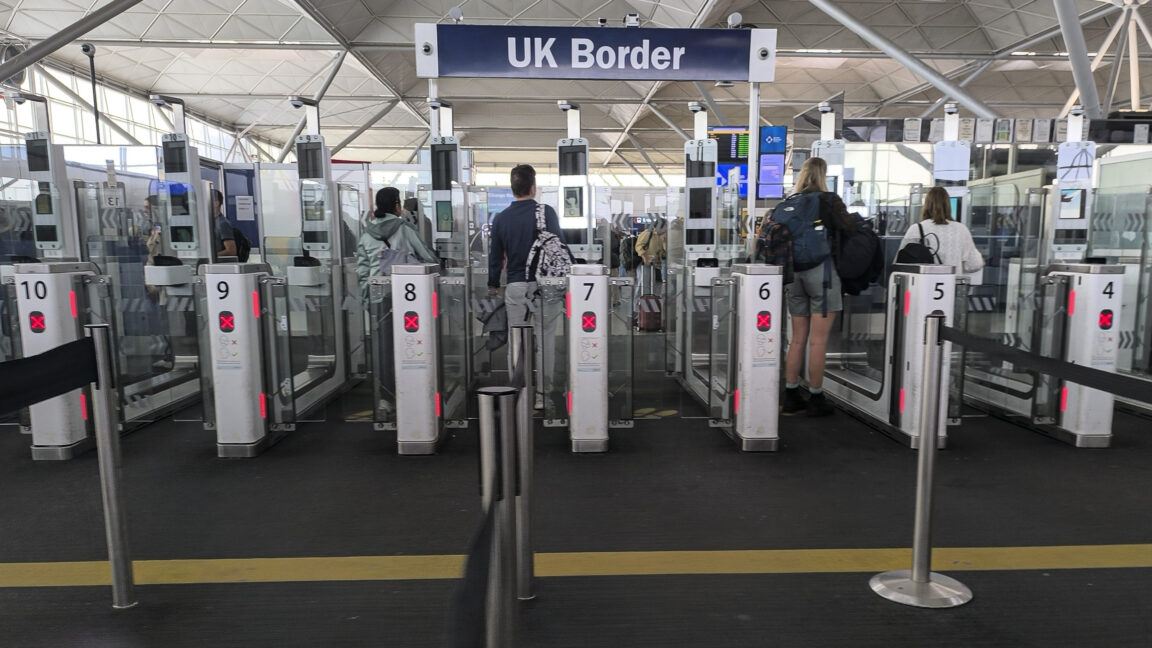
The UK will scan asylum-seekers’ faces for age checks—despite knowing the tech is flawed

Age verification is consuming the Internet. From social media bans in Australia to porn restrictions in half of US states, for many having to prove their age to access websites is becoming an everyday requirement. But one of the key technologies underpinning many of these age checks is about to seep into the offline world—with potentially life-changing consequences for people having their age predicted by AI.

Starting next year, the British government is planning to introduce facial age estimation—where AI scans your face and suggests how old you are—to help determine the age of asylum seekers arriving at the United Kingdom’s border. The move is believed to be the first time that a so-called facial age estimation (FAE) system has been used in this way. Many asylum seekers arriving in the UK will not have documents proving their age, and if children are incorrectly classed as adults, they can be stripped of some legal protections and placed in adult-only detention centers.

An investigation by WIRED and Lighthouse Reports, in collaboration with The Independent, has obtained an internal UK government report detailing its tests of FAE technologies. It shows how the systems regularly mistake children for adults and appear to contain serious bias problems, which directly impact the largest group of migrants subject to age assessments in 2025, according to data from the Home Office. The investigation raises questions about the effectiveness of the technology and whether it should be deployed in such high-stakes scenarios.

Read full article

Comments

© Nicolas Economou/NurPhoto via Getty Images

  •  

After Senate vote, Trump admin backs off plans to kill ocean monitoring

In May, the federal government announced without warning that it would take apart a network of ocean monitoring systems that it had spent over $350 million to build. No reason was given for the decision to shut down the Ocean Observatories Initiative (OOI), but suspicion immediately focused on the network's role in tracking climate change.

But the OOI also provides data that's useful for weather forecasting and fisheries management, leading to widespread opposition. Today, it appears that the opposition has won, as the government will announce that it's reversing the decision. The big remaining question is how much damage the OOI took during the intervening month.

As of now, there is no formal statement available from the federal government. However, The New York Times reports that the decision will be announced later today, and Ars received a statement from Zoe Lofgren, the ranking Democrat on the House Science Committee, indicating that the decision has been made.

Read full article

Comments

© OOI

  •  

Bernie Sanders unveils $7 trillion plan to give Americans control of AI industry

Bernie Sanders has unveiled an aggressive plan to transfer trillions from leading AI firms to the public, and, to the likely horror of AI firms, it goes even further than expected to give Americans more control over the AI industry.

Sanders shared a summary of his legislation with AP News. If passed, the law would create a sovereign wealth fund “financed through a one-time 50 percent tax on the stock of the largest AI companies,” AP News reported. Any AI firm that does $200 million in annual AI sales would be subject to the tax, as would any new firm once it reaches that revenue level.

In total, Sanders estimated the fund could be worth $7 trillion, generating “hundreds of billions of dollars annually in direct payments to Americans and programs such as health care, education and housing,” AP News reported. Each American would likely receive more than $1,000 annually in 5 percent annual dividends, Sanders estimated.

Read full article

Comments

© Nuthawut Somsuk | iStock / Getty Images Plus

  •  

California says AT&T lied to FCC in attempt to shut off old phone network

California state regulators say AT&T lied to the Federal Communications Commission in an attempt to shut off its old copper phone network without providing an adequate replacement.

"AT&T asserts that California seeks to prohibit or hinder wireline carriers from discontinuing copper facilities and investing in fiber," said a June 15 filing by the state of California and the California Public Utilities Commission. "Indeed, AT&T has been making this argument for years. It is not and has never been true."

As we reported last month, AT&T sued California over the state’s refusal to let it stop providing phone service to all potential customers in its wireline network territory. AT&T also petitioned the Federal Communications Commission to declare that California cannot enforce its rules and to let AT&T stop providing service to about 199,000 phone customers.

Read full article

Comments

© Getty Images | KoldoyChris

  •  

Trump admin tries to block Clean Air Act lawsuit over xAI's gas turbines

The Trump administration is trying to help Elon Musk's xAI Corp. beat a Clean Air Act lawsuit filed by the National Association for the Advancement of Colored People (NAACP). The US said the NAACP lawsuit threatens an xAI data center that powers Grok systems needed by the military.

The NAACP sued xAI and subsidiary MZX Tech in April, alleging that they violated the Clean Air Act by operating 27 gas turbines without an air permit in Southaven, Mississippi. The number of unpermitted turbines rose to 57 by mid-May and there were plans to install two more, the NAACP said in a June 12 filing.

"Defendants’ Colossus Gas Plant powers xAI’s nearby Colossus 2 data center, which in turn powers the chatbot 'Grok,'" the lawsuit said. The gas turbines have fueled both health concerns and noise complaints.

Read full article

Comments

© Getty Images | SOPA Images

  •  

US approval of Paramount/Warner Bros. deal surprised DOJ lawyers, report says

When the US Department of Justice approved Paramount Skydance's proposed acquisition of Warner Bros. Discovery on Friday, a DOJ press release said "a rigorous eight-month investigation led by the [Antitrust] Division’s career staff" showed that the $111 billion deal would not harm competition or American consumers.

But according to The Wall Street Journal, the DOJ career lawyers who led that investigation "were leaning toward recommending a lawsuit challenging it on the grounds that the combination of the two movie studios would be anticompetitive and violate antitrust law." DOJ senior leaders closed the investigation "before career staffers who were concerned about the acquisition had an opportunity to object, according to people familiar with the matter," the WSJ reported.

Commenting on the report that the decision to allow the deal surprised staff investigators, Sen. Elizabeth Warren (D-Mass.) wrote that "the American people need to know if this merger was approved as a political favor. This reeks of corruption."

Read full article

Comments

© Getty Images | Andrew Harnik

  •  

Trump admin abandons fight against wind energy as clean energy output surges

The Trump administration has abandoned its effort to halt wind energy projects across the United States and dropped its challenge to the court ruling that tossed President Donald Trump’s order freezing federal permitting and leasing for wind projects. States that challenged the order hailed the development as one of the most significant legal victories against the Trump White House’s campaign against the energy transition.

On Monday, the US Court of Appeals for the First Circuit dismissed the appeal after the Justice Department filed a motion for its voluntary dismissal on June 10.

The case against Trump’s executive order was filed in May 2025 by a coalition of attorneys general from 17 states and Washington, DC, led by New York Attorney General Letitia James.

Read full article

Comments

© glegorly

  •  

UK to ban social media for kids under 16, may impose overnight curfews

The UK government announced today that it will ban social media for all kids under the age of 16 in rules expected to take effect in spring 2027. The ban will apply to platforms including Snapchat, TikTok, YouTube, Instagram, Facebook, and X.

"We’re going further than any country in the world by banning social media for under-16s and putting wider protections in place to give kids their childhood back," Prime Minister Keir Starmer said in the announcement.

In addition to the ban on social media, Starmer's government said it will impose "world-leading blocks on harmful functions such as livestreaming and stranger communication with children for under-16s... Restrictions on these functionalities will also be on by default for 16- and 17-year-olds to prevent a cliff-edge at 16." The livestreaming and stranger-contact rules would apply to a range of services, such as online gaming.

Read full article

Comments

© Getty Images | lixu

  •  

Controversial FISA spying law expires tonight. The spying will continue.

Title VII of the Foreign Intelligence Surveillance Act (FISA) is set to expire at midnight tonight after Congress failed to pass an extension of the controversial spying law. But that doesn't mean the government's spying powers will disappear.

Surveillance under Section 702 of FISA "operates under yearlong certifications approved by the FISA Court," the Brennan Center for Justice at New York University School of Law explained this week. The current certification will remain in place until March 2027 under the yearlong certification issued by the Foreign Intelligence Surveillance Court on March 17, 2026.

"In order to pressure members to accept a bill without meaningful reforms, surveillance hawks are claiming that Section 702 surveillance will 'go dark' on June 12 if Congress hasn’t renewed the law," the Brennan Center said. "Contrary to that claim, Congress planned for potential lapses and made very clear that Section 702 surveillance may continue under existing certifications even if the statute sunsets. Members must not be fearmongered into passing a reauthorization without protecting Americans from warrantless government access to their private communications."

Read full article

Comments

© Getty Images | Richard Drury

  •  

Have politics finally come for the National Academies of Science?

Founded during the US Civil War to provide advice to the government, the National Academies of Science have become one of the most prestigious scientific organizations. Its primary function is to prepare comprehensive reports on scientific and technological issues, aided by its ability to attract top talent from across the country.

Those reports have not been afraid to weigh in on matters of public controversy and risk offending powerful groups, which it has managed to do without losing the respect of the governmental organizations that fund these reports. But this year, there have been increasing signs that the Academies' ability to dodge political firestorms has reached its limit. Yesterday, a deeply reported story from Politico explained the breakdown between the National Academies and Republican politicians.

The National Academies is preparing an expert report on attribution of weather events to human-driven climate change, and fossil fuel companies are worried it will lead to findings of liability in the many cases where those companies are being sued.

Read full article

Comments

© csfotoimages

  •  

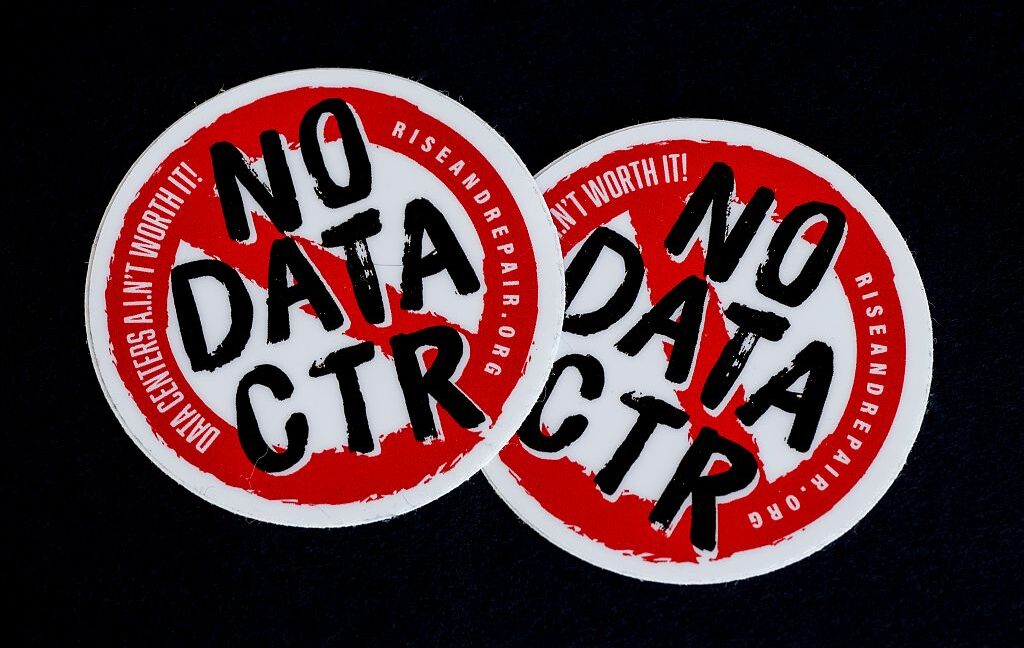
$130 billion in data center projects blocked by protests so far this year

It's clear that communities now have an effective playbook to block data center construction. This week, researchers flagged the first quarter of 2026 as producing the "most blocked and delayed data center projects on record," NBC News reported.

Data Center Watch, a project from AI intelligence firm 10a Labs that tracks data center fights around the US, reported that protestors "blocked or delayed at least 75 projects nationwide worth about $130 billion from January through March," NBC News reported.

That's "the most in a three-month period since the group began tracking in 2023," and it shouldn't be parsed as "a cyclical spike," the researchers said. Instead, there's been a "structural shift," as "communities have internalized an opposition playbook, legislative sessions introduced formal regulatory uncertainty, and the number of active opposition groups more than doubled to 833 across 49 states," researchers said.

Read full article

Comments

© UCG / Contributor | Universal Images Group

  •  

Lawsuit: ChatGPT validated suicidal woman's distrust of crisis lines

Last year, a 24-year-old Canadian woman was in a mental health crisis and turned to ChatGPT for help. Hours later, that woman, Alice Carrier, took her own life.

According to a new lawsuit filed Thursday in San Francisco Superior Court and brought by Carrier’s surviving family, her ChatGPT session “encouraged Alice to kill herself.”

This lawsuit, like numerous other similar cases that have come before it, alleges a design defect with ChatGPT itself and blames OpenAI for knowingly deploying a dangerous product.

Read full article

Comments

© Samuel Boivin/NurPhoto

  •  

Verizon sent man a refurbished phone with MDM, then deleted his data remotely

Verizon sent one of its customers a "refurbished" phone equipped with a Mobile Device Management (MDM) profile that gave the company remote control over the device. The serious mistake raises questions about Verizon's process for preparing refurbished phones to be sent to customers.

Tom Collery, the unlucky Verizon customer, called Verizon in February after having network problems, including dropped calls. Verizon responded by sending him a replacement for his phone, a Samsung Galaxy Z Flip7. But instead of a brand-new device or a properly functioning refurbished one, Verizon sent Collery a device managed with the same kind of software used to monitor and control company-owned phones.

It turned out the device was a store demo unit that wasn't properly wiped before it was sent to Collery. He said he used the phone for a couple of weeks before all of his data was erased, seemingly due to a remote action that triggered a complete reset.

Read full article

Comments

© Getty Images | Bloomberg

  •  

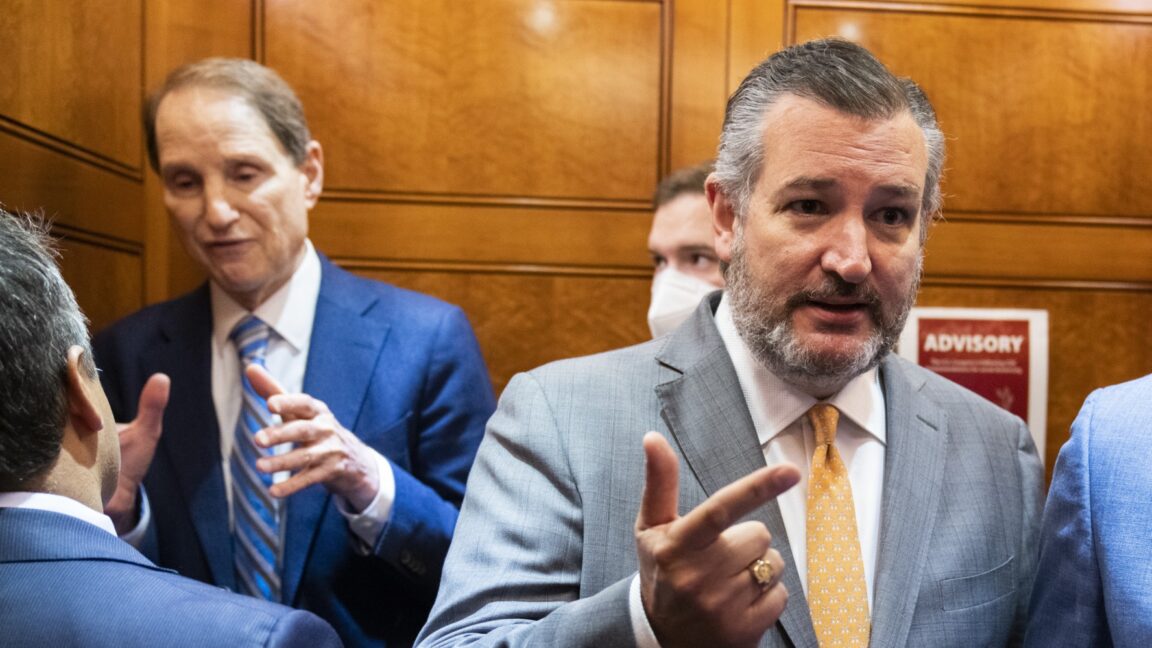
Ted Cruz and Ron Wyden try to fight censorship with bipartisan JAWBONE Act

US Senators Ted Cruz (R-Texas) and Ron Wyden (D-Ore.) today introduced the JAWBONE Act, a proposed law that could fuel lawsuits against federal officials who try to coerce broadcasters or tech platforms into restricting speech.

The Justice Against Weaponized Bureaucratic Overreach to Networked Expression Act would prohibit federal agencies and employees from coercing or trying to coerce broadcasters and providers of online services or AI services into changing content. The bill could apply to Federal Communications Commission Chairman Brendan Carr's repeated attempts to pressure TV networks and broadcasters, or government pressure imposed on social media firms and AI chatbot makers.

The bill would create a private right of action for victims of "jawboning," letting people recover compensatory damages in court. Individuals whose speech is stifled could bring cases against government officials, and the proposed law could be enforced by state attorneys general through civil actions.

Read full article

Comments

© Getty Images | Tom Williams

  •  

Man sues Florida cops over arrest spurred by "93% match" in facial recognition

A man suing Florida police alleges that cops relied on a faulty facial recognition match and concealed exculpatory evidence when they arrested him on a charge of attempting to lure a child in August 2024. The plaintiff, Robert Dillon, was arrested after a facial recognition system flagged him as a 93 percent match to a suspect filmed by a McDonald's surveillance camera.

"This case is about what happens when police let an error-prone artificial intelligence system stand in for an investigation," said the lawsuit filed today. "A facial recognition algorithm flagged Robert Dillon as the man who tried to lure or entice a child under twelve years old at a Jacksonville Beach McDonald’s. It was wrong. Mr. Dillon, a fifty-two-year-old resident of Fort Myers, had never set foot in Jacksonville Beach. But rather than test the machine’s answer against the evidence that would have cleared him, the officers built a case to confirm it. Mr. Dillon was arrested and prosecuted for one of the most stigmatizing crimes a person can face."

Dillon lives more than 300 miles from Jacksonville Beach, and a police search of a license plate reader database found no evidence he was in the area when the alleged crime was committed, the lawsuit said. Dillon was flagged as the suspect based on a low-quality image, specifically a photo taken of a McDonald's computer screen that was displaying video surveillance footage, the lawsuit said.

Read full article

Comments

© Getty Images | imaginima

  •  

Nobody needs AI to search the Internet, court says in ruling against Google

Potentially impacting all AI search engines and chatbots known to poorly paraphrase source links, a German court has ruled that Google is liable for false statements in AI Overviews.

The preliminary ruling came in a case flagged by The Decoder, where two publishers found that Google's AI Overviews incorrectly linked them to scams and other sketchy business practices. After smearing publishers by making affirmative statements like "Yes, [it] is known for dubious business practices and is often perceived as a scam," Google failed to correct the misleading output, even after the publishers sent a cease-and-desist letter earlier this year.

Google tried the usual arguments to shield itself from liability for false statements in AI Overviews, such as arguing that most users understand that AI outputs aren't always accurate and must be verified.

Read full article

Comments

© SOPA Images / Contributor | LightRocket

  •  

Racist comments targeting politicians tripled since Meta relaxed its rules

Last year, Meta radically overhauled the rules around what content it would allow on its platforms. The company claimed that its own efforts policing speech had gone too far and that it would relax the rules around what speech was allowed. “We have been over-enforcing our rules, limiting legitimate political debate and censoring too much trivial content and subjecting too many people to frustrating enforcement actions,” Joel Kaplan, Meta’s chief global affairs officer, wrote in a blog post at the time.

Over a year later, new research from the Center for Countering Digital Hate (CCDH) shows the immediate impact of these changes.

The researchers analyzed about 8 million Facebook comments and found that abusive and racist comments targeting both Republican and Democrat lawmakers tripled in the six months after the new rules were put in place. Some categories of abusive comments documented by the researchers saw even sharper rises, with violent threats and hate speech quadrupling during the same period.

Read full article

Comments

© Getty Images | Chesnot

  •  

Starlink charges $10 monthly hardware fee in move away from one-time purchases

Starlink has started charging a $10 monthly rental fee for hardware in a shift away from its longtime practice of selling hardware to customers for a one-time charge.

Starlink residential ordering pages now show an upfront hardware cost of $0 and a monthly kit fee of $10, similar to the hardware rental fees long charged by cable and telecom companies. Starlink hardware includes a terminal to receive satellite signals and a router to place in a user's home.

The monthly kit fee is in addition to Internet service prices, which Starlink recently raised by $5 to $10 per month. Starlink is charging $55 a month for 100Mbps, $85 for 200Mbps, and $130 for the "Max" tier that can go up to 400Mbps. Starlink also provides a professional-installation service for a one-time fee of $199, or for no additional charge if you subscribe to the Max plan.

Read full article

Comments

© Getty Images | John Keeble

  •  

Paramount accuses Netflix of "scorched-earth campaign" against WBD merger

Paramount Skydance is accusing Netflix of maintaining a campaign against its proposed acquisition of Warner Bros. Discovery (WBD).

In a June 5 letter (PDF) addressed to Jared A. Hughes, acting section chief of the Media, Entertainment, and Communications Section of the US Department of Justice's (DOJ's) Antitrust Division, and A. Maya Kahn, a trial attorney for the Antitrust Division, and first reported on by Politico today, Paramount chief legal officer Makan Delrahim accused Netflix of trying to influence stakeholders about the merger. The letter reads:

Indeed, Netflix’s panic-level response and scorched-earth campaign to try and poison regulators and other stakeholders against the Transaction shows just how seriously Netflix takes Paramount as a scaled competitor.

The letter from Delrahim, a former assistant attorney general for the Antitrust Division, is a response to a letter that The International Brotherhood of Teamsters sent to the DOJ in March. The teamsters' letter argued that Paramount and WBD's merger would threaten film and TV workers. The union, which has 1.3 million members, asked the DOJ to block the merger "unless substantial and enforceable safeguards are put in place to increase domestic production and protect jobs," per an announcement from the group.

Read full article

Comments

© Mike Cohen/Getty Images for The New York Times

  •  

One day after discovery, Meta pulls facial recognition code from its smart glasses

One day after WIRED revealed that Meta had quietly embedded an unreleased face-recognition system into an app installed on more than 50 million phones, the company removed it, according to a WIRED analysis of the latest version’s code.

The most recent version of Meta AI, a companion app for its line of smart glasses, strips out the unactivated software components that powered the system Meta internally called NameTag. The version published the day of WIRED’s report included several code libraries explicitly named for face recognition. Friday’s release includes none of them.

Andy Stone, Meta's vice president of communications, told WIRED on Monday that the feature is purely exploratory, adding: “No final decision has been made on what to do here, if anything.”

Read full article

Comments

© David Paul Morris/Bloomberg/Getty

  •  

Meta alleges NSO violated spyware injunction with new WhatsApp attacks

Meta today accused spyware maker NSO Group of violating a court order that barred it from targeting users of WhatsApp.

"WhatsApp caught and disrupted spear phishing attempts linked to NSO, a spyware firm blacklisted by the US government," WhatsApp owner Meta said in an announcement. Meta said it is asking a court "to hold NSO in contempt for violating a permanent injunction that barred them from ever targeting WhatsApp and its users."

NSO is an Israeli company that developed the Pegasus spyware. The US government added NSO to the Entity List in 2021, saying it “developed and supplied spyware to foreign governments that used this tool to maliciously target government officials, journalists, businesspeople, activists, academics, and embassy workers.”

Read full article

Comments

© Getty Images | stockcam

  •  

Man jailed for a month despite Flock showing he was 5 miles from crime scene

A San Diego police department is facing a lawsuit after jailing a man for a month based on a Flock camera alert that cops allegedly should have known, based on the timestamp, did not depict the car that they were looking for.

Last November, Hugo Parra was arrested on felony charges after San Diego police relied on Flock data and a witness statement to wrongly connect him to an attempted carjacking at gunpoint, the Times of San Diego reported. Cops were looking for a red Alfa Romeo car with tinted windows and a man wearing a gray hoodie, and Parra happened to be wearing a white hoodie while riding in a friend's car that roughly matched the vehicle description.

Although Flock cameras can capture license plate data, cops did not have even a partial plate to help them verify if the car was involved in a violent crime. But the Flock data cops used to justify the arrest actually showed that Parra was five miles away at the time of the crime, Parra's attorney, Alex Coolman, told the Times of San Diego. Rather than arrest him, cops could have used that data, as well as Parra's cellphone location data, to corroborate Parra's statement that he was innocent, Coolman said.

Read full article

Comments

© Pacific Press / Contributor | LightRocket

  •  

School shooting survivor sues AI gun detection firm after system failed to spot weapon

The injured teenage survivor of a January 2025 shooting at a Nashville, Tennessee high school recently sued the manufacturer of an “AI gun detection” system that failed to detect the handgun that left two dead, including the shooter.

According to the lawsuit, which was filed in Davidson County court last month, the security company Omnilert either knew or should have known that there were “significant operational limitations in its gun detection system that could result in detection failures during actual emergencies, including limitations based on camera placement, proximity of the weapon to camera sensors, camera angle, lighting, and weapon visibility.”

Omnilert cofounder Ara Bagdasarian declined Ars’ invitation to answer questions about the lawsuit. System Integrations, the other defendant in the case, which resold the Omnilert system, also did not respond to Ars’ request for comment.

Read full article

Comments

© Getty Images

  •  

Scientists ejected from diabetes conference for distributing journal reprints

Five leading scientists were ousted from the annual meeting of the American Diabetes Association (ADA) in New Orleans on Friday. Their crime: handing out copies of an editorial, published in the journal Diabetes Care on April 29, sharply criticizing the Trump administration's ongoing attacks on scientific research.

Those ousted were Steven Kahn, professor of medicine at the University of Washington and editor-in-chief of Diabetes Care, who co-authored the published editorial; former ADA President Desmond Schatz of the University of Florida, Gainesville; Aaron Kelly, pediatrics professor at the University of Minnesota; Justin Ryder of Northwestern University; and Irl Hirsch, also of the University of Washington. The five were handing out reprints of the editorial outside a room where NIH director Jay Bhattacharya had been scheduled to speak. Bhattacharya canceled and another NIH official spoke in his stead.

"They physically grabbed us, forced us out of the conference center, and now are telling us we can no longer attend this meeting," Kelly told MedPage Today, which first reported the incident. "They're taking our lanyards. It really has come to this in America. Censorship is real. America needs to stand up. Scientists, stand up. Physicians, stand up."

Read full article

Comments

© Screenshot/MedPage Today

  •  

S&P 500 rejects SpaceX, also blocking entry for OpenAI and Anthropic

SpaceX has requested unusually swift entry into several leading stock market indexes as a condition of its historic stock market debut. But the S&P 500 stock market index representing many of the largest profitable US companies has surprised market analysts by refusing to bend the rules for Elon Musk’s space and AI company.

The June 4 decision by S&P Dow Jones Indices—the company that creates and manages stock market indexes such as the S&P 500—means that SpaceX will not gain accelerated access to potentially billions more dollars through passive investment funds that automatically purchase shares of S&P 500 companies. Modifying the rules in response to SpaceX's request could have also allowed leading AI companies such as OpenAI and Anthropic to gain entry not long after their own expected initial public offerings (IPOs). That possibility has now been shuttered.

The news will likely come as a relief to people concerned about passive investor money and people’s retirement savings plans having greater exposure to the market risks associated with SpaceX’s big bet on AI and speculative orbital data center plans. AI companies are generally facing more challenges in funding and building expensive AI data centers, even as they shift more of the subsidized costs of running AI services onto shocked customers through usage-based pricing.

Read full article

Comments

© Michael Yanow/NurPhoto via Getty Images

  •  

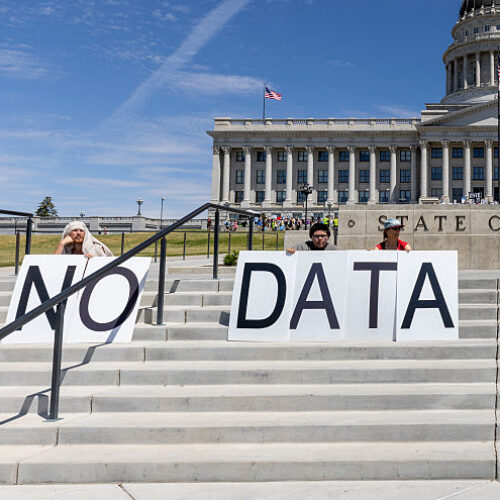
"We pissed off a lot of people": Giant data center plan cut 50% amid protests

One of the world's biggest data center projects was designed to be nearly three times the size of Manhattan, stretching across multiple Utah sites. But intense local backlash in Box Elder County has now pushed the developer to cut the project plans in half before construction starts.

Residents' top concern was the Stratos data center project draining local waters, and they were willing to pay to protect them, most especially the vulnerable Great Salt Lake. Many locals paid a $15 fee to register comments to block the transfer of 1,900 acre-feet of water from a ranch to the hyperscale data center. Other concerns include electricity bills rising and potential risks to air quality, local wildlife, and land.

Venture capitalist Kevin O'Leary, chair of O'Leary Digital and Shark Tank investor, is behind the construction of the project. He told a local ABC affiliate that he regrets not working with state officials to be more transparent about the project from the beginning.

Read full article

Comments

© Natalie Behring / Stringer | Getty Images News

  •  

Trump admin tries again to revive dying coal industry

On Thursday, President Donald Trump announced his administration's latest attempt to prop up the US coal industry during an incoherent press event that randomly oscillated between energy issues and Trump's fixation with building and renovating monuments in DC. The energy portion of the events was also frequently disconnected from reality.

"Today we're taking historic action to bring down the price of energy and the cost of living for all Americans with the power of clean, beautiful coal," said Trump, apparently unaware that coal is one of the most expensive means of generating electricity in the US.

With wind and solar power getting cheaper, coal has become the second-most expensive way of producing electricity, trailing only the cost of building a new nuclear plant. As a result, no new coal plants have been completed in over a decade, and coal has gone from powering over half the electrical grid to producing only about 15 percent of the nation's electricity. That's before the indirect costs of coal use are considered. It produces the most greenhouse gas emissions per unit of energy, releases dangerous particulates and chemicals into the atmosphere, and leaves behind ash that has high levels of toxic metals.

Read full article

Comments

© Douglas Sacha

  •  

AT&T and Verizon lose Supreme Court case over fines for selling location data

AT&T and Verizon lost an attempt to overturn fines for selling users’ real-time location data without consent, as the Supreme Court ruled today that the Federal Communications Commission process for issuing financial penalties did not violate the right to a jury trial.

AT&T convinced the US Court of Appeals for the 5th Circuit to overturn its fine last year, while Verizon lost in the 2nd Circuit. The Supreme Court took up the case to resolve the circuit split and reversed the 5th Circuit decision in today's ruling, which was 8-1 with Justice Clarence Thomas dissenting.

AT&T and Verizon were fined a total of $104 million by the FCC in 2024 for violations revealed in 2018. The carriers paid their fines and challenged them in circuit appeals courts, where judges’ panels ruled on the cases. Carriers claimed this system deprived them of the Seventh Amendment right to a jury trial.

Read full article

Comments

© Getty Images | Kevin Carter

  •  

Elon Musk tries again to escape FTC audits of X data handling

Critics hope to keep Elon Musk from escaping a strict data-privacy order imposed by the Federal Trade Commission (FTC) shortly before he took over Twitter.

The FTC order placed restrictions on X's data use for 20 years, while requiring regular independent audits and granting the agency authority to request documents as needed to ensure compliance.

The FTC’s action came after Twitter voluntarily disclosed that between May 2013 and September 2019, a coding error accidentally allowed phone numbers and email addresses that users shared for two-factor authentication purposes to be used for targeted advertising aimed at those same users. In a settlement that came just months before Musk's 2022 takeover, Twitter agreed to pay $150 million and to allow the FTC to monitor the platform's data-handling practices until 2042 in order to protect user privacy.

Read full article

Comments

© Anadolu / Contributor | Anadolu

  •  

Cable lobby warns of chaos if FCC doesn't relax ban on foreign routers

The cable industry's primary lobby group is seeking a waiver of the Federal Communications Commission ban on foreign routers, warning of potential chaos if cable Internet service providers can't change some of the components in routers they offer to home broadband users.

In March, the FCC added all consumer-grade routers made at least partly outside the US to its Covered List, which imposes restrictions on devices deemed to pose an unacceptable risk to national security. The change affected virtually all consumer routers, preventing new or changed models from being imported into or sold in the US.

In a petition filed on Tuesday, NCTA-The Internet & Television Association asked the FCC to grant an expedited waiver allowing its members' suppliers to "substitute substrate materials and memory modules in the previously certified routers that are now on the Covered List" as long as the changes "are otherwise consistent" with FCC regulations.

Read full article

Comments

© Getty Images | BernardaSv

  •  
❌