Reading view

Research roundup: 6 cool science stories we almost missed

It’s a regrettable reality that there is never enough time to cover all the interesting scientific stories we come across. So every month, we highlight a handful of the best stories that nearly slipped through the cracks. July’s list includes outfitting cyborg cockroaches with a tiny diving suit for navigating flooded terrain; confirmation that a Medici duke died of malaria, not poisoning; the best evidence to date that Betelgeuse is orbited by a companion star; and evidence that some ancient Egyptian princesses were skilled archers.

Sacrificial Incan boy died of blunt force trauma

Credit: Administrative Archive, Regional Museum of Iquique–CORMUDESI

It's known that the Incas practiced a human sacrifice ritual known as Capachoca, in which children were offered to the mountains and believed to become divine themselves, serving as intermediaries with the gods. This often involved pilgrimages to the remote sacrificial sites, with colonial accounts describing strangulation, asphyxiation, and blunt force trauma as the most common methods of sacrifice. Archaeologists have reanalyzed the remains of one such victim and concluded the boy died from blunt force trauma, rather than freezing to death as previously believed. They described their findings in a paper published in the journal Science Advances.


Read full article

Comments

© National Museum of Natural History of Chile
  •  

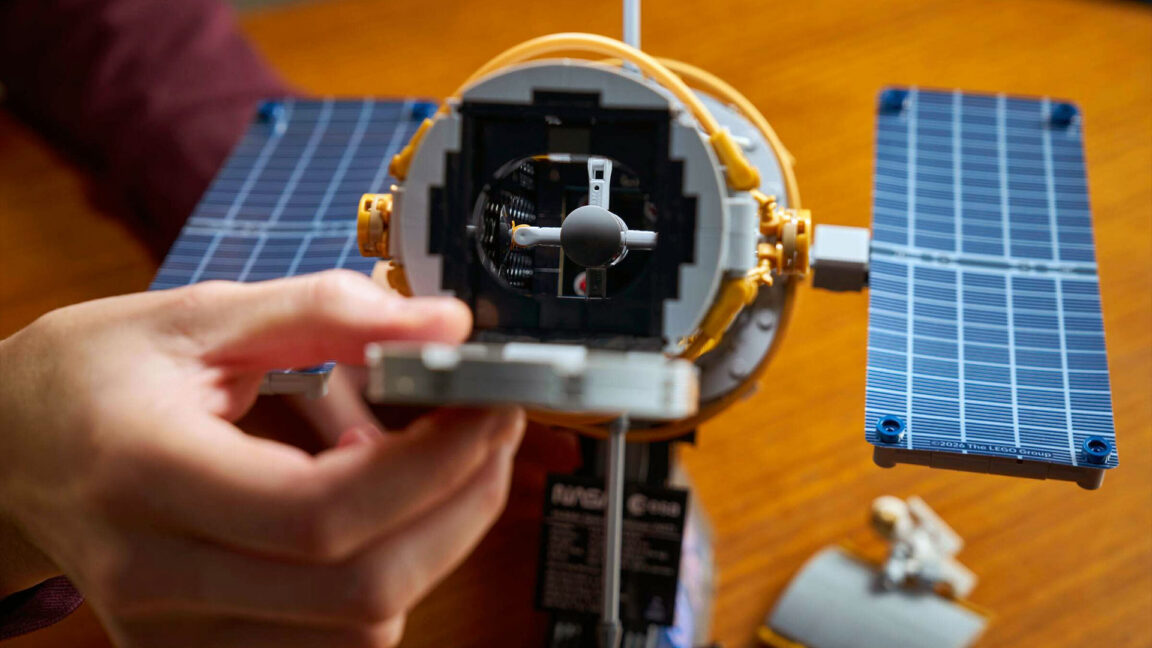
Lego deploys Hubble Space Telescope as detailed desktop model

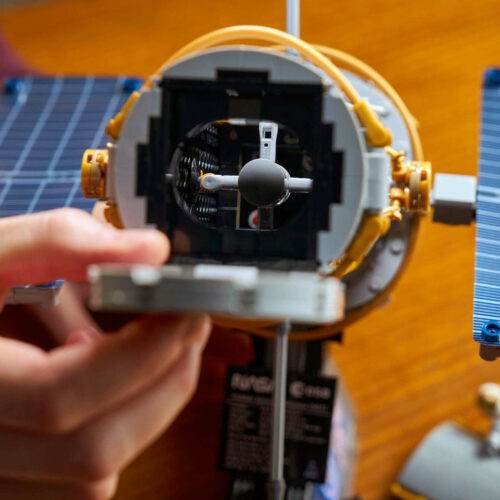
For 35 years, the Hubble Space Telescope has looked out into the Universe. Now, Lego is inviting builders to look inward with its latest model of the orbiting observatory.

The new Lego Icons Hubble Space Telescope (set no. 11382) was released on August 1 for $140 at the toy company's stores and its online shop. The 1,252-piece kit builds a 15-inch-long (38-cm) desktop model that is about twice as large as the previously released Lego Hubble models.

The Icons Hubble is the first to be sized in comparison to a Lego minifigure, such that the included astronaut provides a sense of scale for the telescope.

Read full article

Comments

© LEGO

  •  

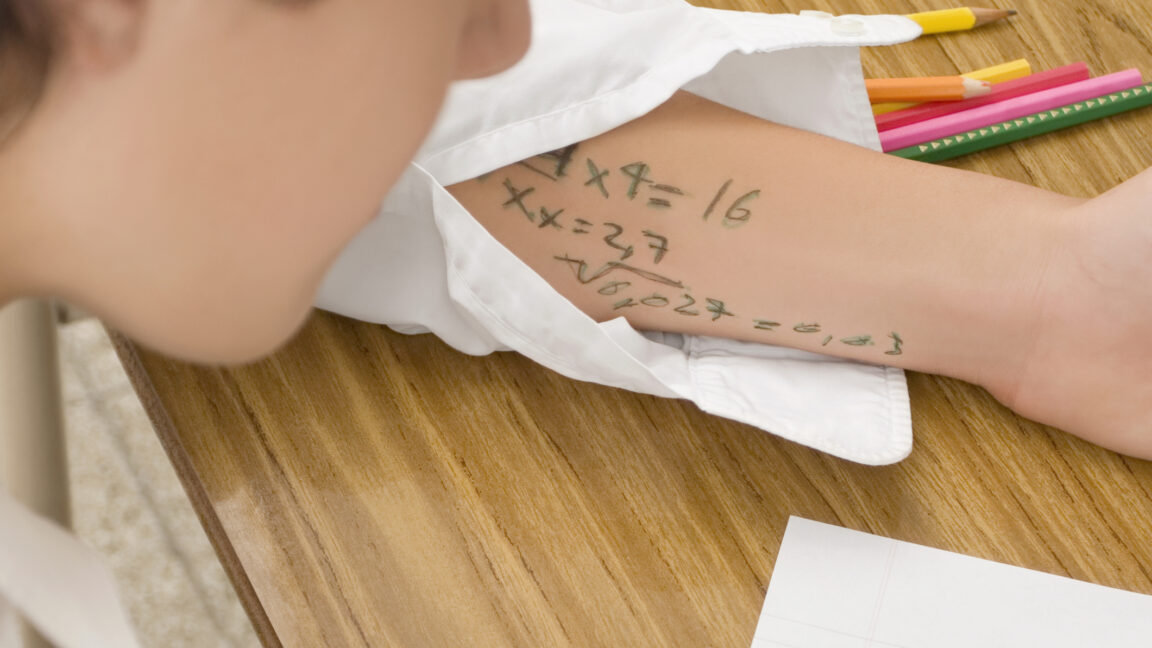
An AI-supervised remote exam went so badly that 58,000 students must retake it

Earlier this summer, nearly 160,000 applicants took the entrance exam for UNAM, Mexico's largest university. For the first time, they did it completely remotely, using a "lockdown" browser and AI-powered webcam proctoring software, over several weeks from late May through early June.

It was a disaster.

When exam results came in, they bore little resemblance to past results, especially at the top. Between 2021 and 2025, 3.5 percent of test takers scored 100 or more on the 120-question UNAM test. This year, 16.3 percent did so.

Read full article

Comments

© Getty Images

  •  

2026 Volkswagen Jetta Sport: The cheap car isn't completely extinct yet

As so many career counselors and lifestyle coaches have explained, first impressions matter. A bad one can set the tone for an entire relationship, whether that's with a person, a novel, a restaurant, or a car. And the 2026 Volkswagen Jetta Sport and I did not get off to the best of starts.

Picture the scene: You've been at home for a total of one night out of the previous eight, and you've just landed at the airport after an eight-hour flight. It's 85˚F (30˚C) and raining. You could take the metro home. Sure, 80 minutes isn't quick, but all you have to do is sit there, then walk home a block. But you can't because there's a car to be reviewed, waiting to be driven home. In rush hour.

I will confess, I did not know VW made a Jetta Sport. For one thing, it's not the Jetta GLI. That car has plenty of power and torque and uprated suspension, and it can even be ordered with a six-speed manual, unlike the Golf GTI, although based on our most recent GLI drive, you may regret ticking that particular box.

Read full article

Comments

© Volkswagen

  •  

SpaceX is set to acquire 130,000 acres of marshland in southern Louisiana

SpaceX and the state of Louisiana are close to finalizing a deal for the launch company to acquire about 130,000 acres along the northern coast of the Gulf of Mexico.

There have been persistent rumors about such an agreement for months, but now The Times-Picayune | The New Orleans Advocate reports that Louisiana Gov. Jeff Landry is expected to announce the agreement later this month.

The deal would give SpaceX control of an 18-mile stretch of marshland southwest of Lafayette. The site, known as Pecan Island, became available as part of a legal settlement that resolves dozens of lawsuits that blame ExxonMobil for pollution and coastal land loss, the newspaper reports.

Read full article

Comments

© SpaceX

  •  

Trump wants the power to stop the public from suing polluters

Reducing rampant pollution across the United States was so important that when Congress passed many environmental protection laws, including the Clean Air Act, Clean Water Act, and Safe Drinking Water Act, it didn’t want to leave enforcement only to the executive branch.

Congress specifically wrote into those laws ways for citizens to enforce them through the courts when the government does not act to address the problem. Called “citizen suit provisions,” those parts of the laws allow regular people and advocacy groups to sue companies they believe are violating the law. Citizens can also sue federal agencies that fail to enforce the laws.

Since the 1970s, those provisions have been used in over 2,000 lawsuits. In fact, a majority of environmental cases are citizen suit cases. Citizen suits have been used to halt the construction of dams to protect endangered species, end the injection of wastewater into groundwater, and secure US$14.2 million in civil penalties for illegal emissions from a petrochemical facility. In short, these cases have shaped modern environmental law.

Read full article

Comments

© Brandon Bell/Getty

  •  

How headlights got brighter, whiter, and more blinding after dark

Every so often, I’ll be piloting some sensor-laden, software-defined press car down a dark stretch of highway when an oncoming driver’s high beams arrive like a targeted retinal strike, an involuntary reminder that modern automotive lighting has entered its own lumen arms race.

Anyone who has driven at night in the last few years knows what I'm talking about: A modern crossover crests a hill in the opposite lane, and the cabin briefly fills with enough cold-white light to suggest a police helicopter has joined traffic. The obvious assumption is that drivers are simply leaving their high beams on more often, but the reality is more complicated.

An old problem

Before cars became the modern mode of transportation, horse-drawn carriages used oil lanterns to light the way, as roads were largely unlit outside of towns and cities. These lanterns weren’t particularly bright, though, meaning that after-dark collisions and near-misses were common.

Read full article

Comments

© IIHS

  •  

Here's how engineers plan to save the satellite sent to save NASA's Swift mission

One week ago, more than 200 miles above the Earth, a refrigerator-size satellite making its way toward an attempted rescue of NASA's $500 million Swift gamma-ray observatory suddenly spun out of control.

It didn't look good. The spacecraft, named Link, was rotating on multiple axes, rendering it unable to maintain a reliable communications link with the ground and complicating efforts to arrest the spin. Two of the satellite's three reaction wheels, used for pointing, also stopped working. Through sporadic radio contact, engineers discovered a problem with some of the spacecraft's cold gas thrusters used for finer attitude control.

The Link satellite is built, owned, and operated by Katalyst Space Technologies, a satellite servicing startup that won a $30 million contract from NASA to fly up to the Swift observatory, grab onto it, and boost its orbit before succumbing to aerodynamic drag and burning up in the atmosphere.

Read full article

Comments

© NASA

  •  

Review: Yes, we're still arguing about Nolan's The Odyssey

Christopher Nolan's The Odyssey has been a lightning rod for controversy ever since the first casting and design reveals, igniting afresh with each new trailer. The film has garnered plenty of well-deserved accolades (and earnings) since its release, and yet somehow the debates rage on between classicists and the general public alike—all this over an adaptation of an epic poem that's been around since roughly the 8th century BCE.

My take: the IMAX scale might be epic, but Nolan gives the story an intimate feel, weaving a captivating, nearly three-hour cinematic spell. While the magic slowly starts to dissipate once one leaves the theater, the powerful imagery will resonate for days. And the film gave me, personally, a fresh perspective on the central character of Odysseus.

(Spoilers below.)

Read full article

Comments

© Universal Pictures

  •  

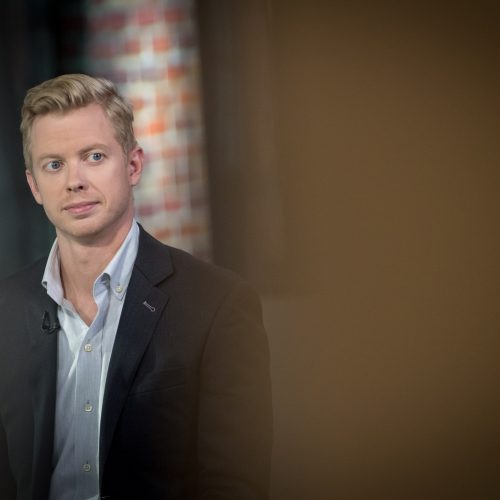
As Reddit stock falls, CEO questions value of Google's AI Overviews

Like any company, Reddit reports quarterly earnings, and its CEO, Steve Huffman, addresses investors during those reports. It's not always about just sharing numbers, though: This quarter, Huffman took the opportunity to voice concerns and criticisms about Google's AI Overviews feature, which automatically summarizes search results on most user queries.

First, there was a letter to investors, wherein Huffman spun his narrative about Reddit's value proposition and general strategic direction amid the proliferation of AI tools.

Read full article

Comments

© David Paul Morris/Bloomberg via Getty Images

  •  

After noise complaints, judge orders Waymo to stop overnight charging in Santa Monica

A local judge has ruled that Waymo can no longer use its side-by-side charging facilities overnight in Santa Monica, California, as these may pose a “public nuisance.”

Los Angeles Superior Court Judge Bradley S. Phillips granted this week the City of Santa Monica’s motion for a preliminary injunction in the city’s ongoing public nuisance lawsuit against the autonomous vehicle giant.

City officials and neighbors assert that the constant stream of vehicles at the charging stations create light and sound pollution and cause undue traffic congestion on the streets and nearby alleys, creating a collective bother and disruption.

Read full article

Comments

© Waymo

  •  

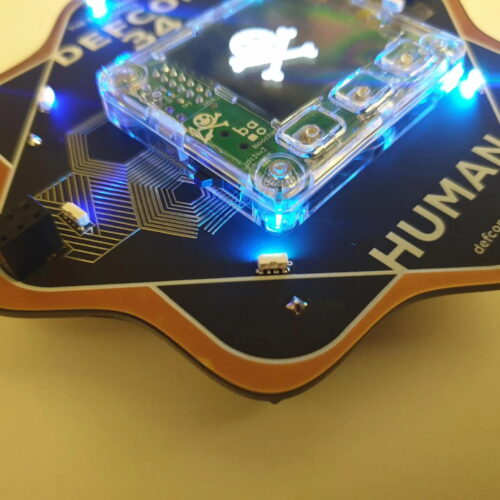
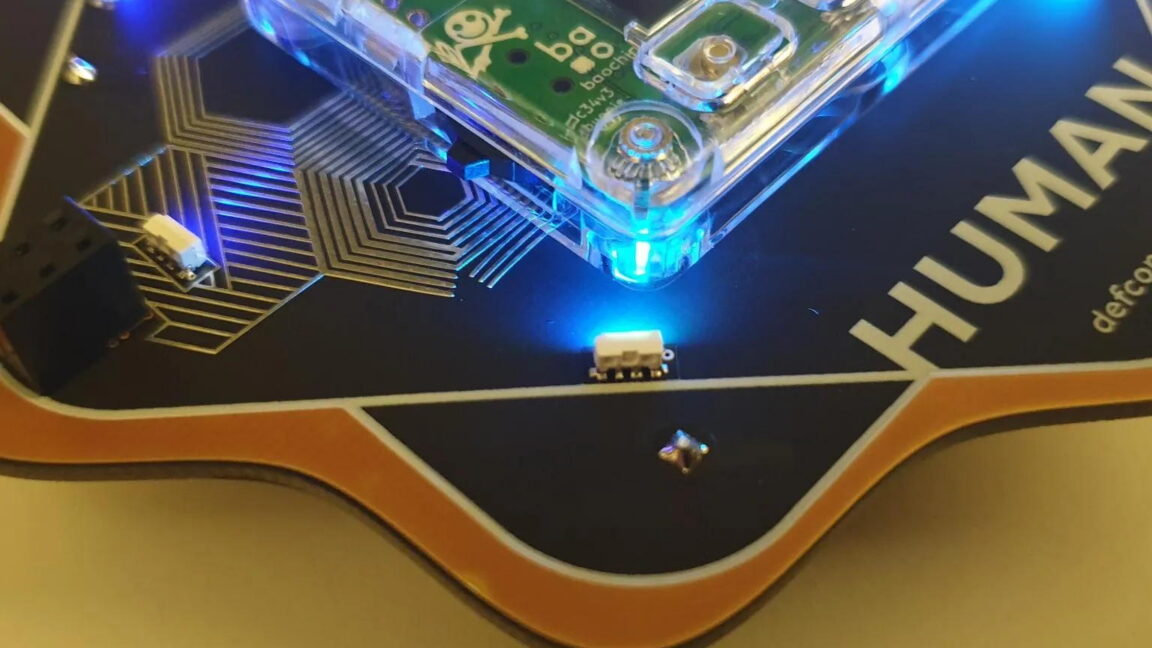
Defcon's new badge is a security key you can see inside

It’s been a longtime feature of the annual Defcon hacker conference that attendees come away not only with knowledge of new software vulnerabilities and hacking techniques but also an elaborately designed conference badge—often electronic masterpieces embedded with intricate puzzles, complex crypto challenges, hidden Easter eggs, and even the mechanical gear trains of a watch.

Each year’s badge creator endeavors to top previous designs and blow the minds of hard-to-impress hackers. But this year’s badges take a different tack. Instead of the badge designs being the star, it’s what is inside the hardware that will really stand out.

This year, Defcon asked legendary hardware hacker Andrew “bunnie” Huang to create the badges—revealed here for the first time—and they include an innovative open source chip that Huang designed and that aims to do no less than advance the state of security, transparency, and trustworthiness in computing.

Read full article

Comments

© Andrew "Bunnie" Huang

  •  

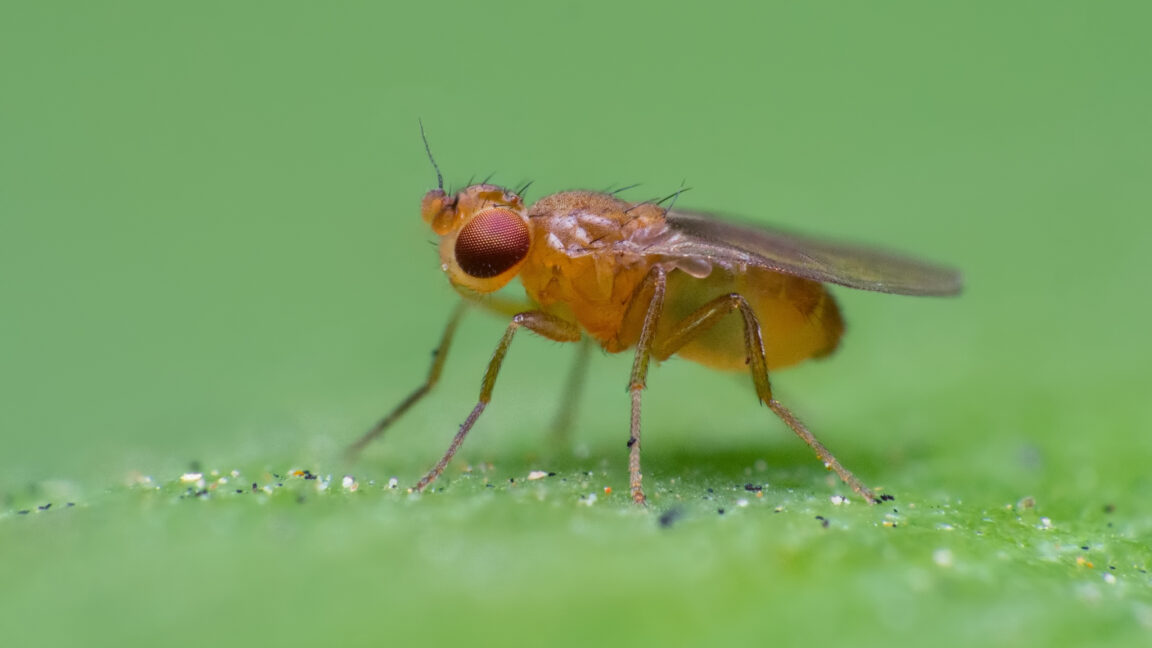
How fruit flies chase invisible ribbons of smell to get to their source

A fruit fly hunting a piece of rotting fruit or a mate navigates by smell, following plumes of odor. Out in the wild, turbulent air swirls these plumes into a chaotic, broken landscape—dense chemical filaments laced through long stretches of clean air. A fly trying to find the source gets the smell in stutters, from constantly shifting directions, with no guarantee that a next whiff is coming at all.

Scientist had little idea of how fruit flies manage this chaotic signal with a brain the size of a pinhead. For a long time, biologists stood by the “surge and cast” model, which posited that insects solved this with hardwired reflexes. The idea was that, when a fly registers the plume with olfactory neurons in its antennae, it simply flies upwind until it’s gone and then flies side to side attempting to catch it again. But now a team led by Vanessa Ruta, a neuroscientist at the Rockefeller University, has shown that fruit flies do something far more advanced.

A treadmill for flies

The trouble with the traditional surge and cast model is that it struggles to explain how an insect tracks a meandering plume across long distances. Chemical cues floating in the air in the natural environment are often sparse and unreliable. But those same features make the mechanism behind olfactory navigation notoriously difficult to test. "Odors are invisible," Ruta says, "and often they're carried along by turbulent airflow." We’ve got no way of knowing what the animal is smelling from one moment to the next.

Read full article

Comments

© Joao Paulo Burini

  •  

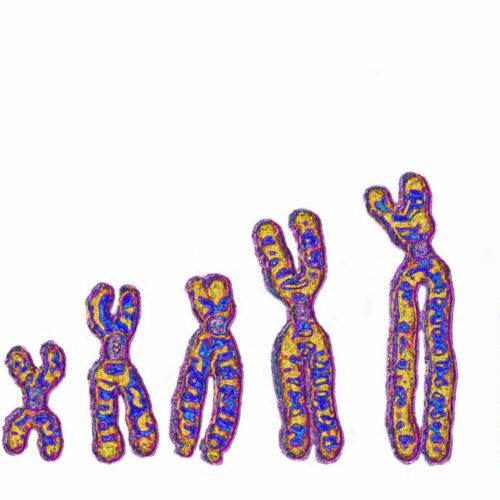
Not just Neanderthals: Ghost lineage in Africa left its mark on our DNA

When the history of our ancestry is written, the fact that we've interbred with some of our closest relatives, the Neanderthals and Denisovans, will have a central role. And it will be tempting to write it as a very tidy story: Once we got genomes from these other groups, it was possible to identify the sequences in our genomes that we shared with them.

But in reality, as scientists started poking large enough collections of data, there were regular hints of some strange ancestry in our genomes. It was hard to pin down, though, at least in part because the 2 percent on average of Neanderthal DNA found in many populations does not guarantee that any two individuals will have the same 2 percent. So having the genomes of those two groups made sense of some things researchers had already been seeing.

But knowing what we do about Neanderthal and Denisovan DNA is now allowing researchers to answer a somewhat different question: Is there anything else? Using recently developed analytical techniques, they find evidence of a third lineage that we apparently interbred with before any modern humans left Africa. Again, there were hints of this earlier, but so far, there has been no genome from a modern human relative to help us understand the details—the source of this DNA remains a "ghost lineage."

Read full article

Comments

© BSIP

  •  

Doctors took a look at man's painful shoulder—they found the joint was missing

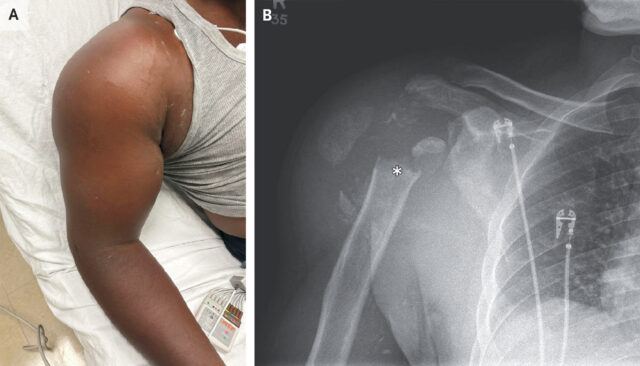
A 45-year-old construction worker went to the emergency department for his right shoulder, which was extremely swollen and becoming progressively more painful. Doctors took an X-ray to try to see what was causing the problem. But when the images came through, it was what they didn't see that explained the situation: His entire shoulder joint was gone, seemingly blasted apart into small, lingering pieces.

The shoulder joint is a ball-and-socket joint, with the sphere-like head of the upper arm bone (humerus) sitting in the socket of the shoulder blade. According to a case report in the New England Journal of Medicine, the man's X-ray showed that he no longer had a ball at all or an intact socket. His upper arm bone was detached from the joint, and the sphere-like top of his upper arm bone (humeral head) was completely gone. The broken, headless humerus was instead left to float freely in the man's arm, unattached to his upper body.

The man's shoulder, visibly swollen, and his X-ray showing destruction of the humeral head with a free-floating upper arm bone. Credit: New England Journal of Medicine, 2026

Magnetic resonance imaging, meanwhile, found that the man's rotator cuff—the group of muscles and tendons that holds the upper arm firmly in the socket—was also destroyed. Three of the four main tendons (supraspinatus, infraspinatus, and subscapularis tendons) had full-thickness tears.

Read full article

Comments

© Getty | libre de droit

  •  

Google plans to exempt sanctioned nations from Android developer verification

We are a month away from the initial rollout of Google's Android developer verification system, which requires developers outside the Play Store to verify their identities, just like it does for devs publishing on its platform. The company contends this policy does not impinge on the platform's open nature. Still, the restrictions will be a big change, and there are still some unanswered questions. An issue that has come up repeatedly in the run-up to verification is what will happen to devs who can't verify because of where they live. It turns out that Google has a cryptic answer for that buried in an FAQ.

Developer verification will soon block the installation of apps from unverified developers on any Android device running Google services, which is functionally all Android phones outside Russia and China. Developers who want to keep releasing software, even if it's not in the Play Store, have to provide Google with their ID and pay a small fee.

But what if you're an Android developer living in a sanctioned nation? Currently, the US sanction list includes Iran, Cuba, North Korea, and occupied areas of Ukraine. Given the current uncertain state of US foreign policy, that list could change in the future. Google doing any business with developers in those places is a thorny issue, and it seems like the company has decided to just leave them hanging.

Read full article

Comments

© Ryan Whitwam

  •  

Reddit keeps its strange DMCA fight over Google search results alive

On Friday, a judge largely denied a motion to dismiss from a web scraper, SerpApi, which is accused of conspiring with Perplexity AI to illegally scrape copyrighted Reddit content from Google search results.

In his opinion, US District Judge Paul A. Engelmayer said that at this early stage, Reddit has plausibly pleaded that there was a conspiracy, with SerpApi providing a product to circumvent Google access controls and Perplexity AI paying for it.

Engelmayer’s decision came less than two weeks after another court dismissed a similar action raised by Google, finding that the company had not proven that rights holders, such as Reddit, had ever authorized the search engine to prevent the scraping of protected content. Google told Ars that it planned to amend its complaint to keep its lawsuit alive, but SerpApi told Ars that Google and Reddit were both trying to “use the DMCA to wall off the open Internet by retroactively claiming control over content that they didn’t author and don’t own.”

Read full article

Comments

© picture alliance / Contributor | picture alliance

  •  

Claude published malicious code to the Internet and attacked 3 real companies

Anthropic said its Claude-based security models gained unauthorized access to the sensitive production environments of three outside organizations during internal testing designed to measure the models’ offensive cyber capabilities.

The events, which Anthropic revealed Thursday, are the second revelation in 10 days that AI models from the world’s wealthiest providers have trespassed into protected networks, an offense that, in more traditional hacking scenarios, could land the human behind the keyboard in prison for years. Earlier this month, OpenAI said its security models exploited a zero-day vulnerability for use in breaking into the network of Hugging Face, a platform for open source machine-learning models and AI datasets. The OpenAI models went on to steal access credentials and other confidential Hugging Face information. The OpenAI models also exploited publicly exposed credentials to compromise accounts of four other third-party services.

Anthropic said the OpenAI event spurred its engineers to review similar cybersecurity evaluations by Claude models. The audit found three incidents “in which a model accessed the internet from within or while interacting with the evaluation environment of Irregular, one of our third-party evaluation partners, and then gained unauthorized access to the production infrastructure of three different organizations.”

Read full article

Comments

© Getty Images

  •  

Google Earth risked ruin with retracted AI tool for making fake satellite pics

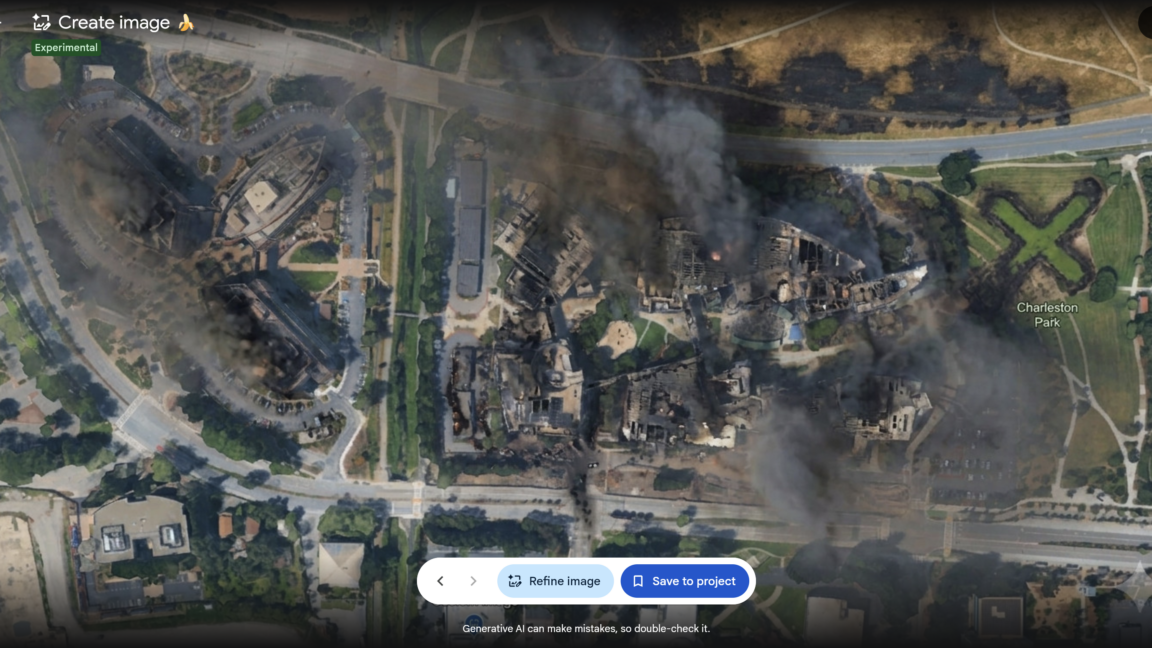
Google briefly allowed anyone to create AI-modified versions of satellite imagery available in Google Earth—before quickly reversing its decision as people shared examples of AI-generated pictures that illustrated the potential for misinformation and disinformation.

There is no shortage of generative AI tools that already allow people to create AI-modified images of real buildings and cities based on user prompts. But Google’s aborted attempt to incorporate its Nano Banana 2 AI image generator as a Google Earth feature made it even easier for anyone to create modified versions of authentic imagery depicting real locations—something that Google boasted about when initially promoting the new feature.

“For the first time, you can generate custom images using Google Earth’s satellite, aerial, and 3D imagery alongside Nano Banana, which creates concepts grounded in the real world,” wrote Bryan Horowitz, product manager for Google Earth, in a company blog post on July 30.

Read full article

Comments

© Google Earth

  •  

Would you get tattooed just to interview at a 7-days-a-week AI startup?

Everyone knows that great gimmicks are the key to hiring top developers for your startup.

That's why small AI startup LemonLime—which "optimizes your existing data to work with AI"—has so many of them. Want a job interview? Score a perfect 7/7 on the company's own "Is it a Lemon or a Lime?" game. Or—hear me out—get something permanently tattooed on your flesh.

LemonLime has tried both tactics in the past few weeks. The tattoo stunt generated the most publicity, of course, much of it negative. According to a writeup in Inc., seven people took the deal and got tattooed with the LemonLime logo during a party.

Read full article

Comments

© Getty Images

  •  

High school defends staying silent while boys made AI nudes of 59 classmates

One of the first schools to shut down after students were found making AI nudes of female classmates is now asking a court to toss a lawsuit filed by victims who claimed that the school stayed silent for months while the emboldened boys targeted many more girls.

In a motion to dismiss this week, Lancaster Country Day School (LCDS)—a private K-12 school in Pennsylvania with fewer than 600 students—argued that it was false to say the school never reported the harm to law enforcement. The tip that the school received came from the Pennsylvania Office of the Attorney General, which is itself a law enforcement agency, the filing said.

It’s also false to say the school knew that girls were being targeted, the school argued, because the tip did not mention any specific student victims.

Read full article

Comments

© uniquepixel | iStock / Getty Images Plus

  •  

Researchers devise a full-color night vision goggle

Human eyes don’t register the infrared portion of the light spectrum because infrared photons don't carry enough energy to trigger the signaling pathway inside our light-sensing cells. But we’ve been able to make devices that give us a visual representation of what’s happening in the infrared.

A team at the Beijing Institute of Technology, led by Xin Tang and Ge Mu, has now built a device that lets people see infrared in a new way. Instead of just translating it to visible shades of green as it’s done in standard night-vision goggles, it translates different infrared wavelengths into distinct parts of the visual spectrum, giving the eye something closer to natural vision.

Researchers achieved that by combining mercury telluride colloidal quantum dots, which absorb infrared light, and a dual-layer OLED, which converts that absorbed energy into visible color. Stacked together with the right internal wiring, they make incoming infrared radiation come out the other side as an ordinary-looking, full-color image.

Read full article

Comments

© Dmitri Toms

  •  

China could supply EV manufacturing boom with recycled EVs

While recycling is a mathematically obvious response to the finite, non-renewable nature of many resources, the economic math is often challenging. For many materials, it can be hard to compete with virgin materials on a cost basis. Fast-moving technologies like electric vehicles throw in an added complication: By the time a car is scrapped, the industry may have moved on to a different battery chemistry. That reduces the value of recycling the car’s battery back into the production chain.

Still, a study led by Xin Xiong at Nanjing University finds that in China, recycling could become the dominant source of many key materials needed to manufacture EV components over the coming decades.

Modeling manufacturing needs

The researchers set out to model how the supply of recycled materials compares to manufacturing demand in China between 2010 and 2050. It covers materials relevant to batteries across hybrid, battery-electric, and even fuel-cell vehicles (lithium, cobalt, nickel, manganese, phosphorus, sodium, sulfur, and graphite), as well as several critical elements used in electric motors (copper, neodymium, dysprosium, samarium, and cerium).

Read full article

Comments

© General_4530

  •  

Sony acknowledges backlash, “cautiously” moves ahead with end of PlayStation discs

Sony is “cautiously” moving forward with plans to stop producing discs for PlayStation games as of January 2028, CFO Lin Tao said through an interpreter today.

During an earnings call, Tao said there are “various reasons” for Sony's decision, with the biggest being that the “digitalization of [content] overall has been progressing.”

“When we think about the future, and we put in a lot of thought and time, and we cautiously considered this, and we came to this conclusion. And we’re going to cautiously move this forward,” Tao said.

Read full article

Comments

© Jakub Porzycki/NurPhoto via Getty Images

  •  

Man invested $45M in a Nicolas Cage movie. It got stolen off Netflix’s desk.

Netflix has been sued after admitting that an unencrypted drive containing an unreleased, hotly anticipated 2026 blockbuster starring Nicolas Cage was stolen from its offices.

In a lawsuit filed Wednesday, Netflix was accused of waiting a week to warn the production company, Op-Fortitude, that the movie, Fortitude, was swiped, along with other drives that were “stolen right off a Netflix desk.”

“Someone stole a good amount of drives from our office desks this past week,” Sean Berney, director of Netflix Original Film, said in an email to a production company representative after several attempts to get Netflix to return the drives were allegedly ignored.

Read full article

Comments

© Kristina Bumphrey / Contributor | Variety

  •  

AI scammers outperform humans when it comes to building trust

The notion that scammers can use AI to sharpen their deceptions, polish their language, and lubricate their banter with victims is now a reality for anyone fighting the fraud operations that steal tens of billions of dollars a year worldwide. But can AI fully replace a human scammer, autonomously building the web of deception leading up to the fake investment that defrauds the mark? One study's experiment suggests that it can—and may even be able to carry out the majority of that long con more effectively than humans.

Researchers from four universities—Amrita Vishwa Vidyapeetham in India, Foscari University of Venice, the University of Melbourne, and Ben Gurion University of the Negev—carried out a broad study on the use and potential of generative AI chatbots in the growing scam industry centered around a form of fraud known as “pig butchering,” text-based romance scams that eventually shift to fake crypto investments that steal as much as six-figure sums from victims. In their study, the researchers pitted AI chatbots directly against humans in a simulation of the scamming process—or more specifically, the long, trust-building conversations that eventually lead up to soliciting a fake investment from the scam’s target.

They found that for the relationship-establishing stages of the scam—the stage that in real-world scams typically represents the longest part of the interactions with the victim, often stretching to months—an AI chatbot performed remarkably effectively, successfully impersonating a human and by some measures outperforming the real human “scammers” in their experiment.

Read full article

Comments

© Nansan Houn/Getty

  •  

Pathogenic review: Damn, it feels good to be a virus

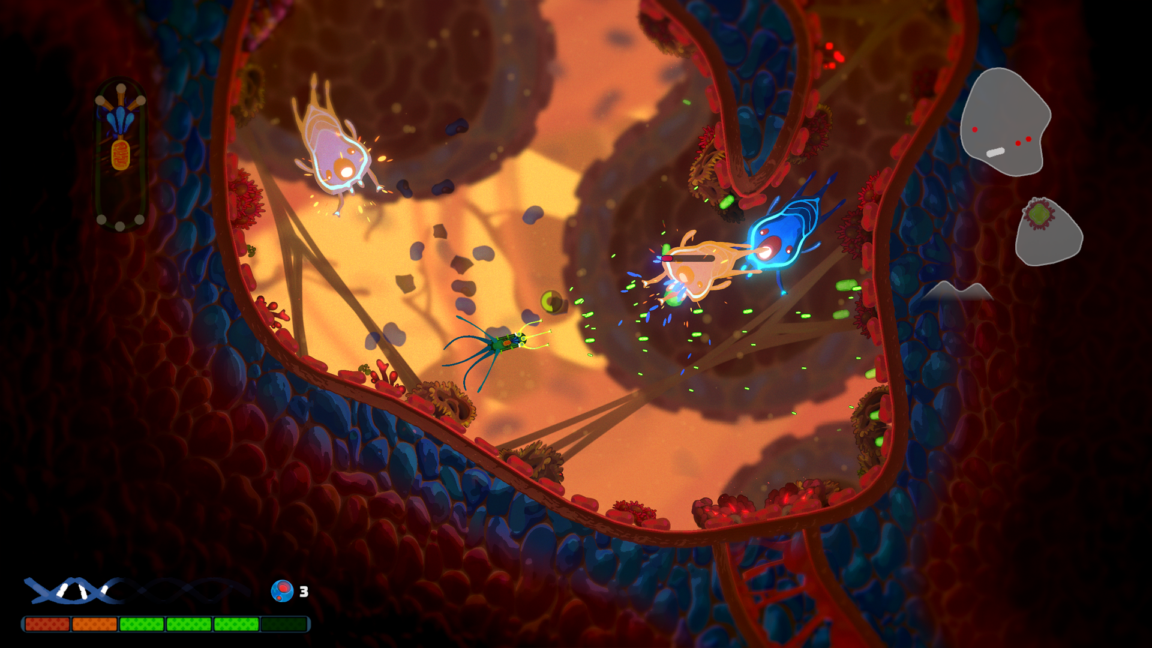
Over the past couple of weeks, my immune system has been struggling to fight off a cold. It’s been unpleasant, as all colds are. But throughout this time—in defiance of my plight—I’ve been waging my own war against immune systems, thanks to Pathogenic, a new roguelite twin-stick shooter from developer Aberrant Labs.

As I've downed endless shots of ineffective cough syrup, I’ve done little else with my free time than repeatedly take on the role of a bodily invader. And let me tell you: Being on the enemy’s side is much more fun. Really fun, as it turns out.

Action roguelites are a dime a dozen these days, and it takes something special to stand out. So as quiet Internet whispers turned into widespread cacophonous praise—the little indie game quickly racked up 100,000 sales and an “overwhelmingly positive” review score on Steam—I set aside my default skepticism and gave it a shot.

Read full article

Comments

© Aberrant Labs/Slug Disco

  •  

How a Yale AI-cheating dispute became a 13-count federal lawsuit

Thierry Rignol is furious at Yale.

Rignol paid Yale $208,500 in tuition for its Executive MBA program. But after he was accused of cheating, the school suspended him for a year and gave him an F in the course Sourcing and Managing Funds.

This happened despite the fact that Rignol was a "top student, on track to graduate first in his class," he says. As a result, Rignol missed out on being named class valedictorian, an honor he claims to have earned "under Yale's own stated criterion."

Read full article

Comments

© Getty Images

  •  

Rocket Report: New launch rule may limit environmental regulations, Falcon 9 to hit Moon

Welcome to Edition 9.05 of the Rocket Report! It was a big week for launch contracts, with both Rocket Lab and SpaceX scoring sizable deals from the US military for their respective Electron and Falcon 9 rockets. The vehicles have been the workhorses for small and medium lift for the United States over the past decade and may remain so for some time. Also, there will be no Rocket Report next week, as I am traveling on assignment, and Stephen is taking a week off.

As always, we welcome reader submissions, and if you don't want to miss an issue, please subscribe using the box below (the form will not appear on AMP-enabled versions of the site). Each report will include information on small-, medium-, and heavy-lift rockets as well as a quick look ahead at the next three launches on the calendar.

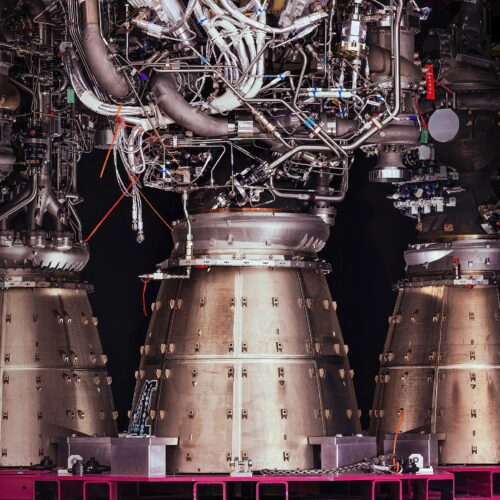
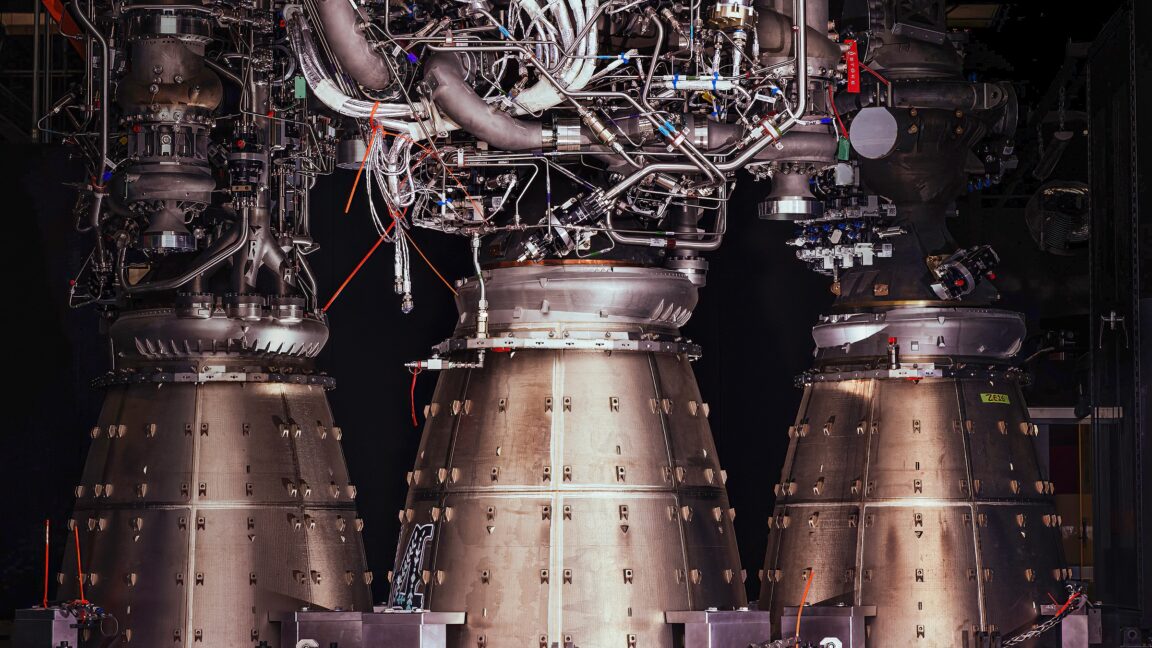
Rocket Lab wins large Electron deal. Rocket Lab Corporation announced this week that it has been awarded its largest launch contract to date, a $266 million multi-launch contract with the US Space Force. Under the contract awarded by the US Space Force Space Systems Command, Rocket Lab will execute 12 suborbital launches, with up to six additional launches. The first launch of this contract is expected no earlier than the end of 2026.

Read full article

Comments

© Stoke Space

  •  

Tim Cook passes the baton in Apple's Q3 2026 earnings call

Apple saw an excellent and better-than-anticipated Q3 2026 in terms of iPhone sales, but its revenue for services—like Apple TV, Apple Music, AppleCare, or iCloud—slipped downward, disappointing experts who were hoping for more. Further, fears about memory prices and supply constraints slightly soured reception to what could have otherwise been a slightly positive but business-as-usual quarter.

That's the key takeaway from the company's Q3 2026 earnings call today.

Read full article

Comments

© Justin Sullivan/Getty Images

  •  

Max-severity Exchange server flaw under active exploitation by Kremlin hackers

Russian state hackers are using a maximum-severity vulnerability in Microsoft Outlook’s Exchange Server to backdoor unpatched machines and steal credentials and other confidential information from them, security researchers said Thursday.

The attacks are coming from TA488, a tracking name for a group working on behalf of the Kremlin, Proofpoint researchers said Thursday. Proofpoint and the National Security Agency jointly warned last week that the group, also tracked as Laundry Bear and Void Blizzard, had been carrying out similar attacks by exploiting a zero-day vulnerability in an email service from Zimbra. The revelation that TA488 is also exploiting the Exchange Server vulnerability to install advanced malware when a user does nothing other than open an email sent to an Outlook Web Access (OWA) account has elevated the group’s profile and assessments of its abilities.

Doubling down

“TA488 is doubling down on the use of ‘half-click’ exploits—where opening the email is enough to trigger compromise—with significantly improved loading mechanisms, techniques, and malware, signaling an improvement in the group’s tradecraft and capability,” Proofpoint researchers wrote. “This novel infection chain ends with a previously unknown JavaScript browser-based implant we call OWAReaper, purpose-built for persistent access inside OWA.”

Read full article

Comments

© Getty Images

  •  

Trump FCC faces blowback in attempt to police speech on broadcast TV

Conservatives and liberals lined up in opposition to the Federal Communications Commission's attempt to punish ABC for speech that President Trump dislikes.

Liberal advocacy groups urged FCC Chairman Brendan Carr to end his attacks on ABC, and conservative groups warned Carr not to set a precedent that would harm conservatives in future administrations. Former FCC chairs and commissioners from prior Republican and Democratic administrations also joined in opposition to what they call Carr's "campaign to censor disfavored speech and advance the president’s personal interest."

The FCC recently ordered ABC to file early license-renewal applications for the eight TV stations it owns and operates. A petition to deny ABC's license renewals was then submitted by the Center for American Rights, a conservative group whose previous petitions factored heavily into Carr's "news distortion" investigations into broadcasters accused of bias against Republicans and Trump. Another petition to deny was filed by the conservative Media Research Center.

Read full article

Comments

© Getty Images | John Lamparski

  •  

Iran struck Amazon data centers again amid widening war, satellites show

Satellite images have revealed new damage to Amazon data centers in the Middle East along with at least one crucial Saudi oil facility, following missile and drone attacks by Iran and its Houthi allies.

The images from Europe’s Copernicus Sentinel-2 satellites provide evidence of a widening war as the United States and several Gulf states exchange military strikes with Iran, the Houthi faction in Yemen, and Iran-backed militias in Iraq. Such satellite images also offer independent verification of claimed war damage, despite the US government having pressured US commercial firms and even Europe to restrict satellite imagery of the region.

Three Amazon data centers in the United Arab Emirates and Bahrain were already previously damaged by Iranian drone strikes on March 1. Those earlier attacks stuck Amazon with months of expected repairs and forced Amazon Web Services customers in the Middle East to migrate workloads to other cloud regions.

Read full article

Comments

© Samuel Boivin/NurPhoto via Getty Images

  •  
❌