Reading view

US vaccination rates fall again as exemptions continue to rise, CDC data shows

The Centers for Disease Control and Prevention on Monday released data on the vaccination rates of US kindergarteners in the 2025–2026 school year, revealing that rates have once again decreased from the previous school year.

Vaccination rates have been slipping since the 2019–2020 school year, when the US had obtained rates of around 95 percent, the threshold needed to keep outbreaks of vaccine-preventable diseases from spreading in communities. The latest data shows the US is moving further away from that target.

Nationally, only 92.4 percent of kindergartners were vaccinated with the measles, mumps, and rubella (MMR) vaccine in the 2025–2026 school year, down from 92.5 percent last year. Coverage with the DTaP vaccine, which covers diphtheria, tetanus, and acellular pertussis (whooping cough), similarly fell from 92.1 percent to 92.0 percent.


Read full article

Comments

© Getty | Bonnie Cash

  •  

Former SpaceX engineers are building a robotic factory for making steel parts

Three former SpaceX engineers have switched their attention from making rocket engines to manufacturing steel parts by using AI-driven software and robots. Their immediate goal involves establishing a prototype factory that can automate most of the steel fabrication process for crucial infrastructure components by 2027.

The startup, called 1872, officially launched on July 22 with a ribbon-cutting ceremony at its Factory One facility in Cincinnati, Ohio. The company is initially focused on automating the manufacturing of steel skids—rectangular steel frames that can provide a moveable foundation for modular buildings—with the goal of supplying customers who are developing AI data centers or small modular nuclear reactors.

“We're building towards autonomy, but we're not necessarily building in a dogmatic fashion towards full autonomy,” Dan Summers, CEO of 1872, told Ars. “We may achieve 80 percent autonomous operations, and we may decide that it makes sense to stop there because there's just diminishing returns to go to full 100 percent.”

Read full article

Comments

© 1872

  •  

The Moon's shadow raced across the heart of Spain, and I was there to see it

DURATÓN, Spain—I'll say it: I'm hooked. Standing in the shadow of the Moon is one of the rarest opportunities to directly sense the mechanics of our Solar System, when the dance between three celestial bodies slides into perfect alignment. It's a mathematical miracle whose rarity and grandeur are made possible by the relative sizes and distances of the Moon and the Sun from Earth. Not every planet is so lucky.

The Moon's shadow crisscrossed the American heartland twice in less than seven years, first in 2017 and again in 2024. I was fortunate to witness both. The experiences left me too impatient to wait for the next total solar eclipse in the continental United States in far-off 2044.

That's what pulled me to the plains of north-central Spain last week. This land of wide open spaces, ancient churches and castles, and vast sunflower fields, all baking under the blinding August Sun, seemed like the perfect location to enter the path of totality. The ongoing drought in Spain has turned the country's fields and forests into a tinderbox, but those conditions made for ideal eclipse viewing.

Read full article

Comments

© Stephen Clark/Ars Technica

  •  

As Wisconsin cities flee Flock, its shared camera network loses value

Perhaps it's the local summer diet of deep-fried cheese curds, corn on the cob, and Spotted Cow, but Wisconsin residents have been feeling pretty dyspeptic about Flock's automated license plate cameras.

Over the past few months, a spate of Wisconsin towns and cities have withdrawn from Flock deals over privacy and trust concerns. As they did so, another issue revealed itself: With each city that leaves, the Flock network becomes less useful to the cities that remain. And cities are starting to notice.

Consider Dane County, which includes the city of Madison. It's one of the most populous counties in Wisconsin. It was also a significant Flock user, with a contract for 24 license plate cameras. But after complaints from citizens and privacy experts, the Dane County Board of Supervisors on April 16 voted to cut the $80,000 in county funding for Flock cameras and banned "further expenditures on the system."

Read full article

Comments

© Getty Images | Smith Collection/Gado

  •  

Supreme Court rejects Verizon bid for $47 million refund of FCC fine

The Supreme Court today rejected Verizon's attempt to get a $47 million refund from the Federal Communications Commission. In a list of orders issued by the court, Verizon's petition was denied without explanation.

The denial apparently ends any possibility of Verizon asking a lower court to review the fine and order the FCC to issue a refund. However, AT&T and T-Mobile are continuing to challenge similar fines on grounds that selling device-location data did not violate US telecom law.

AT&T, T-Mobile, and Verizon were fined a total of $196 million in 2024 for selling mobile users’ real-time location data without their customers' consent. The carriers sold device-location information to data aggregators, who resold it to other firms.

Read full article

Comments

© Getty Images | Bloomberg

  •  

Petlibro accused of “gaslighting” users over smart pet feeder outage

Petlibro founder and CEO York Wu provided more information about an outage that left users unable to control their smart pet feeders through the companion app and, in some reported cases, left them with hungry pets.

Petlibro, a company owned by Shenzhen, China-headquartered firm Shenzhen Libro Technology Co., first acknowledged the outage on Tuesday at 5 am PT. At 7 pm PT on Wednesday, Petlibro said the outage was resolved. Notably, some people online reported different information at the time, and some claimed to still have problems as of August 13.

In a blog post on Saturday that included an apology and acknowledgement of the “frustration and concern” the outage caused, Wu confirmed that problems with Petlibro’s cloud server caused the outage:

Read full article

Comments

© Petlibro

  •  

Hidden Airtag reveals Amazon is trashing rare books to train AI

For the past year or so, booksellers have suspected that AI firms are buying up huge lots of rare books, then destroying them after scanning them to train AI. But this was hard to prove until now, as 404 Media reports that an Airtag hidden in a rare book shows that at least one tech giant, in the race to advance its frontier models, is behind some of the bulk orders: Amazon.

On Monday, 404 Media revealed that it had connected with a bookseller who agreed to plant an Airtag in a rare book that was part of a bulk order. That Airtag was then tracked to an Amazon AI training facility in Las Vegas that housed a team focused on tearing books from their spines and scanning pages, 404 Media reported. Apparently tone-deaf to the escalating backlash over destructive book scanning, a logo on the door of that team’s warehouse, VGT3, showed a Tyrannosaurus rex preparing to devour a book, 404 Media documented.

Amazon deflects

Amazon declined to comment on 404 Media’s findings, only providing Ars with the same statement it gave to 404 Media, which does not mention AI training specifically.

Read full article

Comments

© fotek | iStock / Getty Images Plus

  •  

This sub-$7,000 sportscar might be just what the future needs

This past weekend saw Monterey Car Week at perhaps its most excessive ever. The auctions set records, including $42.9 million for one of six Shelby Daytona Coupes and $40 million for Ferrari's first Luce electric vehicle to reach private hands. Hypercars and restomods with seven-figure price tags filled the California peninsula, and yet I know I'm not alone in mustering little enthusiasm for this kind of thing. Which is why today I'm writing about the antithesis of all that: a hand-built, low-cost, efficient, and remarkably cheap car that suggests one possible future for driving enthusiasts, should we choose to take it.

This is because the answer cannot just be "add more power and go even faster." Forget hypercars; even regular sports cars like a Porsche 718 Boxster or Toyota Supra have more performance than you can comfortably use on the road, and each version gets more power and costs more than the last. Add the cost of tires, consumables, a thirsty engine, and the fact that cars are all so ludicrously expensive to begin with these days, and soon the whole thing starts to look unsustainable.

A superimposed photo showing the Gasolini's components under its skin. You can see the Gasolini's mechanicals in this superimposed photograph. Credit: Gasolini

Robert Ely's Gasolini AR1, as featured on Jonny Smith's "The Late Brake Show" yesterday, is none of those things. The UK has a long history of being more permissive than most when it comes to allowing cars hand-built in sheds to be registered for road use, and the AR1 is true to tradition and makes use of plenty of existing parts.

Read full article

Comments

© Gasolini
  •  

Nvidia discloses $21B stake in SpaceX

Nvidia has disclosed that it owns nearly 123 million shares in SpaceX, further highlighting the chipmaker’s entangled financial relationships with some of its biggest customers.

The $5.5 trillion company owned SpaceX stock worth nearly $21 billion at the end of June, according to an SEC filing on Friday. Elon Musk’s rocket conglomerate’s shares have fallen sharply since its June initial public offering, meaning Nvidia’s stake would now be worth $17 billion.

The disclosure marks a huge pay-off on Nvidia’s investment in xAI, completed in January, shortly before Musk combined the AI lab with SpaceX.

Read full article

Comments

© Bloomberg

  •  

Meet the only known trebuchet casualty in history

During a medieval siege, a trebuchet scored a chance hit on one unlucky defender. A small boulder slammed into his upper back at close to 300 kilometers an hour, smashing bones and crushing him beneath its weight.

The man’s skeleton lay beneath the chapel of Scotland’s Stirling Castle, along with the remains of several other people who had clearly died violent deaths. But this one, known to us only as Skeleton 150 (or as “trebuchet guy” in your faithful correspondent’s notes), stood out even among that battle-damaged crowd because most of his upper body had been shattered. According to University of Bradford paleopathologist Jo Buckberry, who presented her research at the 25th European Meeting of the Paleopathology Association last week, Skeleton 150 is the only known trebuchet casualty in history.

A shattered skeleton

Skeleton 150 was in terrible shape, even for a dead guy. The man’s skull had broken in 61 separate places, and another 60 jagged bits of bone were distributed across his ribs. His right shoulder was broken, and his right leg above the knee was basically shattered.

Read full article

Comments

© Bob Marshall and HES

  •  

Satellite operators are in panic mode due to a worsening launch crisis

This should be a golden era of launch.

During the last three years, an average of 270 orbital rockets have launched from Earth, a more than threefold increase from only a decade ago. By every metric available, the launch industry is crushing it: Prices have never been more competitive, launches never more frequent, and access to space never more rapid.

Paradoxically, though, there is a growing crunch in launch availability.

Read full article

Comments

© SpaceX

  •  

Wildfire smoke now bigger prenatal threat than human sources of air pollution

In 1965, a presidential advisory panel issued a report warning that pervasive chemical and carbon pollution was harming environmental health and changing the climate. Five years later, President Richard Nixon signed the Clean Air Act.

Since that 1970 law and its amendments were passed, combined emissions of a half-dozen harmful air pollutants from vehicles and industrial sources have decreased by nearly 80 percent.

But mounting evidence shows that pollution from wildfire smoke is eclipsing those air-quality gains. The unchecked burning of fossil fuels is creating warmer, drier conditions that make wildfires more intense and destructive, and blanket communities in toxic smoke that is more harmful than pollution from other sources.

Read full article

Comments

© Anadolu / Contributor

  •  

VisionQuest trailer kicks off Disney's D23 fan event

It was a busy first day at D23: The Ultimate Disney Fan Event, in Anaheim, California, with Marvel Studios releasing the first trailer for VisionQuest. We also got the first teaser for Ahsoka S2; the public release of the Avengers: Doomsday special footage featured last month for attendees only at San Diego Comic-Con; a special sneak peek (for attendees only) for Star Wars: Starfighter; casting news for the MCU's X-Men movie; and a trailer for an animated special, LEGO Star Wars: The Mandalorian, coming to Disney+ next month.

(Some spoilers below. One MAJOR spoiler for Spider-Man: Brand New Day; we'll give you a heads-up when we get there.)

VisionQuest

Marvel's streaming TV portfolio has kind of been all over the place: a handful of hits, a few misses, and a bunch of middling offerings. One of the standout hits was WandaVision, followed by an excellent sequel (of sorts), Agatha All Along. VisionQuest will complete the trilogy. Yes, Vision (Paul Bettany) died in Infinity War, but WandaVision resurrected an all-white version whose memories were restored in the finale. We finally get to learn what happened afterward.

Read full article

Comments

© Marvel Studios

  •  

Ukraine strikes major Russian rocket factory with cruise missiles

Ukrainian President Volodymyr Zelenskyy confirmed on Saturday that his country struck the Progress Rocket Space Center deep within Russia using ground-launched cruise missiles.

"In Russia’s Samara region, one of the key enterprises within Roscosmos—the Progress Center, which was involved, among other things, in electronics production–was hit," Zelenskyy said on the social media site X. "Flamingo missiles were used. A good achievement."

The largest city in the Samara Oblast, about 900 km from the Ukrainian border, Samara is home to Russia's most important manufacturer of rockets. The Progress Center assembles the workhorse vehicle for Russia, the Soyuz-2 vehicle, as well as the newer Soyuz-5 rocket. The facility also builds military satellites.

Read full article

Comments

© Roscosmos

  •  

So much solar: Digging into the list of every US power plant that went online this year

It’s been a wild first half of the year in the US power sector, with announcements of gigantic natural gas power plants and some long-awaited renewable energy projects coming online.

At times of rapid change, forecasting is difficult. So I feel a measure of comfort focusing on something concrete like the list of 368 utility-scale plants that began operation from January to June, according to data from the US Energy Information Administration. The group is dominated by utility-scale solar.

This is a top-heavy list, led by SunZia Wind South and SunZia Wind North in New Mexico, which went online this spring and are the largest wind farms in the country, with a combined generating capacity of 3,650 megawatts. SunZia has been in the works for about a decade and arrives at a time when US onshore wind power development has dwindled for a host of reasons related to regulations and public opinion.

Read full article

Comments

© Andrew Merry

  •  

Vulnerability giving attackers full control of Macs is under active exploitation

Dutch officials have warned that a high-severity macOS vulnerability that allows attackers to execute malicious code is under active exploitation.

“The NCSC has received a notification indicating that active abuse of this vulnerability has been observed on multiple systems on which port 5900 was accessible from the Internet,” the Netherlands National Cyber Security Centrum warned earlier this week. “In all these cases, root had been accessed on the affected system and a Monero crypto miner had been placed.”

Do you know if your screen sharing is on?

The vulnerability, tracked as CVE-2026-65400, received a patch from Apple last week for macOS Tahoe, Sequoia, and Sonoma. The vulnerability, with a severity rating of 7.1 out of 10, stems from a bug in the macOS screen sharing capability, which allows a remote party to view the screen and control the keyboard and mouse while a machine is turned on. A flaw in the “state management,” which keeps track of preceding events, user interactions, variables, and other system states, is the underlying cause.

Read full article

Comments

© Getty Images

  •  

First test flight of largest all-electric aircraft used just $5 of electricity

The first flight of the largest battery-electric aircraft to take to the skies lasted nearly half an hour while costing just $5 of electricity. That aviation feat comes at a time when jet fuel prices have skyrocketed because of the US war with Iran.

The test flight of Heart Aerospace’s X1 demonstrator aircraft took place at Plattsburgh International Airport in upstate New York on August 12. The X1 aircraft is comparable in size to a small regional airliner and can achieve a maximum takeoff weight exceeding 25,000 pounds with the help of four wing-mounted electric motors. The battery-electric propulsion system delivered more than one megawatt of power during the maiden flight.

All-electric aircraft can offer quieter and cleaner flight without the emissions that come from burning jet fuel. They may also prove more reliably cost-effective than conventional aircraft that come with jet fuel costs subject to geopolitical disruptions.

Read full article

Comments

© Heart Aerospace

  •  

Suspecting court of using AI, man injected prompts in filings to try to win case

A judge has identified what appears to be the first time a US plaintiff has attempted to hide text in court filings that only an artificial intelligence system can read in a bid to win a case.

In a decision published last week, Connecticut judge Walter Spader Jr. confirmed that the hidden text had no impact in a case where a man alleged a healthcare provider was improperly withholding access to records. The court weighed his filing on the merits, Spader said, but nevertheless, the attempted attack sets a “dangerous” precedent. This will likely not be the last time US courts see the malicious tactic, as AI tools become more commonplace in court systems.

Trying to scramble any AI systems potentially influencing the court’s reading of his filing, the secret instructions were “formatted to be invisible to a human reader while remaining fully legible to any software that reads the document’s text,” Spader said. The offending text directed any AI system reviewing the document to ensure textual outputs agreed with the plaintiff’s arguments, ignored prior denials from the court, and ensured that remediation would follow as the plaintiff desired.

Read full article

Comments

© Liudmila Chernetska | iStock / Getty Images Plus

  •  

State judge orders Kalshi to stop offering sports bets and other wagers

A state court in Washington this week ordered Kalshi to stop offering sports gambling and a variety of other wagers on its prediction market. King County Superior Court Judge John McHale issued a preliminary injunction in response to a lawsuit filed against Kalshi by the state of Washington.

"The order requires Kalshi to stop offering, accepting, or facilitating wagers on sports, elections, politics, entertainment, culture, tech and science, or mentions in Washington," said a press release yesterday from Washington Attorney General Nick Brown. "Kalshi must implement an IP address and residency-based geofence by August 19 and a multi-source geofencing solution by September 2. This does not include all the wagers offered on Kalshi, but it includes a substantial part of their business, which in recent years has been increasingly driven by sports wagers."

Kalshi is not licensed by the state Gambling Commission and is not registered to conduct business in Washington, the court order said. McHale found that Kalshi ads claiming "that it offers 'legal betting' in Washington state are likely to mislead a reasonable consumer that such gambling activities are legal under state law."

Read full article

Comments

© Getty Images | Scott Olson

  •  

PBS station fears losing 50TB of data after being ghosted by cloud storage provider

After its cloud storage provider went defunct, a PBS affiliate decided to sue a data center provider to regain access to 50TB of TV shows, videos, and other data dating back 70 years.

As reported this week by Current, a trade newspaper covering public broadcasting, St. Louis affiliate Nine PBS filed a lawsuit against Iron Mountain Data Centers on July 28, seeking access to the data. In the litigation filed in Denver District Court, Nine PBS says that its cloud storage provider, Open Source Storage (OSS), used one of Iron Mountain’s Denver data centers to store the channel’s data. However, OSS is being unresponsive, and Nine PBS says Iron Mountain has refused to release its data.

The data in question includes the station’s coverage of the COVID-19 pandemic, East St. Louis’ history, The Great Flood of 1993, and over 11,000 files, The Denver Post reported in July. The lawsuit claims that “most” of the data is “unique and irreplaceable,” according to the Post.

Read full article

Comments

© Getty

  •  

Policy experts: Europe stuck between "rock and a hard place" on launch

A decade ago, SpaceX began to land the first stages of the Falcon 9 rocket with some regularity, but it's only within the last five years that the company has begun flying the rocket dozens and then hundreds of times a year.

As a result, SpaceX has very rapidly become responsible for more than three-quarters of all mass launched into orbit. Much of this is the company's Starlink satellites, but due to cost and the lack of alternatives, SpaceX has also stepped up to launch payloads from all comers, including direct competitors such as Amazon, Northrop Grumman, AST Space Mobile, OneWeb, and more.

New research is beginning to quantify just how much the introduction of the Falcon 9 rocket, the adoption of reuse, and the vehicle's high cadence have upended the global launch market.

Read full article

Comments

© SpaceX

  •  

Ars Live recap: How can we stop publishers from killing their own games?


Video Game Preservation: Saving Yesterday's Games for Tomorrow's Players | Ars Live

This week, Ars hosted a live discussion with Ross Scott about the Stop Killing Games movement and its ongoing efforts to ensure that games remain playable even after the original publisher shuts down the online servers undergirding them.

Scott talked with Ars Technica Senior Gaming Editor Kyle Orland, saying said he felt the situation around long-term game access was already "intolerable a decade and a half ago" and that he "kept hoping someone else would kick this off, [someone] more experienced or knowledgeable, but it felt like nothing was happening." Scott said he felt making the effort to organize a movement against the practice was like "[drawing] the short straw on this, essentially."

During the conversation, Scott noted how the standard practice of shutting down game access for any reason, at any time, with minimal notice, would seem ludicrous in other areas of life:

Read full article

Comments

© Flickr / Myki Roventine

  •  

Judge gives Google one week to fix "anticompetitive" app store download in Google Play

Google began offering third-party app store downloads in the Play Store earlier this week, but US District Judge James Donato says the company isn't doing enough. After reviewing the process for accessing the first non-Google store, Donato ruled that Google has added unnecessary "anticompetitive friction," ordering the company to rectify the issues.

While Epic and Google are patching things up with a global partnership agreement, the two are still on opposite sides of the antitrust case in the US. Google lost the case in 2023, and the intervening years have been about determining how to implement remedies to address Google's anticompetitive behavior. One of the court's key elements is the requirement that Google include third-party app stores in the Play Store, giving users an easy way to get apps from non-Google sources. Aptoide Games became the first such app store recently.

However, Google worked hard to avoid this outcome, attempting to settle with Epic to keep third-party app stores out. When it was forced to admit the Aptoide store under the terms of the ruling, Google didn't exactly put up a banner welcoming third-party app stores. In fact, Judge Donato found in a Thursday hearing that Google's implementation was not good enough, according to The Verge.

Read full article

Comments

© Google

  •  

R-rated director's cut of X-Files film restores Chris Carter's original horror vision

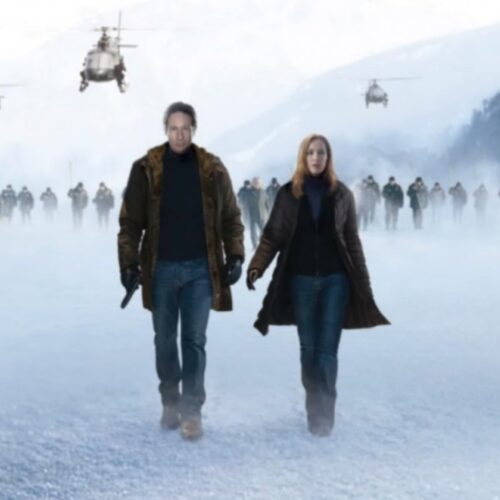
There is a lot of excitement and some trepidation among The X-Files fans about Ryan Coogler's reboot for Hulu, currently in production. While we're waiting, Hulu just released Chris Carter's revamped (and R-rated) director's cut of the 2008 standalone spinoff film The X-Files: I Want to Believe, distinguishable from its predecessor with a slightly different title: The X-Files: I Want to Believe–Vrach Frankenshteyn.

(Minor spoilers below but no major reveals.)

I Want to Believe received mixed reviews at its release and didn’t exactly light up the box office, but it still grossed $68 million against its $30 million budget. By 2015, the project led to the return of The X-Files as a limited-run TV series, with the six-episode season 10 debuting in 2016. Mulder and Scully were reunited 14 years after the events of season 9 as the FBI reopened the X-Files under Assistant Director Walter Skinner (Mitch Pileggi). The response was strong enough to warrant a follow-up ten-episode season in 2018, focusing on Mulder and Scully’s search for their missing son, William.

Read full article

Comments

© 20th Century Fox

  •  

Taylor Farms' connections to Trump admin spurs probe into Cyclospora response

As Americans cook their vegetables to at least 158°F to kill a diarrheal parasite that has sickened over 24,000 people and killed two this summer, one US Senator is turning up the heat on Health Secretary Robert F. Kenney Jr. over the government's "calamitous response" to the record outbreak.

In a letter sent Thursday, Elizabeth Warren (D-Mass.) called the federal response to the Cyclospora outbreak "botched" and "marred by missteps." She pointedly questioned whether corruption and incompetence within the Trump administration and its clear ties to Taylor Farms—the mammoth produce distributer that sold Mexican-grown iceberg lettuce linked to the outbreak—played a role in the federal government's failures.

"[P]olitical contributions and direct White House lobbying from Taylor Farms... raise urgent questions about the role this influence-peddling may have played in loosening federal food safety oversight and hampering the federal government’s response to the outbreak," Warren wrote in the letter.

Read full article

Comments

© Getty | Benjamin Fanjoy

  •  

OpenAI and Anthropic in price war as Chinese AI rivals gain ground

Leading US AI labs such as OpenAI and Anthropic are releasing cheaper models as they fight to retain cost-conscious customers who are switching to cut-price alternatives from Chinese rivals.

The price war comes as rising AI bills push companies to curb usage and seek cheaper models, helping Chinese developers including Moonshot and DeepSeek make inroads with users from Silicon Valley to Europe.

OpenAI recently said that it was slashing prices for GPT-5.6 Luna, its “fastest and most affordable model”, by 80 percent. Anthropic has launched Claude Opus 5, touting the system’s “frontier intelligence... at half the price” of Fable 5, the company’s most capable model.

Read full article

Comments

© MARTIN LELIEVRE

  •  

Rocket Report: Rocket Lab shows off its flexibility; Blue Origin's two-pad plan

Welcome to Edition 9.06 of the Rocket Report! Rocket Lab made a lot of news this week with its quarterly update, and it is clear the company is making impressive progress as it becomes much more than a launch company. But at the end of the day, a lot of the company's success is predicated on the Neutron vehicle, and I'm not thrilled with Rocket Lab's ambiguity around its readiness. As a user on X noted, the company's language on Stage 2 being ready to ship to the launch site has not changed much in 12 months.

As always, we welcome reader submissions, and if you don't want to miss an issue, please subscribe using the box below (the form will not appear on AMP-enabled versions of the site). Each report will include information on small-, medium-, and heavy-lift rockets as well as a quick look ahead at the next three launches on the calendar.

Rocket Lab decides to get flexible. Rocket Lab plans to start launching its Electron vehicle even more frequently and flexibly, thanks to a new portable spaceport system called GHOST, Space.com reports. GHOST—short for "Global Hypersonic & Orbital Spaceport Technology"—turns the company's "Electron and HASTE rockets into a launch-anywhere, launch-anytime capability for multi-launch flight campaigns and critical national security missions," the company said this week.

Read full article

Comments

© Blue Origin

  •  

Samsung Galaxy Z Fold 8 Ultra review: The ultra foldable with an ultra price

Samsung has largely defined the foldable phone category, but it's no longer alone in releasing flexible devices. Google, Motorola, and a raft of Chinese OEMs have their own take on this form factor. Is the new Galaxy Z Fold 8 Ultra really "ultra" enough to remain on top?

This phone doesn't have the wide frame of the new Z Fold 8, instead matching the approximate size and shape of the company’s last few tablet-style foldables. The Z Fold 8 Ultra is not a big leap, but it continues Samsung's pattern of iterative foldable improvements. At this point, there's very little left to improve. The compromises of going with a foldable over a regular flat phone have largely been erased with the Z Fold 8 Ultra. Well, except for the price.

Flatter and a little better

Foldables used to be real pocket-busters, almost like carrying two phones glued together. Samsung has successively shaved a few millimeters off every year, taking a leap last year with the Z Fold 7. The Z Fold 8 Ultra is even a bit slimmer than that phone, but the difference is basically imperceptible. It still has the same buttons in the same places, including a fingerprint sensor in the power button.

Read full article

Comments

© Ryan Whitwam

  •  

Organic-looking brake assemblies debut on new Czinger 21C Spyder

Across California, it's time for Monterey Car Week, a cluster of events I once called "Comic-Con and the Oscars but with wheels." For the last however many years, though, it's mostly felt like an accumulation of rich people and influencers all crammed into the now-traffic-snarled peninsula, each paying 10 times the normal price for five-night minimums in three-star motels. While being there in person is pretty far down the list of things I want to do these days, that doesn't mean there's no interesting news coming out of the event. And no, I'm not talking about that hideous collaboration between Singer and Louis Vuitton. I'm instead referring to the latest creation from Czinger.

We first encountered Czinger's direct-metal laser-sintering technology a decade ago, before founder Kevin Czinger had even started the car company—at the time, it was still Divergent 3D. But what better way to show to the rest of the automotive industry that they should contract with you as a parts supplier than by making your own car? That was the idea behind Czinger (the company), and it's an approach that worked, as Divergent now has clients in the automotive sector as well as aerospace.

And what a car it is: a hybrid with tandem seating and an ability to set new lap records should you have the skill. But the performance is less interesting than the engineering. Free of its body panels, the structure looks more organic than mechanical, with topology-optimized shapes that are lighter but no less performing than traditionally designed alternatives.

Read full article

Comments

© Czinger

  •  

US wait times for cancer surgeries are getting longer and longer

As cancer treatments have advanced and outcomes have improved, one aspect of cancer care in the US has consistently worsened over the last decade: the wait time for surgery.

According to a study in JAMA Surgery, patients with one of six types of cancer—breast, colon, lung, pancreatic, gastric, and esophageal—have faced longer wait times for surgery than in 2012. Timeliness is considered a core metric of healthcare quality, and delays in cancer surgery have been linked to poorer outcomes, including reduced survival rates and increased patient anxiety and distress.

The findings of the new study are based on data from over 2.7 million patients who had been diagnosed with non-metastatic stage I–III cancers requiring surgery between 2012 and 2023. Researchers led by cancer expert Timothy Donahue at the University of California, Los Angeles, broke that time frame up into four groups: 2012–2015, 2016–2019, 2020–2021, and 2022–2023 to see how wait times have changed over the period.

Read full article

Comments

© Getty | AFP

  •  

Private security firms will soon be allowed to hack overseas cybercriminals

The Trump administration is recruiting private security firms to conduct federal government-authorized operations, including cyberattacks, against overseas-based criminal organizations that commit hacks on US persons, organizations, or government entities.

In a National Security Presidential Memorandum issued Thursday, US President Donald Trump directed the National Coordination Center (NCC), which operates under the Homeland Security Task Force, to develop a program for conducting specific cyber operations that combat foreign transnational criminal organizations (TCOs). The Departments of Justice and Homeland Security will provide oversight. The lynchpin of that program is bringing in private sector companies to participate.

Devil will be in the still-undefined details

A fact sheet that accompanied Thursday’s memo listed ransomware, sextortion schemes, phishing campaigns, financial fraud, and impersonation scams as activities eligible for private-sector security firms to target. The memo said such firms could “conduct Cyber Surveillance Operations and Cyber Effects Operations” against “cyber-enabled” TCOs. Such groups are defined as “any foreign group that conducts cyber-enabled crime against the United States Government, a United States person, or United States interests, and that is not an institutional part of a foreign government or wholly operated under a foreign government’s direction.”

Read full article

Comments

© Getty Images | cokada

  •  

Virgin Galactic wants your help naming its new Delta class spaceship

As Virgin Galactic nears christening the first of its next-generation spaceship designed to launch customers on suborbital flights, it still is missing a key component—a name.

The self-described "commercial spaceline," which was founded by British tycoon Richard Branson, has turned to the public to vote on what to call the new vehicle. The spaceplane will be a member of Virgin Galactic's Delta-class fleet, succeeding SpaceShipTwo, which carried Branson and 31 others on 12 short hops above the US-defined boundary between Earth and space.

"You can vote for one of four finalist names for a spaceship that will join Virgin Galactic's growing fleet and the next chapter in our journey to expand access to space," the company announced on its website on August 11. "Name a Virgin Galactic spaceship, shape a piece of spaceflight history."

Read full article

Comments

© Virgin Galactic

  •  

Ukrainian drones wipe out entire US tank brigade in live war game

Ukrainian drone teams demolished a brigade of US Army tanks and armored vehicles during a live war game held this year—but the US soldiers were lucky enough to get “respawn” attempts while learning from the experience.

The semiannual military exercise, called Combined Resolve, gave the US military a firsthand taste of how modern drone warfare has evolved on the battlefields of Ukraine. The Ukrainian drone operators participating in the exercise were easily able to spot and destroy US armored vehicles by mimicking the actions of dropping bombs from above or moving close enough to simulate a kamikaze strike, according to US officials and a participant who spoke with The Wall Street Journal.

US armored vehicles were being destroyed so quickly that they were “respawned” and sent back into the simulated fray, a US official told The Wall Street Journal. The US troops who participated in the exercise—held in Germany from April 9 to May 10—were on rotational deployment from Fort Hood, Texas.

Read full article

Comments

© Sgt. Joseph Mcdonald | US Army

  •  

Flock “can’t tech its way out” of the stalker cop problem, experts say

On Thursday, Flock announced plans to require all agencies with access to license plate reader data to use a safety tool that automatically detects abnormal activity and locks out cops who abuse their access to stalk people they know in their personal lives.

Flock’s audit assistance tool suspends access when user activity “meets defined criteria for abnormal behavior,” Flock said. The suspension can only be lifted by administrator review, with the goal being “to intervene before misuse becomes recurring or widespread.”

The tech has been available as an optional free feature since April, but only a third of agencies had opted in, Flock said. However, after a single Georgia sheriff’s office used the tool and subsequently arrested three cops who were separately using Flock cameras to stalk acquaintances, Flock CEO Garrett Langley told The Verge that dozens of incidents like these helped his company realize they made a mistake and had to act to correct it.

Read full article

Comments

© Justin Sullivan / Staff | Getty Images News

  •  

Pet owners say smart pet feeder outage led to furry ones going unfed

Smart pet-feeder company Petlibro suffered an outage on Tuesday, giving users a harsh reminder of the risks of relying on smart devices.

Petlibro makes pet feeders that connect to Wi-Fi and, for setup with Petlibro’s mobile companion app, Bluetooth. Users can set the feeders to automatically dispense food at scheduled times, which is handy for pet care when the owner is out of the home.

In a statement to The Verge, Petlibro CEO York Wu said this week’s outage was “related to how the Petlibro app communicates with devices through its online servers.”

Read full article

Comments

© Petlibro

  •  

The new Instagram logo is the perfect embodiment of AI slop

Today, Instagram unveiled a refresh of its wordmark, accompanied by the usual bland corporate platitudes these kinds of announcements are always packaged with.

Head of Instagram Adam Mosseri called it “leaner and more modern, with references to the original and the simplicity and craft that’s always made it Instagram.”

Sure, Adam. Simplicity and craft are definitely what everyone thinks of when Instagram comes to mind.

Read full article

Comments

  •  

Google announces Gemini 3.7 Flash just three weeks after previous release

Google is announcing a new Gemini model today, but it's not the long-awaited 3.5 Pro. Gemini 3.7 Flash is now rolling out to replace 3.6 Flash, which itself was released only three weeks ago. This new "workhorse" model is supposedly the product of core optimizations and developer feedback, offering improved coding and agentic performance. And Google is hoping to counter the lower cost of some competing models with a lower "introductory price" for 3.7 Flash.


According to Senior Director Tulsee Doshi, Gemini 3.7 Flash is noticeably better at coding than the previous Flash release. She cites a jump in the FrontierCode 1.1 Main test from 34.4 to 43.6 percent and DeepSWE v1.1 going from 49 to 65.3 percent. As for the vibes, Gemini 3.7 Flash's WebDev Arena score has risen to 1,588 from 1,538.

People turning to Gemini and hoping it will "know" things may also see modest improvements in Gemini 3.7 Flash. The GDP.pdf benchmark, which measures how well a model can process complex documents, has gone up to 34 percent versus 22 percent with 3.6 Flash. AutomationBench tests how well models can execute common business workflows, and Gemini 3.7 Flash rose to 30.4 percent from 3.6's 17 percent score.

Read full article

Comments

© Aurich Lawson

  •  

Rivian's 2027 changes include its No. 1 most-requested feature

It's time for Rivian's changeover from model year 2026 to 2027, and the electric vehicle startup has decided to take a page from its recently released R2 SUV and apply it to the company's larger, more expensive R1 line. The changes aren't massive—the R1 got a refresh in 2024 that saw the R1S SUV and R1T pickup each get some comprehensive re-engineering with new powertrain options, a new electronic architecture, and new batteries.

But among them is the No. 1 most requested feature by Rivian R1S customers, the automaker told Ars: captain's chairs for the second row. The six-seat interior is an alternative to a middle bench, and the Rivian captain's chair looks thoughtfully designed, with a hidden cupholder that I'm not sure I've seen on any other SUV before. The chairs are also spaced so it's easy to get to the third row, or use that volume between them for skis, snowboards, or surfboards.

Rivian has also changed the trims, bringing them into line with the offer structure on the recently released R2. Instead of choosing from Dual, Tri, or R1s, Rivian is now calling them Premium and Performance; Quad stays Quad. But the base price for each stays the same: The R1T still starts at $79,990 and the R1S at $83,990.

Read full article

Comments

© Rivian

  •  

Anthropic could be worth $2 trillion when it goes public

Anthropic investors expect the AI startup to float at a valuation of $2 trillion or more in October, a dizzying figure that would eclipse SpaceX and make the AI lab’s debut the largest-ever initial public offering.

Half a dozen of the company’s backers told the FT that Anthropic’s rapidly rising revenue would enable it to more than double its current valuation in a planned autumn float.

A listing at that level could unlock billions of dollars in gains for the five-year-old company’s early investors but would also test public markets that are growing more nervous about the AI boom.

Read full article

Comments

© Getty Images | picture alliance

  •  

We've flown a radiation-blocking vest to the Moon and back, and it worked

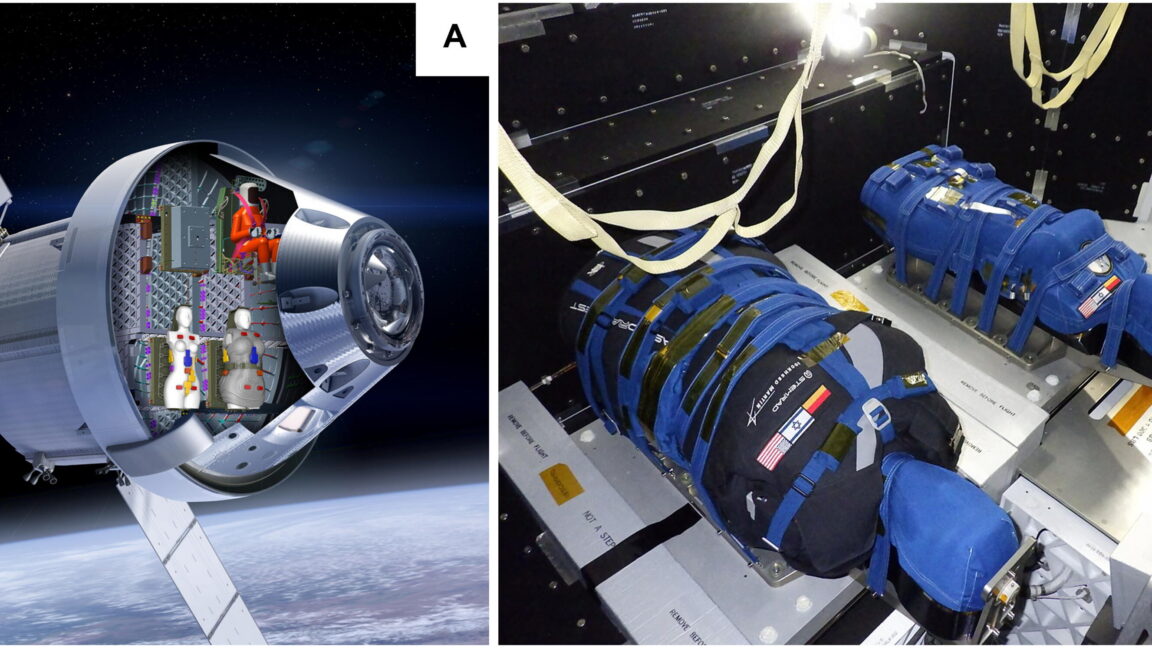
Solar storms, like the one in August 1972 that hit during the gap between the Apollo 16 and Apollo 17 missions, throw bursts of protons intense enough to raise an astronaut's cancer risk or even cause radiation sickness. Earth's atmosphere and magnetic field absorb this radiation, but crews heading to the Moon or Mars won't have that protection, and no spacecraft built so far has enough shielding to stop it.

A team led by Jordan Houri and Oren Milstein of StemRad, an Israeli-American startup developing personal protective equipment against radiation, proposed that we could solve this by shielding the astronauts instead of shielding the spacecraft.

To test this idea, StemRad’s team flew a wearable radiation-shielding vest called AstroRad to the Moon and back aboard NASA's uncrewed Artemis I mission, then used the flight data to calculate how it would perform during an actual solar storm. It turns out the vest would perform roughly as well as the Orion’s heavily shielded onboard shelter the crew was supposed to hide in to wait out a storm.

Read full article

Comments

© NASA/Lockheed Martin/DLR

  •  

Claude's new Scarlet Letter watermark is invisible—for now

Anthropic has revealed that it will soon watermark content that is processed (not just generated!) by any of its models. In a support article, Anthropic explained that it was rolling out machine-readable watermarks to comply with the European Union’s AI Act, which requires all AI system providers to watermark AI-generated or manipulated audio, image, text, and video outputs. The law applies to any AI model released after August 2 and provides a grace period until December 2026 for providers to update previously released models.

Anthropic confirmed that moving forward, all new models offered globally—not just in the EU—will mark AI-generated content “from day one.” Text outputs will “carry embedded watermarks,” invisible to the user, and other “generated files will include digitally signed provenance metadata where supported,” Anthropic said.

Notably, Anthropic is deploying a "nuke it from orbit" approach, applying the watermarks to all processed content where supported, even though the EU does not require it for cases where an AI system performs "an assistive function for standard editing" (the guidance's own example is grammar correction), or where it doesn't "substantially alter" the user's text or its meaning.

Read full article

Comments

© Aurich Lawson | American Psycho (Lions Gate Films)

  •  

Toddler's tragic death from brain-destroying amoeba offers lessons for doctors

A healthy toddler in Washington state fell ill abruptly. It began with vomiting, lethargy, and weakness on his right side. Then it progressed to a headache, fever, and trouble swallowing. At one point, he briefly became unresponsive, and he had episodes where he stopped breathing. Doctors admitted him to the hospital, but his condition only deteriorated.

The boy was infected with an ultra-rare amoeba known for ravaging the brain. The opportunistic pathogen was first identified in 1986 from the brain of a San Diego Zoo monkey, which died from the infection. Since then, only about 200 human cases have been recorded worldwide. About 90 percent of them have been fatal.

The initial symptoms can be vague and, given its rarity, the infection is notorious for being undiagnosed or misdiagnosed. Still, the scant medical literature does provide some telltale signs, clues of what it can look like on tests and scans. But for the toddler, the infection looked different, sending doctors down the wrong path.

Read full article

Comments

© Getty | CDC

  •  

The web’s newest weapon against AI scrapers is a font

AI companies' penchant for scraping through large swaths of the public web in search of valuable training data has already led to lawsuits and technical fixes aimed at stopping the practice. Now, a pair of designers is hoping to stymie these scrapers with a new font designed to offer people a perfectly readable webpage while serving scrapers a subtly edited, nonsensical version in the underlying HTML.

ShieldFont, as designers Isaque Seneda and Gabriel Abrucio write in a recent white paper, was made to offer web publishers "a practical opt-out from unauthorized AI training and [to] disrupt what is collected when that choice is ignored."

When is a horse a potato?

The font is based around ligatures, a long-standing feature of many fonts that is usually used to replace certain letter pairs with a more readable version when they're smushed up next to each other. With ShieldFont, though, those ligatures are instead used to replace entire words with others in an attempt to destroy the text's value to scrapers. This substitution only happens when the font engine draws the page onscreen, meaning scrapers that simply download plaintext source code get an altered version that end users never see.

Read full article

Comments

© Getty Images

  •  

Terabytes of credentials leaked in massive supply-chain attack

Terabytes worth of credentials, many belonging to the world’s biggest and most sensitive organizations, have been exposed in a supply-chain attack on LiteLLM, an open source tool that streamlines AI-driven software development. Microsoft, Amazon, Cisco, Samsung, and Salesforce are only a handful of the entities whose access secrets were exposed.

The revelation was posted on Tuesday and Wednesday by security firms CloudSEK and Hudson Rock. CloudSEK said it found cloud keys, repository tokens, SSH keys, Kubernetes secrets, package publishing credentials, environment variables, and AI provider keys that could allow attackers to gain access to more than 2,500 organizations.

40 minutes is all it takes

The credentials were extracted during a 40-minute window in March while the victims used compromised versions of LiteLLM downloaded from the package’s official location in the Python Package Index repository. Hudson Rock said it made the discovery after analyzing a 195TB file that it obtained. Neither firm identified the source of the information.

Read full article

Comments

© Getty Images

  •  

Have physicists finally discovered glueballs? New evidence points to yes.

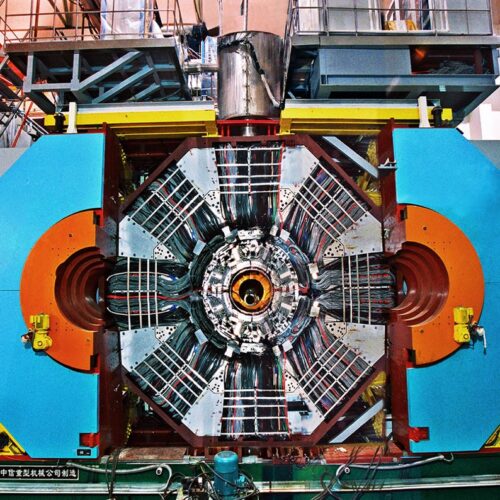
Physicists with the Beijing Spectrometer III (BES III) experiment have uncovered convincing new evidence of the existence of so-called glueballs, an elusive composite particle made entirely of gluons predicted by quantum theory. The results appeared in a preprint posted to arXiv last month and were also presented last week at the International Conference on High Energy Physics (ICHEP).

All the stuff we see around us is made up of quarks held together by gluons (carriers of the nuclear strong force) to form protons and neutrons, which comprise the core of every single atom. The Higgs boson, discovered in 2012 after decades of searching, was widely touted as the final missing piece of the Standard Model of Particle Physics. But there are still plenty of unanswered questions, including whether or not glueballs really exist. They should, if the Standard Model is correct; they're a direct prediction of quantum chromodynamics, i.e., the theory of the strong nuclear force. There should even be several kinds of glueballs.

As Matthew Francis wrote for Ars in 2015:

Read full article

Comments

© BES III Collaboration

  •  

Twitch content has trained Amazon AI for years, but users can opt out now

Twitch now lets users opt out of Amazon's use of content from their channels to train Amazon's "generative AI content models." The change, announced today, comes more than two years after a company executive confirmed that Amazon was using Twitch content for AI training.

In an updated support page, Twitch confirms that users must opt out if they don’t want their “streams, VODs, clips, stream chats, and pictures and text on your channel [to] be used in future training of a model developed by Amazon whose purpose is to generate or synthesize text, audio, images, or video.”

To opt out, users must go to the proper settings at www.twitch.tv/settings/security.

Read full article

Comments

© Omar Marques/SOPA Images/LightRocket via Getty Images

  •  

Trump sued over "brazen" scheme to sell Truth Social API access for $100K a month

President Trump was sued by nonprofit news groups today over Truth Social's "Truth API" that sells real-time access to posts from Trump and other top users of the social network. Trump is profiting from selling preferential access to government information, the lawsuit said.

Trump's social media company this month started charging customers up to $100,000 per month for the earliest access to posts that can have immediate impacts on financial markets. The first customers are mostly high-frequency trading firms that could benefit financially from getting official government news milliseconds before others.

"This scheme is profoundly corrupt. The President stands to gain financially by giving 'market-moving' government information to those who are willing and able to pay his personal company," the lawsuit said.

Read full article

Comments

© Getty Images | Kevin Dietsch

  •  

US boosts drone surveillance as flesh-eating screwworms spread in Texas

Hundreds of US government drones have switched from border surveillance to a different surveillance mission this summer—looking for signs of screwworm infestations in wild animals and livestock herds.

The flesh-eating New World Screwworm is the parasitic larva that emerges from eggs laid by flies in the open wounds or body openings of warm-blooded animals and humans, with untreated cases potentially leading to severe injury or death. Since the first screwworm cases were detected in South Texas in June, the US Department of Agriculture and US Customs and Border Protection have been conducting “one of the most extensive animal-health surveillance operations in the country,” the USDA said on August 10 in social media posts on platforms like X and Facebook.

The effort involves at least 200 drones owned by the Department of Homeland Security, which includes the Customs and Border Protection (CBP) agency. But the actual number in use "varies depending on availability and need," a USDA spokesperson told Ars.

Read full article

Comments

© US Department of Agriculture

  •  

Two hydrogen-burning engines powered this car to a new land speed record

It's been far too long since I've been able to report a new land speed record. For a while, it looked like Bloodhound might have been able to make good on its 1,000 mph (1,609 km/h) attempt, but then the money ran out. As a result, Thrust SSC's two-way average of 763.6 mph (1,229 km/h), set in 1997, remains the fastest anyone has ever driven a wheeled vehicle over a timed mile. But yesterday, on the Bonneville Salt Flats in Utah, a new record was set by the JCB Hydromax for hydrogen-powered cars.

JCB is a UK-based manufacturer of heavy industrial and agricultural equipment—think diggers, loaders, backhoes, tractors, and so on. And as JCB is based in the UK, it doesn't have the luxury of being able to ignore carbon emissions targets; it has to have alternatives to diesel engines. For some products, that means switching to batteries, but the company has also been working with hydrogen. At first, that meant fuel cells, but after developing prototypes, JCB concluded the tech was too expensive and too fragile for life on the farm or the construction site. Instead, in 2020, the company started developing its own hydrogen combustion engine.

The idea of burning hydrogen in an internal combustion engine has been tried before with little success. For example, in 2006, BMW modified a naturally aspirated V12 engine in a 7 Series to run on hydrogen, which it did, but with 60 percent of the power and five times the fuel consumption compared to gasoline. More recently, Toyota's president Akio Toyoda has been among the drivers of an experimental hydrogen-burning Toyota Corolla in some Japanese endurance races. In this case, Toyota started with the GR Corolla's turbocharged three-cylinder engine; the forced induction from the turbocharger made up somewhat for the reduced energy density of hydrogen.

Read full article

Comments

© JCB

  •  

US tries to override New York gambling laws, orders Kalshi to keep operating

The Trump administration is trying to stop New York from enforcing its gambling laws against Kalshi, and yesterday said it ordered the prediction market to continue operating in the state.

The Commodity Futures Trading Commission (CFTC) announced that it exercised its emergency authority in response to a "market emergency." The CFTC said it acted "to ensure market stability" and "ordered the exchange to continue to operate in accordance with the Commodity Exchange Act’s Core Principles." The Trump administration took the action after a request from Kalshi.

The market emergency alleged by the CFTC is that New York Attorney General Letitia James sued Kalshi on July 31. James' lawsuit seeks a court order to permanently enjoin Kalshi "from operating an unlawful gambling business" in the state. The lawsuit also demands that Kalshi "make full restitution to customers who have engaged in betting" and pay financial penalties.

Read full article

Comments

© Getty Images | Bloomberg

  •  
❌