Reading view

Motorola's GrapheneOS phones will launch in 2027 priced higher than Pixels

Several months ago, Motorola and the makers of GrapheneOS announced a team-up that would expand support for the privacy-centric OS to beyond Google's Pixel phones. The announcement, however, was bereft of details. Now, the creators of the OS have taken to Mastodon (naturally) to provide an update. Moto's GrapheneOS phones are on track to launch in 2027, but they'll cost a pretty penny.

The upcoming Moto devices won't ship with GrapheneOS, but they will be fully supported by the project with help from Moto itself. So far, only Pixel phones have met GrapheneOS's strict hardware requirements to ensure the highest level of security and privacy. The software, which is based on Android, includes features like enhanced memory protection, granular network permissions, customizable app sandboxing, and a duress code that can be used to wipe your phone. (That last one got an activist charged with a felony earlier this year after he used it to delete his data during a customs interrogation.)

According to the GrapheneOS team, the upcoming Moto phones will be premium flagship devices. The team expects pricing to be even higher than Pixel phones, which is saying something. The current Pixel lineup starts at $900 for the base model Pixel 11, a $100 increase from last year. The Pixel 11 Pro XL price has gone up to a whopping $1,300 this year.


Read full article

Comments

© Motorola

  •  

Lawsuit demands Logitech hand tariff refunds over to customers

Logitech is facing a proposed class action lawsuit for not giving customers tariff refunds.

In April 2025, Logitech raised the prices on 51 percent of its portfolio, with some prices increasing by as much as 25 percent.

The complaint seeks to “recover monies that Logitech extracted from American consumers as offset for import tariffs that the United States Supreme Court has since declared unlawful, tariffs for which Logitech now stands to be reimbursed by the federal government. This is all while Logitech retained every dollar of the corresponding price increases it charged its customers due to the illegal tariffs.”

Read full article

Comments

© Logitech

  •  

Fighter jets help destroy Russian drone boat near European offshore gas platform

This week, Romania accused Russia of sending a drone boat loaded with explosives to a vital European natural gas platform in the Black Sea. A Romanian F-16 fighter jet used its cannons to disable the surface drone so that explosive ordnance experts could blow it up safely.

On August 20, the Romanian Coast Guard first spotted the maritime drone a few hundred meters away from the Neptun Deep project’s main drilling platform, where several hundred workers were busy with the platform’s ongoing installation, Defense Minister Radu Miruță said in a Facebook post. The offshore gas project would make Romania the largest gas producer in the European Union once it starts full production in 2027.

To protect the lives of the workers and the offshore gas infrastructure, the Romanian military scrambled two F-16 fighter jets to stop the drone with cannon fire, Miruță said. Army specialists later carried out a controlled detonation, as seen in a Facebook video shared by the defense minister.

Read full article

Comments

© Romanian Ministry of Defense

  •  

US distributor of China’s most popular humanoid robots pivots after US ban

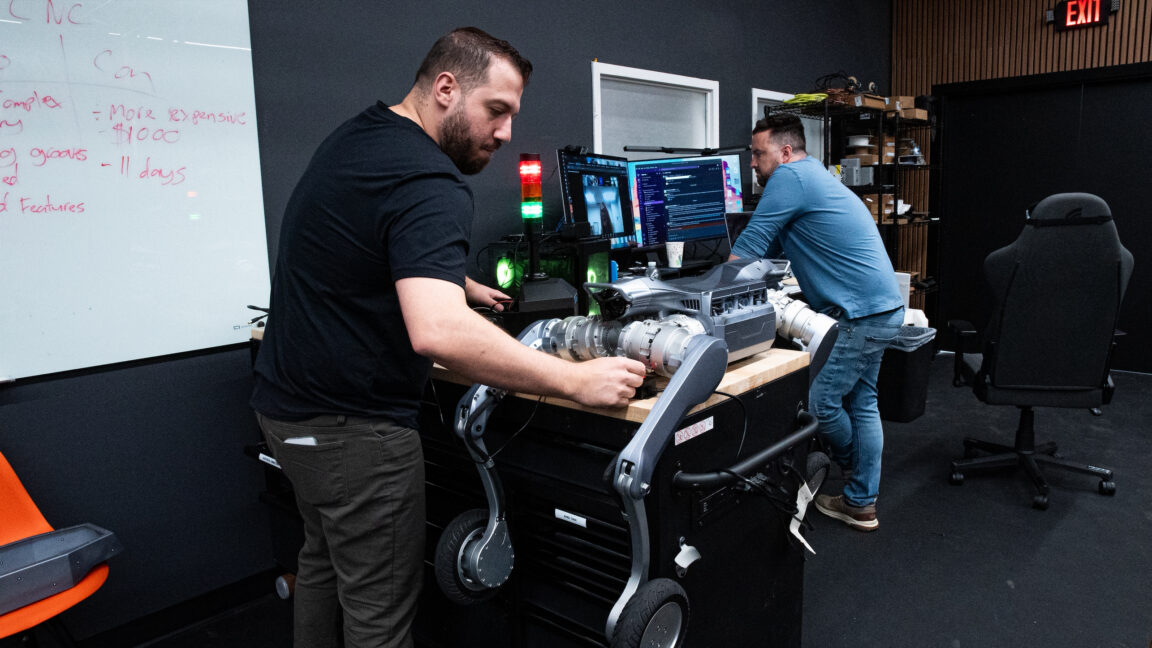
A leading US distributor of China’s most popular humanoid robots and robot dogs now plans to produce its own robots at a facility on Long Island, New York. The business pivot comes amid the US government’s growing crackdown on foreign-made robots.

The company, RoboStore, had previously become the main North American distributor for humanoid robots and quadruped robots from Unitree Robotics, a Chinese robotics company that produces some of the most affordable and popular humanoid robot models. Universities like Harvard and MIT, along with tech companies like Amazon and Nvidia, purchased such robots made in China through RoboStore for their own research and development purposes.

“We’ve sold over 1,500 robots and deployed them and worked with customers like Cisco, OpenAI, Nvidia, and over 150 universities,” Teddy Haggerty, founder and CEO of RoboStore, told Ars.

Read full article

Comments

© Robo Inc.

  •  

Reverse-lookup service exposed millions of photos of people’s faces

When someone uploads a photo to the people-search tool ClarityCheck, the website has a clear message: “Your reverse image search is private and secure.” New research, though, shows that the website left more than 9 million image files, including photographs of people’s faces, publicly exposed. And a second misconfiguration publicly exposed people’s email addresses and phone numbers.

Overall, according to findings from independent security researcher Jeremiah Fowler, the exposed ClarityCheck database contained roughly 450 GB of images, including what appeared to be profile images, screenshots, and other photographs of adults, teenagers, and children. All of the images were stored in an unsecured Amazon S3 bucket, with files in folders named “faces” and “profiles,” which could be accessed by anyone online through a URL included in the company’s publicly available website code.

ClarityCheck is one of a number of so-called people-finder tools that have appeared online in recent years. These websites broadly claim to be able to search the web, public records, and other databases to identify individuals. ClarityCheck’s website says it can run searches on phone numbers, email addresses, vehicle identification numbers, and names. Its photo-search page says it can help “identify anyone in a photo” and find social media profiles “in seconds.”

Read full article

Comments

© picture alliance / Contributor

  •  

Amazon aims for delivery drones to reach 500 US neighborhoods by end of 2026

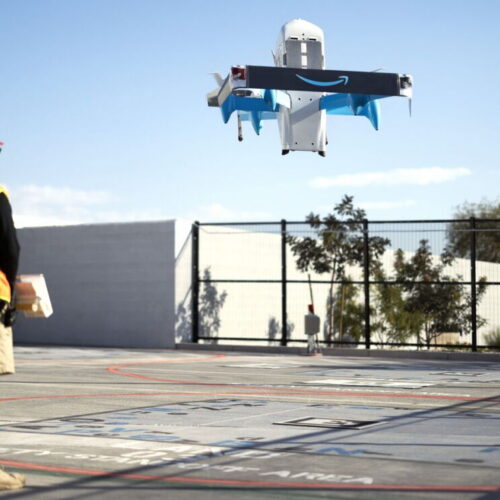
Amazon wants to grow its Prime Air delivery drone service sixfold to reach nearly 500 cities and towns across the United States by the end of 2026. The planned expansions from Amazon and its rivals could make the convenience of delivery drone services available to tens of millions more people in the coming months—but will also test more communities’ tolerance for increased noise from daily drone flights.

On August 19, Amazon announced it would soon launch Prime Air in the metropolitan areas of Chicago; Cleveland; Atlanta; Syracuse, New York; and Boise, Idaho, with more to come later in the year. Each Prime Air site offers delivery drone service within an area of about 175 square miles, with delivery times ranging from half an hour to an hour.

Prime Air already operates out of Amazon warehouses in 10 cities across seven states. Those include primarily suburban neighborhoods of Phoenix; Tampa; Kansas City; Omaha, Nebraska; Baton Rouge, Louisiana; Detroit; Houston; and San Antonio, Dallas, and Waco, Texas.

Read full article

Comments

© Amazon

  •  

Framework responds to complaints that BIOS update bricks Ryzen 7040 laptops

A BIOS update for the Framework Laptop 13 with AMD Ryzen 7040-series processors is bricking the systems, multiple users have reported online.

Framework started shipping pre-built Ryzen 7040-based Framework Laptop 13 computers and compatible motherboards in 2023. In June 2026, Framework released BIOS 3.20 for the devices. The update adds mainboard support for features, including a haptic touchpad and new speakers, for the higher-end Framework Laptop 13 Pro and fixes issues, including one “where the Battery Extender status was reported incorrectly following a reboot, hibernation, or shutdown after the timer had expired," per a post on Framework’s forum from an employee.

Some users say that they installed the update successfully.

Read full article

Comments

© Andrew Cunningham

  •  

Google Pixel 11 series review: Is the magic fading?

Google's approach to making smartphones has changed a lot over the years. It started with Nexus phones aimed at the tinkerer and enthusiast niche back when there were countless companies making smartphones. Today, there are far fewer, and Google's hyper-polished Pixel lineup is seeing less competition and higher sales. So maybe Google thinks it can just keep doing what works. The new Pixel 11 series is Google's most refined yet, featuring sleek designs, smart software, and incredible screens. They're also rather boring.

Google made precious few hardware changes in its 2026 phones, shaving off a fraction of a millimeter here and dropping a gram there. The design language has been the same now for three generations, all while prices continue to inch upward. And this year, Google's hardware has actually regressed in a few key areas. Despite that, the Pixel 11 phones aren't bad—they're some of the best 2026 has to offer. But it feels like Google is forgetting that it's not just competing against Apple and Samsung. It also has to compete against the Pixels of yesteryear.

The same old (but great) design

Just like last year's Pixel 10 series, Google's 2026 lineup includes three flat phones and one foldable. The flat Pixels are the same size, and even side-by-side, it's hard to tell them apart from their predecessors. We've got almost identical aluminum and glass sandwich designs, which do admittedly look very nice. They still have Pixelsnap, too.

Read full article

Comments

© Ryan Whitwam

  •  

Ukrainian drones overwhelm Russian tanks’ new active protection system—for now

Russian tanks have entered battle for the first time with a new active protection system designed to shoot down incoming drones. But the technology’s recent combat debut in Ukraine met with only limited success—Ukrainian drones still destroyed the Russian armored vehicles by attacking in overwhelming numbers.

The first documented battlefield appearance of the Arena-M active protection system took place when Russian forces launched a company-size assault with tanks and other armored vehicles in the Donetsk Oblast region of eastern Ukraine on July 22. The Ukrainian defenders repelled the attack and posted video footage of their kamikaze drone strikes destroying at least seven T-72B3A tanks, including some that carried the Arena-M system, according to Euromaidan Press.

However, Ukrainian soldiers also described the Russian Arena-M system successfully shooting down some incoming drones, according to the journalists Dmytro Putiata and Rob Lee. The Ukrainians reported requiring between 15 and 20 drones to finish off each tank.

Read full article

Comments

© Security Service of Ukraine

  •  

Peacock raises prices by 18 percent after becoming profitable

For the fourth time in four years, Peacock has raised its prices.

The Select plan, which has ads and doesn’t include sports, movies, or Peacock originals, went from $8/month to $9/month. The monthly fee for the standard ad plan (Premium) went from $11/month to $13/month, and the ad-free plan (Premium Plus) went from $17/month to $20/month. Annual pricing, as previously, offers 12 months for the price of 10 months.

Peacock’s previous price hike was in July 2025, when the middle tier (with ads) went from $8/month to $11/month, and the ad-free plan increased from $14 to $17. Peacock also raised prices in July 2024 and August 2023. NBCUniversal launched the service in 2020.

Read full article

Comments

© Jakub Porzycki/NurPhoto via Getty Images

  •  

Fairphone's latest repairable phone is finally available in the US for $650

As smartphone designs have become more refined, they've also become less repairable. Fairphone bucks that trend, offering devices that can be fully disassembled and serviced using a single screwdriver. But its devices were a pain to get in the US until now.

The Dutch company has launched the Fairphone Gen 6+ in the US, offering not only the phone but a full line of accessories and replacement parts so you can keep your phone running for years. And yes, the battery is removable.

Don't expect the Fairphone Gen 6+ to blow you away in the spec department—it focuses on being repairable and paying workers a fair wage. Half of the phone is made from recycled materials, and it has a microSD card slot. How retro.

Read full article

Comments

© Fairphone

  •  

Petlibro accused of “gaslighting” users over smart pet feeder outage

Petlibro founder and CEO York Wu provided more information about an outage that left users unable to control their smart pet feeders through the companion app and, in some reported cases, left them with hungry pets.

Petlibro, a company owned by Shenzhen, China-headquartered firm Shenzhen Libro Technology Co., first acknowledged the outage on Tuesday at 5 am PT. At 7 pm PT on Wednesday, Petlibro said the outage was resolved. Notably, some people online reported different information at the time, and some claimed to still have problems as of August 13.

In a blog post on Saturday that included an apology and acknowledgement of the “frustration and concern” the outage caused, Wu confirmed that problems with Petlibro’s cloud server caused the outage:

Read full article

Comments

© Petlibro

  •  

First test flight of largest all-electric aircraft used just $5 of electricity

The first flight of the largest battery-electric aircraft to take to the skies lasted nearly half an hour while costing just $5 of electricity. That aviation feat comes at a time when jet fuel prices have skyrocketed because of the US war with Iran.

The test flight of Heart Aerospace’s X1 demonstrator aircraft took place at Plattsburgh International Airport in upstate New York on August 12. The X1 aircraft is comparable in size to a small regional airliner and can achieve a maximum takeoff weight exceeding 25,000 pounds with the help of four wing-mounted electric motors. The battery-electric propulsion system delivered more than one megawatt of power during the maiden flight.

All-electric aircraft can offer quieter and cleaner flight without the emissions that come from burning jet fuel. They may also prove more reliably cost-effective than conventional aircraft that come with jet fuel costs subject to geopolitical disruptions.

Read full article

Comments

© Heart Aerospace

  •  

Judge gives Google one week to fix "anticompetitive" app store download in Google Play

Google began offering third-party app store downloads in the Play Store earlier this week, but US District Judge James Donato says the company isn't doing enough. After reviewing the process for accessing the first non-Google store, Donato ruled that Google has added unnecessary "anticompetitive friction," ordering the company to rectify the issues.

While Epic and Google are patching things up with a global partnership agreement, the two are still on opposite sides of the antitrust case in the US. Google lost the case in 2023, and the intervening years have been about determining how to implement remedies to address Google's anticompetitive behavior. One of the court's key elements is the requirement that Google include third-party app stores in the Play Store, giving users an easy way to get apps from non-Google sources. Aptoide Games became the first such app store recently.

However, Google worked hard to avoid this outcome, attempting to settle with Epic to keep third-party app stores out. When it was forced to admit the Aptoide store under the terms of the ruling, Google didn't exactly put up a banner welcoming third-party app stores. In fact, Judge Donato found in a Thursday hearing that Google's implementation was not good enough, according to The Verge.

Read full article

Comments

© Google

  •  

Samsung Galaxy Z Fold 8 Ultra review: The ultra foldable with an ultra price

Samsung has largely defined the foldable phone category, but it's no longer alone in releasing flexible devices. Google, Motorola, and a raft of Chinese OEMs have their own take on this form factor. Is the new Galaxy Z Fold 8 Ultra really "ultra" enough to remain on top?

This phone doesn't have the wide frame of the new Z Fold 8, instead matching the approximate size and shape of the company’s last few tablet-style foldables. The Z Fold 8 Ultra is not a big leap, but it continues Samsung's pattern of iterative foldable improvements. At this point, there's very little left to improve. The compromises of going with a foldable over a regular flat phone have largely been erased with the Z Fold 8 Ultra. Well, except for the price.

Flatter and a little better

Foldables used to be real pocket-busters, almost like carrying two phones glued together. Samsung has successively shaved a few millimeters off every year, taking a leap last year with the Z Fold 7. The Z Fold 8 Ultra is even a bit slimmer than that phone, but the difference is basically imperceptible. It still has the same buttons in the same places, including a fingerprint sensor in the power button.

Read full article

Comments

© Ryan Whitwam

  •  

Ukrainian drones wipe out entire US tank brigade in live war game

Ukrainian drone teams demolished a brigade of US Army tanks and armored vehicles during a live war game held this year—but the US soldiers were lucky enough to get “respawn” attempts while learning from the experience.

The semiannual military exercise, called Combined Resolve, gave the US military a firsthand taste of how modern drone warfare has evolved on the battlefields of Ukraine. The Ukrainian drone operators participating in the exercise were easily able to spot and destroy US armored vehicles by mimicking the actions of dropping bombs from above or moving close enough to simulate a kamikaze strike, according to US officials and a participant who spoke with The Wall Street Journal.

US armored vehicles were being destroyed so quickly that they were “respawned” and sent back into the simulated fray, a US official told The Wall Street Journal. The US troops who participated in the exercise—held in Germany from April 9 to May 10—were on rotational deployment from Fort Hood, Texas.

Read full article

Comments

© Sgt. Joseph Mcdonald | US Army

  •  

Pet owners say smart pet feeder outage led to furry ones going unfed

Smart pet-feeder company Petlibro suffered an outage on Tuesday, giving users a harsh reminder of the risks of relying on smart devices.

Petlibro makes pet feeders that connect to Wi-Fi and, for setup with Petlibro’s mobile companion app, Bluetooth. Users can set the feeders to automatically dispense food at scheduled times, which is handy for pet care when the owner is out of the home.

In a statement to The Verge, Petlibro CEO York Wu said this week’s outage was “related to how the Petlibro app communicates with devices through its online servers.”

Read full article

Comments

© Petlibro

  •  

Twitch content has trained Amazon AI for years, but users can opt out now

Twitch now lets users opt out of Amazon's use of content from their channels to train Amazon's "generative AI content models." The change, announced today, comes more than two years after a company executive confirmed that Amazon was using Twitch content for AI training.

In an updated support page, Twitch confirms that users must opt out if they don’t want their “streams, VODs, clips, stream chats, and pictures and text on your channel [to] be used in future training of a model developed by Amazon whose purpose is to generate or synthesize text, audio, images, or video.”

To opt out, users must go to the proper settings at www.twitch.tv/settings/security.

Read full article

Comments

© Omar Marques/SOPA Images/LightRocket via Getty Images

  •  

US boosts drone surveillance as flesh-eating screwworms spread in Texas

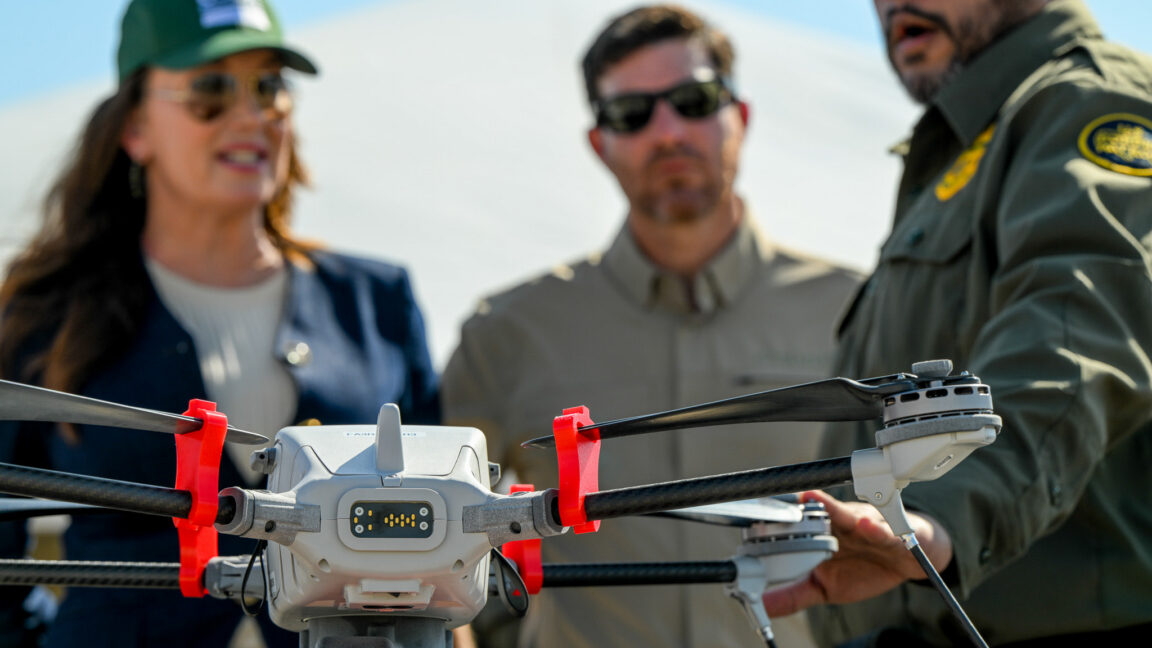
Hundreds of US government drones have switched from border surveillance to a different surveillance mission this summer—looking for signs of screwworm infestations in wild animals and livestock herds.

The flesh-eating New World Screwworm is the parasitic larva that emerges from eggs laid by flies in the open wounds or body openings of warm-blooded animals and humans, with untreated cases potentially leading to severe injury or death. Since the first screwworm cases were detected in South Texas in June, the US Department of Agriculture and US Customs and Border Protection have been conducting “one of the most extensive animal-health surveillance operations in the country,” the USDA said on August 10 in social media posts on platforms like X and Facebook.

The effort involves at least 200 drones owned by the Department of Homeland Security, which includes the Customs and Border Protection (CBP) agency. But the actual number in use "varies depending on availability and need," a USDA spokesperson told Ars.

Read full article

Comments

© US Department of Agriculture

  •  

Google reveals 2026 hardware lineup: Pixel 11, Pixel Watch 5, and Pixel Tag

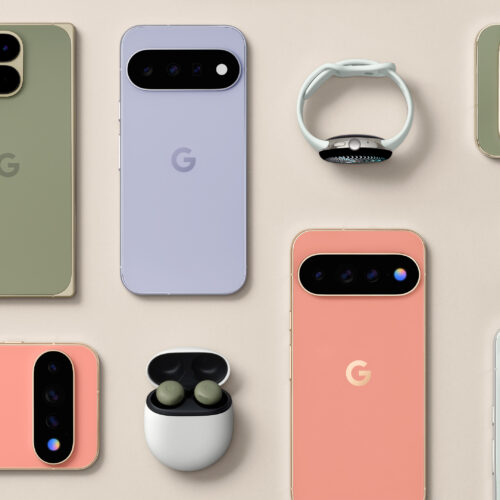
Google has revealed its Pixel phone hardware for 2026, and you won't be surprised. The Pixel 11 series looks a lot like last year's lineup, featuring an evolution of the design Google adopted with the Pixel 9. There are some minor tweaks, a few new hardware goodies, and yes, even more Gemini-powered AI. The new phones are joined by an updated Pixel Watch 5 with much the same story, as well as Google's first in-house tracker device, the Pixel Tag. And you can place orders for all of Google's new hardware today.

The Pixel 11 series is clearly the star of the show. You might even call it the highlight—or HiLight. Just as the leaks predicted, Google's most notable hardware innovation for the 2026 Pixel phones is the return of the notification LED (sort of).

The new HiLight feature is available on the Pro phones, so the base model Pixel will remain unilluminated. HiLight consists of a ring of RGB LEDs inside the flash assembly on the back of the phone. It lights up when you're talking to Gemini, so you don't have to look at the screen of your phone to know you've been heard or that the AI is working. Thus, it makes the most sense when the phone is lying face down.

Read full article

Comments

© Google

  •  

Russian drones found near vital European offshore gas site, get blown up

Romanian army divers used explosives to destroy two Russian-made drones found floating in the Black Sea near Romania’s largest natural gas project, according to the NATO member country’s defense minister.

Defense Minister Radu Miruță posted a Facebook video supposedly showing one of the drones being blown up in the water by explosive ordnance disposal divers of the Romanian army on August 11, as reported by Reuters and other news outlets. The drones were first spotted in the water by a ship working in the vicinity of the Neptun Deep—an offshore gas project under development in the Black Sea that will make Romania the largest gas producer in the European Union.

A Romanian Coast Guard ship that responded with army soldiers aboard found two drifting Gerbera-type drones of Russian design along with other debris. Miruță also disclosed that Romania had reached out to “Ukrainian partners who confirmed that the systems do not belong to them.”

Read full article

Comments

© Romanian Ministry of Defense

  •  

A Google insider spills the tea on how the company forsook its founding ideals

In 2018, 20,000 Google employees worldwide made headlines when they staged a walkout to protest how the company had handled sexual misconduct allegations against key corporate executives, among other grievances. One of the organizers was Claire Stapleton, a communications specialist whose distinctive voice and ability to channel the corporate ethos had once earned her the internal moniker "Bard of Google."

Six months later, a disillusioned Stapleton resigned, claiming she had been demoted during the most recent restructuring as retaliation for helping to spearhead the walkout. The story of how she went from enthusiastic cheerleader to proactive dissident, and the many lessons she learned along the way, are featured in her new book, Don't Be Evil: Bad Bosses, Fake Promises, and My Escape from Big Tech—A Biting Memoir of Twelve Years Inside Google.

Stapleton didn't set out to be a rabble-rouser. When she joined Google out of college in 2007, it was like "getting the golden ticket in Willy Wonka," she told Ars. Awareness of her good fortune offset any initial uneasiness or skepticism, although Stapleton was sufficiently independent-minded not to move into what was then Google's new corporate housing development in Mountain View, California. Stapleton was very good at her job, and she quickly moved up the ranks, playing a key role in shaping the company's public image.

Read full article

Comments

© Alex Tai | SOPA Images | LightRocket | Getty Images

  •  

Developer Cold Iron Studios shuts down cloud version of $60 game with no refunds

Following its announcement in March, game developer Cold Iron Studios has shut down the servers for the cloud version of Aliens: Fireteam Elite on the Nintendo Switch. The game originally cost $30 (or $60 for an “Ultimate” version with additional content).

Cold Iron Studios hasn't offered customers refunds.

TheGamer reported that affected players are entitled to a discount for the Nintendo Switch 2 version of the game, which is a 2021 co-op, third-person shooter based on the Alien film franchise. However, that would mean paying money for a game that you have already paid money for once.

Read full article

Comments

© Cold Iron Studios/Steam

  •  

Zuckerberg’s superyacht ignored emergency channel, failed to aid stranded boat

Social media scuttlebutt about Mark Zuckerberg’s $300 million superyacht failing to assist stranded boaters off the coast of Alaska was partly corroborated by ship-tracking data—and eventually prompted responses from both the US Coast Guard and a spokesperson for Zuckerberg.

The incident was made public when Michael Love, a passenger aboard the replica steamship Wilderness Legacy during an Alaska cruise, posted about it on the social media platform Bluesky. The ship detoured to rescue a stranded 21-foot skiff with two women, a child and a dog, after the US Coast Guard had supposedly first radioed Zuckerberg’s superyacht, Launchpad, for help without success.

“There was near unanimous booing when the captain announced this,” Love wrote in describing the Alaska cruise passengers’ response to the lack of help from Zuckerberg’s ship.

Read full article

Comments

© Sylvain Lefevre/Getty Images

  •  

Following Epic loss, Google has started hosting rival app stores in the Play Store

A new day has dawned in the Play Store, and it's one that Google tried very hard to avoid. The first third-party app store has arrived in Google Play as a result of the long-running antitrust lawsuit with Epic. Those in the US can now head into Google Play and download Aptoide, a game-focused store that has been available as a sideloaded client since the early days of Android.

Forcing Google to distribute third-party app stores in Google Play was one of several remedies imposed by Judge James Donato after Epic emerged victorious in 2023. The remedies also included lowering developer fees, mirroring Google Play apps in other app stores, and allowing developers to use alternative payment systems. But it was the app store stipulation that seemed to irk Google the most.

Google almost avoided this outcome when it agreed to a settlement with Epic, which was announced early this year. Under the terms, Google would certify third-party app stores to allow users to install and use them with less friction, but it would not host them in Google Play. However, Google and Epic withdrew the settlement when it appeared the court would not approve it. This Registered App Store program is still slated to launch internationally, but in the US, Google is only doing what it must to comply with the judge's orders.

Read full article

Comments

© Mateusz Slodkowski/SOPA Images/LightRocket via Getty Images

  •  

Europe's free satellite service just made it easier to track wildfires

The wildfires afflicting communities across the world can now be tracked more easily by anyone using Europe’s free and open satellite imagery service—all thanks to a wildfire visualization script originating from nearly a decade ago.

The Copernicus Browser provides free access to the latest satellite imagery taken by the European Space Agency’s Sentinel satellites for the European Union’s Earth observation program. The three satellites of the Sentinel-2 mission have proven especially useful for wildfire monitoring by providing multi-spectral imaging at resolutions as granular as 10 meters in visible light and near-infrared bands—and the Copernicus Browser previously offered 10 default visualization layers using different combinations of spectral bands.

Now Copernicus Browser has also added a straightforward “wildfires” visualization layer for Sentinel-2 imagery that went live on August 4. Anyone clicking on this layer while looking at a wildfire location can see active fires in white or yellow, burning vegetation in red, and burned landscapes in dark brown or black.

Read full article

Comments

© European Union | Copernicus Sentinel-2

  •  

OpenAI’s expensive smart speaker will use moving parts to seem “more alive”

OpenAI’s upcoming smart speaker will probably cost over $300, “people familiar with the matter” have told Bloomberg’s Mark Gurman.

The generative AI company has “discussed” charging up to $400, Bloomberg, which has been reporting on the yet-to-be-announced smart speaker since July, said today. The publication said that OpenAI is viewing the smart speaker as a smartphone replacement.

OpenAI has declined to comment on its product roadmap.

Read full article

Comments

© Getty Images | NurPhoto

  •  

Remembering the pre-Google web, when search was an experiment

In the mid-'90s, the web was exploding, but finding anything of actual value on it felt like an elaborate negotiation with whatever proto-search engine happened to be standing closest to the door. Unlike now, when Google is widely seen as both portal and gatekeeper, sites like AltaVista, Lycos, Excite, HotBot, and Ask Jeeves promised to tame the chaos, each with its own suite of quirks, charms, and flaws.

The real story of pre-Google search is not that early engines were inferior. It's that they reflected a different Internet entirely, one where directories mattered, crawling was still an art, ranking was fragile, and the idea of “search” had not yet hardened into a single dominant interface.

A different kind of web

The first thing to remember about the pre-Google Internet is that there was no built-in assumption that you could search for everything. Many users found pages through Yahoo-style directories, bookmarks, newsgroups, email signatures, and links from site to site because the web was still small enough that human organization could compete with machine indexing. It was an era of Wild West-style discoverability. Search engines existed, but they were only one part of a larger ecosystem that blended curation and accident.

Read full article

Comments

© Aurich Lawson

  •  

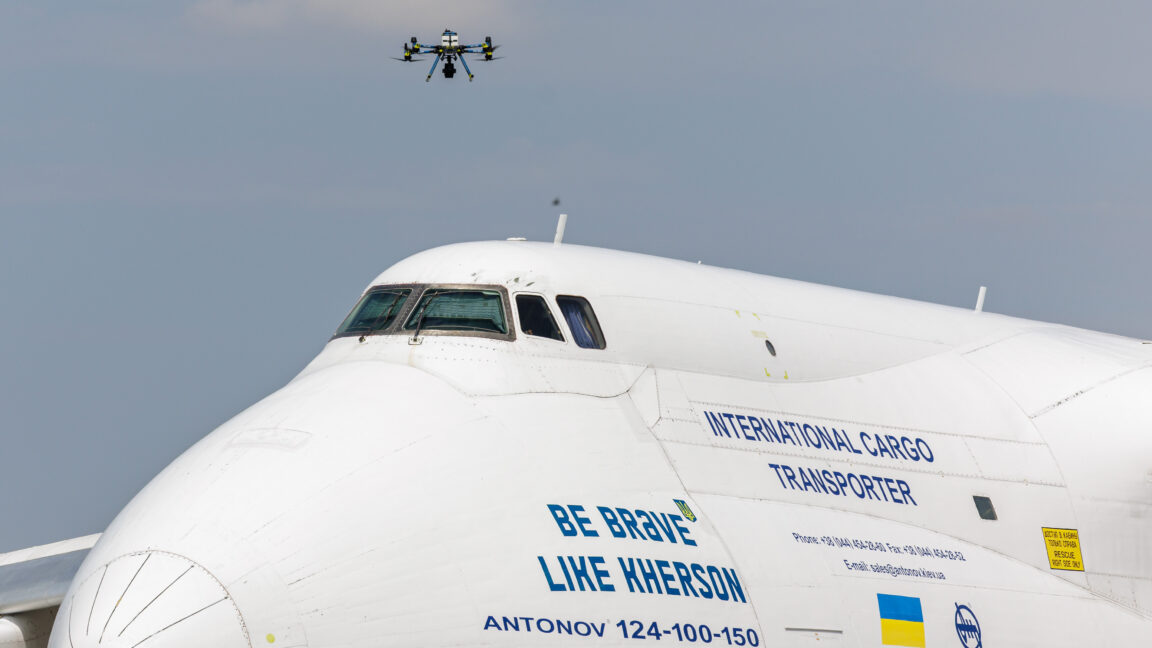
Explosive drone found hovering near Ukrainian cargo aircraft at German airport

German police disarmed a drone carrying explosives after it was discovered near Ukrainian cargo aircraft parked at Leipzig airport—and authorities are looking into the possibility of a second drone after an approaching aircraft collided with something midair.

The drone, first spotted by an airport employee, was hovering close to the ground between two parked An-124 cargo aircraft owned by Ukraine’s Antonov Airlines shortly before midnight on August 4, according to The Guardian. It had apparently been modified to help avoid detection by the airport’s drone defense sensors, said Alexander Dobrindt, federal minister of the interior for Germany, during a press conference.

Dobrindt described the drone as carrying a fist-sized package of a substance believed to be the plastic explosive Semtex. Only a failed detonator prevented the drone from exploding near the Ukrainian cargo aircraft, he said.

Read full article

Comments

© Jens Schlueter/Getty Images

  •  

AI isn’t enough to protect social media communities from AI

Sometimes you have to fight fire with fire. But when it comes to AI slop and hateful content threatening the safety and value of social media platforms, adding more fire—in this case, more AI—can make the problem worse.

At its best, social media can be a haven for people who want to share their experiences and knowledge. It gets closest to this ideal when users contribute authentic, valuable content, whether that’s a uniquely thoughtful blog post or a helpful video on how to build a PC. Relying primarily on AI tools to preserve that authenticity misses what makes social media worthwhile in the first place: the people behind it.

Erroneous erasures

In April, a Slack channel for moderators of the r/AskHistorians Reddit community was usually busy. The channel, which automatically receives links to modmail messages, was flooded with alerts after dozens of comments and posts dating back 10 years were automatically removed from the subreddit.

Read full article

Comments

© Getty

  •  

Reddit signals ominous upcoming "changes” for old.reddit.com

Old.reddit.com’s days appear to be numbered.

Reddit has strayed from saying that it will shutter the website, which many long-time Redditors prefer for its layout, navigation, and fewer feed recommendations.

In a blog post today, Reddit made a vague statement about upcoming “changes” to Old Reddit:

Read full article

Comments

© Kirill Kudryavtsev / AFP via Getty Images)

  •  

Google's AI shake-up: DeepMind's Hassabis steps aside, senior scientists depart

Google got a slow start with generative AI after seemingly being caught flat-footed by Microsoft's Copilot reveal. What a difference a few years make. Now, Google is at the forefront of AI development (for better or worse), but new cracks are beginning to show. The company's string of high-profile personnel departures continues, and DeepMind CEO Demis Hassabis has now said he will hand off day-to-day responsibilities to take on an oversight role at parent company Alphabet.

Hassabis was one of the founders of DeepMind, and he maintained a key leadership role after Google acquired it. As the generative AI boom took off, Hassabis has been one of the loudest voices predicting the impending creation of artificial general intelligence (AGI), which is typically described as an AI with human-like capabilities and intelligence.

In his memo announcing his decision to leave DeepMind, Hassabis again leans on the promise of AGI. "I've been working towards AGI my whole life and now, like many of you, I feel it is close at hand," said Hassabis.

Read full article

Comments

© Ruhani Kaur/Bloomberg via Getty Images

  •  

After jacking up prices, Disney+ and Netflix consider offering free alternatives

Disney is “exploring a free product” for streaming customers, CEO Josh D’Amaro confirmed in a call with investors today.

D’Amaro, who succeeded Bob Iger as Disney’s chief in March, said that a free Disney-owned streaming service would help Disney reach more “price-sensitive” customers, which is a “strategic priority” for Disney, according to a transcript of the call.

A free streaming service would also generate more ad revenue, which has become increasingly important for streaming services challenged by plateauing subscriber numbers, subscriber churn, and competition from cheaper and free rivals.

Read full article

Comments

© Getty

  •  

Google plans to kill Assistant on your phone on September 4

Google Assistant's days have been numbered for a while, but the company has now settled on a date to retire its pre-AI assistant robot. In an email being sent out to users, Google confirms that Assistant on Android devices will be shut down starting on September 4, forcing everyone over to Gemini. Google told us it was coming, but that doesn't make it hurt any less.

The initial plan was to retire Assistant in late 2025, but the service got a brief reprieve as Google shored up some aspects of Gemini. Now that Gemini is ready to take over, Google will begin ending support for the old system on September 4, but the email notes that it may take several weeks for the process to complete. So those stubbornly clinging to Assistant may still be able to use it a bit longer before the option disappears. For those who made the switch already, nothing will change.

By ending Assistant on mobile devices, Google is also killing it on myriad other gadgets that connect to your phone for smart features. So smartwatches, headphones, and cars with Android Auto are also being forcibly moved to Gemini. Most of Google's smart home devices have already transitioned to Gemini.

Read full article

Comments

© Aurich Lawson

  •  

The Pixel 11's "glow" feature is actually called HiLight—here's what it does

Google will reveal the Pixel 11 series later this month, but leaks and teasers so far have painted a picture of phones that have barely changed since last year. One notable exception seems to be the illuminated dot from some of the teasers. This has been rumored as "Pixel Glow," but a new leak all but confirms a different (and less interesting) name. Say hello to HiLight.

A post on Bluesky by WinFuture's Roland Quandt shows the new LED inside the camera module of the Pixel 11 Pro Fold. We can see the actual body of the device rather than a shadowy outline as in Google's teasers, and it does look a bit different than the previous Pixel Fold.

The camera bump on the Pixel 11 Pro Fold is smaller, with no separate section for the flash off to the right. It appears that HiLight is the flash. Presumably, it still works as a flashlight and camera flash, but it can also produce a range of colors.

Read full article

Comments

© Google

  •  

Google plans to exempt sanctioned nations from Android developer verification

We are a month away from the initial rollout of Google's Android developer verification system, which requires developers outside the Play Store to verify their identities, just like it does for devs publishing on its platform. The company contends this policy does not impinge on the platform's open nature. Still, the restrictions will be a big change, and there are still some unanswered questions. An issue that has come up repeatedly in the run-up to verification is what will happen to devs who can't verify because of where they live. It turns out that Google has a cryptic answer for that buried in an FAQ.

Developer verification will soon block the installation of apps from unverified developers on any Android device running Google services, which is functionally all Android phones outside Russia and China. Developers who want to keep releasing software, even if it's not in the Play Store, have to provide Google with their ID and pay a small fee.

But what if you're an Android developer living in a sanctioned nation? Currently, the US sanction list includes Iran, Cuba, North Korea, and occupied areas of Ukraine. Given the current uncertain state of US foreign policy, that list could change in the future. Google doing any business with developers in those places is a thorny issue, and it seems like the company has decided to just leave them hanging.

Read full article

Comments

© Ryan Whitwam

  •  

Tim Cook passes the baton in Apple's Q3 2026 earnings call

Apple saw an excellent and better-than-anticipated Q3 2026 in terms of iPhone sales, but its revenue for services—like Apple TV, Apple Music, AppleCare, or iCloud—slipped downward, disappointing experts who were hoping for more. Further, fears about memory prices and supply constraints slightly soured reception to what could have otherwise been a slightly positive but business-as-usual quarter.

That's the key takeaway from the company's Q3 2026 earnings call today.

Read full article

Comments

© Justin Sullivan/Getty Images

  •  

Iran struck Amazon data centers again amid widening war, satellites show

Satellite images have revealed new damage to Amazon data centers in the Middle East along with at least one crucial Saudi oil facility, following missile and drone attacks by Iran and its Houthi allies.

The images from Europe’s Copernicus Sentinel-2 satellites provide evidence of a widening war as the United States and several Gulf states exchange military strikes with Iran, the Houthi faction in Yemen, and Iran-backed militias in Iraq. Such satellite images also offer independent verification of claimed war damage, despite the US government having pressured US commercial firms and even Europe to restrict satellite imagery of the region.

Three Amazon data centers in the United Arab Emirates and Bahrain were already previously damaged by Iranian drone strikes on March 1. Those earlier attacks stuck Amazon with months of expected repairs and forced Amazon Web Services customers in the Middle East to migrate workloads to other cloud regions.

Read full article

Comments

© Samuel Boivin/NurPhoto via Getty Images

  •  
❌