Reading view

Starlink charges $10 monthly hardware fee in move away from one-time purchases

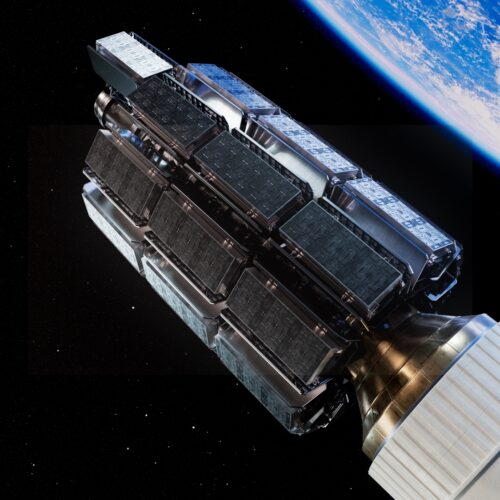
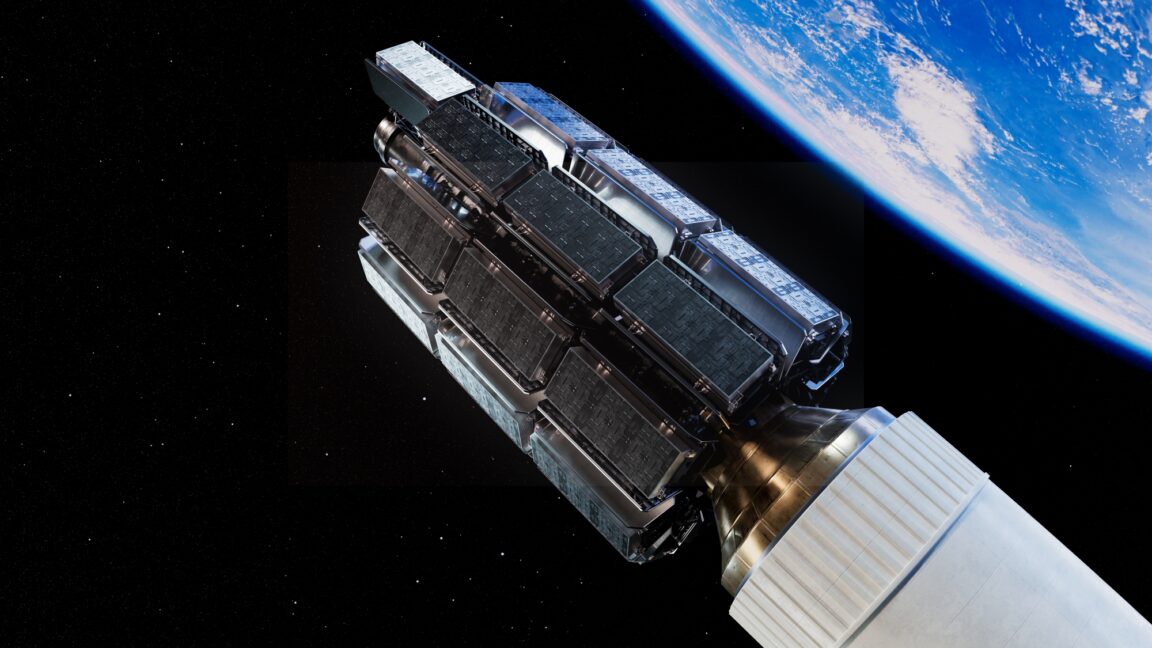
Starlink has started charging a $10 monthly rental fee for hardware in a shift away from its longtime practice of selling hardware to customers for a one-time charge.

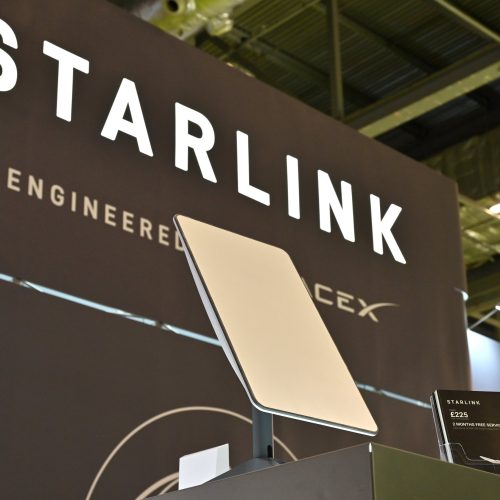
Starlink residential ordering pages now show an upfront hardware cost of $0 and a monthly kit fee of $10, similar to the hardware rental fees long charged by cable and telecom companies. Starlink hardware includes a terminal to receive satellite signals and a router to place in a user's home.

The monthly kit fee is in addition to Internet service prices, which Starlink recently raised by $5 to $10 per month. Starlink is charging $55 a month for 100Mbps, $85 for 200Mbps, and $130 for the "Max" tier that can go up to 400Mbps. Starlink also provides a professional-installation service for a one-time fee of $199, or for no additional charge if you subscribe to the Max plan.
Read full article

Comments

© Getty Images | John Keeble
  •  

Locked in heated rivalry with researcher, Microsoft fixes 0-day they disclosed

Microsoft on Tuesday released fixes for two high-severity zero-days that were disclosed by a researcher who has been locked in a testy beef with the software giant.

Nightmare Eclipse, the pseudonym the researcher goes by, released a handful of high-severity vulnerabilities in recent months, making them zero-days that had the potential to be exploited in the wild. The researcher has said the disclosures, which included proof-of-concept code, came after Microsoft reneged on an arrangement the two made regarding vulnerabilities they had discussed.

Disclosure drama

“But someone violated our agreement and left me homeless with nothing,” Nightmare Eclipse wrote in March. “They knew this will happen and they still stabbed me in the back anyways, this is their decision not mine.”

Read full article

Comments

© Getty Images

  •  

Three key vital signs make up the "urban pulse" of a city

People often speak metaphorically of the heartbeat or pulse of a city, but according to the authors of a new paper published in the Proceedings of the National Academy of Sciences, cities do indeed have an "urban pulse"—an indication of urban "metabolic activity" that can be measured to suss out telltale patterns. And those patterns could help inform future public policy around urban planning.

The precise definition of urbanization has shifted over the centuries. Zhe Zhu of the University of Connecticut and his fellow authors adopted a broad version for their study. It features fundamental "processes of concurrent change in at least six dimensions, including demography, economy, infrastructure, environment, governance and culture," they wrote. "Together they give rise to outcomes, measurable results of the process, such as population growth, urban land expansion, GDP growth, and innovation." Their chosen metrics reflect this dynamic view: Cities are not static grids but "living, adaptive ecosystems."

“For decades, we had just been capturing the outcome of urbanization—a house that’s been built, or a road expansion,” said Zhu. “But you don’t really see the dynamics within an urban area. This is going to be a very impactful tool influencing not only top-down policy decisions from governments but also bottom-up decisions from everyday people navigating their cities.” One day we may be able to check a neighborhood's "urban pulse" while house-hunting, for instance, or while scouting potential locations for a new business.

Read full article

Comments

© Zhe Zhu/GERS Lab

  •  

Commonwealth Fusion makes the physics case for its 400 MW reactor

The scientific community has a plan for achieving fusion power. It involves getting a better understanding of how to control fusion in a tokamak-style reactor using the currently under construction ITER reactor, and then using that knowledge to build DEMO-style plants. But ITER isn't even expected to see hot plasmas until the middle of the 2030s, by which point solar panels will be so cheap that we'll probably all be getting them free in our cereal boxes.

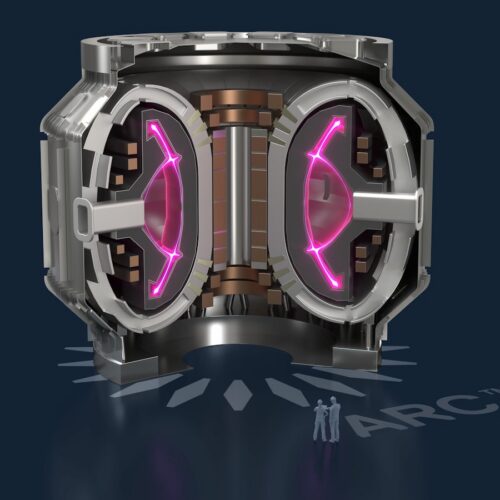
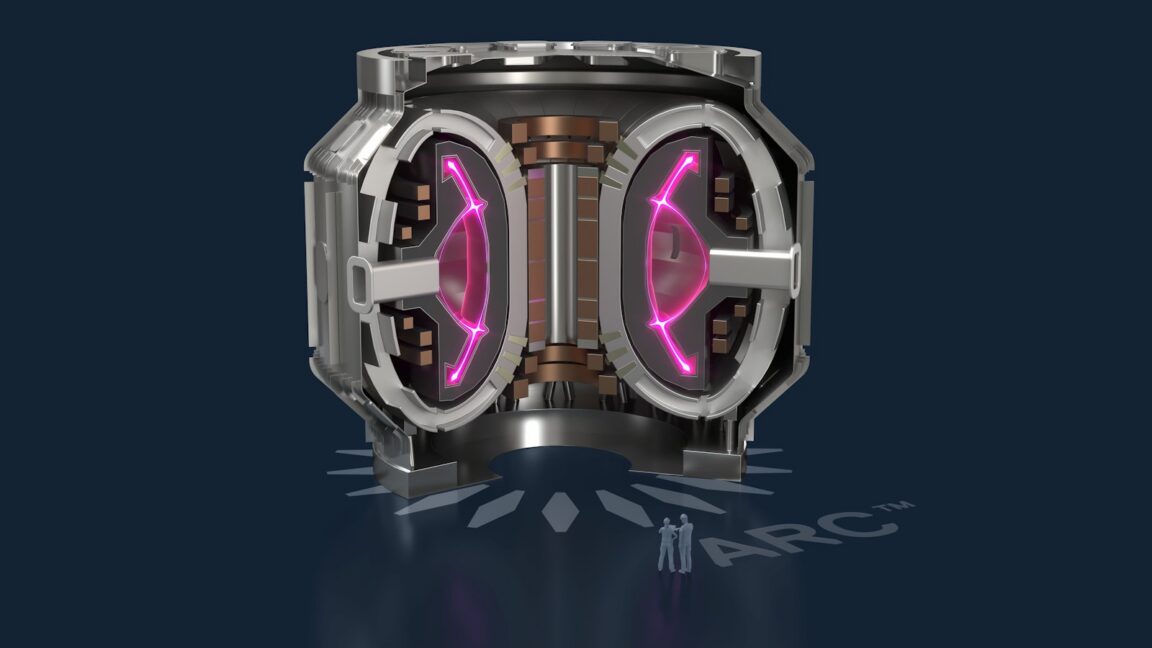
Commonwealth Fusion is a startup that's basically asking "what if we did that, but now?" Its ITER equivalent, a tokamak called SPARC, is over 70 percent complete and is planned to be operating as soon as next year. The company already has a site and customers for the power-generating follow-on, called ARC. Both of those projects are predicated on using high-temperature superconductors to generate an extremely powerful magnetic field that will allow the company to build a smaller reactor, and thus get things done faster.

Years of running plasmas through tokamaks has given us confidence that the basics of these plans are sound. But there are lots of potential devils in the details (otherwise there'd be little need for experimental reactors). So Commonwealth's scientists, in collaboration with the academic community, have recently released five peer-reviewed papers that detail its plans for ARC: what our best models tell us now, and what we'll still need to learn from SPARC to finalize the design of a production fusion plant.

Read full article

Comments

© Commonwealth Fusion

  •  

Paramount accuses Netflix of "scorched-earth campaign" against WBD merger

Paramount Skydance is accusing Netflix of maintaining a campaign against its proposed acquisition of Warner Bros. Discovery (WBD).

In a June 5 letter (PDF) addressed to Jared A. Hughes, acting section chief of the Media, Entertainment, and Communications Section of the US Department of Justice's (DOJ's) Antitrust Division, and A. Maya Kahn, a trial attorney for the Antitrust Division, and first reported on by Politico today, Paramount chief legal officer Makan Delrahim accused Netflix of trying to influence stakeholders about the merger. The letter reads:

Indeed, Netflix’s panic-level response and scorched-earth campaign to try and poison regulators and other stakeholders against the Transaction shows just how seriously Netflix takes Paramount as a scaled competitor.

The letter from Delrahim, a former assistant attorney general for the Antitrust Division, is a response to a letter that The International Brotherhood of Teamsters sent to the DOJ in March. The teamsters' letter argued that Paramount and WBD's merger would threaten film and TV workers. The union, which has 1.3 million members, asked the DOJ to block the merger "unless substantial and enforceable safeguards are put in place to increase domestic production and protect jobs," per an announcement from the group.

Read full article

Comments

© Mike Cohen/Getty Images for The New York Times

  •  

Anthropic says these topics are too dangerous to let its Fable 5 model talk about

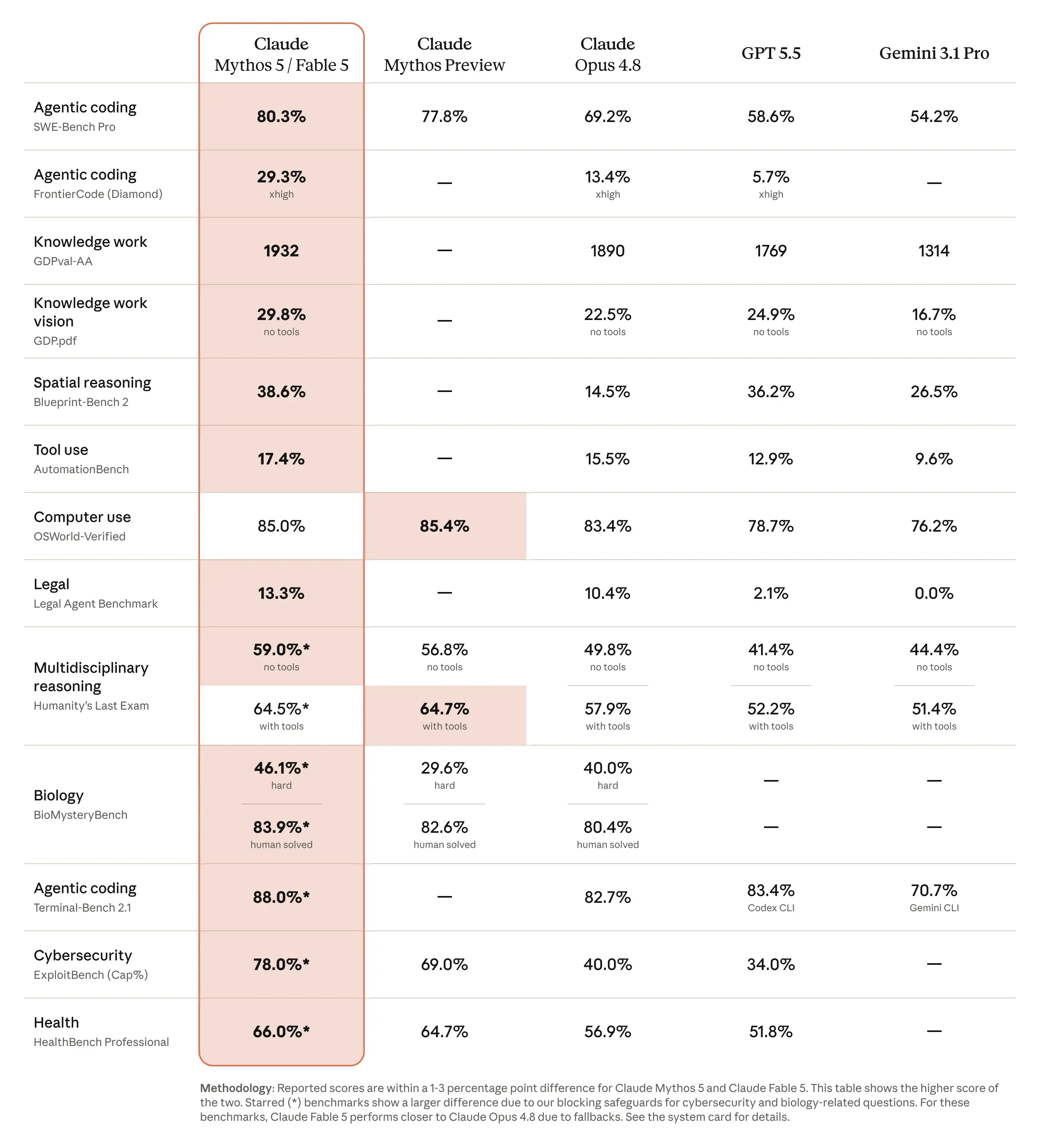
Anthropic Tuesday publicly released Claude Fable 5, its first "Mythos-class" model that it says surpasses its previous frontier Opus models in overall capabilities. But the model's launch today comes with safeguards designed to prevent it from answering queries on topics like cybersecurity, biology, and chemistry, where the company has publicly worried about its potential impact to "uplift" malicious actors.

Anthropic says Fable 5 operates on the "same underlying model" as Mythos 5, which is coming out of its monthslong "Mythos Preview" period today, but only for "a small group of cyberdefenders" judged trustworthy through the existing Project Glasswing. Unlike Mythos 5, though, the publicly accessible Fable 5 is designed to funnel queries on certain sensitive topics to the earlier Claude Opus 4.8 model and to warn the user when this is happening.

Among the many claimed benchmark improvements for Fable 5, the one related to cybersecurity was a particularly large jump. Credit: Anthropic

Anthropic said it has tuned these safeguards to be "stricter than ideal," meaning the system may occasionally refuse "harmless requests" in a way that it acknowledges may be frustrating for regular users. But Anthropic says such false positives come up in less than five percent of all sessions in testing, and were worth it to avoid situations where Mythos could give malicious actors assistance in "causing serious harm that they couldn’t have received from other sources."

Read full article

Comments

© Getty Images

  •  

Google announces Gemini 3.5 Live Translate for instant voice-to-voice translation

Google has been chasing real-time translation for years, which it says has been one of its "pioneering machine learning experiments." We've seen numerous demos on stage at Google events in the past, but you needed Google phones, earbuds, or some other specific setup. Last year, Google brought real-time translation to more users in the Translate app, and now it's expanding availability more. With the release of Gemini 3.5 Live Translate, you'll have access to instant translation in more places and with lower latency than ever before.

The new AI model is part of the version 3.5 family that launched at I/O. Before today, Google had only rolled out the Flash version, but we're expecting a Pro model to drop in the coming weeks. Gemini 3.5 Live Translate is a speech-to-speech model tuned to automatically detect and translate in more than 70 languages.

Google says Gemini 3.5 Live Translate is fast enough to keep up with a normal conversation, following just a few seconds behind the speaker while also matching intonation, pacing, and pitch. In short, the voice sounds more like you than a generic robot. The demos, which are all being recorded under controlled conditions, do sound impressive. You won't have to wait long to verify the model's abilities for yourself, though.

Read full article

Comments

© Aurich Lawson

  •  

NASA assigns crew for Artemis III, sets aggressive timeline for flying it

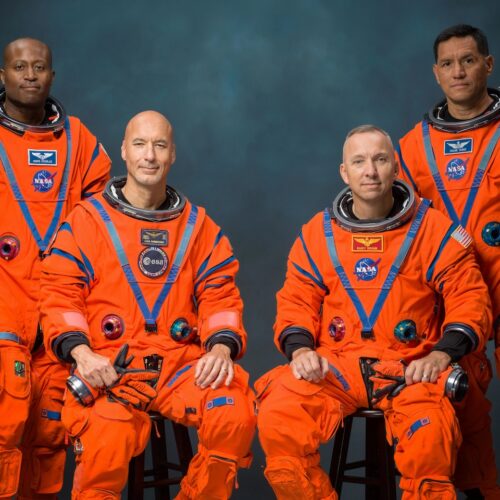
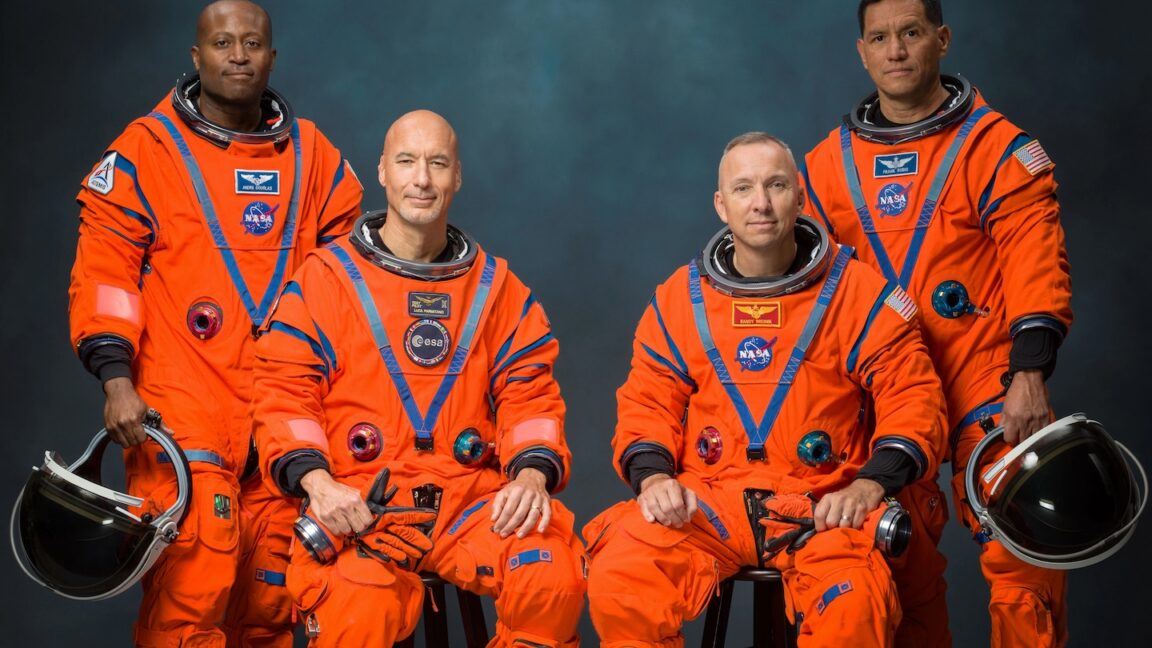
The US space agency unveiled the crew for its Artemis III mission on Tuesday during an enthusiastic event at Johnson Space Center in Houston.

For this spaceflight into low-Earth orbit, which will see the Orion spacecraft rendezvous and dock with lunar lander prototypes, NASA chose an experienced, all-male crew with military backgrounds. They were revealed inside a darkened Teague Auditorium where hundreds of friends, family members, and NASA employees cheered enthusiastically.

The four crew members are:

Read full article

Comments

© NASA

  •  

Screwworms in US: Human risk is low—but they can burrow through your skull

Ravenous, flesh-eating flies have busted through containment barriers and have now reemerged in the US. On Monday and Tuesday, the US Department of Agriculture reported three new cases, bringing the tally to five.

One of the cases is in a dog, though it's unclear where it became infected; the dog lives in New Mexico, had its infection reported in Texas, and may have recently traveled to Mexico, where the flies are also spreading. But the other four US cases were all in Texas—and all in calves—two in Zavala County and two in La Salle County.

Almost all the attention over screwworm's resurgence has focused on the threat to livestock, like the calves and, in turn, the financial risk to the cattle industry. The fly's voracious, screw-shaped larvae can fell cattle if given the chance, and preventing infestations requires intense vigilance. The USDA has estimated that if the flies stage a comeback rivaling isolated outbreaks of the past, they could cost Texas producers $732 million per year and the Texas economy $1.8 billion.

Read full article

Comments

© CSIRO

  •  

One day after discovery, Meta pulls facial recognition code from its smart glasses

One day after WIRED revealed that Meta had quietly embedded an unreleased face-recognition system into an app installed on more than 50 million phones, the company removed it, according to a WIRED analysis of the latest version’s code.

The most recent version of Meta AI, a companion app for its line of smart glasses, strips out the unactivated software components that powered the system Meta internally called NameTag. The version published the day of WIRED’s report included several code libraries explicitly named for face recognition. Friday’s release includes none of them.

Andy Stone, Meta's vice president of communications, told WIRED on Monday that the feature is purely exploratory, adding: “No final decision has been made on what to do here, if anything.”

Read full article

Comments

© David Paul Morris/Bloomberg/Getty

  •  

Drone boat picked up downed US Army helicopter pilots—a first for sea rescues

A drone boat picked up two US Army pilots from waters near the Strait of Hormuz after their helicopter gunship went down, US military officials said. The incident apparently represents the first time the US military has used a drone for such a rescue mission at sea.

The two crew members from the US Army AH-64 Apache were “rescued by American forces” at 7:33 pm US Eastern Time after their helicopter went down off the coast of Oman on June 8, according to a US Central Command press release. That press release mentioned support from US Navy units including the US 5th Fleet’s Task Force 59, which is charged with integrating uncrewed aerial, surface, and underwater vehicles, alongside AI, into 5th Fleet maritime operations.

Anonymous US military officials initially told CBS News that the Apache air crew was rescued by an uncrewed surface drone operated by Task Force 59 from the US Fifth Fleet in Bahrain. The officials also described the incident as the first time the military had used a drone to rescue people from the water.

Read full article

Comments

© Saronic Technologies

  •  

High-severity vulnerability in Linux caused by a single faulty character

Researchers have analyzed a high-severity vulnerability in Linux that’s able to escalate untrusted users to root by exploiting a bug you don't often see: a single errant character inside the kernel.

The vulnerability, tracked as CVE-2026-23111, is located in nf_tables, a subsystem of the Linux kernel that provides packet filtering capabilities. It’s used to manage firewall rules and replaces older subsystems such as iptables, ip6tables, arptables, and ebtables.

!!!WTF!!!

The presence of a single mis-issued exclamation point in code implementing nf_tables introduced a use-after-free, a class of vulnerability that corrupts memory by placing malicious code at memory addresses that haven’t been properly freed of their previous contents. CVE-2026-23111 can be exploited by an unprivileged user or process to elevate system rights to root.

Read full article

Comments

© Getty Images

  •  

Gold isn’t inert, it just has bodyguards protecting it

Gold is weird. It's one of the few metals that doesn’t really oxidize. Even silver and copper—from the same column of the periodic table—form weak oxides. Naively, you might expect that gold would tarnish just like silver. Gold also sits right next to platinum, but it has none of that metal’s catalytic properties.

Then came gold nanoparticles that acted like catalysts, and we were confused by their apparent willingness to take part in chemical reactions.

Now, a pair of scientists has explained that gold’s inertness isn’t inherent to the atom but rather to the surfaces that gold crystals form. Before we get to the results, let’s first take a look at the traditional explanation for gold’s inertness and why an inert material that has no catalytic activity suddenly acts as a catalyst when in its nanoparticle form.

Read full article

Comments

© Kieran Stone

  •  

Here's Audi's next Q7 SUV and US-only SQ7, now with an RS V8

MUNICH, GERMANY—Audi is having a bit of an SUV renaissance lately. Over the past 18 months, it has brought out a new electric Q6 and replaced the midsize Q5, and later this summer we'll get to see the Q9, a full-size leviathan with the Escalade in its sights. But today it's the turn of an all-new version of the Q7, and the North America-only SQ7, both of which go on sale later this year for model year 2027.

The standard Q7 will come to the US with a twin-turbo 2.9 L V6 that generates 429 hp (320 kW) and 442 lb-ft (600 Nm). Meanwhile, the SQ7 borrows the 591 hp (441 kW), 590 lb-ft (800 Nm) V8 as found under the hood of the RS7. But there's no plug-in hybrid version slated as far as we know.

Both models use an eight-speed automatic transmission (ZF's very capable 8HP) and all-wheel drive. Audi says these are the quickest-accelerating Q7 and SQ7s it has made, and it also says they should be much better to drive, too. Standard Q7s will ride on steel springs or can option the adaptive air suspension that's standard on the SQ7—this gets an optional third mode that lowers the car by more than an inch (30 mm).

Read full article

Comments

© Audi

  •  

Apple says its AI is still private, even when it's running on Google's servers

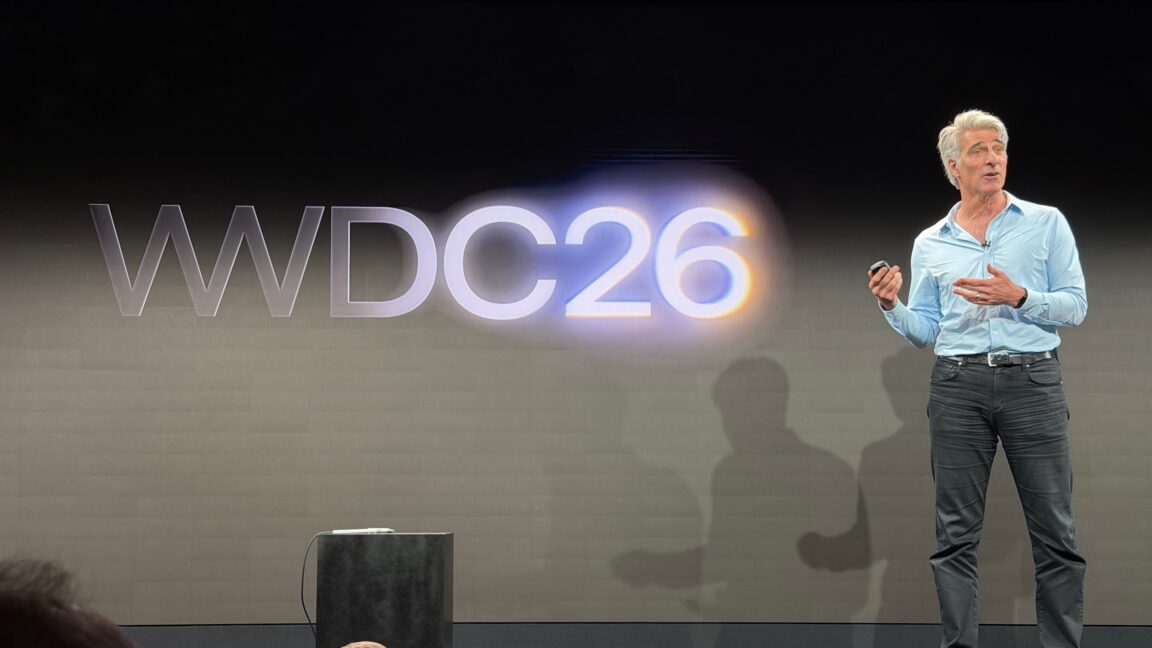
CUPERTINO, California—Apple announced earlier this year that its long-delayed Siri upgrade, announced this week as "Siri AI," would use Google's Gemini language models. What the company confirmed at its Worldwide Developers Conference yesterday was that it also ran on Nvidia hardware installed in Google servers. But the company is still making the same privacy promises it did before, when all of its AI models were either running locally on your devices or on Apple-controlled server hardware.

For years, Apple has touted user privacy as a key benefit of using its platforms. Its cloud services use encryption that's intended to keep other people—including Apple employees—from being able to gain access to it. And the company has long advertised its use of on-device processing for things like scanning images, keeping as much data as possible from leaving your device in the first place.

But with Apple Intelligence, Apple has run up against the limits of its own hardware. The kinds of language and reasoning models that can run locally on an iPhone or Mac are relatively small, limiting their capabilities and accuracy. Apple's Private Cloud Compute system was a partial solution but relied on Apple's own server hardware; to get the kind of capacity it would need to support Siri AI, Apple would have had to commit to a huge data center buildout that it has so far avoided.

Read full article

Comments

© Andrew Cunningham

  •  

First Drive: The 2027 Rivian R2 entirely changes the EV game

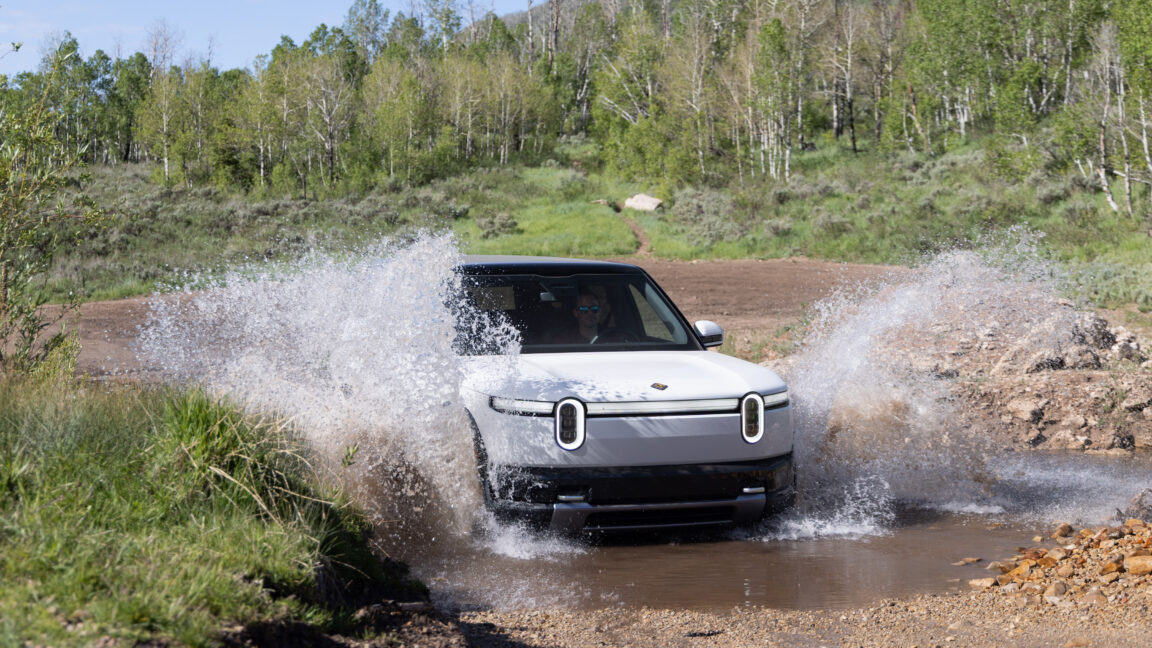
This month, Rivian begins customer deliveries of the highly anticipated R2 model that aims to bring the startup’s aspirational adventure lifestyle to the mainstream EV market. That has required cutting costs, scaling production, and reaching new customers—a big brief, then, for the diminutive R2.

To show exactly how a startup transitions to a mass-market automaker, Rivian hosted a picturesque media event in Utah that included both on and off-road driving in the Launch Edition that stickers for just under $60,000 (including destination). We also got plenty of access to the technological development that underpins the brand’s critical electric crossover.

The R2 almost perfectly matches the dimensions of today's best-selling US cars. This dedicated two-row model, versus the R1’s three-row S or pickup truck T, measures 185.9 inches (4,722 mm) long, or about 1 inch (25.4 mm) longer than a Honda CRV. The R1’s instantly recognizable profile and design language carry through, but unique packaging requirements dictated nifty design solutions.

Read full article

Comments

© Michael Teo Van Runkle

  •  

FCC lifts looming deadline for Amazon Leo satellite broadband constellation

The Federal Communications Commission has waived a requirement for Amazon to launch half of its satellite broadband constellation by the end of July, a key regulatory reprieve that buys the tech giant time to get more of its spacecraft into orbit.

Amazon won regulatory approval for the Amazon Leo network in July 2020. The FCC's authorization came with two deadlines. First, Amazon had to launch half of its 3,232 satellites by July 30, 2026, in order to maintain authorization to launch the rest of the network. The regulator gave Amazon a deadline of July 30, 2029, to have all of its first-generation satellites in orbit.

It has been apparent for some time that Amazon would not meet the FCC's requirement to launch half of its satellites—1,616 spacecraft—by the end of next month. Amazon filed an application in January requesting the FCC extend the deadline to July 2028 or waive it altogether. The commission decided on the latter option, removing any time limit for the 50 percent deployment milestone, but keeping the July 2029 deadline in place for the entire constellation.

Read full article

Comments

© Amazon

  •  

Tests suggest Russian satellites can jam GPS on a continental scale

Russian satellites have been identified as the cause of mysterious, seconds-long bursts of GPS interference across Europe—a rare example of human-made GPS interference coming from space. But uncertainty still hangs over whether such interference is intentional and if it could be more powerfully weaponized as GPS jamming with continental reach in the future.

The discovery came from an investigation detailed in a June 2 preprint paper by Todd Humphreys and his student Zach Clements at The University of Texas at Austin, along with Argyris Kriezis at Stanford University in California. By sifting through public data from ground-based stations with global navigation satellite system (GNSS) receivers, they identified a pattern of high-powered interference lasting less than 10 seconds each time but simultaneously detectable by ground stations across Europe from Norway to Spain to Poland, and even reaching as far west as Greenland and Canada.

By analyzing the ground station data from January 2019 to April 2026, the researchers found 75 days with at least one widespread GNSS interference event overlapping with the GPS L1 frequency band centered on 1575.42 megahertz. That represents the main band used for signal transmission by the US-made GPS satellite constellation and GNSS constellations from other countries.

Read full article

Comments

© European Space Agency

  •  
❌